ByteDance, the Company behind TikTok, is negotiating chip supply deals with two Chinese semiconductor companies. The company is in talks with Shanghai-based GPU startup Iluvatar CoreX and Baidu’s chip unit Kunlunxin. The move signals a wider shift away from Nvidia hardware among China’s biggest tech firms.
 ByteDance bets big on AI chips. [Source: GettyImages]
Two sources familiar with the matter confirmed the talks to Reuters. Both sources declined to be named because the discussions remain private. ByteDance, Iluvatar CoreX, Baidu, and Tencent did not respond to requests for comment.
ByteDance Turns to Iluvatar CoreX for Inference Chips
If a deal is reached, Iluvatar CoreX will become ByteDance’s third major domestic GPU supplier. It will join Huawei and Cambricon on that list. The chips under discussion target inference workloads, which are tasks that involve responding to user queries in real time.
Iluvatar CoreX is expected to ship at least 50,000 chips to ByteDance this year. Most of those chips will support tasks tied to ByteDance’s AI chatbot Doubao. ByteDance is working to grow Doubao’s user base across China.
Inference workloads differ from AI model training. Training requires the most powerful processors available. Inference chips handle live, query-based tasks and face fewer restrictions under current U.S. export rules.
Baidu’s Kunlunxin Chip Unit Also in the Picture
ByteDance is considering a separate chip deal with Baidu’s Kunlunxin unit. The two negotiations run side by side. One source confirmed that Tencent is already a Kunlunxin customer. This points to growing demand for the unit’s products across China’s technology sector.
Baidu announced plans to spin off Kunlunxin and list it separately on the Hong Kong Stock Exchange in January 2026. The company said the listing aims to showcase Kunlunxin’s value on its own. It also wants to attract chip sector investors and broaden financing channels.
A ByteDance deal would add significant commercial weight to Kunlunxin’s growth story. It would also support the spin off plan ahead of the planned listing.
Who Is Iluvatar CoreX?
Iluvatar CoreX listed in Hong Kong in January 2026. The company reported 1 billion yuan, roughly $148 million, in 2025 revenue. About 90% of that came from GPU sales. The company has grown quickly on the back of rising domestic demand for AI hardware.
Iluvatar CoreX was founded in 2015. It specializes in general purpose GPUs built on 7nm class process technology. Its flagship TianGai 100 series targets AI training and inference workloads. The chips compete directly with Nvidia’s A100 and A800 chips.
The company’s Tiangai chip series serves AI training workloads. Its Zhikai series targets inference tasks. Iluvatar CoreX has until now supplied mainly government procurement projects. A ByteDance deal would mark a major commercial step forward.
Iluvatar CoreX’s sales should total 3.04 billion Yuan ($449.8M) in 2026. The overall chip shipments are predicted to grow by 139% to exceed 100,000 units over the year.
ByteDance Runs Three Chip Supply Tracks at Once
ByteDance is not relying on a single domestic supplier. The company runs a three track supply strategy to reduce exposure to any one source. Beyond the Iluvatar CoreX and Kunlunxin talks, ByteDance has been developing its own custom AI silicon. The company was also in discussions with Samsung as recently as February 2026 about potential manufacturing partnerships.
The strategy reflects a broader goal. ByteDance wants to avoid depending on any chip vendor that U.S. policy could cut off at short notice. Spreading supply across Iluvatar, Baidu, and its own in house silicon gives the company more flexibility.
U.S. export restrictions have tightened steadily over recent years. Nvidia’s most powerful processors have been caught in the crossfire repeatedly. ByteDance is building supply chain options in direct response to that risk.
China’s Domestic Chip Sector Takes Market Share From Nvidia
The ByteDance negotiations reflect a broader market trend. Chinese GPU and AI chipmakers captured nearly 41% of China’s AI accelerator server market last year. This eroded Nvidia’s once strong position in one of its most important overseas markets, according to a Reuters report from April.
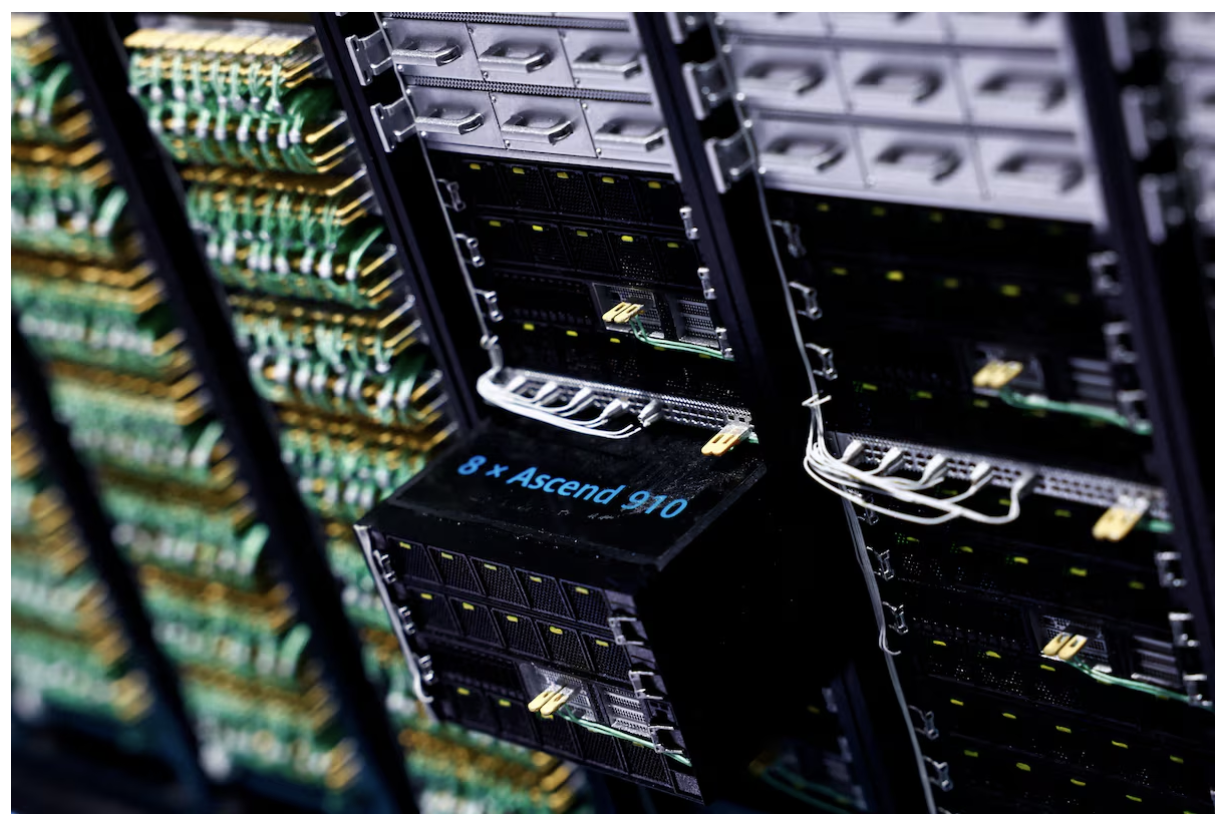 AI servers highlight China’s growing domestic chip industry. [Source: Reuters]
Beijing has made chip self reliance a policy priority. The government actively promotes the use of locally developed semiconductors. These potential deals show how China’s domestic AI chip industry is gaining ground as U.S. export restrictions tighten.
The timing matters. As U.S. China tech tensions remain high, Chinese companies face an uncertain supply environment for foreign chips. Domestic suppliers like Iluvatar CoreX and Kunlunxin step into that gap directly.
Deal Terms Remain Unfinalized
Both negotiations remain ongoing. Sources cautioned that final terms are not yet set and remain subject to change. No companies involved have confirmed the talks publicly.
A ByteDance deal would mark a turning point for Iluvatar CoreX. The company has built its business largely on government contracts. Serving one of China’s largest private tech companies would open a different class of customer entirely.
For Nvidia, the picture in China grows more difficult. Domestic rivals are gaining scale, winning big name clients, and building product lines designed to replace restricted Nvidia hardware. The ByteDance talks confirm that shift is moving faster.
Also Read: Nickel Industries Presses Ahead on Green Nickel Certification and EV Battery Supply Chain
FAQS
Q1: What chips is ByteDance buying from Iluvatar CoreX?
A1: ByteDance is in talks to buy GPU chips from Iluvatar CoreX for AI inference tasks, with at least 50,000 units expected to ship in 2026 to support its Doubao chatbot.
Q2: Why is ByteDance moving away from Nvidia?
A2: These US export restrictions have stopped Nvidia’s newest chips from being sold in China and have forced ByteDance to buy AI chips from the Chinese producers of Huawei, Cambricon, Iluvatar Core X and Baidu’s Kunlunxin.
Q3: What is Baidu’s Kunlunxin?
A3: Kunlunxin is Baidu’s AI chip unit, currently being spun off for a separate Hong Kong Stock Exchange listing. Tencent is already a customer, and ByteDance is now in talks to use its chips.
Q4: Are the ByteDance chip deals confirmed?
A4: No. Both negotiations are still ongoing and final terms have not been set. None of the companies involved have publicly confirmed the talks.
Disclaimer: This article is based on information from sources familiar with the matter. The reported deals between ByteDance, Iluvatar CoreX, and Baidu have not been officially confirmed. Final terms remain subject to change. Colitco does not endorse any of the companies mentioned in this report.
Sources
https://www.reuters.com/world/china/bytedance-talks-with-chinas-iluvatar-corex-purchase-ai-chips-sources-say-2026-06-15/
https://www.investing.com/news/stock-market-news/bytedance-explores-ai-chip-supply-deals-with-iluvatar-corex-baidu–reuters-4741158
https://www.indexbox.io/blog/bytedance-in-talks-with-iluvatar-corex-and-baidu-for-ai-chips/

Luke Carlino is a seasoned Copywriter, Content Strategist, and Social Media Manager specialising in Mining, Finance, and Business journalism. With more than a decade of industry experience, he brings rigorous editorial standards and commercial acuity to every project.