
Building serious wealth on the stock market requires a clear system. Australians face a changing financial landscape as we head deeper into 2026. Random stock picking no longer guarantees financial success for retail investors.
Smart wealth creators want a predictable framework to build a seven-figure portfolio. You need a repeatable capital allocation process that survives market volatility. This framework forms the ultimate ASX wealth building strategy Australia will follow for the next decade.
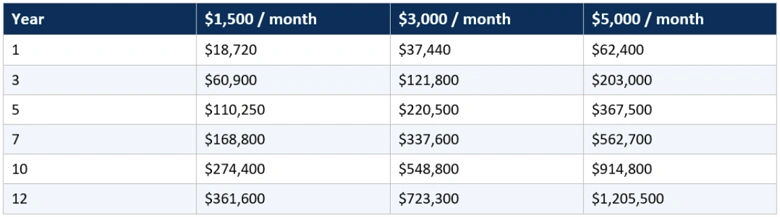
Fig 1: Indicative portfolio trajectory for 3 contribution level at 8% CAGR [Kalkine]
The Core Index Foundation
Every portfolio needs a solid foundation to handle macro economic shifts. Broad exchange-traded funds (ETFs) provide low-cost diversification for your core assets. Funds like the Vanguard Australian Shares Index ETF (VAS) capture market returns automatically.
The BetaShares Australia 200 ETF (A200) offers another excellent low-fee choice. These index funds harvest franking credits and lower your single-stock risk profile. You should anchor the majority of your wealth in these broad market vehicles.
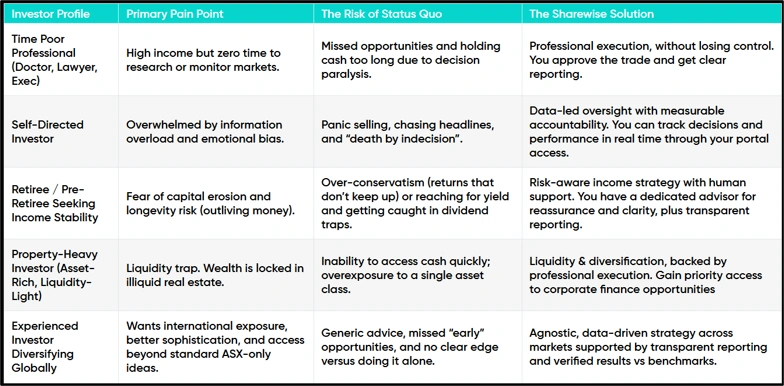
Fig 2: Which investor profile fits you [Sharewise]
Selecting the Best Corporate Compounders
A great blueprint couples broad index funds with high-quality individual businesses. Investors must identify the best ASX stocks next 10 years for consistent capital growth. You should focus on firms with sustainable earnings and excellent corporate management teams.
Look closely at ASX blue chip stocks Australia 2026 to find resilient local businesses. Wesfarmers (WES) demonstrates how a strong retail and industrial portfolio creates long-term value. Woolworths Group (WOW) provides defensive strength because everyday household spending remains highly predictable.
Goodman Group (GMG) offers fantastic structural exposure to data centres and global logistics properties. Macquarie Group (MQG) holds an exceptional track record of finding opportunities across global markets. These quality businesses survive difficult market environments and emerge stronger years later.
Technology companies also offer superb compounding potential through high-margin software models. TechnologyOne (TNE) generates predictable revenue through recurring enterprise software contracts. WiseTech Global (WTC) provides additional exposure to rapidly expanding global logistics software themes.
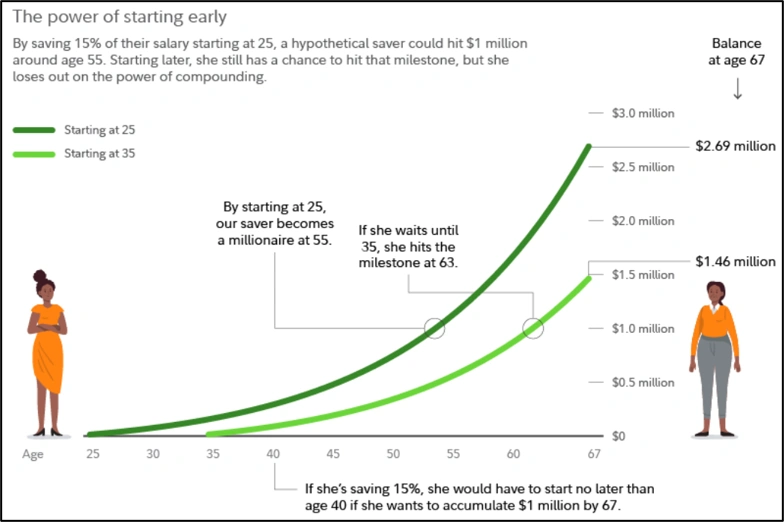
Fig 3: Concept chart for investors [Fidelity.com]
The Power of Automation
Consistency drives long-term investment success much more than lucky market timing. You should make your monthly share contributions an automated, non-negotiable household budget item. Investing a set amount every month removes toxic emotion from your financial choices.
The stock market will never feel completely safe to everyday retail buyers. Headlines will always scare people with news about inflation, interest rates, or geopolitical risks. Regular dollar-cost averaging cuts through this media noise and builds excellent investment discipline.
Incorporating Modern Alternatives
Expert asset allocators are changing their core tactics in the current 2026 market environment. High valuations in the banking sector make some traditional blue chips less attractive today. Commonwealth Bank (CBA) share prices look stretched after massive market runs.
Industry experts anticipate that banks might act as an anchor on broad index returns. Sophisticated investors now tilt their portfolios toward alternative asset classes for better balance. Private credit and private debt generate highly reliable cash flow for your bank account.
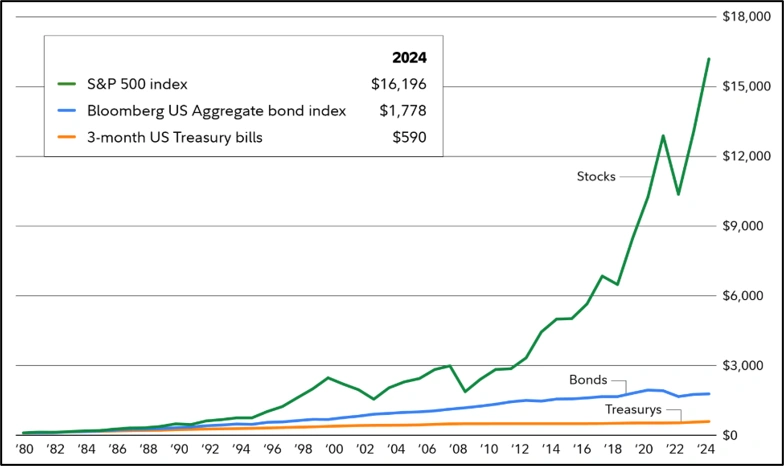
Fig 4: How $100 grow since 1980 [Fidelity.com]
These defensive alternatives keep your unit prices stable while producing excellent yields. Target returns in this sector range from six to nine percent for defensive investors. This steady cash flow allows you to redeploy capital into growth assets over time.
Growth alternatives like private equity also present stellar long-term return potential for patient savers. The recent democratisation of private markets allows everyday investors to access these premium funds. You can allocate a small portion to these unlisted assets to outpace benchmark returns.
Rules-Based Risk Management
Every smart investor manages portfolio risk through a strict, rules-based rebalancing programme. You can implement a simple five percent drift band to govern your asset mix. Trim your overweight assets and buy your underweight assets mechanically when triggers occur.
This rules-based technique forces you to sell high and buy low without emotional interference. You must also monitor manager selection closely within the alternative asset space. Ensure your chosen fund managers hold proven processes and stable investment teams.
The Mathematics of a Million Dollars
The mathematics of compounding returns does the heavy lifting over a ten-year window. An average annual return of nine percent can turn small sums into serious wealth. Contributing around $4,700 monthly can push your balance past one million dollars in a decade.
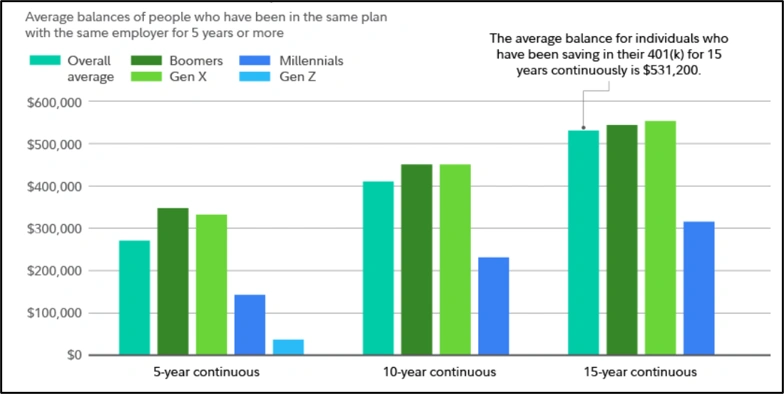
Fig 5: Overtime the results would add up [Fidelity.com]
Portfolio progress always feels painfully slow during the first five years of the journey. Your initial portfolio growth stems almost entirely from personal savings and cash contributions. Patience pays off when your investment returns finally eclipse your fresh cash savings.
Protecting your hard-earned capital requires constant vigilance against speculative market traps. Avoid chasing speculative small-cap stocks that need perfect conditions to survive. Exercise extreme caution with technology companies that rely heavily on excessive artificial intelligence hype.
Keep an eye on long-term bond yields because they influence all asset prices. Local interest rate adjustments can create short-term headwinds for Australian equity markets. Broad diversification remains your ultimate shield against severe sequence-of-returns risk during corrections.
Decadal Structural Tailwinds
Several structural tailwinds will drive Australian equity returns over the coming decade. The global energy transition will increase long-term demand for critical local minerals and resources. Sustained net migration will benefit our domestic housing-linked sectors and consumer staples.
Artificial intelligence infrastructure build-outs will support local data centre real estate investment trusts. The continuous flow of mandatory superannuation money provides a permanent floor for domestic shares. These factors establish a highly supportive environment for dedicated Australian wealth builders.
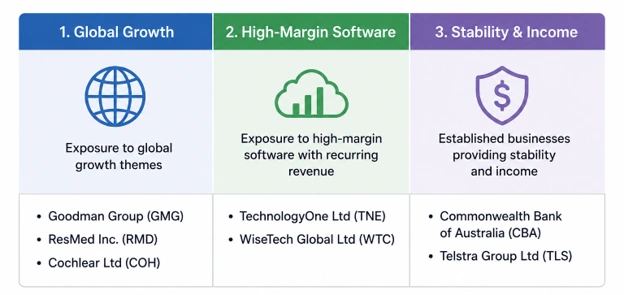
Fig 6: Concept portfolio for an investor [Colitco]
Tax efficiency acts as an incredible wealth accelerator for smart Australian portfolios. Our unique dividend imputation system provides valuable franking credits to local equity investors. Reinvesting these franking credits through automated plans boosts your effective compounding rate significantly.
Hold high-yielding franked shares in your personal name to maximise your tax position. Utilise capital losses strategically before the end of the financial year to offset gains. A smart combination of superannuation and personal brokerage accounts provides ultimate financial flexibility.
Also read: How the 2026 Iran-US Ceasefire Deadlock is Hitting Australian Markets
FAQ
Q1. How should I manage my investment portfolio?
ANS. Treat your investment portfolio exactly like a commercial business. You need to calculate a clear revenue schedule every financial year. This helps map out your expected income over twelve months.
Q2. Why is knowing my dividend cash flow important?
ANS. Understanding your cash flow lets you plan your reinvestments accurately. It removes the guesswork from your wealth creation strategy. Executing a predictable and boring process builds long-term success.
Q3. How much market risk should young investors take?
ANS.Younger investors have a longer time horizon to recover. They can afford to take much higher equity market risks. You should simply ignore temporary paper losses during market drops.
Q4. What should I do as I approach retirement?
ANS. Older investors must protect their capital much more. You need to restructure your asset allocations toward defensive alternatives. This shift ensures a reliable income stream without a salary.
Q5. Do I need special skills to build a million-dollar portfolio?
ANS. You absolutely do not need special talents or wealthy relatives. Regular Australians achieve this goal using a very straightforward path. Commitment to your savings plan beats complex financial wizardry entirely.
Q6. How much of my income should I aim to save?
ANS. Make paying yourself first a habit with every single paycheck. You should aim to save fifteen percent of your pre-tax income. Increase this savings rate systematically as your salary goes up.
Also read: ASX Fortescue Stock Surge: $10,000 Turned Into What in 12 Months
Disclaimer
This article is meant only for informational purposes. If you are an investor who is watching ASX investment closely, all the data published in the content is sourced from announcements and other external sources. Kindly verify all information related to the share price and market data. Any investment should be made at the investor’s own risk.
Sources:
- https://www.fool.com.au/2026/06/13/how-to-build-a-1-million-asx-share-portfolio-from-zero/
- https://kalkine.com.au/education/personal-finance/how-australian-investors-can-strategically-build-a-1-million-asx-portfolio-in-the-next-decade
- https://www.fool.com.au/2026/04/07/how-to-build-a-million-dollar-asx-share-portfolio-from-zero-2/
- https://www.youtube.com/watch?v=UAbNv7EiY_s
- https://www.sharewise.com.au/investing-1-million-in-2026-strategy-for-performance-driven-investors

Luke Carlino is a seasoned Copywriter, Content Strategist, and Social Media Manager specialising in Mining, Finance, and Business journalism. With more than a decade of industry experience, he brings rigorous editorial standards and commercial acuity to every project.