BHP Group Limited (ASX: BHP) does not need much of an introduction. Most Australian investors have encountered it, held it, or at least considered it at some point. The dividend history goes back to around 2006. Two payments a year, both fully franked. That kind of consistency is rare in mining.
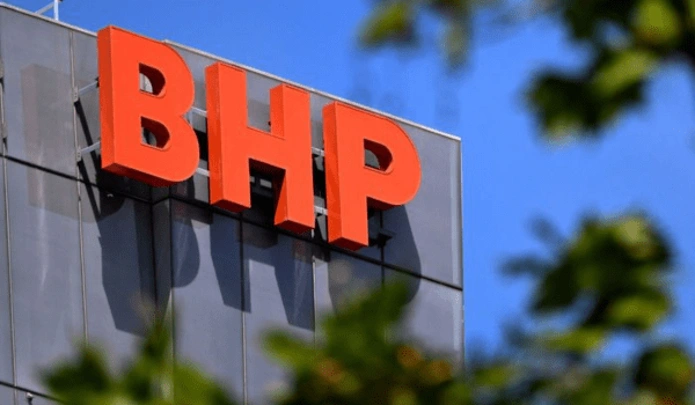
Figure 1: BHP Group Limited, Australia’s largest listed mining company by market capitalisation [Courtesy: HRKatha]
The ASX BHP share price has had a strong run. Up roughly 32% year-to-date and about 57% over twelve months. New investors buying today are entering at a very different price than those who held through the dip. That changes the yield story considerably.
Why Passive Income Investors Keep Coming Back to BHP
Today, BHP is the largest Company on the Australian share market by a considerable margin, with a market capitalisation of around A$308 billion. That is not only a headline number. It speaks to scale of operations, geographic spread, and what kind of balance sheet will be able to sustain dividend payment through tough commodity price cycles.
BHP’s earnings come from iron ore, copper, and a range of other materials. No single commodity controls the outcome. When iron ore softens, copper can carry some of the load. That spread has kept the dividend programme running through periods when single-commodity miners were forced to cut.
Cyclical Does Not Mean Unreliable
BHP is a cyclical stock. That word puts some income investors off, and fair enough. Cyclical businesses move with the economy. When growth slows, demand for steel and copper eases. Margins compress. Share prices follow.

Figure 2: Illustration of passive income, investment returns, and wealth creation concepts [Courtesy: Magnific AI]
But BHP’s cost structure is low relative to peers. That is where the dividend resilience actually comes from. A low-cost miner can keep paying out even when prices fall, because the margin between production cost and sale price stays workable. That is the real reason the dividend record stretches back two decades.
What BHP Actually Pays
Two fully franked dividends per year. March and September. The most recent interim payment of A$1.0385 per share landed in March 2026, representing a yield of approximately 3.5% at the time of writing.
Table 1: BHP Dividend Forecast: FY26 and FY27
| Financial Year | Forecast Dividend (A$ per share) | Forward Dividend Yield |
|---|---|---|
| FY26 | A$1.91 | ~3.2% |
| FY27 | A$1.80 | ~3.0% |
The step-down from FY26 to FY27 is modest. It is not a red flag on its own. What it does signal is that analysts are not expecting earnings to accelerate from here, at least not in the near term.
Franking Credits Change the Real Yield
Full franking matters more than many investors realise. The headline yield sits around 3.0% to 3.5%. But for Australian resident investors, the attached franking credits reduce the tax payable on that income. For investors in lower tax brackets, those credits come back as a refund. The effective after-tax yield is higher than what the headline number suggests.
What the Analysts Are Saying
Thirteen out of eighteen analysts currently rate BHP as a hold. Four call it a strong buy. One rates it a strong sell. That spread tells you something. The rally has priced in a lot of good news already.
Table 2: BHP Analyst Ratings Summary
| Rating | Number of Analysts |
|---|---|
| Hold | 13 |
| Strong Buy | 4 |
| Strong Sell | 1 |
| Total | 18 |
The average price target of A$59.57 sits about 1% below the current price. That is not a ringing endorsement for buyers chasing capital growth. The range between the bear case and the bull case is wide enough to suggest genuine disagreement about where commodities go from here.
Table 3: BHP Analyst Price Target Range
| Scenario | Price Target (A$) | Implied Move |
|---|---|---|
| Average Target | A$59.57 | -1% downside |
| Bear Case | A$40.10 | -33% downside |
| Bull Case | A$69.79 | +16% upside |
For BHP shares passive income Australia investors, the analyst debate about capital upside is secondary. The BHP dividend yield Australia 2026 and franking credits are the actual product here. Whether the share price moves 1% in either direction matters less than whether the A$1.91 per share forecast holds.
BHP’s Long-Term Track Record
Ten years ago, BHP shares sat at around A$16. Iron ore had collapsed near US$50 per tonne. The dividend had just been cut for the first time in sixteen years. It looked like the wrong time to buy. It turned out to be the opposite.
- A$10,000 invested in Jun 2016 bought approximately 625 shares
- Those shares are worth around A$37,500 today on capital appreciation alone
- Cumulative fully franked dividends over the decade add approximately A$15,000
- Total return lands at roughly A$52,500, a 425% gain on the original investment
- A term deposit at 2% per annum over the same period would have returned just A$12,190
Table 4: BHP A$10,000 Investment: Ten-Year Return Comparison
| Return Component | Amount (A$) |
|---|---|
| Capital Appreciation | A$37,500 |
| Cumulative Dividends | A$15,000 |
| Total Return | A$52,500 |
| Term Deposit (2% p.a.) | A$12,190 |
Commodity Outlook and What It Means for the Dividend
BHP has gained around 32% percent year-to-date and about 57% over the trailing twelve months. That rally which is based upon global expectations for demand around electrification and energy transition spending, particularly with steel production integrated into these models, underscores better starting sentiment on copper. Iron ore has been more mixed, with Chinese steel demand remaining a closely watched variable.
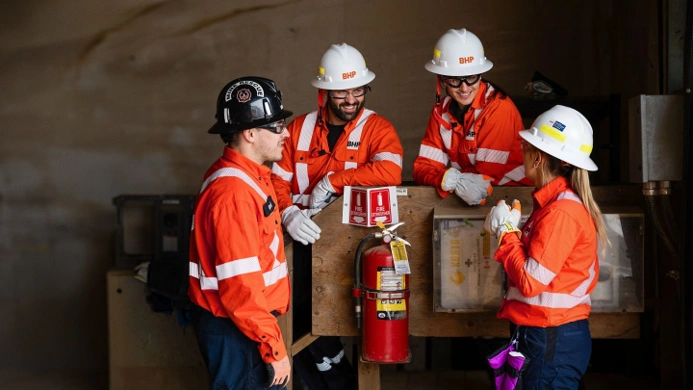
Figure 3: BHP employees at a company facility, reflecting the scale of its global operations [Courtesy: BHP]
The income case for BHP has always rested on the low-cost operating model more than on commodity price forecasts. High prices are a bonus. The baseline is a business that can pay reasonable dividends even when prices are not cooperating. That has held true for two decades. Whether it holds through the next commodity cycle is the real question for income investors considering BHP today.
Future Direction and Impact on Passive Income Investors
If you are an investor who is tracking the mining sector then you should know that the forecast dividend step-down from FY26 to FY27 is small. The fully franked structure remains intact. The Company’s diversified commodity base has not changed. On paper, the passive income case for BHP looks consistent.
The complication is the entry price. ASX Investors buying after a 57% twelve-month rally are locking in a lower yield than those who bought through the softness. A 3.0% to 3.2% fully franked yield from the world’s largest diversified miner is still a reasonable income outcome. Whether it is the right fit depends on what the investor is comparing it against and what tolerance they have for commodity cycle exposure.
Also Read: BHP Port Hedland Workers Vote for Strike Action Following Failed Bargaining
FAQ
Q1. Does BHP pay fully franked dividends?
Ans. Yes. BHP pays two fully franked dividends per year, in March and September.
Q2. What is the forecast BHP dividend yield for FY26?
Ans. Analysts forecast a dividend of A$1.91 per share in FY26, translating to a forward yield of approximately 3.2% at the time of writing.
Q3. Is BHP a defensive stock?
Ans. No. BHP is a cyclical stock tied to commodity prices and the broader economic cycle. It behaves differently from classic defensive stocks like utilities or major banks.
Q4. Why does full franking matter for BHP passive income investors?
Ans. Fully franked dividends carry tax credits that reduce the effective tax payable for Australian resident investors, lifting the real after-tax yield above the headline figure.
Q5. What commodities does BHP produce?
Ans. BHP’s primary commodities include iron ore and copper, alongside coal and other materials. This spread supports earnings stability across different commodity cycles.
Disclaimer
This article is intended for informational purposes only. All data published in this content is sourced from ASX announcements and external sources. Readers should independently verify all share price, dividend, and market data before making any financial decisions. Any investment should be made at the investor’s own risk. Colitco does not hold any position in the above-mentioned Company.
Sources
- https://www.asx.com.au/markets/company/BHP
- https://www.fool.com.au/2026/06/13/are-bhp-shares-a-good-buy-for-passive-income-2/
- https://cdn-api.markitdigital.com/apiman-gateway/ASX/asx-research/1.0/file/2924-03081111-3A691768&v=undefined
- https://www.fool.com.au/2026/06/10/if-you-invested-10000-in-bhp-shares-10-years-ago-here-is-what-they-would-be-worth-today/

Luke Carlino is a seasoned Copywriter, Content Strategist, and Social Media Manager specialising in Mining, Finance, and Business journalism. With more than a decade of industry experience, he brings rigorous editorial standards and commercial acuity to every project.