St George Mining Limited (ASX: SGQ) (“St George” or “the Company”) has announced a key development milestone for its Araxá Niobium and Rare Earths Project in Minas Gerais, Brazil.
Initial beneficiation testwork, the process of concentrating valuable minerals from raw ore, has produced results consistent with commercial niobium operations at comparable deposits worldwide.
The testwork was conducted on approximately five tonnes of near-surface saprolite material excavated from a shallow trench at the central Araxá project area.
Saprolite is weathered rock sitting just below the surface. It is typically the first material mined in an open-cut operation, making these results directly relevant to the likely feed grade and processing behaviour of the project’s earliest production years.
The results cover two separate product streams produced from the same ore sample: a niobium concentrate and a rare earth element (REE) concentrate. Both were obtained through flotation, a standard mineral processing technique that separates target minerals from waste material using air bubbles and chemical reagents.
Executive Chairman John Prineas commented: “Our Araxá Project hosts world-class resources for each of niobium and rare earths — something which is unique amongst our critical metals peers. Our aim is to capture the full value of this mineralisation by producing commercial products of both niobium and rare earths in a potential mine development at Araxá.”
Five-Tonne Trench Sample Mirrors Real-World Mining Conditions
The metallurgical testwork sample comprised approximately five tonnes of saprolite material collected from a shallow trench excavated at the Central Araxá project area. The trench was positioned at coordinates 296,516.56 m E, 7,826,528.89 m N (UTM Zone 23S, SIRGAS2000) at an elevation of 1,023.83 RL.
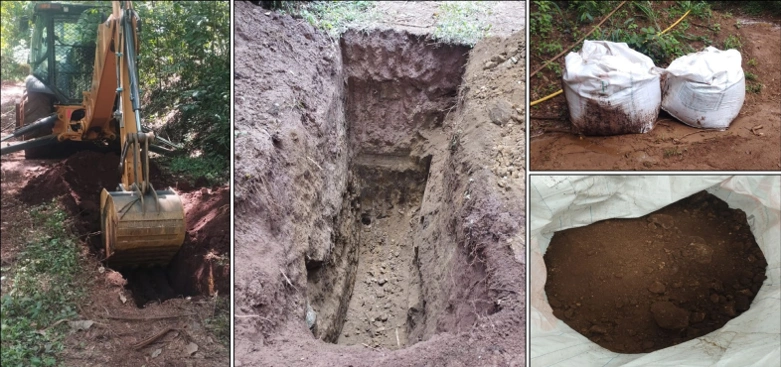
Figure 1: Trench excavation at the Central Araxá Project area used to collect approximately five tonnes of representative saprolite material for metallurgical testwork. [Source: St George Mining Limited, ASX Release 11 June 2026]
Sampling was taken between one and three metres depth, with the upper metre of surface material removed first to reduce the influence of organic matter and weathering-related contamination. The material was collected in its natural state and transported to the laboratory in bulk bags without any prior crushing, splitting, or processing.
The sample collected had average grades of 0.69% Nb₂O₅ and 9.29% TREO, providing a representative assessment of the grade and metallurgical characteristics of the near-surface mineralisation.
The results are cross-referenced against geological logging and assay data from the immediately adjacent drillhole AAX-DD-0066.
The large sample size improves confidence that the material tested captures natural variability within the mineralised saprolite zone.
CIT-SENAI prepared and sub-sampled the material using a jaw crusher and rotary splitter following ISO 17025-certified procedures. Chemical analyses were performed using XRF and ICP-OES at SGS.
Niobium Flotation Delivers Industry-Comparable Grades and Recoveries
The niobium testwork was carried out by CIT-SENAI, Brazil’s Centre of Innovation and Technology, at its advanced laboratory facility in Belo Horizonte, Minas Gerais State. CIT-SENAI is an ISO 17025-certified scientific agency and a recognised authority in Brazilian metallurgical research.
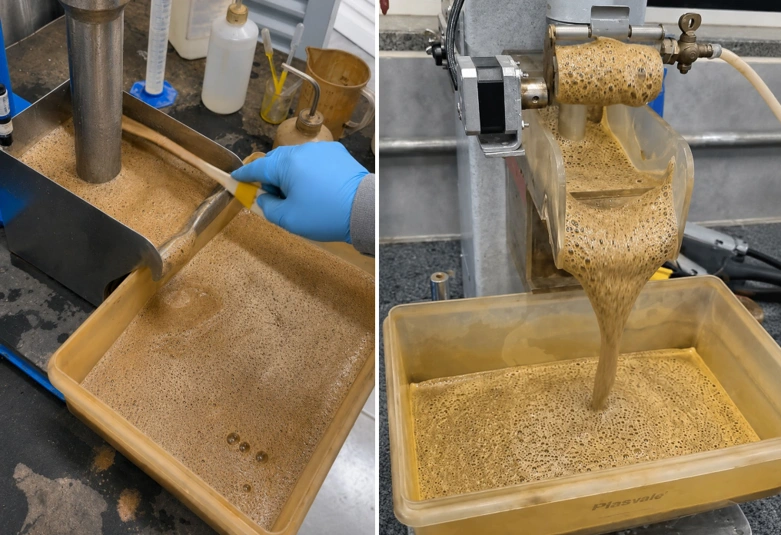
Figure 2: Niobium flotation testwork conducted by CIT-SENAI at its Belo Horizonte laboratory. Left: second cleaner stage. Right: third cleaner stage — the yellow colour indicates a higher-grade concentrate. [Source: St George Mining Limited, ASX Release 11 June 2026]
Two open circuit flotation tests produced the following principal results:
- Test 13: 39.6% Nb₂O₅ concentrate grade at 54.27% flotation recovery
- Test 7: 40.17% Nb₂O₅ concentrate grade at 45.99% flotation recovery
Nb₂O₅ is the standard expression for niobium pentoxide, the form in which niobium is measured in ore and concentrate. When the preceding magnetic separation stage is included, the combined magnetic separation and flotation recovery for Test 13 was approximately 50.9% Nb₂O₅.
For context, the industry benchmark for Araxá-style pyrochlore niobium, the mineral form in which niobium occurs at Araxá, is 40% to 60% recovery and 40% to 50% Nb₂O₅ in the flotation stage, rising to 50% to 60% Nb₂O₅ after pyrometallurgical refining, with approximately 95% recoveries at that stage. Both test results sit within the industry recovery range.
John Prineas noted: “High-grade niobium concentrate was produced in this early-stage flotation testwork with recoveries and grades that are consistent with niobium mining operations with Araxá-style pyrochlore mineralisation.”
Table 1 — CIT-SENAI Flotation Results for Niobium (Open Circuit)
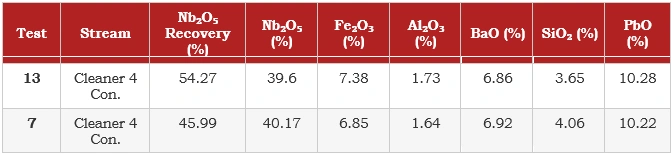
Table 1: CIT-SENAI open circuit flotation results for niobium from saprolite material at the Araxá Project, Minas Gerais, Brazil. [Source: St George Mining Limited, ASX Release 11 June 2026]
The elevated lead oxide (PbO) levels are characteristic of Araxá-style pyrochlore mineralisation and are well recognised within existing Brazilian niobium processing operations.
The Company has flagged further downstream refining studies to evaluate impurity removal pathways and ferroniobium processing options.
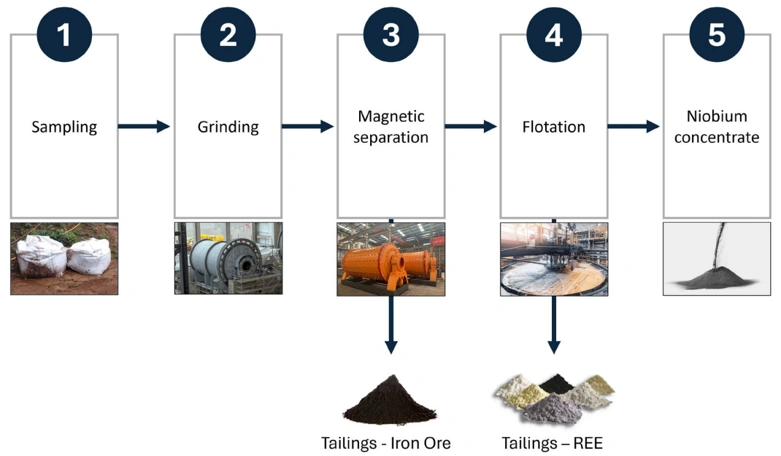
Figure 3: Typical Niobium processing flowsheet highlighting the rare earth concentrate in tailings.
Recovery improvement is expected through future locked-cycle and recycle testwork — the next stage of metallurgical testing that recirculates intermediate flotation streams back into the circuit, simulating a commercial plant’s performance.
John Prineas stated: “Further work is now underway to optimise flotation performance, evaluate locked-cycle operation and assess downstream refining pathways.”
Rare Earth Concentrate Stream Confirmed from Niobium Flotation Tailings
In addition to the niobium results, the testwork confirmed the potential to recover a separate rare earth concentrate from the niobium flotation tailings, the material that remains after niobium has been extracted.
This is important because it demonstrates the potential to produce two separate commercial products from the same ore without additional mining.
The rare earth flotation test was conducted on orange saprolite material from trench sampling at the Araxá Project, using a technique known as reverse flotation.
This method floats away the silica minerals from the pyrochlore tailings, leaving a rare earth-enriched concentrate behind. Reverse flotation is already widely used in the iron ore industry.
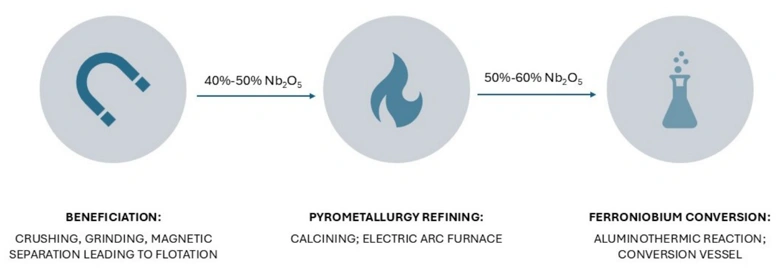
Figure 4: Simplified niobium production flowsheet from Araxá-style pyrochlore mineralisation, showing the beneficiation, pyrometallurgy refining, and ferroniobium conversion stages with industry-typical grade ranges. [Source: St George Mining Limited, ASX Release 11 June 2026]
Key results from rare earth testwork (Test 12):
- TREO concentrate grade: 7% — a 1.6 times upgrade on the 9.8% TREO feed grade for this test
- Rare earth recovery from silica flotation tails: 2%
- Rare earths reporting to the niobium flotation concentrate: approximately 59.7%
- Rare earths lost to the silica flotation concentrate: approximately 7.1%
- Overall rare earth recovery across all streams: approximately 82%
A 15.7% TREO grade from an early-stage open circuit test is commercially significant, noting that the locked-cycle phase is expected to improve recoveries further.
The Company expects a higher portion of the rare earths will be recovered once locked-cycle and recycle phases are complete. Further metallurgical testwork is underway to determine the likely overall rare earth recovery to a final commercial product.
John Prineas added: “The testwork was completed on five tonnes of near-surface material likely to be the kind of ore mined in the initial years of a mining operation at Araxá, thereby providing a robust result for development study work.”
Table 2 — CIT-SENAI Flotation Results: Rare Earth Concentrate from Niobium Tailings

Table 2: CIT-SENAI flotation results for the rare earth concentrate stream produced from niobium flotation tailings, Araxá Project. SiO₂ in the rare earth concentrate was 3.61%. [Source: St George Mining Limited, ASX Release 11 June 2026]
Araxá Mineral Resource Estimate: Scale and Composition
St George Mining announced a major resource upgrade for Araxá on 3rd March 2026. The JORC-compliant Mineral Resource Estimate (MRE) now totals 70.91 million tonnes grading 4.06% TREO and 0.77% MREO, using a 2% TREO cut-off.
The Araxá Project sits adjacent to CBMM’s world-leading niobium mining operations — the same geography that produces the majority of the world’s niobium supply.
Table 3 — JORC 2012 MRE at 2% TREO Cut-off (as at 3 March 2026)
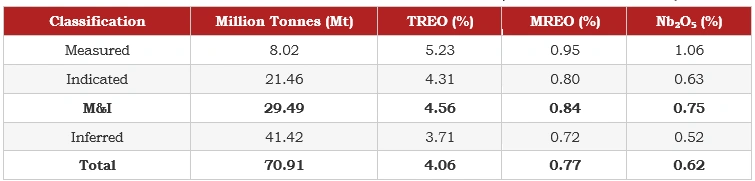
Table 3: Total JORC 2012 Mineral Resource Estimate for the Araxá Project using a 2% TREO cut-off. MREO = Magnet Rare Earth Oxides. [Source: St George Mining Limited, ASX Release 3 March 2026]
An additional resource of 24.56 million tonnes grading 0.52% Nb₂O₅ was also defined using a 0.2% Nb₂O₅ cut-off (for blocks below the 2% TREO cut-off). Combined, the total Nb₂O₅ inventory associated with the Araxá Mineral Resource is 95.47 million tonnes.
Table 4 — Additional JORC 2012 MRE at 0.2% Nb₂O₅ Cut-off (as at 3 March 2026)
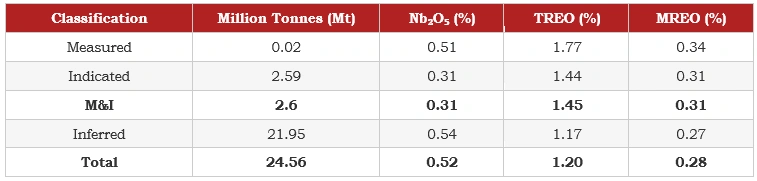
Table 4: Additional JORC 2012 MRE using a 0.2% Nb₂O₅ cut-off (blocks below the 2% TREO cut-off not included in Table 3). [Source: St George Mining Limited, ASX Release 3 March 2026]
The Measured and Indicated portion of the MRE totals 29.49 million tonnes at 4.56% TREO and 0.84% MREO, the highest confidence categories under JORC reporting guidelines.
The Magnet Rare Earth Oxide (MREO) suite is dominated by neodymium and praseodymium, with the total resource grading 0.57% Nd₂O₃ and 0.19% Pr₆O₁₁. The Measured and Indicated component averages 0.61% Nd₂O₃ and 0.21% Pr₆O₁₁.
NdPr oxides are the primary commercial driver of rare earth demand, used in permanent magnets for electric vehicle motors, wind turbines, and defence systems.
Table 5 — Magnet Rare Earth Oxide (MREO) Breakdown at 2% TREO Cut-off
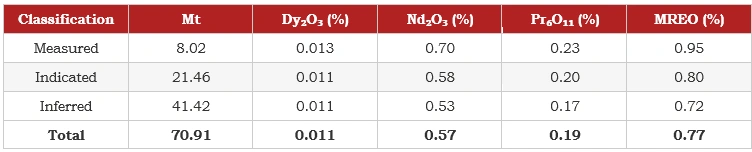
Table 5: Magnet Rare Earth Oxide (MREO) breakdown at 2% TREO cut-off. Tb₄O₇ (0.003%) is included in the total MREO but not shown separately. [Source: St George Mining Limited, ASX Release 3 March 2026]
The Heavy Rare Earth Oxide (HREO) suite represents approximately 2.55% of TREO and approximately 13.5% of MREO across the total resource.
The HREO suite is dominated by yttrium, gadolinium, europium, and dysprosium, with yttrium representing approximately 42% of the reported HREO grade.
The Measured category grades 1,205 ppm HREO and the Measured and Indicated component averages approximately 1,093 ppm HREO.
The resource also contains a measurable samarium component, averaging 600 ppm Sm₂O₃ in the total MRE and 721 ppm Sm₂O₃ in the Measured category.
Subject to metallurgical recovery and product specifications, samarium may provide additional rare earth product optionality, including potential exposure to samarium-cobalt magnet applications.
Experienced Metallurgy Team Brings Direct Araxá Operating Knowledge
The Company has assembled a team of metallurgical and processing experts with direct experience at Brazil’s major niobium and rare earth operations. This includes personnel with hands-on roles at CBMM, the world’s dominant niobium producer — whose operations are located in the same Araxá region.
- Ricardo Nardi, Lead Processing Engineer: Former Head of Mineral Processing at CBMM with more than 30 years of experience in niobium mineral processing, including all mineral by-products such as barite, magnetite, phosphate, and rare earths, as well as high purity niobium oxide production
- Adriano Rios, Director of Mining Operations: Former Production Manager at CBMM, responsible for all mining operations including mine planning, mineral processing, and pyrometallurgy. Also a former Director of Operations for COMIPA, the joint venture operating company between CBMM and the State of Minas Gerais
- Thiago Amaral, Brazil Country Head: Former CBMM Product Regulation Coordinator responsible for quality system controls in processing and production, and ex-Head of Sustainability at CBMM responsible for licensing, environmental management, and ESG programmes
- Alaercio Vieira, Metallurgy Manager: Former Metallurgy Manager at Serra Verde (Brazil’s only producing rare earth mine, currently the subject of a US$2.8 billion takeover from USA Rare Earth Inc (NASDAQ: USAR)), former Metallurgy Manager of Taboca (niobium and tantalum alloys producer), and previously Process Expert at CBMM in Araxá and CMOC at Catalão, Brazil
- Peter Adamini, Independent Metallurgical Operations (IMO): Technical Manager and Competent Person for the testwork results; member of the Australasian Institute of Mining and Metallurgy (AusIMM)
- Gavin Beer, Met-Chem Consulting: Metallurgical Consultant and Competent Person for testwork results; Fellow and Chartered Professional of AusIMM
The CIT-SENAI technical team involved in the testwork comprised three analyst engineers, one research engineer, two assistants, two research engineer fellows, and three technicians.
John Prineas stated: “We are particularly pleased to have assembled a Brazilian and Australian technical team with extensive practical experience in both niobium and rare earths process development and operation, including previous experience at Araxá niobium operations along with Brazilian and international rare earths projects.”
Pilot Plant, Locked-Cycle Testwork, and Refining Studies Underway
Building on the open circuit results, the Company is progressing a broader metallurgical evaluation programme across multiple international laboratories. The programme includes:
- Comminution testwork — assessing how easily the ore breaks apart during grinding, which affects plant energy use and processing costs
- Ongoing flotation optimisation studies to improve concentrate grade and recovery
- Locked-cycle flotation testwork — simulating commercial circuit conditions by recirculating intermediate streams
- Flotation variability studies across different ore types within the deposit
- Downstream concentrate refining studies — evaluating processing routes to final commercial products
- Ferroniobium process evaluation — the standard commercial form in which niobium is sold to steelmakers
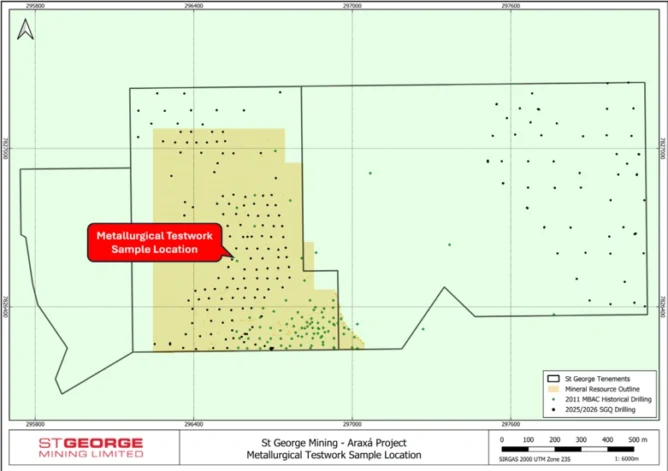
Figure 5: Map of the Araxá Project showing the location of the trench sample used for metallurgical testwork (red highlight), overlaid on the mineral resource outline and drill hole database. [Source: St George Mining Limited, ASX Release 11 June 2026]
CIT-SENAI will conduct a one-month pilot plant study on niobium flotation during July 2026. St George’s large-scale pilot plant is currently under construction at CEFET-MG in Araxá and is scheduled to be operating by late Q4 2026.
The pilot plant will have a throughput capacity of up to 300 kg per hour and will cover the full range of production steps including flotation of concentrate, ferroniobium production, and production of rare earth concentrate, mixed rare earth carbonate (MREC), and rare earth oxides.
Beneficiation flowsheet development testwork is ongoing at multiple international metallurgical laboratories, including in Brazil and at SGS Lakefield in Canada.
Detailed rare earth mineralogy is also being conducted at SGS Lakefield and in Australia with rare earth mineralogy experts including Karsten Winter from Mineralogy Solutions.
The metallurgical programme runs in parallel with feasibility development. The Company appointed Worley Engenharia Ltda as feasibility technical adviser in May 2026. Worley has operated in Brazil for more than 60 years and was selected after a competitive process.
Niobium and Rare Earths Demand Driven by Steel, EVs, and Defence
Niobium is used primarily as a micro-alloying element in high-strength, low-alloy (HSLA) steel. Small additions can raise tensile strength by up to 30% while preserving weldability. According to Research Nester, the global niobium market was valued at USD 3.4 billion in 2025 and is forecast to exceed USD 6.5 billion by 2035, a CAGR of 6.8%.
Beyond steel, new demand is growing from battery applications. CBMM, the world’s dominant niobium producer, based in the same Araxá region, launched the world’s first niobium-based battery anode production facility in November 2024 and has a target of generating 30% of its revenue from non-steel products by 2030.
Brazil accounts for approximately 89% of global niobium supply, with CBMM’s Araxá facility alone holding production capacity of 150,000 metric tonnes of ferroniobium per year.
The proximity of St George Mining’s Araxá Project to this infrastructure is a direct logistical and operational advantage.
The rare earth oxides market is expanding on the back of electric vehicle motor magnets, wind turbine generators, and defence systems.
According to Prophecy Market Insights, the global REO market is projected to grow from USD 6.2 billion in 2024 to USD 18.2 billion by 2034, a CAGR of 12.6%. The MREO suite, neodymium, praseodymium, terbium, and dysprosium, drives the majority of that demand growth.
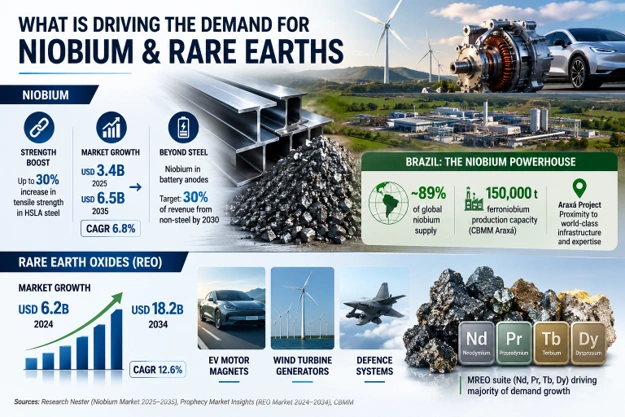
Figure 6: Factors driving the demand for Niobium and Rare Earths.
Investors’ Outlook
Investor sentiment around St George Mining Limited (ASX: SGQ) has strengthened through 2025 and into 2026, reflecting the scale and grade of the Araxá resource and the steady pace of project development. The stock has traded near the higher end of its 12-month range as metallurgical testwork and drilling results have progressively de-risked the project.
SGQ Share Price Performance — As at 11 June 2026
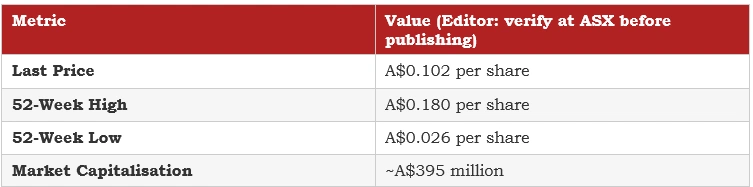
Table 6: Share price data sourced from the ASX.
Key Catalysts to Watch
- Locked-cycle and recycle flotation testwork results — expected to improve on the open circuit recovery figures reported here
- CIT-SENAI one-month pilot plant study on niobium flotation — scheduled for July 2026
- Large-scale pilot plant at CEFET-MG in Araxá — under construction, scheduled to be operational by late Q4 2026
- Downstream refining studies — ferroniobium process evaluation and rare earth refining pathways
- Ongoing assay results from the current 10,000-metre drilling campaign
- Feasibility study advancement with Worley Engenharia Ltda as technical adviser
- Mineralogy study results from SGS Lakefield (Canada) and Mineralogy Solutions (Australia)
Disclaimer
This article has been prepared by Colitco in collaboration with St George Mining Limited as part of a commercial content and investor communications arrangement. Colitco may receive compensation for the production and distribution of this content. This article is intended for informational purposes only and does not constitute financial product advice, investment advice, or a recommendation to buy or sell any securities. The content reflects information available at the time of publication and may not be updated. All figures, data and statements have been sourced from St George Mining Limited’s official ASX announcements and publicly available sources. Readers should conduct their own independent research and seek professional financial advice before making any investment decisions. Past performance is not a reliable indicator of future results. Exploration results are not a guarantee of future resource definition or commercial production.

Luke Carlino is a seasoned Copywriter, Content Strategist, and Social Media Manager specialising in Mining, Finance, and Business journalism. With more than a decade of industry experience, he brings rigorous editorial standards and commercial acuity to every project.