Macquarie Group Limited (ASX: MQG) sits in a rare category on the Australian Securities Exchange. It does not depend on one market, one product, or one economic trend to keep generating returns.

Figure 1: Macquarie Group headquarters [Courtesy: Reuters]
Most Australian investors know the name. Far fewer understand just how deliberately this business is built to hold value across different economic seasons.
Why Macquarie Is Hard to Fit Into One Box
The group spans from asset management and infrastructure to commodities, capital markets, and the specialist finance and advisory segment. These divisions do not move together in lockstep. Some pick up speed during deal-heavy periods. Others find their footing when infrastructure or energy capital starts flowing. That spread is deliberate.
A Platform That Moves With Capital Flows
Macquarie has spent decades building a business that responds rather than reacts. Interest rates shift. It adjusts. Infrastructure demand rises. It deploys. Commodity markets move. It is already there.
This is the foundation of the long-term case for Macquarie shares Australia investors keep coming back to. The business is not waiting for one tailwind. It has the structure to benefit from several at once.
Macquarie Share Price
Macquarie shares Australia currently trade at the following levels, based on the most recent available market data:
- Last Price: A$251.130 per share
- Market Capitalisation: A$94.23 billion
- 52-week range: A$187.310 to A$251.420 per share
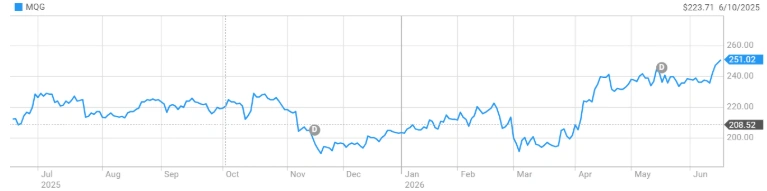
Figure 2: Macquarie Group (ASX: MQG) share price performance [Courtesy: ASX]
These figures reflect a Company trading near the top of its annual range. The share price outlook Australia investors are watching suggests the market is already pricing in confidence around Macquarie’s long-term positioning. Whether that leaves room for further upside depends on how its key divisions perform through the next cycle.
The Business Case: Adaptability as a Competitive Advantage
The global economy needs capital in places that are complex, long-duration, and difficult to finance through standard channels. Macquarie has built its business around exactly that problem.
Infrastructure, renewable energy, data centres, transport assets, housing, and resource projects all require patient capital and specialist expertise. Macquarie connects the money with the assets and takes a fee for doing it well.
Where the Earnings Come From
Earnings at Macquarie can be lumpy. Management has been transparent about this. Deal closings, asset realisations, and market volumes do not follow a neat calendar. Investors who buy Macquarie shares Australia expecting smooth quarterly growth tend to misread the business.

Figure 3: Investment growth and long-term wealth creation [Courtesy: Magnific]
The more useful lens is over a full cycle. Over five to ten years, the Company has consistently found new places to deploy capital and expertise. That is the pattern long-term investors are backing when they choose to buy Macquarie shares Australia.
Entrepreneurial Culture, Disciplined Risk
Large financial institutions tend to slow down as they grow. More hierarchy. More caution. Fewer bets.
Indeed, Macquarie has tended to evade that trap more successfully than most of its peers. The Company still has a distributed model that incentivises teams to identify and operate on opportunities. That is a cultural advantage that cannot be easily copied.
Risk Management as a Foundation
The entrepreneurial approach only holds up if the risk management underneath it is solid. Macquarie’s track record across multiple credit cycles, commodity downturns, and market dislocations suggests it is.
This is not a Company that has avoided all volatility. It has moved through volatility without structural damage. That distinction matters for anyone considering whether to buy Macquarie shares Australia for the long term.
Industry Outlook: Long-Duration Themes Still Intact
The global infrastructure investment gap is not closing anytime soon. Spending requirements on energy transition, transport, digital infrastructure, and water assets run into the trillions over the next two decades.

Figure 4: Market growth illustration highlighting long-duration investment themes [Courtesy: Magnific]
Macquarie Asset Management is one of the largest infrastructure investors in the world. The ASX Financial and Infrastructure sector continues to be shaped by how large institutions like Macquarie position themselves in this space. The Company’s role as a capital allocator and asset manager places it directly in the path of these long-duration investment themes.
Patience as Part of the Strategy
No financial company is immune to market cycles. Macquarie is not an exception. When deal activity slows, when asset sales are delayed, or when commodity income pulls back, the share price reacts.
The Macquarie share price outlook Australia analysts track tends to reflect this variability. Short-term earnings misses are possible. The long-term investment case does not rest on avoiding those. It rests on whether the Company keeps finding new ways to generate returns when conditions improve.
For investors with a 10-year horizon, that is the right question to ask. Based on what Macquarie has demonstrated across multiple cycles, the answer looks favourable.
Future Direction and Impact on Australian Investors
The coming decade will bring continued shifts in interest rates, energy systems, and global capital flows. Each of those shifts creates demand for the kind of specialist capital allocation Macquarie provides.
The impact on Australian investors who hold Macquarie shares is twofold. First, the domestic platform in banking and financial services continues to generate recurring income. Second, the global asset management and infrastructure arms provide exposure to international capital flows without requiring investors to look offshore themselves.
ASX Financial stocks rarely offer that combination of domestic stability and international reach in a single holding. The Macquarie share price outlook Australia-focused investors are watching will ultimately track how well the Company continues to execute on both fronts.
FAQ
Q1. Is Macquarie Group considered a bank or an investment firm?
Ans. It operates as both. The Company holds a banking licence but generates most of its earnings from asset management, infrastructure, and markets activity.
Q2. Why do investors choose to buy Macquarie shares Australia over other financial stocks?
Ans. The business model is more diversified than most ASX financial peers. It is not solely dependent on net interest margins or domestic loan growth.
Q3. What drives volatility in the Macquarie share price outlook Australia investors watch?
Ans. Deal volumes, asset realisations, and commodity income can all shift quarterly. These cause short-term fluctuations even when the long-term fundamentals are intact.
Q4. Does Macquarie pay dividends?
Ans. Yes. The Company has a consistent dividend payment history, though payout levels can vary with earnings across reporting periods.
Disclaimer
This article is intended for informational purposes only. All data referenced has been sourced from ASX announcements and publicly available external sources. Share price and market data should be independently verified before making any financial decisions. Any investment carries risk and should be made at the investor’s own discretion. Colitco does not hold any position in the above-mentioned Company.
Sources
https://www.fool.com.au/2026/06/17/why-id-buy-and-hold-macquarie-shares-for-10-years/
https://www.asx.com.au/markets/company/MQG

Luke Carlino is a seasoned Copywriter, Content Strategist, and Social Media Manager specialising in Mining, Finance, and Business journalism. With more than a decade of industry experience, he brings rigorous editorial standards and commercial acuity to every project.