Ten years ago, buying BHP shares felt like a terrible idea. Today, it looks like one of the best decisions an Australian investor could have made.
BHP Group Limited (ASX: BHP) has been one of the quiet achievers when it comes to delivering some of the great long-term returns on the Australian Securities Exchange. Before looking forward, the 10 years long term BHP ASX share price forecast of the Company tells a story worth listening to.
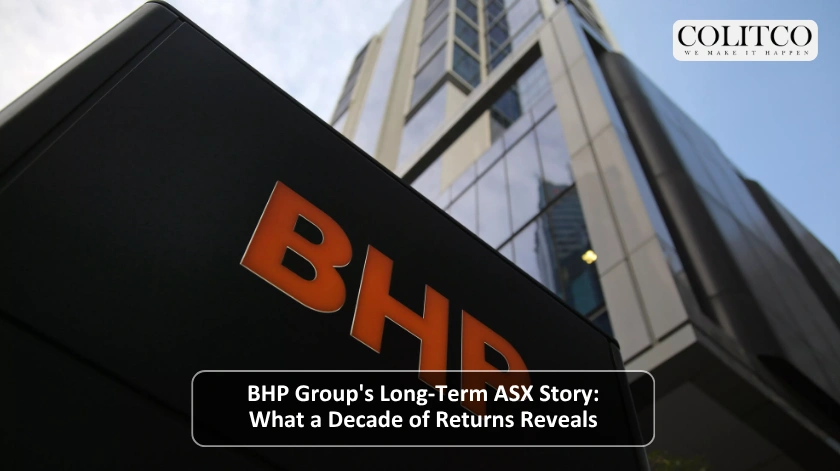
Figure 1: BHP Group, one of Australia’s largest mining companies [Courtesy: TradingKey]
The Numbers Behind the BHP Stock Long-Term Forecast Australia
BHP was trading at around A$16 on the ASX back in June 2016. China was slowing hard, iron ore had plunged near US$50 per tonne and BHP had just cut its dividend for the first time in 16 years.
Someone who invested A$10,000 into BHP at that moment in time would have received around 625 shares. With BHP shares today changing hands for around A$60.16 each. And those same 625 shares are now only worth around A$37,500 on capital appreciation alone.
Dividends Make the Real Difference
BHP has historically paid 50% to 75% of underlying profit as a fully franked dividend. Over the past ten years, BHP has paid cumulative dividends of approximately A$24 per share. On 625 shares, that amounts to approximately A$15,000 received over the decade.
Add the capital value and the dividend income together. The total portfolio value reaches approximately A$52,500. That is a total return of approximately 425% on a single A$10,000 investment. A term deposit at 2% per annum over the same period would have returned only A$12,190.

Figure 2: Representation of dividend investing and long-term shareholder returns [Courtesy: Magnific AI]
Three Phases That Drove BHP ASX Share Price Forecast 10-Year Returns
The BHP Group share price prediction 2030 is easier to understand when you break the past decade into its three distinct phases.
Phase One: The Commodity Recovery
Iron ore recovered from below US$40 per tonne to above US$100 per tonne. The BHP ASX share price more than doubled during this period alone.
Phase Two: The Super Cycle
Iron ore briefly exceeded US$220 per tonne in 2021 and 2022. BHP paid record dividends that alone returned close to half the original A$10,000 investment. Shareholders who held through the 2016 gloom collected extraordinary income.
Phase Three: The Copper Era
The first-ever quarter for BHP where copper comes in ahead of iron ore earnings for the first time in136-year. Copper jumped through US$13,000 per tonne. This change was driven by AI data centres and electric vehicles.
BHP Quarterly Performance: What the Latest Numbers Show
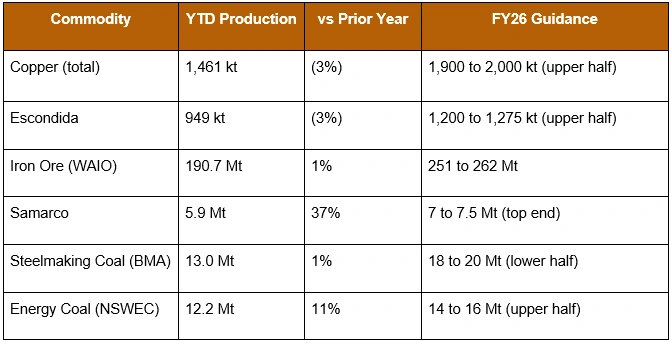
Copper Growth: The Investment Thesis for the Next Decade
BHP plans to grow copper-equivalent production at 3% to 4% per year through 2035. This is not a passive target. The Company submitted the Environmental Impact Declaration permit for the Escondida New Concentrator in March 2026.
This new concentrator represents the centrepiece of Escondida’s growth program and is expected to require an investment of between US$4.4 billion and US$5.9 billion to deliver between 220 and 260 thousand tonnes per annum of copper.
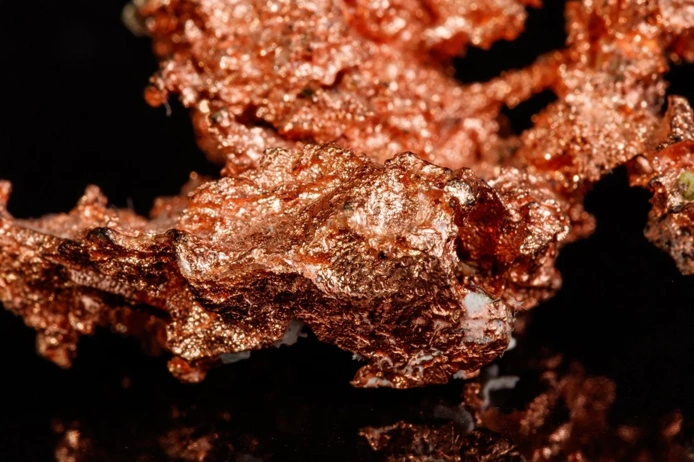
Figure 3: Copper, a key driver of BHP’s future growth strategy [Courtesy: Crystals.eu]
The project, which is pending permitting approval, will move towards an anticipated final investment decision between CY27 to CY28 as well a possible first production within CY31 to CY32.
In March 2026, Resolution Copper a joint venture between Rio Tinto (55% and operator) and BHP (45%)) secured a land exchange in Arizona, United States. This milestone enables the joint venture to progress additional resource data collection and commence early underground development at one of the highest ranked copper resources not currently being exploited globally.
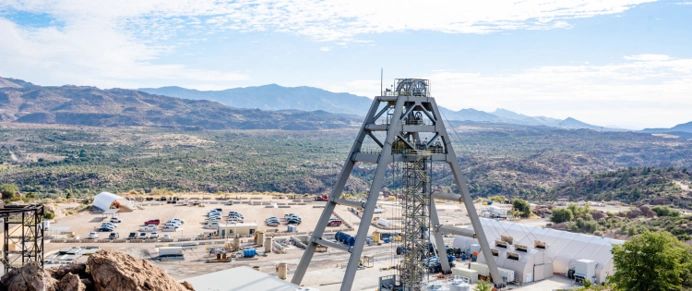
Figure 4: Resolution Copper project in Arizona [Courtesy: Resolution Copper]
Industry Outlook
If you are an investor looking to invest in the mining sector then you should know that there has been increased copper demand that is outpacing the supply consumption. The International Energy Agency estimates that demand for copper for clean energy technologies only could increase by almost double up to 2040. That structural demand is further reinforced by increasing AI data centres, electric vehicle charging networks and grid upgrades.
BHP is the world’s largest copper producer, and its long-life, high-margin assets are positioned directly in front of this demand wave. This is the industry backdrop that makes the BHP stock long-term forecast Australia conversation meaningful.
BHP Share Price: Where the Stock Sits Today
- Last Traded Price: A$60.16 per share
- Market Capitalisation: A$305.29 billion
- 52-Week Range: A$65.04 – $35.52 per share
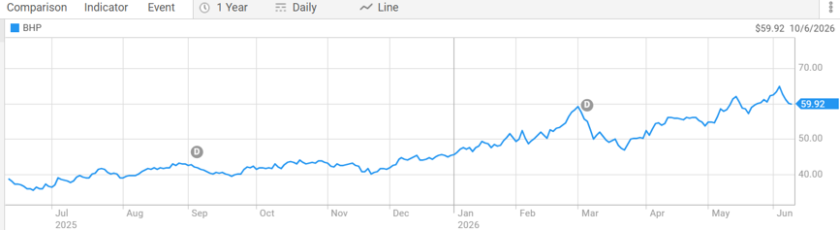
Figure 5: BHP (ASX: BHP) share price performance [Courtesy: ASX]
Future Direction: Impact on Investor Returns
If BHP delivers even half the total return over the next decade that it delivered over the past decade, A$10,000 invested today would grow to approximately A$30,000 by 2036. That projection is based on the Company’s own production growth targets, the structural demand outlook for copper, and the historical pattern of dividend contributions compounding alongside capital gains.
The impact here is most directly felt by long-term retail investors, self-managed super fund trustees, and income-focused shareholders who rely on BHP’s franked dividend stream. The copper transition changes the growth profile.
It also changes the earnings mix. Investors who held BHP through the darkest period of the 2016 commodity crash were rewarded. The question for today’s ASX investor is whether the same patience will be rewarded again.
ALSO READ: St George Mining Welcomes ATL as Shareholder Following Lithium Star JV Restructure
FAQ
Q1. What was the total return on A$10,000 invested in BHP shares ten years ago?
Ans. Approximately A$52,500, combining capital gains and cumulative dividends over the decade.
Q2. Why is copper now central to the BHP ASX share price forecast 10-years outlook?
Ans. Copper earnings exceeded iron ore for the first time in BHP’s history, driven by AI and electric vehicle demand.
Q3. What is the BHP stock long-term forecast Australia based on?
Ans. BHP seeks annual 3% to 4% growth in copper-equivalent production through to the end of the decade, underpinned by investments in major projects.
Q4. Who is taking over as BHP CEO?
Ans. Brandon Craig will assume the role of CEO on 1 July 2026, succeeding Mike Henry.
Disclaimer
This article is meant only for informational purposes. If you are an investor who is watching BHP closely, all the data published in the content is sourced from ASX announcements and external sources. Kindly verify all the information related to the share price and market data. Any investment should be made at the investor’s own risk. Colitco does not hold any position in the above-mentioned Company.
Sources
- https://cdn-api.markitdigital.com/apiman-gateway/ASX/asx-research/1.0/file/2924-03081111-3A691768&v=undefined
- https://www.asx.com.au/markets/company/BHP
- https://www.fool.com.au/2026/06/10/if-you-invested-10000-in-bhp-shares-10-years-ago-here-is-what-they-would-be-worth-today/

Luke Carlino is a seasoned Copywriter, Content Strategist, and Social Media Manager specialising in Mining, Finance, and Business journalism. With more than a decade of industry experience, he brings rigorous editorial standards and commercial acuity to every project.