BHP Group Limited (ASX: BHP) take centre stage in the eyes of investors. The stock peaked and then fell nearly 10 per cent within weeks.

Figure 1: BHP Group Limited corporate office and branding [Courtesy: FinNews Network]
That kind of swing gets attention. It’s also forcing a real conversation about BHP Group investment strategy 2026 Australia and where the stock goes from here.
What Happened With BHP Shares
BHP closed Monday at A$59.82, up 1.4 per cent. Zoom out and the stock is up roughly 63 per cent over the past year.
June itself was choppy. Shares touched a record A$65.59 mid-month, then slid back toward A$58.52. Copper sparked the rally. Profit-taking knocked it back down.
Why It Matters For Investors
Anyone tracking BHP stock forecast 2026 ASX needs to watch copper closely. This month the metal topped a multi-year high of more than US$6.6 per pound.
That demand is being driven by electric vehicles, solar panels and data centres. As copper goes, so too go diversified miners like BHP.
Renewed tensions in the Middle East and still-muted inflation have only injected further noise. And then add in plenty of profit-taking after such a big run, and the pullback begins to add up.
About BHP Group Limited
BHP Group is one of the world’s largest diversified resources Company. The company consists of iron ore, copper, nickel and potash mining operations around the globe.
BHP, headquartered in Melbourne, is valued at a market capitalisation of almost A$303.96 billion. Its operations stretch across Australia and the Americas, which is exactly why BHP Group’s investment strategy 2026 Australia matters well beyond local borders.
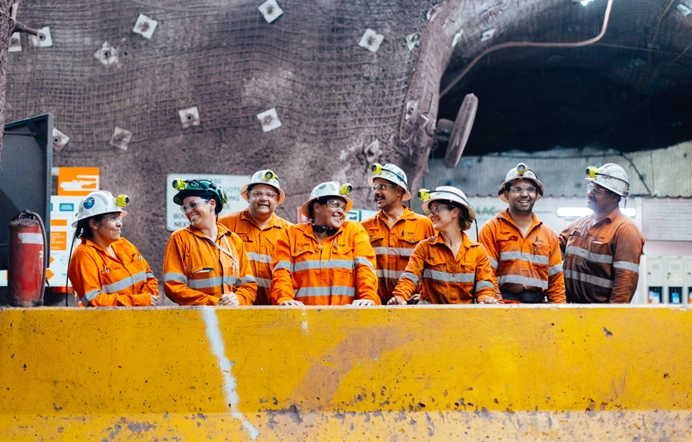
Figure 2: BHP employees at one of the Company’s mining operations [Courtesy: BHP Group]
The Company’s portfolio spans some of the world’s largest mining operations, including iron ore in Western Australia, copper in South Australia and Chile, and the developing potash business in Canada. That spread is part of what keeps BHP on watchlists even when individual commodity prices wobble.
Who Is Steering The Company
BHP confirmed a leadership shake-up that lands on 1 July 2026. Brandon Craig steps in as Chief Executive Officer and Director.
Craig moves up from President Americas. One of his first moves is splitting that role into two separate regional positions.
New Regional Leadership Structure
Jessica Farrell takes over as President North America from 1 July 2026. She’ll also act as President South America while BHP fills that seat permanently.

Figure 3: Jessica Farrell, incoming President of North America at BHP [Courtesy: The West Australian]
Edgar Basto shifts into a new Chief Enterprise Performance Officer role from 1 September 2026. Geraldine Slattery stays on as President Australia, now also covering Copper South Australia, which brings all of the Company’s Australian assets under one leader for the first time.
Why The Restructure Matters
Craig has framed these changes as building organisational capacity for BHP’s growth agenda. He’s pointed to a more complex operating environment, one where companies need to engage stakeholders and deploy capital with discipline.
For investors, the message is straightforward. BHP wants clearer accountability across regions as it pushes ahead with major projects like Jansen. Whether that will translate to faster decision-making is another question entirely.
BHP Resets Jansen Potash Investment Plan
BHP revealed on 18 Jun 2026 that there had been significant budget overruns at its Jansen Stage 2 Potash Project. The all-in cost goes from US$4.9 billion to US$6.9 billion.
First production is now delayed to late FY2031. BHP points to extra construction hours and higher material costs as the main culprits.
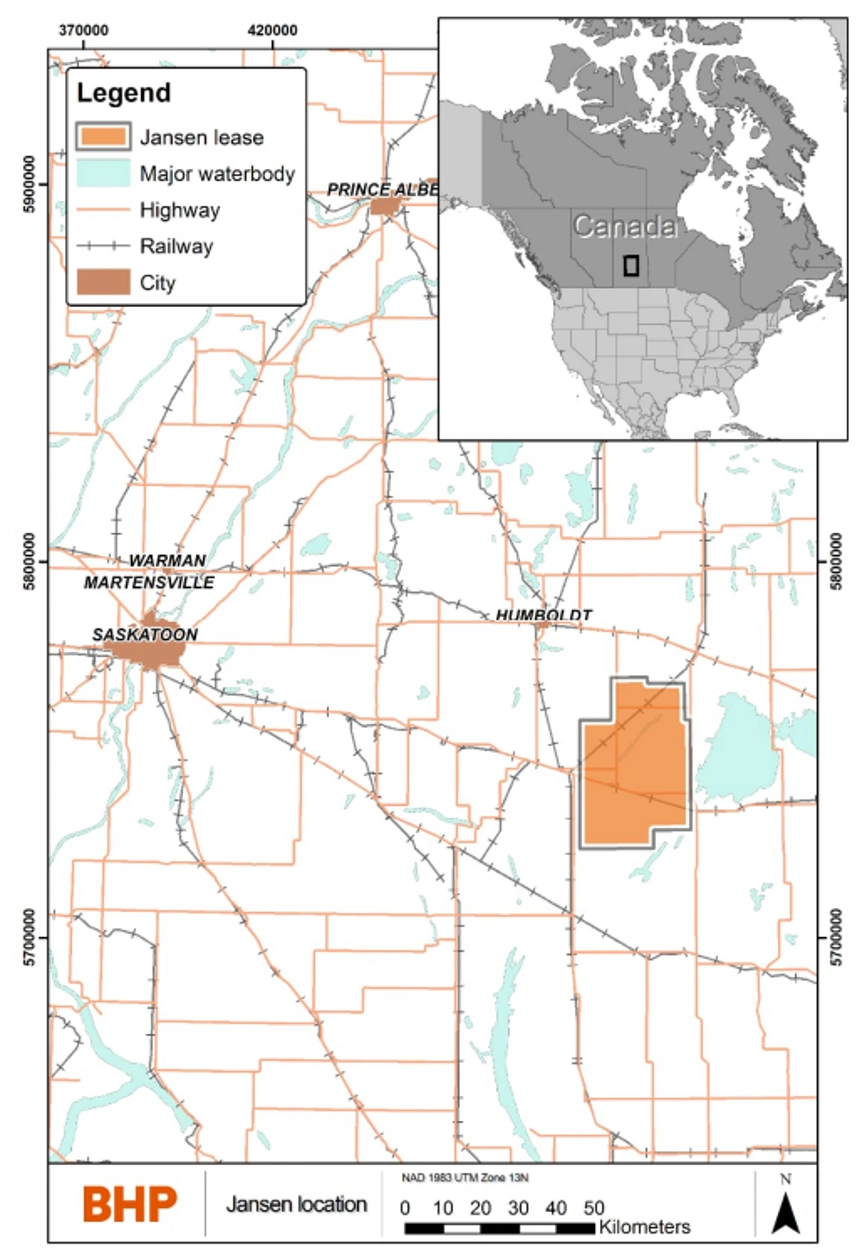
Figure 4: Location map of BHP’s Jansen Potash Project in Saskatchewan, Canada [Courtesy: BHP Group]
Impairment And Production Outlook
BHP also flagged an expected impairment charge of around US$2.3 billion tied to the Jansen Project. Higher capital intensity across both stages is behind that number.
Through the reset, BHP is also guiding to 8.5 million tonnes per annum from the integrated project combined. Group capital expenditure guidance for FY27 is also unchanged at around US$11 billion.
What Brokers Are Saying
Market Index data shows most brokers currently sit on a hold rating for BHP. The average target price of A$61.77 implies only modest upside from current levels.
TradingView paints a similar picture. Many analysts consider it a hold, though out of 18 ratings, 13 are Hold and four are strong buy. The average target of A$64.78 implies almost 8 per cent upside potential.
What stands out is the spread. Some analysts see BHP falling to A$40.97. Others think it could climb to A$94.51, more than 44 per cent above the all-time high it hit earlier in June. That’s a wide gap for a company this size, and it tells you just how much uncertainty is baked into commodity price assumptions right now.
BHP Share Price Snapshot
Here’s where things stand for anyone weighing a BHP share price prediction Australia:
- Last traded price: A$59.425 per share
- Market capitalisation: A$303.96 billion
- 52-week range: A$36.360 to A$65.980 per share
- Average broker target: A$61.77, around 3% upside
- Analyst forecasts range from A$40.97 to A$94.51 per share
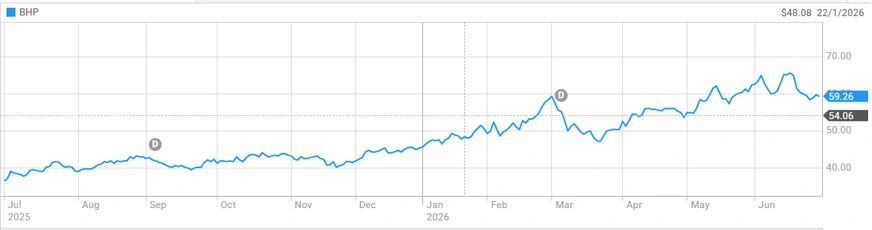
Figure 5: BHP Group Limited (ASX: BHP) one-year share price performance [Courtesy: ASX]
This ASX Mining update, and the spread between analyst targets, says a lot. Some see real downside risk. Others think there’s room to run.
Industry Outlook
Potash provides potassium, which is a critical element that really has no substitute. Demand growth is predicted at one to two per cent a year through 2050.
Copper demand keeps climbing too, pushed along by electrification and renewable infrastructure builds. That combination is part of why the broader BHP stock forecast 2026 ASX story is still in talks.
Future Direction And Impact On Shareholder Returns
For investors tracking the ASX, the real question is whether commodity prices hold steady through 2027. Copper, iron ore and potash are all subject to their own demand cycles.
Brandon Craig has talked about disciplined capital and reliable operations. Whether that translates into stronger returns will depend on execution, not just intent.
For now, BHP looks like a stock in transition. New leadership, a reset growth project and a share price still finding its footing after a record run.
Investors following the BHP Group investment strategy 2026 Australia will want to see how the new executive team deals with both the copper upside and potash cost overrun in the coming months.
FAQs
Q1. Is BHP a good stock to buy right now?
Ans. Currently, most brokers are on a hold rating, with minimal upside embedded.
Q2. Why did BHP shares spike in June?
Ans. A copper price rally pulled diversified miners like BHP higher.
Q3. Why is the Jansen Project costing more?
Ans. Extra construction hours and material costs pushed the budget up.
Q4. Who takes over as BHP’s CEO?
Ans. Brandon Craig becomes CEO and Director from 1 July 2026.
Disclaimer
This article is meant only for informational purposes. If you are an investor watching BHP Group Limited closely, all data published in this content is sourced from ASX announcements and external sources. Kindly verify all information related to share price and market data before making decisions. Any investment should be made at the investor’s own risk. Colitco does not hold any position in the above-mentioned Company.
Source
- https://cdn-api.markitdigital.com/apiman-gateway/ASX/asx-research/1.0/file/2924-03104170-3A696020&v=undefined
- https://cdn-api.markitdigital.com/apiman-gateway/ASX/asx-research/1.0/file/2924-03101647-3A695576&v=undefined
- https://www.asx.com.au/markets/company/BHP
- https://www.fool.com.au/2026/06/30/should-i-buy-bhp-shares-in-july/
- https://colitco.com/

Elizabeth Jones is a finance and mining content specialist with over 10 years of experience creating clear, SEO-driven content across fintech, investing, banking, insurance, cryptocurrency, and resource markets. She transforms complex financial data and industry trends into engaging, reader-focused articles that improve understanding and audience engagement.