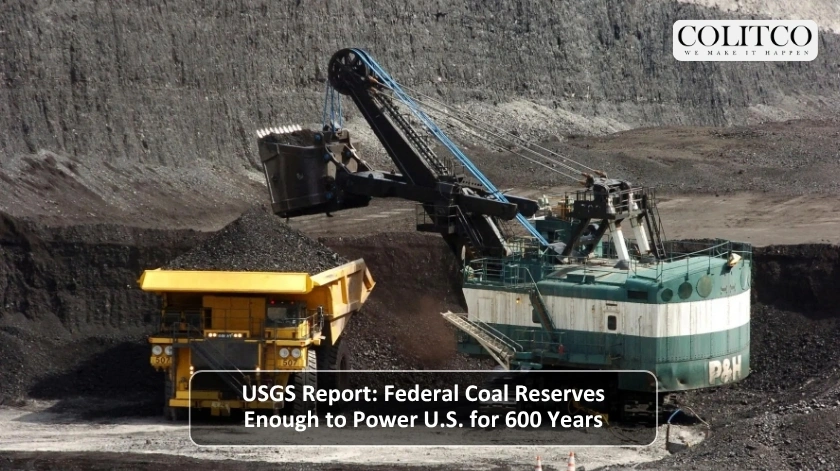
The U.S. Geological Survey released a comprehensive resource assessment detailing energy reserves on public lands. The assessment reveals that coal deposits beneath federally managed public lands contain sufficient energy to power the United States for 600 years at current consumption rates. The published survey documents 4.2 billion short tons of coal reserves that link directly to active mining operations.
The agency also identified an additional 356 billion short tons of available coal resources sitting in undisturbed geological formations across the conterminous United States. Federal officials compiled data across multiple government jurisdictions to measure total resource availability. This survey establishes a scientific baseline for energy planning and land management activities.
The Department of the Interior published these findings to clarify energy reserves across public domain properties. Researchers evaluated resource depth, seam thickness, and extraction accessibility during the analysis. The study combines geological mapping data with active mining production figures.

Figure 1: The U.S. Geological Survey’s report claims Federal Coal Reserves are enough for 600 years [Source: Drought.gov]
By The Numbers: Coal Reserves
- Active Reserves: Active federal mines hold 4.2 billion short tons of reported coal reserves.
- Available Resources: Federally managed lands contain 356 billion short tons of accessible coal resources.
- National Duration: Total federal deposits offer 600 years of power generation at present demand levels.
- Annual Output: Public land mines generated over 261 million short tons of coal during 2024.
Why This Matters to You
Energy generation directly impacts national grid stability and electricity prices for consumers across the country. Citizens rely on stable energy supplies to run residential homes, commercial businesses, and industrial facilities. The availability of long-term energy reserves influences long-term infrastructure investment decisions and municipal planning strategies.
Energy policymakers evaluate resource data when forming national security protocols and energy independence strategies. Coal production contributes tax revenue, royalty payments, and employment opportunities to regional economies. Local communities depend on mineral extraction activities to fund public school systems, road maintenance, and municipal emergency services.
The findings affect discussions surrounding carbon emissions, environmental stewardship, and renewable energy adoption rates. Industrial power producers balance reliability requirements against federal environmental regulations and state clean energy targets. Energy sector analysts track raw material availability to forecast future fuel costs and power generation costs.
Primary Reader Impacts
- Grid Reliability: Domestic coal reserves provide base-load fuel options for electrical utility networks.
- Economic Contributions: Federal coal royalties generate revenue for state treasuries and regional public infrastructure.
- Energy Security: Domestic resource abundance reduces dependence on international fuel imports.
- Policy Planning: Resource estimates guide future regulatory frameworks and resource management plans.
Key Players and Stakeholders
Secretary of the Interior Doug Burgum announced the report findings on behalf of the federal administration. President Donald Trump signed Executive Order 14261, which ordered the initial review of federal coal resources. Secretary Burgum stated: “American Energy Dominance is more important than ever, and so is beautiful clean coal’s role in the production of electricity needed to fuel our future prosperity”.
Secretary Burgum added: “Thanks to the USGS’s rigorous and independent assessment, we’re better equipped to manage America’s vast public lands responsibly while supporting energy security and economic opportunity”. Multiple federal agencies maintain oversight of the relevant public lands, including the Department of Agriculture, Department of Defense, Department of Energy, Department of the Interior, and the Tennessee Valley Authority. Scientists from the U.S. Geological Survey conducted the physical mapping and data aggregation work.

Figure 2: Secretary of the Interior Doug Burgum [Source: Britannica]
Private mining companies operate 34 active coal facilities under federal leases. Heavy equipment operators, logistics providers, and rail transport companies move the extracted coal to market destinations. Commercial energy utilities, steel producers, and manufacturing plants purchase the coal for power and manufacturing processes.
Key Stakeholder Groups
- Federal Executive Agencies: Department of the Interior, Department of Agriculture, Department of Defense, Department of Energy, and Tennessee Valley Authority manage the land holdings.
- Research Organisations:S. Geological Survey researchers analysed geological data and reserve volumes.
- Industrial Mining Operations: Private leaseholders manage 34 active surface and underground extraction sites on federal property.
- End-User Sectors: Electric utilities, metallurgical steel plants, and cement manufacturers consume federal output.
Geographic Breakdown
The mapped resources lie beneath federal public lands across the conterminous United States and Alaska. Western states hold the primary concentration of federal coal deposits west of the Mississippi River. Wyoming contains the highest density of federal coal operations in the nation.
Wyoming hosts 14 federal coal mines, representing 87 percent of all reported reserves tied to active federal leases. The Powder River Basin in Wyoming holds 180.9 billion short tons of available subbituminous coal, representing 50.75 percent of all available federal coal resources in the lower 48 states. The North Antelope Rochelle mine in the Powder River Basin contains 1.3 billion short tons of reported reserves, operating as the largest coal mine globally.
Other western states maintain active federal coal leases, including Colorado with six mines, North Dakota with four mines, and Utah with four mines. Montana hosts three active federal mines, while Alabama contains three active federal metallurgical coal mines. In Alaska, the USGS estimates at least 140 billion short tons of available resources, with potential total resources reaching 5.5 trillion short tons.
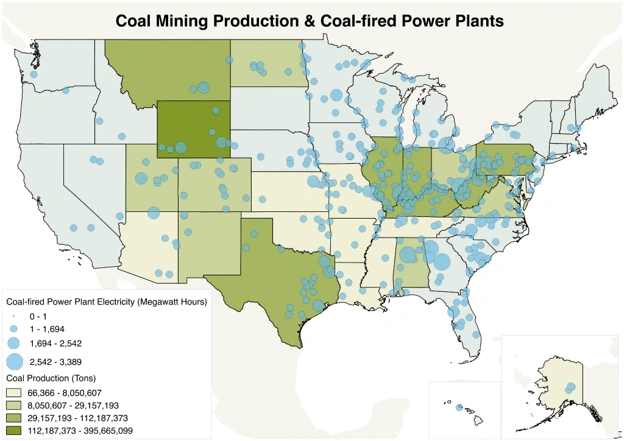
Figure 3: Geography of coal in the US [Source: Education | Nat Geo]
Regional Distribution Highlights
- Wyoming: Hosts 14 active mines and produces 188.3 million short tons annually.
- Colorado: Operates six active mines, including the King II facility supplying cement manufacturers.
- North Dakota and Utah: Maintain four active mines each, supplying regional electrical generation plants.
- Alabama and Montana: Host three active mines each, with Alabama focusing on metallurgical steel coal.
A Timeline of Developments
The Department of the Interior released the USGS report findings on 23 July 2026. The research data incorporates active production metrics from the 2024 calendar year. During 2024, active federal mines extracted over 261 million short tons of coal, representing 51.06 percent of total U.S. coal production.
The 2026 release follows Executive Order 14261, which initiated the national review process. In 2025, Interior Secretary Doug Burgum formally added metallurgical coal to the official List of Critical Minerals. The federal government updates coal reserve assessments periodically to reflect new drilling data and extraction technologies.
Also Read: Unico Silver 2026 Outlook: Australia Mining Growth & Investment Potential
Mining activity has occurred on federal lands for over a century under various leasing acts. The 2026 update provides current data following decades of changing energy consumption patterns. This evaluation timeline offers baseline metrics for future federal resource decisions over the coming decades.
Timeline of Key Events
- 2024 Production Year: Federal mines extracted 261 million short tons, representing over half of national output.
- 2025 Critical Mineral Action: Department of the Interior listed metallurgical coal as a strategic material.
- 2026 USGS Report Release: Department of the Interior published the comprehensive 600-year reserve estimate.
Looking Ahead: Next Steps and Strategy
Geologists conducted the resource assessment by combining field mapping data, core samples, and active mine reporting records. The USGS team categorized total deposits into active reported reserves and available unmined resources. Scientists applied current annual consumption rates to calculate the six-century resource lifespan estimate.
Moving forward, federal policy will shape lease approvals, environmental compliance checks, and land access rules. The Department of the Interior plans additional geological mapping programmes to measure unsurveyed regions in Alaska. Energy developers will determine extraction timelines based on power market demand, financial capital access, and regulatory approvals.
The deployment of these coal reserves will interact with existing national energy grid plans and environmental protection laws. Power generators will evaluate coal consumption alongside natural gas, nuclear, and renewable infrastructure investments. Market conditions, technological developments, and policy decisions will direct actual utilisation levels over time.
Implementation and Operational Factors
- Alaska Exploration: Geologists will execute expanded mapping programmes across northern resource fields.
- Federal Leasing Policies: Interior Department officials will process lease applications based on updated resource maps.
- Market Integration: Commercial power stations will balance coal usage against competing electricity sources.
- Environmental Oversight: Regulators will enforce compliance protocols across active and proposed mining locations.
Sources
- https://www.mining.com/us-estimates-federal-coal-could-power-nation-for-600-years/
Disclaimer: This article is for informational purposes only and does not constitute financial, investment, legal, or professional advice. The resource estimates provided in this report are based on data from the U.S. Geological Survey and reflect projections at the time of publication. Actual energy production, resource availability, and economic viability are subject to change due to regulatory shifts, market conditions, technological advancements, and environmental considerations. Readers should consult with qualified professionals before making any decisions based on the information presented herein.

Luke Carlino is a seasoned Copywriter, Content Strategist, and Social Media Manager specialising in Mining, Finance, and Business journalism. With more than a decade of industry experience, he brings rigorous editorial standards and commercial acuity to every project.