
FAA Launches AI-Driven Air Traffic Program
The U.S. Federal Aviation Administration has quietly launched a new artificial intelligence initiative to transform how the country manages its airspace. Officials confirmed the program on April 17, 2026, marking a significant step in the broader effort to modernize the nation’s aging air traffic control infrastructure.

The Federal Aviation Administration is introducing AI tools to improve airspace management and efficiency. [FAA]
The program carries the name Strategic Management of Airspace Routing Trajectories, widely referred to as SMART. FAA Administrator Bryan Bedford is personally leading the effort. He considers it a central pillar of the agency’s modernization and redesign strategy.
Three Companies Compete for the SMART Contract
The FAA has brought three companies into the competitive bidding process. Palantir Technologies, French defense and technology firm Thales, and Air Space Intelligence (ASI) are each vying for the contract. The agency structured the process as a competitive evaluation rather than a direct award.
Palantir Technologies, Thales Group, and Air Space Intelligence are competing for the FAA’s SMART contract. [1000 Logos]
Each company will develop its own version of the AI software tool. The FAA will then assess which approach best meets the agency’s operational and technical requirements. A formal announcement on SMART is expected around April 21, 2026.
What the SMART AI System Is Designed to Do
Today, air traffic controllers respond to conflicts and congestion as they arise. SMART aims to change that entirely. The system is designed to anticipate flight path conflicts and bottlenecks before aircraft even leave the ground.
Transportation Secretary Sean Duffy publicly acknowledged the initiative at a Washington conference on April 17. He described its capability in specific terms.
“We have three companies right now that are working with us on developing software to look at even how flights are managed. This software, as they look at the flight paths, won’t see [potential conflicts] 15 minutes before it happens… a controller will get a notice that they could change one of the airplane’s flight paths slightly and they can deconflict it an hour and a half or two hours before the conflict even happens.”
— Sean Duffy, U.S. Secretary of Transportation, April 17, 2026

Transportation Secretary Sean Duffy speaks on AI-driven air traffic control reforms during a policy discussion. [NPR]
Duffy also noted the software could help identify periods of heavy scheduled traffic. This would allow the FAA to take proactive steps to reduce congestion before it forms.
A Shift From Reactive to Predictive Air Traffic Management
Current air traffic control operations depend heavily on human controllers reacting in real time. That model has served aviation for decades, but officials say the system now faces strain. Controllers routinely work extended hours, and the U.S. is currently short approximately 3,500 air traffic professionals.
SMART represents a structural shift. Rather than responding to problems, the system feeds predictions to controllers well in advance. This approach reduces pressure on staff and reduces the risk of errors during peak traffic periods.
Billions Committed — But More Funding Required
Congress has already allocated $12.5 billion for the broader ATC modernization program. However, FAA officials have stated the complete overhaul will require approximately $20 billion more. The funding gap remains a significant challenge for long-term planning.
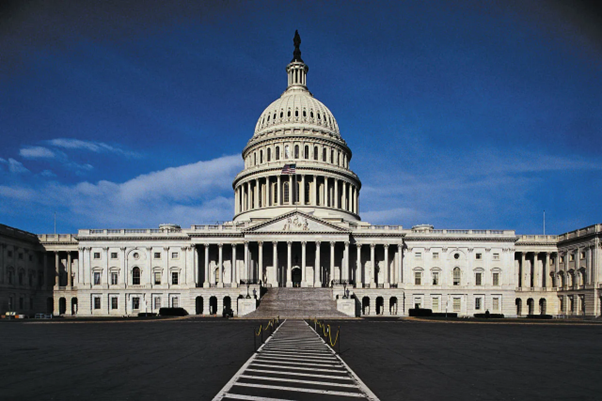
Congress has allocated $12.5 billion for modernization, though significant funding gaps remain. [Britannica]
The One Big Beautiful Bill, passed earlier this year, directed more than $12 billion specifically toward air traffic control modernization. The FAA plans to commit roughly half of its available budget by the end of fiscal year 2026. Immediate priorities include replacing aging copper circuits with fiber optics and upgrading telecommunications and air surveillance systems.
Palantir’s Expanding Government Portfolio
The FAA bid adds to a strong week for Palantir. The data analytics company also secured a $10 billion U.S. Army contract, cementing its position as a major government technology supplier. The company is not classified as a pure defense contractor, and the FAA opportunity reflects its push into civil government work.
Analysts reacted positively. Palantir shares rose approximately 2.5% following the news. Morgan Stanley noted the company is in a strong position heading into its Q1 2026 earnings release. The company’s own forecast targets Q1 revenue of approximately $1.53 billion, with full-year revenue projected to exceed $7.19 billion.
SMART Could Be Operational by the End of 2026
According to sources familiar with the initiative, SMART could reach an operational stage in some capacity before the end of this year. The timeline is aggressive, reflecting both the urgency of the modernization effort and the current political focus on aviation safety.
The FAA has faced sustained pressure to act following a string of aviation close calls and incidents in recent years. Administrator Bedford has committed to ensuring modernization does not repeat the delays and cost overruns of earlier upgrade programs.
What Comes Next for U.S. Air Traffic Modernization
- The Federal Aviation Administration is expected to release more details on the SMART program during a press event on April 21, 2026.
- The outcome of the three-way competition between Palantir Technologies, Thales Group, and Advanced Simulation International will likely influence how U.S. airspace is managed for years to come.
- A win for Palantir Technologies would mark a significant entry into large-scale civilian aviation infrastructure.
- For the Federal Aviation Administration, choosing the right partner is crucial not only from a technological standpoint but also politically.
- The decision is under close scrutiny from Congress and the public, given the scale and importance of the modernization effort.
Also Read: Oil Prices Fall as Iran Reopens Strait of Hormuz – Colitco
FAQS
Q1: What is the FAA’s SMART program?
A1: The SMART (Strategic Management of Airspace Routing Trajectories) program is an AI-driven initiative by the FAA designed to predict and prevent air traffic congestion and flight path conflicts before they occur.
Q2: Which companies are competing for the FAA SMART contract?
A2: Three companies are competing for the contract: Palantir Technologies, Thales, and Air Space Intelligence (ASI).
Q3: How will AI improve air traffic control under SMART?
A3: The AI system will analyze flight paths in advance and alert controllers to potential conflicts up to two hours before they happen, enabling proactive adjustments.
Q4: How much funding has been allocated for FAA modernization?
A4: Congress has allocated $12.5 billion for air traffic control modernization, but the FAA estimates an additional $20 billion is still needed.
Q5: Why is the FAA modernizing its air traffic control system?
A5: The FAA aims to reduce congestion, improve safety, and ease pressure on air traffic controllers amid staffing shortages and rising flight volumes.
Q6: When could the SMART system become operational?
A6: The FAA is targeting initial operational capability for the SMART system by the end of 2026.
Q7: What would winning the FAA contract mean for Palantir?
A7: A win would expand Palantir’s presence into civilian aviation infrastructure and strengthen its role as a major government technology provider.
Disclaimer
This article is published by Colitco for informational and journalistic purposes only. It is based on publicly available information, including statements from the Federal Aviation Administration (FAA) and other credible sources at the time of writing. The content does not constitute financial, investment, or legal advice. Colitco makes no representations or warranties regarding the completeness or accuracy of the information, and readers are advised to conduct their own research before making any decisions based on this material.
Sources