
Askari Metals Limited (ASX: AS2) (“Askari” or the “Company”) has commenced a significant Phase I field exploration program at its wholly owned EPL 7626 licence within the Uis Project in Namibia, marking another important step in the Company’s broader strategy to unlock high-value polymetallic mineralisation across Southern Africa.
The latest campaign targets tin and tantalum mineralisation while also advancing the Company’s exposure to lithium, rubidium and caesium within one of Namibia’s most prospective pegmatite corridors. The announcement reinforces Askari Metals’ growing exploration momentum at Uis, an area strategically positioned adjacent to the operating Uis Tin Mine owned by Andrada Mining.
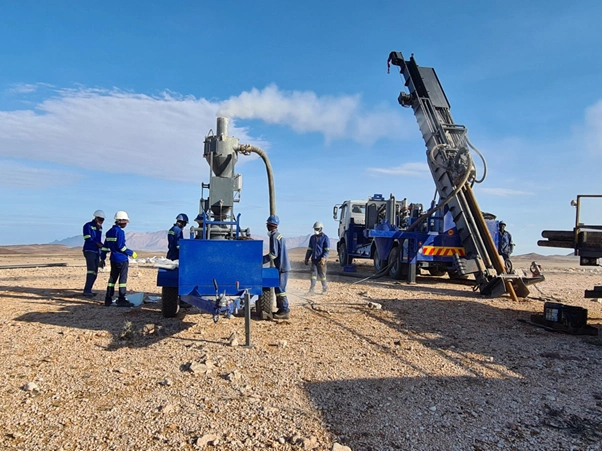
Figure 1: Drill rigs in operation at the Uis Polymetallic Project. [Source: Askari Metals Limited]
Phase I Program Commences at EPL 7626
Askari Metals confirmed that the Phase I field program has officially commenced at EPL 7626 in the Erongo Region of central-west Namibia. The licence forms part of the broader Uis Project, which the Company believes holds strong potential for polymetallic mineralisation, including tin, tantalum, rubidium, caesium and lithium.
The program will include:
- Geological mapping
- Rock chip sampling
- A licence-wide geochemical soil sampling campaign
The Company designed the exploration campaign to identify buried lithium-caesium-tantalum (LCT) pegmatites across the licence area. Management believes the low-cost, high-impact soil sampling strategy will help define high-priority drill and trenching targets for future exploration programs.
EPL 7626 sits directly adjacent to the operating Uis Tin Mine, which hosts a substantial JORC-compliant Mineral Resource Estimate of 77.51Mt at 0.79% Li2O, 0.15% tin and 82 ppm tantalum. The proximity to this established mineral system significantly enhances the prospectivity of Askari’s ground position.
Advanced Remote Sensing Strengthens Exploration Confidence
A key feature of the exploration strategy involves Askari Metals’ in-house remote sensing and hyperspectral targeting methodology. The Company completed an extensive remote sensing study over EPL 7626, which identified lithological zones displaying spectral signatures consistent with tin-tantalum pegmatite-hosting mica schists previously mapped on the neighbouring EPL 7345 licence.
Management believes these same mineralised structures extend north-eastward from EPL 7345, through the Uis Tin Mine and onto EPL 7626 beneath surface cover.
The Company utilised Sentinel-2 multispectral satellite imagery and Principal Component Analysis (PCA) to improve geological interpretation and highlight subtle mineralogical variations across the licence area. According to the announcement, the technique significantly improved the visibility of lithological units, regolith domains and structural trends that may host concealed pegmatites.
Executive Director Gino D’Anna highlighted the importance of the Company’s in-house technical capabilities, stating:
“The in-house re-processing of high-resolution satellite imagery and the development of our remote sensing hyperspectral methodology has allowed us to optimise our desktop targeting technique for the Uis project.”
He added:
“Our optimized hyperspectral technique accurately defines all outcropping and sub-outcropping pegmatites on the project, and clearly delineates the different regolith domains, which is important for our upcoming sampling surveys.”
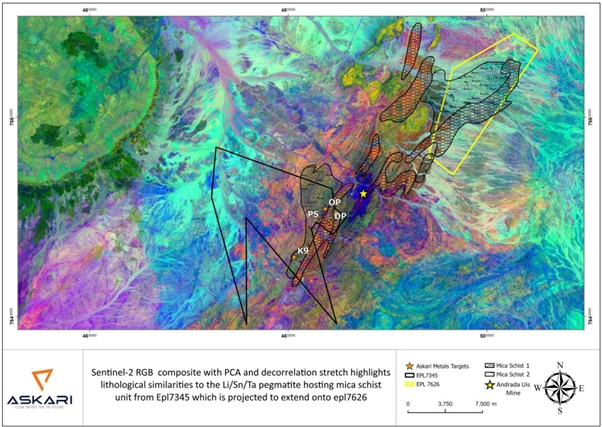
Figure 2: Sentinel-2 RGB composite imagery enhanced with PCA and decorrelation stretch techniques reveals lithological similarities and suggests potential geological extensions into EPL 7626. [Source: Askari Metals Limited]
Extensive Soil Sampling Campaign Underway
The Company has established a large-scale 400m x 40m soil sampling grid across EPL 7626. The program covers approximately 68 square kilometres and includes 4,258 planned soil samples.
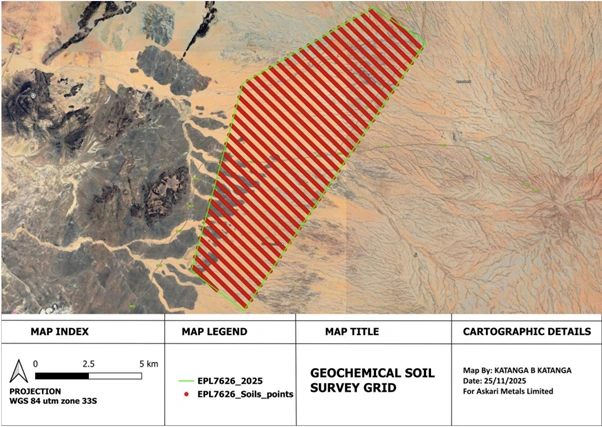
Figure 3: Map outlining the soil sampling program conducted across a 400m x 40m grid spacing. [Source: Askari Metals Limited]
Askari Metals designed the grid spacing to provide a balance between broad regional coverage and the resolution necessary to detect geochemical anomalies linked to buried pegmatites. The sampling program specifically targets tin and tantalum anomalies associated with concealed LCT pegmatite systems.
The soil grid orientation also aligns perpendicular to the regional geological trend, which management believes will maximise the effectiveness of anomaly detection.
Importantly, the exploration strategy leverages the Company’s on-site analytical infrastructure. Askari Metals will process samples using its in-house LIBS (Laser-Induced Breakdown Spectroscopy) system and pellet press equipment, allowing for rapid and cost-effective analysis directly at the site.
Mr D’Anna commented:
“With the Company’s pellet press and LIBS machines on site at Uis, the Company will be able to ensure a much quicker assay turnaround time.”
He further noted:
“Our exploration at EPL 7626 will then be expanded through systematic trenching to test the high priority areas identified through the planned soil geochemical survey.”
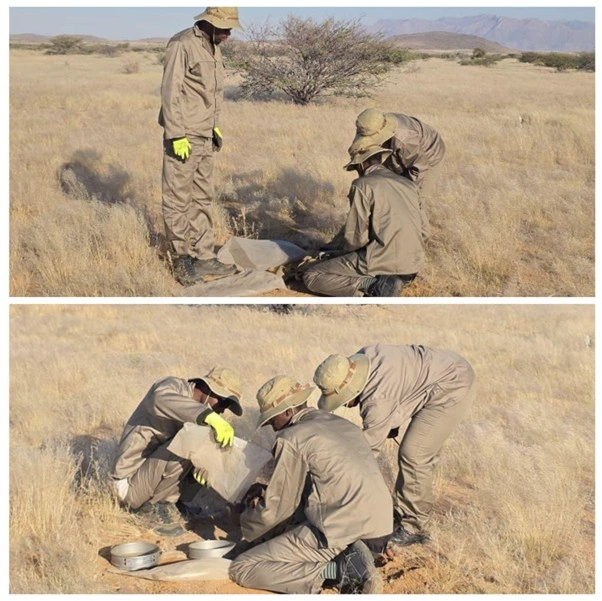
Figure 4: Top: Field team at EPL 7626 collecting sieved soil samples during the sampling campaign. Bottom: Field team at EPL 7626 weighing sieved soil samples prior to bagging and preparation for analysis using XRF, LIBS and pellet press equipment. [Source: Askari Metals Limited]
Building a Pipeline of Pegmatite Targets
Askari Metals stated that its refined hyperspectral targeting model has already generated several new pegmatite targets across its broader Uis landholding. These include the MW, Eve, GP and K10 targets on EPL 7345, as well as the Tawny, Martial and Zebedeus 1 prospects on EPL 8535.
Management now intends to apply the same exploration methodology at EPL 7626 to identify potentially concealed pegmatite systems beneath surface cover.
The Company believes the geological setting supports this interpretation. The Uis Project lies within the Cape Cross-Uis Pegmatite Belt, a region known for extensive pegmatite mineralisation and historical tin production. The project area reportedly hosts more than 80 mapped pegmatites, many of which were historically mined for tin and semi-precious stones.
Geological descriptions in the release indicate the region contains mineral assemblages rich in cassiterite, spodumene, tantalite, columbite and tourmaline, supporting the area’s potential for both critical minerals and battery metals.
Multiple Catalysts Expected Over Coming Months
The Company expects the full Phase I program, including receipt of exploration data and results, to conclude within approximately three months.
Following completion of the soil geochemical campaign, Askari Metals plans to advance several additional exploration activities across the Uis Project, including:
- Second-phase infill soil sampling on EPL 7626
- First-phase trenching on EPL 7626
- First-phase trenching on EPL 8535
- RC drilling on EPL 7345
- Second-phase trenching on EPL 7345
Mr D’Anna emphasised the strong news flow expected from the project in the near term, stating:
“The next few months promises a steady flow of news from Uis, while we simultaneously progress our Ethiopian copper and gold strategy with a focus on the exploration and development of the advanced Nejo Project.”
Investors’ Outlook
Askari Metals (ASX: AS2) continues to position itself as an emerging African-focused critical minerals and precious metals explorer with exposure to multiple high-potential jurisdictions. The commencement of the Phase I program at EPL 7626 strengthens the Company’s exploration footprint within the highly prospective Uis pegmatite district in Namibia.
The Company’s use of advanced remote sensing techniques, combined with rapid in-house analytical capabilities, may provide a competitive advantage in accelerating target generation and reducing exploration timelines. The strategic location of EPL 7626, adjacent to the operating Uis Tin Mine, further enhances the geological significance of the project.
Investors are likely to monitor several upcoming catalysts closely, including initial soil geochemistry results, trenching outcomes and future drilling campaigns across the Uis Project.
At the same time, Askari Metals continues progressing its advanced Nejo copper-gold project in Ethiopia, providing the Company with diversified commodity exposure across both battery metals and precious metals.
Share Price Activity (ASX)
- Last Price: $0.009
- 1 Year Performance: +36.71%
- vs ASX 200 (1yr): +33.30%
- Market Capitalisation: $6.94 million
With multiple exploration programs advancing simultaneously and a steady pipeline of news expected over the coming months, Askari Metals appears positioned for an active and potentially transformational period in 2026.
Disclaimer
This editorial was developed in collaboration with Askari Metals Limited, a Colitco client at the time of publishing. The information contained in this article is provided for informational purposes only and does not constitute financial advice, investment recommendation, or an offer to buy or sell securities. The views expressed are based on publicly available information and company announcements available as of 26 May 2026. Investors should conduct their own independent research and consult a licensed financial adviser before making any investment decisions regarding Askari Metals Limited or any other securities.