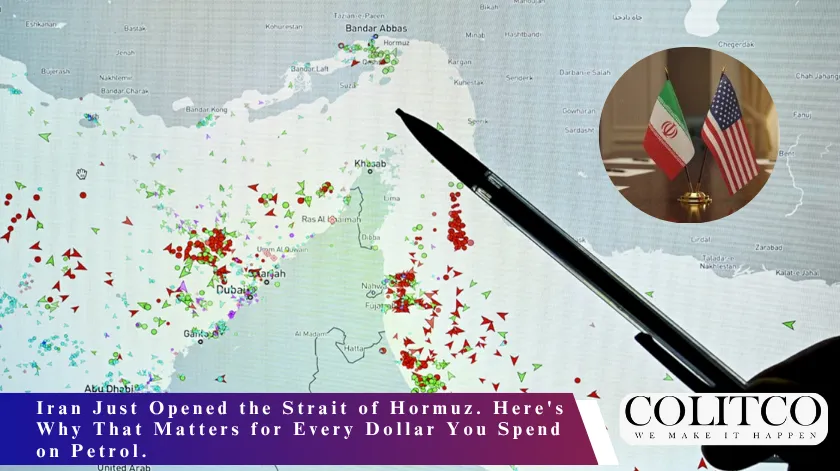
The announcement came from Iranian Foreign Minister Abbas Araghchi on Friday, 17th April 2026, via a post on X. Araghchi wrote that commercial vessel passage through the strait is “declared completely open for the remaining period of ceasefire, on the coordinated route as already announced by Ports and Maritime Organisation of the Islamic Rep. of Iran.”
Markets moved fast. Oil prices plunged on the news, while stocks surged higher. The declaration tied the reopening directly to a freshly brokered ceasefire between Israel and Lebanon, with Iran framing the two as linked diplomatic steps.
In line with the ceasefire in Lebanon, the passage for all commercial vessels through Strait of Hormuz is declared completely open for the remaining period of ceasefire, on the coordinated route as already announced by Ports and Maritime Organisation of the Islamic Rep. of Iran.
— Seyed Abbas Araghchi (@araghchi) April 17, 2026
Iran Lifts Its Blockade of the World’s Most Vital Oil Route
Shipping traffic through the Strait of Hormuz has been largely blocked by Iran since 28th February 2026, when the United States and Israel launched an air war against Iran under Operation Epic Fury, targeting military facilities, nuclear sites, and leadership.Wikipedia
Iran’s response was swift and severe. The Islamic Revolutionary Guard Corps announced the strait was closed. Any vessel attempting to cross it faced attack.
The move sent oil prices soaring above USD 100 per barrel from a pre-war price of about USD 65.
The disruption was the largest oil supply shock in modern history. Before the conflict, about 25% of the world’s seaborne oil trade and 20% of the world’s liquefied natural gas (LNG) passed through the strait daily.
What the blockade affected globally:
- 84% of crude oil through the strait went to Asian markets before the war
- China received roughly a third of its total oil supply via the route
- Europe sourced 12% to 14% of its LNG from Qatar through the strait
- Up to 30% of internationally traded fertilisers transited the waterway
Australia, which imports around 90% of its refined fuel products, felt the pressure almost immediately through higher petrol prices at the bowser.
Oil Prices and Global Energy Markets
The reopening has significant implications foroil prices and the energy sector globally.
International benchmark Brent crude had surged nearly 5% to close at USD 99.39 per barrel on 16th April, while West Texas Intermediate rose almost 4% to settle at USD 94.69 per barrel as traders feared the ceasefire would collapse before any deal was reached.
Friday’s announcement reversed that sentiment immediately.
The question now is how long the opening holds. Araghchi’s statement was explicitly limited to “the remaining period of the ceasefire,” suggesting the strait’s status remains tied to the diplomatic situation. President Donald Trump hailed the news and thanked Tehran, but said the U.S. blockade of Iranian ports “will remain in full force” until the two sides reach a peace deal.
That tension creates a fragile situation. Shipping companies are weighing the reopening announcement against a separate risk: the latest purported guidance from Iran also warns of anti-ship mines in the main traffic lane, while the IRGC continues to vet traffic based on geopolitical affiliation.
Iran, the US, and a Fractured Diplomatic Field
The ceasefire and reopening come after weeks of frantic diplomacy. Pakistan mediated key talks. France and Britain announced a virtual summit on 17th April, bringing together 40 countries to discuss restoring freedom of navigation.
French president Emmanuel Macron and British prime minister Keir Starmer announced they were holding an online meeting on 17 April for countries interested in being involved in a “defensive multilateral mission” to maintaining the Strait open.
France’s Defence Minister Catherine Vautrin confirmed European mine-clearing capabilities are available. “There are capabilities to provide fully supported escort services for ships to ensure safe passage through the strait,” she said.
Iran’s position remains firm on one point: it controls the key. Tehran’s deputy foreign minister said the country rejects any temporary ceasefire and is seeking a comprehensive end to the war across the region, including Lebanon.
The 33-Kilometre Chokepoint That Controls Global Energy
The Strait of Hormuz sits between Iran and Oman at the mouth of the Persian Gulf. At its narrowest point, it is just 33 kilometres wide, yet it carries a quarter of the world’s oil.
There is no realistic alternative route at scale. Oman’s ports at Duqm, Salalah, and Sohar have been used by some vessels to bypass the choke point, but capacity is limited and transit times are far longer.
For ASX-listed energy stocks and Australian consumers, the strait’s status has been the single most watched variable in global energy markets since late February.
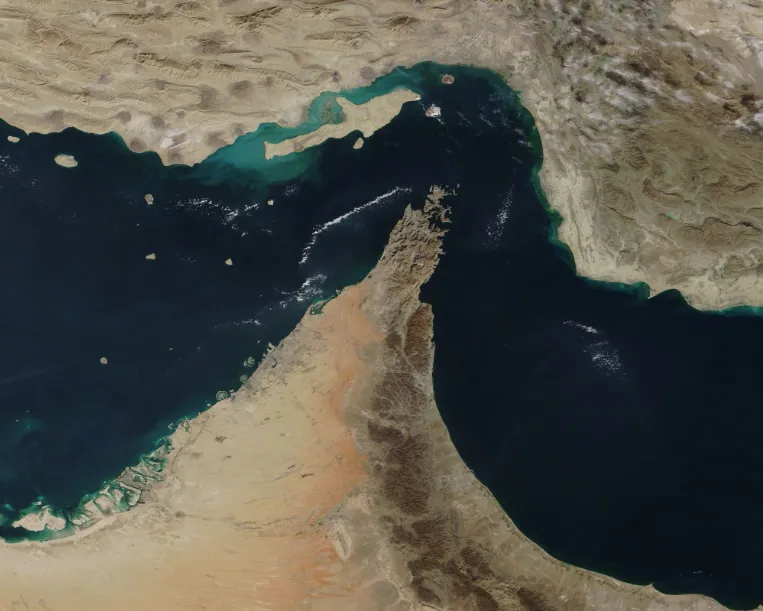
The Strait of Hormuz, at its narrowest point just 33 kilometres wide, carries a quarter of the world’s seaborne oil trade. [Wikipedia]
A Crisis That Began on 28th February 2026
The timeline moved quickly once the initial strikes were launched.
- 28th February 2026: US and Israel launch Operation Epic Fury against Iran
- 2nd March 2026: IRGC formally closes the strait; oil prices spike above USD 100
- 26th March 2026: Iran allows ships from China, Russia, India, Iraq, and Pakistan to transit
- 7th April 2026: Trump announces a two-week ceasefire contingent on the strait’s opening
- 12th April 2026: US-Iran peace talks in Pakistan collapse; Trump announces naval blockade of Iranian ports
- 17th April 2026: Iran declares the strait completely open, tied to the Israel-Lebanon ceasefire
Mines, Blockades, and a Deal Not Yet Done
Iran’s reopening is conditional and comes with caveats. Ships must use a coordinated route approved by Iran’s Ports and Maritime Organisation. The coordinated route requirement effectively gives Tehran ongoing oversight of traffic.
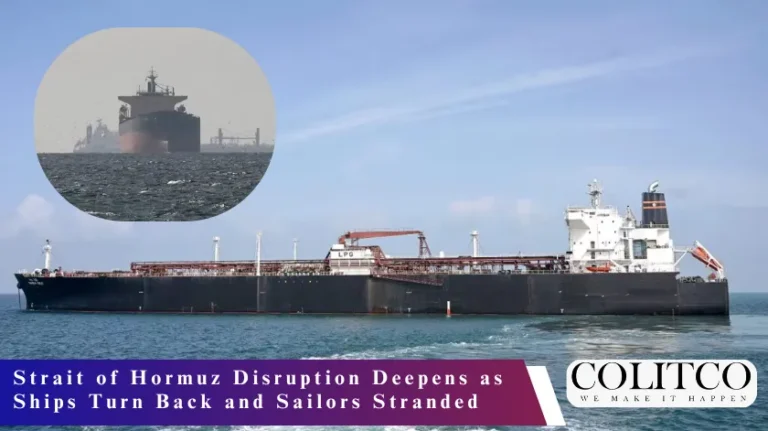
Since the start of the conflict, at least 25 commercial vessels have been hit in the strait, plus four near misses. War-risk insurance premiums soared during the blockade and have not returned to pre-war levels.
The impact onAustralian markets and consumers will depend on how quickly tanker operators restore normal transit patterns and how long the ceasefire holds.
Trump’s insistence on keeping the US naval blockade of Iranian ports in place adds another layer of uncertainty. Oil can flow out of the Gulf, but Iran’s export terminals remain under pressure.
Also Read: Rio Tinto Just Made Its Biggest Kitimat Investment in a Decade
FAQ
Q: What is the Strait of Hormuz?
A: The Strait of Hormuz is a narrow sea passage between Iran and Oman that connects the Persian Gulf to the Gulf of Oman and the Arabian Sea. It is the world’s most critical oil shipping route, carrying roughly 25% of the world’s seaborne oil and 20% of global LNG before the 2026 crisis.
Q: Why did Iran close the Strait of Hormuz?
A: Iran closed the strait in retaliation for coordinated US and Israeli airstrikes launched on 28th February 2026 under Operation Epic Fury, which targeted Iranian military facilities, nuclear sites, and leadership, including the death of Supreme Leader Ali Khamenei.
Q: How did the Strait of Hormuz closure affect oil prices?
A: Oil prices jumped from around USD 65 per barrel before the war to above USD 100 per barrel within days of the closure, marking the largest oil supply disruption in modern history.
Q: Is the Strait of Hormuz safe for shipping now?
A: Iran’s foreign minister declared the strait completely open for commercial vessels on 17th April 2026. However, concerns remain about anti-ship mines in the main traffic lane and the conditional nature of the reopening, which is tied to the duration of the ceasefire.
Q: What does the US naval blockade mean for the strait?
A: The US naval blockade applies specifically to Iranian ports and coastal areas, not to all shipping through the strait. US Central Command clarified it will not impede freedom of navigation for vessels transiting to and from non-Iranian ports.
Q: How does the Hormuz situation affect Australia?
A: Australia imports about 90% of its refined fuel products. Higher oil prices from the blockade flowed through to higher petrol prices for Australian consumers and weighed onASX 200 energy stocks. A sustained reopening would ease pressure on fuel costs.
Disclaimer: This article is for informational purposes only and does not constitute financial or investment advice. Readers should seek independent advice before making any investment decisions.
Source:
- https://www.cnbc.com/2026/04/17/iran-war-hormuz-strait-israel-lebanon-ceasefire.html
- https://www.wsj.com/livecoverage/iran-war-us-talks-2026