
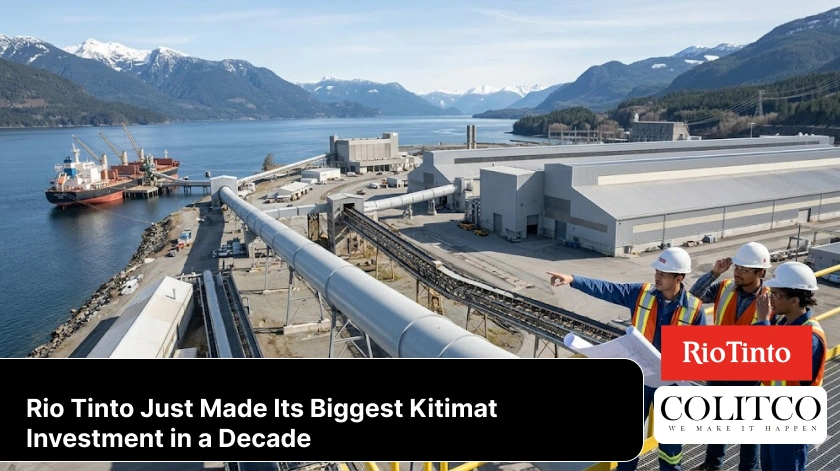
Rio Tinto has commissioned a new alumina conveyor at its BC Works smelter in Kitimat, British Columbia, completing a CAN$135 million project that marks the facility’s most substantial capital spend since its smelter modernisation roughly ten years ago.
The 1.1-kilometre sealed-pipe system will carry approximately 800,000 tonnes of alumina per year and is built to last 50 years. It replaces ageing infrastructure that dates to the 1960s.
New Conveyor Replaces Six-Decade-Old Infrastructure at Kitimat
The old conveyor had been part of BC Works since the early years of the Kitimat operation. Rio Tinto first switched on the smelter and its Kemano Powerhouse in July 1954. The facility has been running continuously for more than 70 years.
The replacement was not just about age. The new system is designed around a sealed pipe configuration, which changes how alumina is handled across the entire raw material supply chain at the site.
By containing the alumina inside a closed pipe and reducing the number of transfer points, the design achieves a 40% cut in particulate emissions compared to the previous open system. High-efficiency dust collectors support this further, and any recovered alumina is fed back into the smelting process rather than lost as waste.
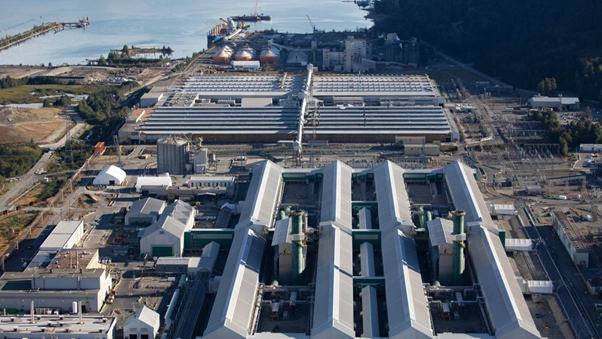
Rio Tinto’s BC Works aluminium smelter in Kitimat, British Columbia, the site of the newly commissioned alumina conveyor system. [Rio Tinto]
What the Kitimat Alumina Conveyor Commissioning Means for Operations
BC Works General Manager Simon Pascoe described the project as a key marker for the operation’s long-term future.
“This project is a key milestone for Kitimat and a strong signal of our confidence in the future of our operations,” Pascoe said, adding that the conveyor “strengthens a critical part of our smelter and is built to support reliable performance for decades to come.”
The Kitimat smelter is one of the lowest-cost aluminium producers in the world. It is powered entirely by clean, renewable hydropower from the 896 megawatt Kemano Powerhouse. That energy profile gives the facility a significant carbon advantage over coal or gas-powered smelters in other parts of the world.
In 2023, the BC Works operation contributed $517 million to the British Columbia economy and supported more than 1,100 direct employees and 400 indirect contractors in the Kitimat region.
A Major Infrastructure Upgrade Against a Broader Strategic Backdrop
The conveyor commissioning comes as Rio Tinto manages a wider operational review across its global aluminium portfolio.
Last year, the company announced production cuts at its Yarwun alumina refinery in Queensland, citing the cost and scale of developing a second tailings facility as a key reason. That decision affected around 180 roles and drew scrutiny over the long-term economics of ageing Australian refinery assets.
The Kitimat decision points in a different direction. Rather than pulling back, Rio Tinto is committing infrastructure capital for a 50-year time horizon at a smelter that already operates at the competitive edge of the industry.
The investment also fits within the company’s broader cost reduction and restructuring program, which has targeted hundreds of millions in productivity savings since late 2025 under CEO Simon Trott.
Environmental Gains from Sealed Pipe Design
The move to a sealed-pipe conveyor is a meaningful environmental upgrade for a site with a significant industrial footprint.
Key environmental improvements from the new system include:
- 40% reduction in particulate emissions through full enclosure of transported alumina
- Fewer transfer points, which cuts dust release during material handling
- High-efficiency dust collectors integrated throughout the system
- Recovered alumina reintroduced into the smelting process, reducing raw material waste
Rio Tinto’s Kitimat smelter previously completed a major modernisation project that resulted in twice the aluminium output with one-third of the electricity and half the emissions of the previous plant. The new conveyor builds on that environmental trajectory.
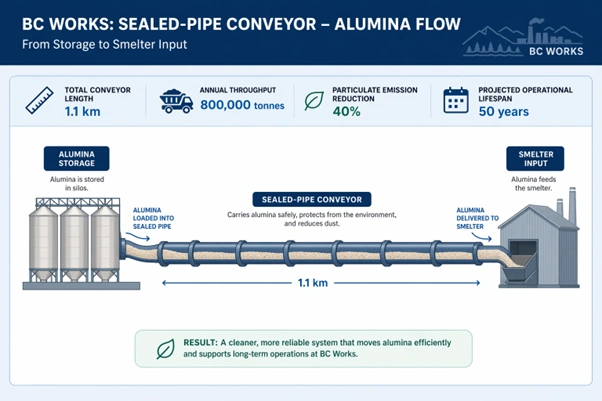
Key metrics of the new alumina conveyor system at Rio Tinto’s BC Works, Kitimat.
Kitimat’s Role in Rio Tinto’s Aluminium Portfolio
BC Works is the only aluminium smelter operator in British Columbia and has established itself as a cornerstone of the local economy and a leader in responsible, high-quality aluminium production.
The facility holds certification from the Aluminium Stewardship Initiative (ASI), the internationally recognised standard for responsible environmental, social and governance performance in the aluminium sector.
Rio Tinto’s aluminium segment reported a 38% rise in EBITDA in its most recent full-year results, reflecting stronger prices and improved operational performance. The Kitimat investment signals the company’s intent to protect that operational foundation for the long run.
Also Read: Wright Family Walks Away with Royalties in One of Australia’s Biggest Mining Legal Battles
Frequently Asked Questions
Q: What is the new Rio Tinto conveyor at Kitimat used for?
A: The new conveyor transports alumina, the raw material used in aluminium production, from storage to the smelter at Rio Tinto’s BC Works facility in Kitimat, British Columbia. It carries approximately 800,000 tonnes of alumina per year through a 1.1-kilometre sealed-pipe system.
Q: How much did Rio Tinto invest in the Kitimat conveyor commissioning?
A: Rio Tinto invested more than CAN$135 million in the new alumina conveyor at Kitimat. The company describes it as the most significant investment at the BC Works operation since the smelter’s modernisation around a decade ago.
Q: What are the environmental benefits of the new Kitimat alumina conveyor?
A: The sealed-pipe design reduces particulate emissions by 40% compared to the old open system. It also cuts the number of transfer points, uses high-efficiency dust collectors, and recycles recovered alumina back into the smelting process.
Q: How long has Rio Tinto operated in Kitimat?
A: Rio Tinto has operated in Kitimat for more than 70 years, with the BC Works smelter and Kemano Powerhouse originally commissioned in July 1954.
What does BC Works produce and how is it powered?
A: BC Works produces primary aluminium at a capacity of approximately 420,000 metric tonnes per year. The smelter is powered entirely by clean, renewable hydropower from the 896 megawatt Kemano Powerhouse, making it one of the lowest-carbon aluminium producers in the world.
Disclaimer: This article is for informational purposes only and does not constitute financial or investment advice. Colitco accepts no responsibility for any loss or damage arising from reliance on the information contained herein. Readers should seek independent financial advice before making any investment decisions.
Sources:


