

Energy markets worldwide are pivoting fast. The crude oil price in Australia today mirrors a jump in Middle East risk. Benchmark contracts finally broke a harsh two-week losing streak.
Market traders are watching this conflict closely and it is escalating. Brent crude futures fell 2.3 percent on Friday. They officially settled at $92.89 a barrel. US West Texas Intermediate fell 3 per cent to $90.25 a barrel.
Weekly gains reveal a totally different narrative despite Friday’s dip. Brent futures managed to add 0.9 per cent overall. WTI climbed 3.2 per cent as severe geopolitical fears gripped investors.
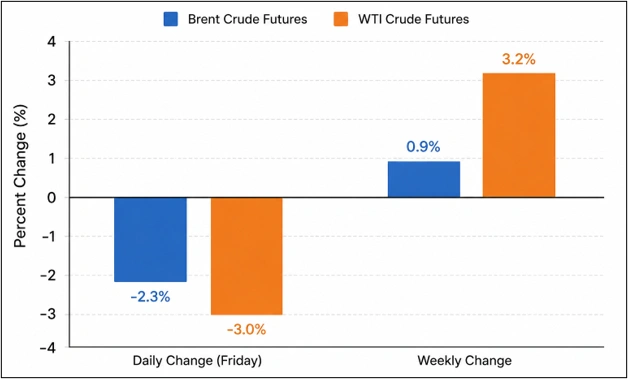
Fig 1: Brent and WTI Crude oil price movement [Colitco]
International supply routes now face serious operational hazards. This fresh volatility highlights our fragile global shipping logistics. Aussie resource sectors are reacting with massive trading volumes.
Geopolitical Tensions Flare in the Middle East
The escalating Middle East crisis drives this wild price action. Hopes for a regional peace deal suffered a major blow. This diplomatic breakdown heavily influences the ASX energy stocks oil price.
Hezbollah has rejected a US-brokered ceasefire between Lebanon and Israel. The group leader called the deal humiliating and insulting, absurd. This flat rejection destroyed hopes for a broader diplomatic breakthrough.
This unexpected announcement followed deadly Israeli attacks. Recent strikes killed at least four people. Lebanese troops moved into southern parts of the country on Thursday. In these specific areas, heavy fighting has been going on for months.
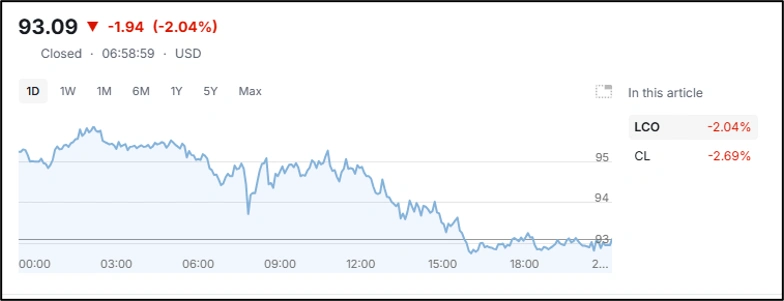
Fig 2: Brent oil price chart [AU Investing]
Iran remains a central player in this conflict. The nation demands a total cessation of fighting in Lebanon before negotiating. The US and Israel launched a joint assault on Iran in late February.
The conflict has now spread across multiple fronts. Recent weeks saw Iranian missile attacks on Kuwait and Bahrain. The US also launched retaliatory strikes on Iran’s Qeshm island.
Supply Disruptions Choke Global Shipping Lanes
These hostilities sit dangerously close to vital shipping lanes. The critical Strait of Hormuz remains almost entirely shut. This closure has triggered the biggest oil supply disruption in history.
The closure of this vital choke point restricts millions of barrels daily. Global manufacturing hubs are scrambling to secure alternative energy reserves. This frantic race further inflates the premium on available crude.
Energy analysts fear a prolonged Iran oil supply disruption 2026. A blocked strait chokes global oil shipments. This supply squeeze keeps energy prices high around the world.
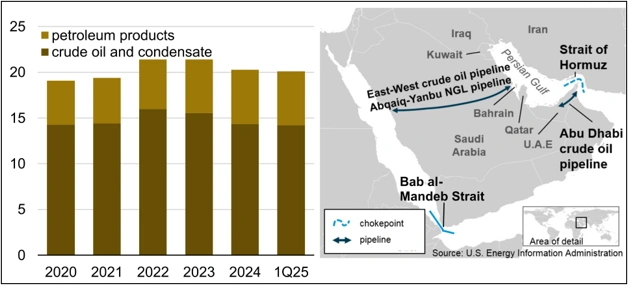
Fig 3: Volume of petroleum transported through the Strait of Hormuz [EIA]
The market experienced brief relief on Friday. Oman announced that its vital Mina al Fahal port returned to normal operations. Reports had earlier indicated a total halt in oil loadings.
An alleged drone attack caused an explosion between two single-buoy mooring berths. Supertankers remained anchored off the port during the chaos. The quick restart capped Friday’s price gains.
Reuters first reported the explosion, citing people familiar with the matter. Shipping data from LSEG confirmed the presence of the idling supertankers. This visual evidence sent shockwaves through energy trading desks globally.
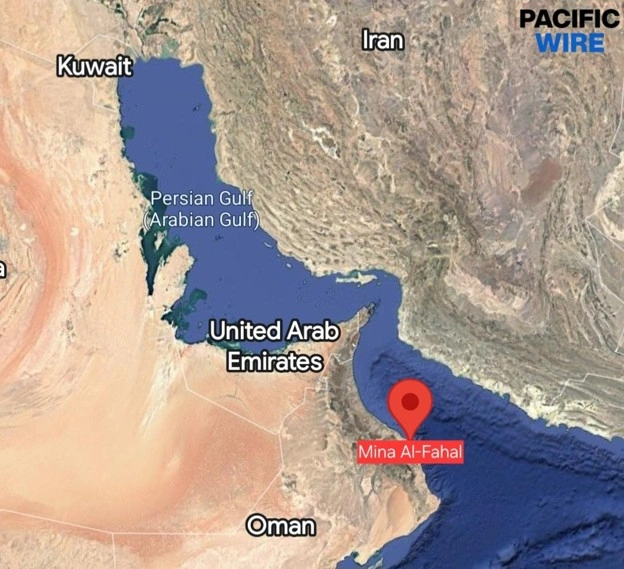
Fig 4: Mina al Fahal port, Oman [Pacific Wire]
What This Means for ASX Investors
Australian investors should consider the impact of these global events on their local portfolios. High volatility directly impacts the ASX energy stocks oil price. Local oil producers often see immediate revenue boosts during supply shocks.
Higher global benchmarks increase profit margins for local energy companies. Investors are pivoting toward defensive resource plays. The crude oil price today Australia serves as a critical indicator for equity valuations.
Institutional funds are actively reallocating capital into local resource giants. Higher cash flows allow these firms to boost dividend payouts. This trend makes local energy equities highly attractive right now.
However, supply shocks also bring broader economic pain. High oil prices act as a heavy tax on consumers. Transport costs rise, and manufacturing becomes more expensive across Australia.
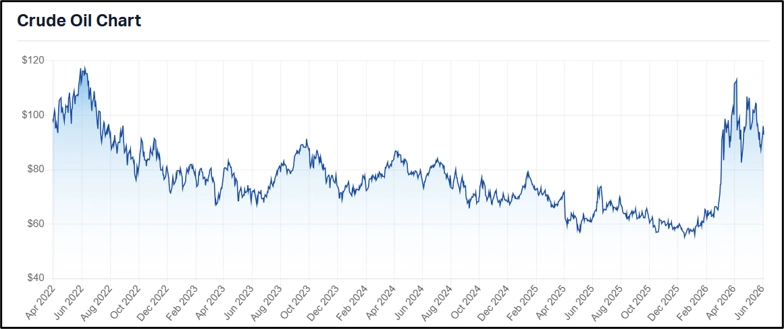
Fig 5: Crude oil price chart [Market index AU]
The Reserve Bank of Australia watches these import costs very closely. Energy inflation easily flows into everyday consumer goods and services. A long commodity boom makes local monetary policy difficult.
Inflation Stickiness and Macroeconomic Resilience
This shifting economic resilience isn’t just an Australian story. Wall Street traders reacted to the hawkish jobs data as well, triggering sharp corrections across key NYSE indices. At the same time, energy derivatives on the LSE surged to price in the mounting geopolitical risk premium.
The Federal Reserve Bank of Boston recently took a look at these economic changes. The study looked at the effects of oil shocks on modern economies. It noted a distinct decrease in vulnerability to energy spikes.
- A 33% oil shock now increases inflation by just 1.5 percentage points.
- The exact same shock caused a 2.2 percentage point inflation spike during the 1970s.
- Oil price surges no longer destroy national employment levels.
- Friday’s US nonfarm payrolls report completely smashed all recent job growth expectations.
- Officials also revised the March and April job figures significantly higher.
- Strong labour data secures maximum employment but triggers deep inflation concerns.
- Expensive energy costs continue to aggravate stubborn global price pressures.
- Robust employment drives consumer spending and creates a sticky inflationary cycle.
- The stellar jobs report effectively rules out any near-term interest rate cuts.
- Traders actually increased their betting odds for further interest rate hikes this year.
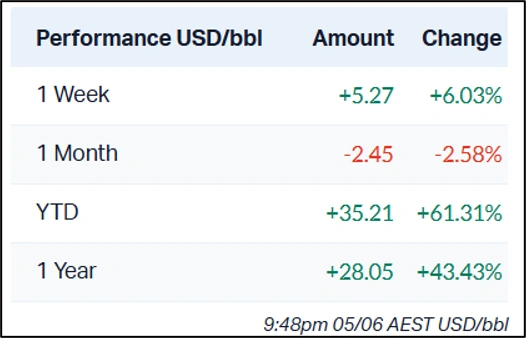
Fig 6: Crude oil price table [Market index AU]
Portfolio Defense in a Volatile Era
Aussie investors cannot ignore the Iran oil supply disruption 2026. Markets now bake a large geopolitical premium into energy assets. This premium alters traditional valuation models for resources.
The crude oil price today Australia will likely face upward pressure. Any further escalation near the Strait of Hormuz will trigger immediate price spikes. Portfolio diversification remains your best defense against this volatility.
Watch the ASX energy stocks oil price closely over the coming weeks. Balance your resource exposure with defensive assets. The global energy map is changing, and smart investors must adapt quickly.
Also read: How the 2026 Iran-US Ceasefire Deadlock is Hitting Australian Markets
FAQ
Q: Arab conflict causes all oil rising, why now?
A: Investing speculation as Hostilities expanded in the Middle East and as crucial shipping lanes faced increasing congestion, the market broke a two week trend.
Q: How does a oil shock affect my ASX energy portfolio?
A: As the global price of crude oil increases, the price increases and dividends of Australian energy companies increase.
Q: Will a blockade of the Strait of Hormuz impact the distribution of most of the world’s oil?
A: Yes, a near-total blockade will cause the most modern disruptions to the supply of oil.
Q: Does the Australian economy fall victim to increasing oil prices and rising fuel costs?
A: Yes, expensive oil increases the price of local transportation and causes consumer price inflation.
Q: Can a 33% energy price increase guarantee an economy will fall into a deep recession again?
A: No, oil price shocks have a lesser effect on economies of the modern world than during the 1970s.
Q: Will increased oil prices cause central banks to increase rates?
A: Stubborn energy inflation and good employment reports increase the likelihood of interest rate increases and decrease the likelihood of cuts.
Also read: Elevra Lithium ASX (ASX: ELV) Secures Crucial Growth Capital
Disclaimer
This article is written only for informational purposes. If you are an investor who is watching Mineral Resources Limited closely, all the data published in the content is sourced from ASX announcements and external sources. Kindly verify all information related to the share price and market data. Any investment should be made at the investor’s own risk. Colitco does not hold any position in the above-mentioned Company
——————–
Source:


