
The Australian federal government has moved a significant step closer to delivering on one of its key election promises, releasing draft legislation that will allow 6.2 million workers to claim an instant $1,000 tax deduction on work-related expenses without producing a single receipt.
What Happened
The Australian Treasury published draft legislation on Monday that proposes lifting the value of eligible expenses taxpayers can deduct from their assessable income, without providing receipts from its current level of $300 to $1,000. The move represents one of the most significant simplifications of the personal income tax system in recent years. Treasurer Jim Chalmers confirmed that 6.2 million workers, or 42% of all taxpayers, stand to benefit from the proposal, with an average tax saving of $205 per eligible worker.
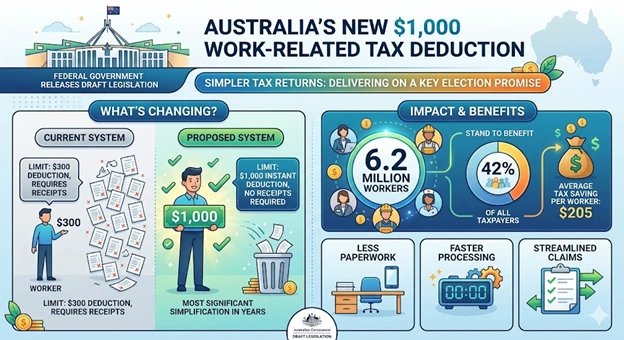
Figure 1: Australia’s new work-related tax deduction
The Impact on Australian Workers
The government frames the measure as a tool to provide cost-of-living relief and to make tax returns easier and cheaper to complete. However, tax professionals caution workers against treating the deduction as a straightforward windfall. The $1,000 deduction translates to less than $300 in actual tax refund dollars for an average Australian worker who selects this option, and the average total deduction claimed by an Australian taxpayer currently sits at around $3,000, far greater than the new standard deduction.
Key considerations for workers include:
- Taxpayers can choose to claim the standard $1,000 amount without itemising individual work-related expenses.
- If a worker accepts the one-click option, their actual work-related expense claims will be ignored entirely.
- The amount a taxpayer receives back depends on their tax rate — for example, someone who pays tax at 30% receives $300 back on a $1,000 deduction.
- Charitable donations and other non-work-related deductions continue to be claimed on top of the instant tax deduction.
The Key Players
Treasurer Jim Chalmers described the measure as “lasting cost-of-living relief to taxpayers,” positioning the reform as central to the Albanese government’s broader economic agenda. Professor Robert Deutsch from The Tax Institute acknowledged that the proposal creates both winners and losers, stating: “There will be people who would typically receive, say, a $650 deduction, who will now be able to simply tick a box and, once this proposal is enacted, claim a $1,000 deduction. But there will also be others with slightly higher deductions who might still opt for the $1,000 flat rate, so there’ll be swings and roundabouts.”
Critics, including Senator Penny Wong, argue that broader tax reform remains necessary, saying: “Clicking a few buttons to receive a basic deduction may be easy, but it is unlikely to be in the best long-term interests of taxpayers or the economy.” The Parliamentary Budget Office (PBO) independently costed the proposal and confirmed its financial scope. Federal Labor argues the measure could save $200 million a year in administrative and record-keeping costs alone, but the policy is projected to cost the government $2.4 billion in foregone tax revenue over the forward estimates.

Figure 2: Treasurer Jim Chalmers [Jim Chalmers]
The National Reach
The draft legislation originates from the Australian Treasury in Canberra and applies across the entire country. The proposed reform targets working Australians broadly, cutting down on paperwork, reducing reliance on professional tax advice, and delivering cost-of-living relief nationwide. The policy will affect workers in every state and territory who earn labour income and lodge a personal income tax return.
The Timeline
Labor first announced the $1,000 instant tax deduction on 13 April 2025 as part of its election commitments, ahead of the federal election that month. The Treasury published the draft legislation on Monday, 20 April 2026, moving the proposal from an election promise into a formal legislative process. The proposal is set to start on 1 July 2026, meaning workers lodge claims under the new system when they file their 2026–27 tax returns. This means that at the earliest, taxpayers will see the benefit flow through on their 2027 tax return, provided the legislation passes Parliament.
The Road Ahead
Labor took the policy to the 2025 federal election, with Prime Minister Anthony Albanese arguing it would “provide more permanent cost of living relief and make tax time quicker and easier for 5.7 million taxpayers.” Following re-election, the government tasked Treasury with drafting the formal legislation, which it released publicly on Monday for consultation. The PBO used microsimulation modelling to cost the proposal. The financial implications for personal income tax collections were estimated using a microsimulation model built from the full set of de-identified personal income tax return data for the 2022–23 income year, provided by the Australian Taxation Office (ATO) and grown over the medium term using parameters from the 2025–26 Budget.
The mechanics of the scheme work as follows:
- Taxpayers whose income comes solely from business or investments are not eligible for the $1,000 deduction but can continue to claim deductions in the usual way.
- Taxpayers whose work-related expenses exceed $1,000 can still itemise and claim them individually.
- The government says eligible taxpayers will be able to complete their return in as few as six clicks, saving time and effort.
- The reform allows taxpayers to choose the $1,000 instant deduction instead of claiming individual work-related expenses, saving time and money by eliminating the need to keep receipts or invoices to substantiate the claim.
Labor estimates that the time saved alone from reducing the burden of record keeping on millions of taxpayers is worth about $200 million a year. The draft legislation still requires passage through Parliament before it becomes law, and the government has not yet confirmed a date for the formal introduction of the bill into the House of Representatives. Workers and accountants across Australia will closely monitor its progress through both chambers in the months ahead.
Sources
- https://www.ato.gov.au/individuals-and-families/your-tax-return/instructions-to-complete-your-tax-return/mytax-instructions/2025/deductions/claiming-deductions
- https://www.pbo.gov.au/elections/2025-general-election/2025-election-commitments-costings/1000-instant-tax-deduction-work-related-expenses
- https://www.etax.com.au/1000-instant-tax-deduction/
Disclaimer: This article is intended for general informational purposes only and does not constitute financial, taxation, or legal advice. The information presented reflects publicly available details sourced from the Australian Treasury, the Parliamentary Budget Office (PBO), and other credible media outlets as of 20 April 2026.
The draft legislation discussed in this article has not yet passed through the Australian Parliament and remains subject to change. Readers must not rely on this article as a substitute for professional advice tailored to their individual financial circumstances.
Tax outcomes, deduction entitlements, and eligibility criteria vary depending on each taxpayer’s personal situation. Readers are strongly encouraged to consult a registered tax agent, accountant, or financial adviser before making any decisions based on the information contained in this article.
While every effort has been made to ensure the accuracy and completeness of the information at the time of publication, Colitco accepts no liability for any errors, omissions, or changes in legislation that may occur after the date of publication.


