
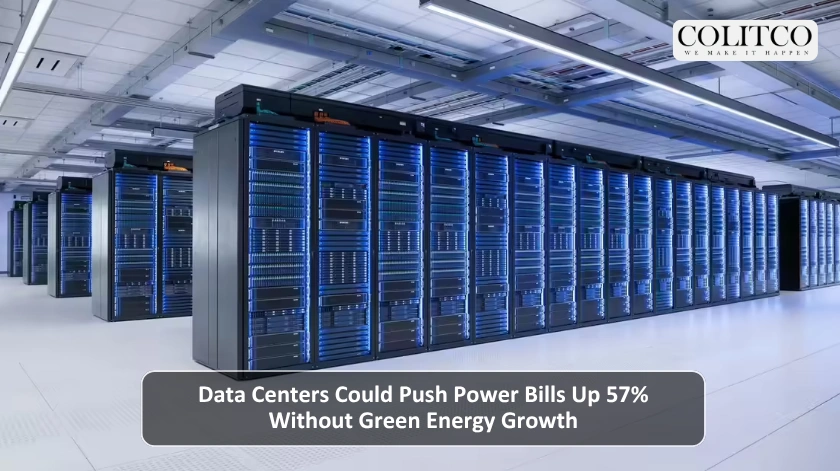
Researchers from North Carolina State University, Carnegie Mellon University, the University of Pittsburgh, and the University of Toronto published the findings. The study comes as data center energy demand grows faster than most power grids can handle.
In 2025 alone, utility companies received demands for a new power connection to new data centers-at least 700GW worth. This is more than the 477 GW total used by the whole U.S. In all of 2023. These figures really highlight the rate at which this industry is growing.
Green Energy Gap Drives Up Costs
Where renewable energy development is slow, the cost problem gets worse. In regions like Virginia, older fossil fuel plants stay online longer to cover the gap left by insufficient clean energy supply.
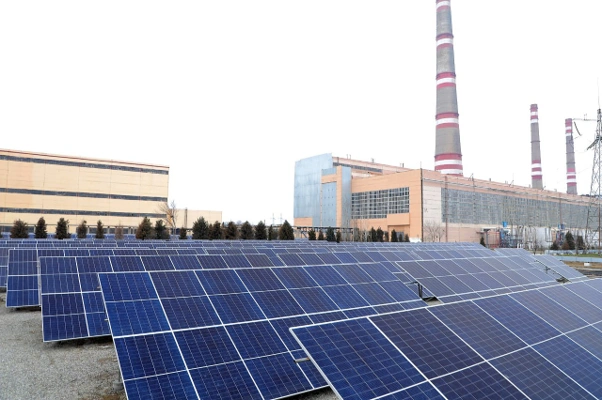
Figure 1: A large-scale solar farm. Researchers say faster renewable energy deployment could help offset rising electricity costs driven by growing data center energy demand. [Credit: iStock]
When local supply falls short, consumers end up importing power from neighboring states. That pushes wholesale electricity prices higher across entire grids. Goldman Sachs estimates that 60% of future data center energy demand through 2030 will be met by gas, with only 40% coming from renewables.
Data center energy demand could also push CO2 emissions from electricity generation up by as much as 28% by 2030. That would reverse two decades of progress the power sector made in retiring coal plants. Adding new transmission infrastructure makes the problem harder to solve quickly, as that process alone can take up to a decade.
Households Already Paying More
The average consumer is already stressed before 2030 even gets here. U.S. Electricity prices averaged 19 cents/kWh by late 2025, up 27% from 2019 levels of roughly 13 cents/kWh, which were about flat for a decade.
Utilities sought almost $29 billion in rate increases in the first half of 2025, up more than twofold over their requests in the same period in 2024. Nearly 40 million U.S. Customers faced rate increases last year, and costs could rise another 40% by 2030 from 2025 levels.
Public opposition to data centers is growing alongside those bills. Seven in 10 Americans oppose having a data center built near their home. In Virginia, electricity prices in data center-heavy areas jumped 267% over five years, and nearly three-quarters of state voters link the facilities to rising costs.
Supply Falls Short of Surging Demand
Data center energy consumption, from 176 TWh in 2023, is expected to rise to between 325 to 580 TWh by 2028. That trajectory puts data center electricity usage up to 12% of all U.S. Consumption within three years.
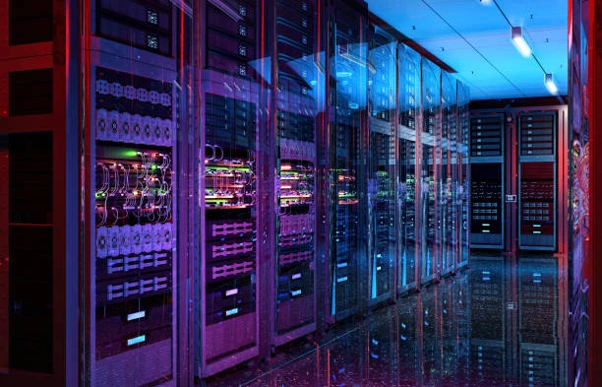
Figure 2: Server racks in a data center facility. Analysts warn that rapid growth in data center power consumption could place additional strain on electricity grids and increase energy costs for consumers. [Credit: iStock]
In Ireland, one example of how swiftly national grids are changing, it is projected that the country will use a third of its total electricity production on data centers by 2026, up from 17% in 2022.
The effect on Irish households could be between an extra 295 and 644 pounds cumulatively from 2025-2034. Researchers found that the additional renewable deployment required in Ireland could result in over 100 pounds saved annually to the average household over that period.
The U.S. Is starting to adapt. Microsoft has pledged not to seek tax benefits, while it funds its own energy use, Anthropic has committed to not passing on any increases in the cost of its energy for its data center expansion on consumers. Over 300 data center-specific bills were introduced by lawmakers in more than 30 states during 2026 alone, addressing issues from moratoriums to tax incentives.
Oregon went furthest, implementing electricity rates for data centers which would be based on the true amount of electricity they pull from the grid. State officials acknowledged, however, that the new structure will not lower bills immediately. Its goal is to slow future increases rather than reverse current ones.
The lead researcher on the NC State study described the challenge plainly. Meeting this level of data center energy demand requires an all-hands-on-deck effort to build generation capacity at a scale the energy sector has rarely seen before.
With utility costs on the rise and grid capacity becoming stretched, the market implications are increasingly capturing the attention of the mining Industry.
FAQS
Q1. By how much could data center energy demand increase our electricity bills by 2030?
A1. Data from a multi-university study expects some U.S. Areas to experience a spike in power costs by up to 57% by 2030. Nationally, expectations are for 6%-29% increases, primarily depending on how quickly renewable capacity expands.
Q2. Why does green energy matter for keeping power bills down?
A2. When renewable energy supply grows slowly, utilities fall back on gas and coal to meet data center energy demand. That keeps older, more expensive plants running longer and drives wholesale electricity prices higher for ordinary consumers.
Q3. Are households already paying more because of data centers?
A3. Yes. Average U.S. electricity prices hit 19 cents per kilowatt-hour by end of 2025, up 27% from 2019. Utilities also filed over $29 billion in rate increase requests in just the first half of 2025, affecting around 40 million customers.
Q4. What parts of the world are suffering from data center expansion the most?
A4. So far, it appears that Virginia has felt the most pain; the price of electricity rose by 267% in electricity-heavy regions of the state in a five-year period. The same applies to the island of Ireland, where it is projected that data centers will consume one-third of that nation’s electricity supply by 2026.
Q5. What are governments and tech companies doing about rising energy costs?
A5. Over 30 U.S. states introduced more than 300 data center-related bills in 2026. Oregon now requires data centers to pay rates that match their actual grid usage. Microsoft and Anthropic have also made separate pledges to cover electricity cost increases tied to their own data center operations.
Disclaimer
The information provided is not trading advice, Colitco and it’s author holds no liability for any investments made based on the information provided on this page. We strongly recommend independent research and/or consultation with a qualified professional before making any investment decisions.
Sources
https://news.ncsu.edu/2026/05/data-centers-power-bills/
https://fortune.com/2026/05/19/data-centers-electricity-costs-us-public-opinion/

Luke Carlino is a seasoned Copywriter, Content Strategist, and Social Media Manager specialising in Mining, Finance, and Business journalism. With more than a decade of industry experience, he brings rigorous editorial standards and commercial acuity to every project.