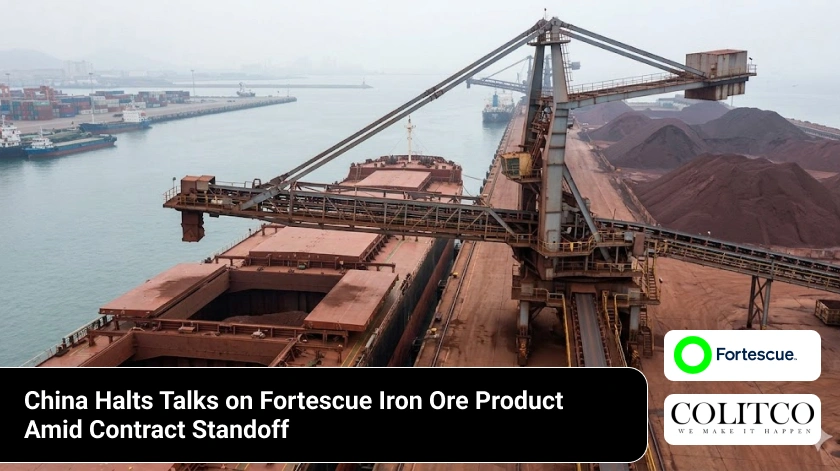
China Mineral Resources Group instructed steel managers to cease discussions with Fortescue regarding an iron ore selection. The purchasing body issued this order as contract negotiations entered a deadlock. Two industry sources confirmed the development on Tuesday.
The directive targets a material specification containing 55 per cent iron content. Fortescue labels this product line Fortune Fines. The agency seeks to prevent mills from committing to purchase agreements.
This intervention follows a pattern of oversight within the industry supply chain. Analysts expect the restriction to test the marketing strategy of the supplier. The directive alters communication protocols between the buyers and the mining company.
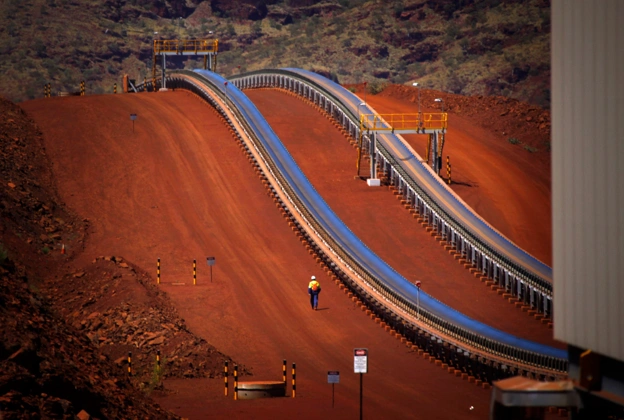
Figure 1: Fortescue mining operations in Western Australia [Source: David Gray / REUTERS]
The policy framework imposes boundaries on company operations:
- Steel mills must suspend product evaluations of the product line.
- Procurement officers must route communication through the state agency.
- Engineering teams must halt trials of the 55 per cent iron content material.
Oversight bodies monitor compliance across mills affiliated with the state. Managers face reviews if they bypass the state procurement channel. This control ensures a single approach during contract negotiations.
Why the Dispute is Significant
This development changes the pricing dynamics of inputs that support manufacturing. Iron ore serves as the primary input for steel production. Changes in procurement policy affect production costs for consumer goods and infrastructure projects.
Buying practices consolidate market power and alter supply contract structures. This shift reduces the ability of companies to negotiate price points. Investors monitor these shifts to calculate dividend yields and company valuations.
The confrontation highlights the disparity in profit distribution across the metals supply chain. Iron ore miners record profit margins between 70 per cent and 80 per cent. Conversely, steel manufacturing companies operate on profit margins within percentages below five per cent.
Understanding these economic balances helps readers track the trajectory of inflation worldwide:
- Input material costs dictate the final price of construction steel.
- Government procurement strategies influence trade balances.
- Corporate profit margins drive capital expenditure choices in the mining sector.
Changes in trade regulations affect employment levels in industries. Manufacturing sectors rely on raw material pricing to maintain workforce numbers. A prolonged deadlock alters investment flows in infrastructure and resource extraction.
Key Players: Fortescue and China Mineral Resources Group
The mandate involves China Mineral Resources Group and Fortescue, the world’s fourth-largest iron ore producer. Steel mills must alter their procurement processes to comply with the state directive. Company executives and state officials control the progression of these supply discussions.
Fortescue Chief Executive Officer Dino Otranto characterised the contract discussions as an “arm wrestle”. Fortescue Executive Chairperson Andrew Forrest previously expressed concern regarding the purchasing group, stating the organization attempted to create a “cartel”. Representatives from China Mineral Resources Group declined to submit comments regarding the instructions.
The mining sector watches the dispute to gauge future negotiation parameters. Companies like BHP Group and Rio Tinto maintain supply contracts with the same buyers. The outcomes will set precedents for trade transactions.
The stakeholders maintain distinct economic positions within the trade framework:
- China Mineral Resources Group manages commodity aggregation for the state.
- Fortescue handles extraction and export from its infrastructure hubs.
- Industrial steelmakers process the ore into metal products.
Analysts track the corporate entities to advise institutional investors. Credit rating agencies evaluate the risk profiles of the mining corporations based on contract stability. The interactions between these entities dictate the economic health of the resource sector.
Geographic Scope of the Policy and Trade Route
The policy decision originated in Beijing at the headquarters of the state procurement agency. The production impact affects steel mills across multiple provinces within China. Company responses emanate from Fortescue executive offices in Perth, Western Australia.
The trade route connects the Pilbara mining region to ports along the Chinese coastline. These corridors facilitate the movement of millions of tonnes of commodities annually. Decisions in capital cities reshape operations along this shipping supply line.
The market effects appeared on commodity boards. The Dalian Commodity Exchange and the Singapore Exchange recorded trading volume adjustments following the report. These venues reflect market sentiment across the Asia-Pacific economic region.
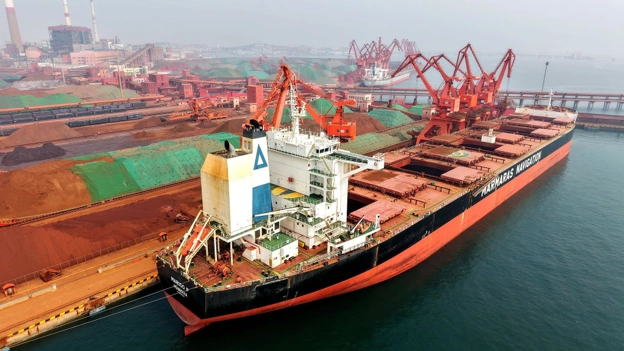
Figure 2: Bulk carrier handling iron ore at a Chinese port [Source: CFOTO / CFOTO/Future Publishing via Getty Images]
Geographic points of significance define the transit path of the product:
- Port Hedland handles the export loading operations for the miner.
- Qingdao port receives the commodity vessels for northern Chinese mills.
- Industrial zones in Hebei province consume volumes of imported ore.
The concentration of supply and demand heightens the impact of localized policy shifts. Western Australia holds the physical reserves, while Chinese provinces house the production capacity. This spatial distribution binds the two economies together through transport infrastructure.
Timeline of the Intervention
The state agency delivered the instructions to mill operators on Tuesday, June 2, 2026. The move occurred during the yearly negotiation cycle for multi-year supply contracts. The timing coincides with the final preparation phases for Fortescue’s product launch.
Fortescue set the export timeline for Fortune Fines to begin in July 2026. The intervention creates a pause in the sales rollout schedule. Industry participants now await the next official meeting between the mining company and state representatives.
The current dispute replicates events from earlier in the calendar year. BHP Group resolved a contract standoff with the state buyer in April 2026. That settlement established contract terms that extend through June 2027.
Also Read: St George Mining Welcomes ATL as Shareholder Following Lithium Star JV Restructure
The timeline outlines a sequence of contract milestones:
- April 2026 marked the resolution of the supply dispute with BHP Group.
- June 2026 brought the restrictions on Fortescue product discussions.
- July 2026 remains the target date for the initial Fortune Fines shipments.
The proximity to the July shipping date increases the pressure on both negotiating teams. Fortescue requires contract certainty before deploying vessels to transport the material. The next weeks will determine whether the parties meet the production schedule.
Strategy and Path to Resolution
China Mineral Resources Group initiated the process by issuing notifications to mill managers. The agency instructed buyers to ask questions about product quality rather than signing purchase contracts. This method removes the miner’s ability to compile an advance order book.
Traders expect minimal impact on spot prices because the product lacks an active trading history. The strategy relies on market leverage rather than immediate supply reductions. The move forces Fortescue to re-evaluate its pricing demands for the contract period.
The situation will resolve when both entities agree on pricing structures. Fortescue continues to communicate with the state group to advance the contract talks. Future agreements may include yuan-denominated pricing options to match market precedents.
The contract resolution will involve specific steps:
- Both parties will resume contract discussions in the coming weeks.
- Fortescue will present quality audits of the 55 per cent iron content material.
- The state buyer will determine the final volume allocations for domestic mills.
The resolution will influence how miners introduce future product variations to the global market. Success for the state buyer will reinforce the procurement model for all future negotiations. Conversely, a compromise will maintain the balance between suppliers and state consumers.
FAQ: Frequently Asked Questions
1. What is the composition and market position of Fortune Fines?
Fortescue developed Fortune Fines as an iron ore product containing 55 per cent iron content. This specification places the material at the lower end of the global grade spectrum. Steel mills use this lower-grade option to reduce overall input costs through blending processes.
2. What is the purpose and function of China Mineral Resources Group?
The state established China Mineral Resources Group to consolidate procurement across the domestic steel sector. The agency aggregates the buying power of individual mills to alter international price negotiations. This structural framework actively shifts bargaining leverage away from international mining corporations.
3. What is the immediate effect of the directive on commodity market prices?
Analysts expect no immediate change to iron ore spot prices because Fortescue has not yet distributed the product. However, futures contracts on the Dalian Commodity Exchange and the Singapore Exchange recorded trading adjustments following the report. The directive impacts future supply contracts rather than current spot volumes.
4. What previous precedents exist for these state procurement standoffs?
The contract deadlock mirrors a dispute between the state procurement body and BHP Group from earlier in the year. That confrontation concluded in April 2026 with a comprehensive agreement extending through June 2027. The final settlement incorporated yuan-denominated indexes to match regulatory preferences.
5. What are the shipment schedules and volume execution timelines?
Fortescue maintains a timeline to begin shipping the initial cargo in July 2026. The communication restriction complicates the task of building an advance order book before vessels depart. Corporate teams from both entities continue to exchange technical data to resolve the commercial impasse.
Disclaimer
This article provides information for general journalistic purposes only. It does not constitute financial, investment, or commercial advice regarding commodity trading, mining equities, or corporate procurement strategies. Readers must perform independent research before making market-related decisions.
Sources
- https://www.mining.com/web/china-tells-steelmakers-not-to-talk-with-fortescue-about-new-iron-ore-product/
- https://discoveryalert.com.au/iron-ore-fortescue-china-state-buyer-scrutiny-fortune-fines/
https://finimize.com/content/chinas-state-buyer-pressures-steelmakers-on-fortescue-talks

Luke Carlino is a seasoned Copywriter, Content Strategist, and Social Media Manager specialising in Mining, Finance, and Business journalism. With more than a decade of industry experience, he brings rigorous editorial standards and commercial acuity to every project.