

The S&P/ASX 200 barely moved on Monday, gaining just 2.3 points, a whisker of 0.03%, to close at 9,200.90. On the surface, that sounds boring. But beneath that flat headline number, the Australian stock market today experienced one of its most dramatic internal rotations in months.
This was not a calm day. This was a day where geopolitical shockwaves hit the market like a stone hitting still water; the ripples pushed energy stocks to multi-month highs while simultaneously dragging technology and financial stocks underwater. The index only looked steady because those forces cancelled each other out.
Don’t mistake stillness for stability.
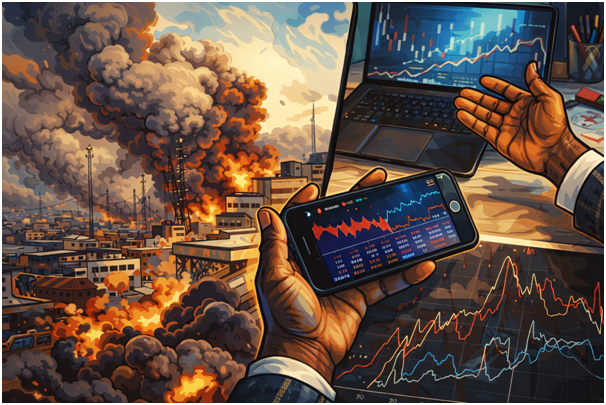
Figure 1: War fears ignite oil, rattle equities, and expose the fault lines beneath a “flat” close on the ASX.
Oil Prices Detonate. Energy Stocks Follow.
Over the weekend, the United States and Israel launched military strikes on Iran. Markets opened Monday morning already pricing in a new era of Middle East risk. Oil responded violently — Brent crude surged 7.8% to US$78.55 per barrel, while West Texas Intermediate jumped 7.3% above US$72 per barrel.
The ASX 200 Energy index surged 5.5% as supply disruption fears gripped the market.
Karoon Energy (ASX: KAR) led the entire index — not just the energy sector — surging 15.21% to close at $1.78. Iran appears to be attempting to disrupt passage through the Strait of Hormuz, a narrow chokepoint that facilitates roughly 20% of the world’s oil supply. That single geopolitical fact explains almost everything about today’s energy rally.
Woodside Energy Group climbed 6.82% to $30.24, while Santos advanced 6.66% to $7.21. Both stocks also ranked among the top volume outliers for the day, with trading volumes running 223% and 182% above their 90-day averages respectively. That level of volume tells you this wasn’t just algorithmic noise — real money moved decisively into Australian energy today.
This rally has legs in the short term. But investors chasing energy stocks now need to understand they’re buying a geopolitical premium, not a fundamental re-rating. If tensions de-escalate, that premium evaporates fast.
Also Read: ASX vs Wall Street: How Middle East Tensions Shake Markets Today
Gold Miners: Safe Haven Demand Kicks In
Alongside energy, gold producers enjoyed a strong session as investors sought safe-haven assets. Resolute Mining led all gainers with a 10.44% surge to $1.64, followed by Genesis Minerals up 8.48% to $8.06 and Ora Banda Mining climbing 7.75% to $1.39.
The Materials sector added 1.95% overall. This is a pattern we’ve seen before in times of geopolitical stress: investors rotate simultaneously into oil (supply shock play) and gold (fear play). Both happened today, and both make sense.
The AUD also weakened against the USD slightly, closing at 0.7088 — itself a minor tailwind for Australian commodity exporters whose revenues arrive in US dollars.
Tech and Financials Take the Hit
Here is the part of today’s Australian stock market story that deserves more attention.
The S&P/ASX 200 Information Technology Index cratered 3.06%, while the Financials Index tumbled 1.77%. Zip Co fell 8.38%, SiteMinder dropped 7.78%, and Mesoblast slid 7.59%. These are not small moves.
Macquarie Group fell 6.38% to $199.86 as concerns mounted over economic stability and potential credit market disruptions stemming from prolonged Middle East conflict.
The logic here is straightforward: prolonged conflict raises the spectre of higher inflation (via energy costs), which pressures central banks to keep rates elevated, which crushes growth stock valuations and compresses bank margins. The market ran that script today with brutal efficiency.
The tech sector’s pain also reflects a longer-running trend. Over recent weeks, AI disruption concerns have already weighed on software names. Add geopolitical uncertainty on top, and you get a sector that simply has nowhere to hide right now.
What This Means for the Week Ahead
The ASX sits just 0.02% off its 52-week high, up 1.94% over the past five days. The benchmark climbed 3.7% in February, its strongest February since 2019, as solid corporate results helped investors navigate rate pressures.
That strong foundation is now being tested by something no earnings report can prepare you for: war.
Any disruption to Strait of Hormuz shipping could trigger further energy price spikes, potentially pushing the ASX 200 Energy Index towards multi-year highs while simultaneously pressuring consumer-facing sectors already grappling with margin compression.
Investors should monitor three things closely this week: the trajectory of oil prices, any escalation or ceasefire signals from the Middle East, and how the big banks and tech names respond in early trade Tuesday morning. If oil holds above US$75 and conflict persists, energy outperformance likely continues. If a diplomatic off-ramp emerges, expect a swift reversal.
The Australian stock market today rewarded those who held energy and gold. Tomorrow, the calculus could shift entirely.
Sources
- ASX: https://www.asx.com.au/
- Stocks Down Under: https://stocksdownunder.com/asx-200-reporting-season-wrap/
- Trading Economics: https://tradingeconomics.com/australia/stock-market


