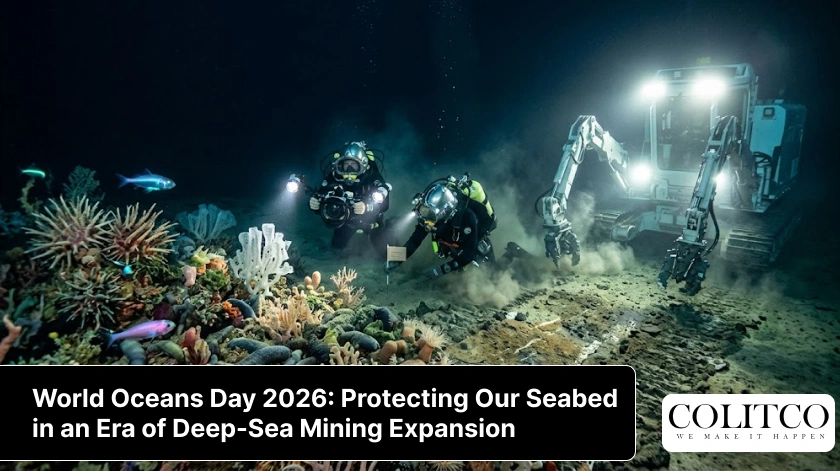
The International Seabed Authority concluded part one of session thirty-one. Delegates from member nations spent nine days discussing regulations for mineral extraction. The participants did not reach an agreement on the text of the code.
The United Nations currently observes World Oceans Day on this eighth day of June. The organisation focuses attention from nations on the oceans through a theme of reimagining human relationships with water. At the same time, interest from businesses in the minerals of the ocean floor continues to grow.
Mining corporations are preparing applications to gather nodules from the ocean floor. These entities want to collect deposits that rest four thousand metres below the surface. Regulators have not yet issued any licences for extraction in waters beyond national borders.
In March, the Legal and Technical Commission reviewed exploration contracts and checked if contractors were following the rules. They will report on mining progress in July.
Scientists from the World Register of Marine Species recently identified twenty-four species in the Pacific Ocean. This research highlights the lack of data regarding organisms that live in the zone targeted for mining. The discoveries increase the tension between conservation groups and mining executives.
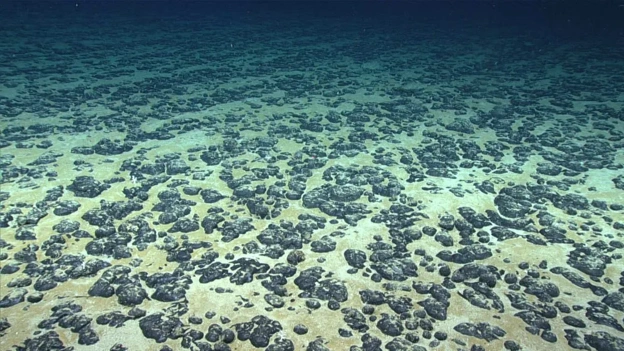
Figure 1: Industry players are finalising permit requests to begin harvesting mineral-rich nodules from the seabed [Source: mining.com.au]
Impact on Global Ecosystems and Economy
The oceans produce fifty percent of the oxygen that humans breathe on Earth. Habitats in the sea also capture twenty-three percent of the carbon dioxide emissions that human activities generate annually. Disruptions to the ocean floor could alter these systems and affect the atmosphere of the planet.
Technology companies require metals like nickel, cobalt, and copper to manufacture batteries. Electric vehicles, smartphones, and power grids depend on these materials. Consumers buy these products daily, which links markets directly to the ocean floor.
Mining operations create sediment plumes that travel through the water column. These plumes can suffocate organisms and disrupt the food chain that supports fisheries. Seafood consumers could face supply changes if these activities damage fish populations.
The ocean also absorbs ninety percent of the heat that climate change produces. A disruption to the seabed could release carbon stored in sediment. This release would accelerate temperature increases across the world.
Industry analysts estimate that ocean industries will employ forty million people by the year 2030. Seabed mining could create jobs in technology and shipping sectors. Conversely, a decline in ocean health could eliminate jobs in tourism and fishing.
- Oceans produce fifty percent of the oxygen for the planet. Destruction of these habitats will alter the composition of the air.
- Marine habitats absorb twenty-three percent of carbon emissions. Any change to this process will accelerate temperature rises across the world.
- Ocean industries will employ forty million people by 2030. The workforce depends heavily on the maintenance of these ecosystems.
Key Stakeholders and Negotiators
Secretary-General Leticia Carvalho leads the International Seabed Authority during this period of negotiations. Carvalho is currently managing her second year of tenure at the organisation. She urges member states to cooperate on protection for the environment and economic rules.
Nauru Ocean Resources Incorporated spearheads the push to begin mining operations. This company operates as a subsidiary of The Metals Company, an enterprise based in Canada. The firm intends to submit an application for extraction later this year.
The government of Nauru sponsors this corporate entity under the provisions of the law of the sea. Representatives from Nauru state that the energy transition requires these minerals. They argue that seabed mining creates fewer carbon emissions than mining operations on land.
Coalitions like Greenpeace and the Deep Sea Conservation Coalition oppose the industry. These organisations represent hundreds of bodies worldwide. Activists demand a moratorium on mining activities until scientists fully understand the risks.
State actors like the United Kingdom, Japan, and India take parts in the policy debates. Japan is exploring waters within its borders for elements through partnerships with the United States. The United Kingdom supports thresholds before any company begins extraction.
Dekota Mark serves as the coordinator for World Oceans Day in Australia. Mark released a statement regarding the preservation of ocean ecosystems. Mark stated, “World Ocean Day is more than a once-a-year celebration, it’s an opportunity to build momentum and strengthen commitment to protecting these vital yet all too often out-of-sight, out-of-mind marine ecosystem.”
Figure 2: World Ocean Day in Australia [LinkedIn/Dekota Mark]
Geographic Focus of Operations
The negotiations took place at the Jamaica Conference Centre in Kingston. Delegates gathered in this facility to draft the framework. The location serves as the headquarters for the International Seabed Authority.
The zone for mining sits in the Clarion-Clipperton Zone. This region spans five million square kilometres across the Pacific Ocean. It lies between Hawaii and Mexico, outside the jurisdiction of any nation.
The region contains billions of tonnes of nodules that rest on the plain of the deep ocean floor. Industry maps show that the area holds more manganese and nickel than land reserves. This concentration makes the location the focal point of investment from corporations.
Exploration activities also occur in the Indian Ocean and the Atlantic Ocean. The ISA has granted thirty exploration contracts covering these parts of the seabed. Each contract allows companies to map resources but forbids gathering for commerce.
Simultaneously, scientists are conducting research workshops in Sanya, China. The Joint Training and Research Centre there analyses impact assessments for ocean ecosystems. These hubs provide data to the authority in Jamaica.
Timeline of Regulatory Milestones
The International Seabed Authority held part one of its session from 9 to 19 March. Prior to that meeting, the Legal and Technical Commission convened from 23 February to 6 March. These events established the agenda for the remainder of the year.
The United Nations General Assembly designated June 8 as World Oceans Day in 2008. The community of nations has observed this event annually for eighteen years. Today, on June 8, activists use the occasion to protest against deep-sea mining.
Also Read: TPG Telecom Outlines a Leaner, Smarter Path Forward
The Council of the International Seabed Authority will reconvene for part two of the session from 13 to 24 July. The Assembly will then meet from 27 to 31 July to vote on matters of administration. These meetings will decide the extension of the exploration contract for Nauru Ocean Resources Incorporated.
The completion of the Mining Code controls the timeline for extraction. The ISA previously set deadlines that passed without an agreement. Observers expect the debates on regulations to extend into 2027.
Another treaty, the High Seas Treaty, received ratifications throughout 2025 and 2026. This agreement seeks to protect thirty percent of waters by 2030. The timeline of this conservation target clashes with schedules of mining corporations.
The Mining Process and Future Outlook
Mining companies will deploy machinery to collect the minerals. These machines weigh several tonnes and drive across the ocean floor. The tractors scrape the top layer of sediment to extract the nodules.
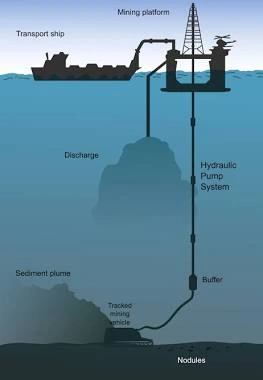
Figure 3: Schematic of the Seabed Extraction Process [Source: Wikipedia]
Observe the mechanical connection between the surface water and the ocean floor in the diagram above. The process utilizes a Tracked mining vehicle to traverse the seabed and collect the targeted Nodules. A Hydraulic Pump System then forces the materials upward through a Buffer component to the Mining platform and the adjacent Transport ship for separation.
This mechanical activity generates a localized Sediment plume that disturbs the immediate environment around the vehicle. The operation also pumps waste material back down via a Discharge line into the lower sections of the water column. This combination of physical triggers creates risks that scientists must evaluate before full deployment.
If the ISA fails to approve the Mining Code, corporations may invoke clauses of law to force a decision. The United Nations Convention on the Law of the Sea contains provisions that allow countries to request reviews of applications. This mechanism could bypass the consensus requirement of the council.
The model for finances also requires resolution before any mining begins. The International Geoscience and Forestry team presented a model to the council in March. The system must distribute benefits to nations under the law of nations.
The race for these minerals will intensify as land resources deplete. Nations will continue to form alliances to secure supply chains for their tech industries. The decisions that the ISA executes this year will shape the future of the oceans.
Sources
- https://mining.com.au/minings-deep-sea-dilemma-world-oceans-day/
- https://isa.org.jm/2026/03/
- https://www.iberdrola.com/environment/world-oceans-day
Disclaimer:
This article is for informational purposes only and does not constitute professional, legal, or environmental advice. The views and data presented herein are based on publicly available information and ongoing discussions within the International Seabed Authority as of June 2026.

Luke Carlino is a seasoned Copywriter, Content Strategist, and Social Media Manager specialising in Mining, Finance, and Business journalism. With more than a decade of industry experience, he brings rigorous editorial standards and commercial acuity to every project.