
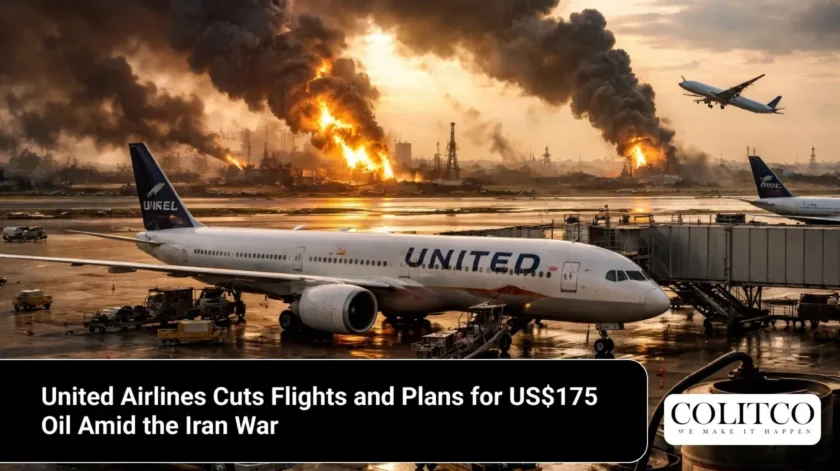
United Airlines (NASDAQ: UAL) is cutting approximately 5% of its planned capacity for 2026 as it braces for a prolonged fuel shock driven by the Iran war. Chief Executive Scott Kirby outlined the move in a staff memo on 20 Mar 2026, warning that oil could rise as high as US$175 a barrel and remain above US$100 through the end of 2027.
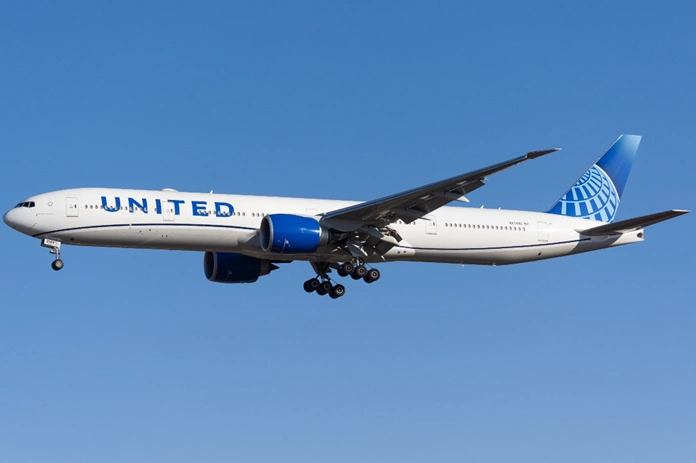
Figure 1: United Airlines aircraft in flight, representing the carrier adjusting capacity amid rising fuel costs [Courtesy: Wikipedia]
At those levels, United’s annual fuel bill would increase by approximately US$11 billion, more than double the profit the Company recorded in what Kirby described as its “best year ever.” The United flight cancellations 2026 programme represents a deliberate, near-term response to a cost environment that few carriers have faced before.
The Scale of the Capacity Reduction and Where It Falls
Off-Peak Routes and Weaker Demand Periods Take the First Cut
United had already begun trimming less profitable flying before the latest announcement, including some midweek, Saturday, and overnight services. The new measures go further, targeting routes and time periods where demand is softest.
Kirby was specific about which flying is being cut, writing in the memo: “We are cancelling about 3 points of flying in off-peak periods (think redeyes, Tues/Wed/Sat flying) during Q2 and Q3.”
Chicago O’Hare and International Suspended Routes Compound the Total
The full breakdown of the United flight cancellations 2026 programme adds up to five percentage points of planned capacity across the following actions:
- Cancellation of approximately three percentage points of off-peak flying in the second and third quarters
- Removal of approximately one percentage point of capacity from Chicago O’Hare
- Continued suspension of service to Tel Aviv and Dubai
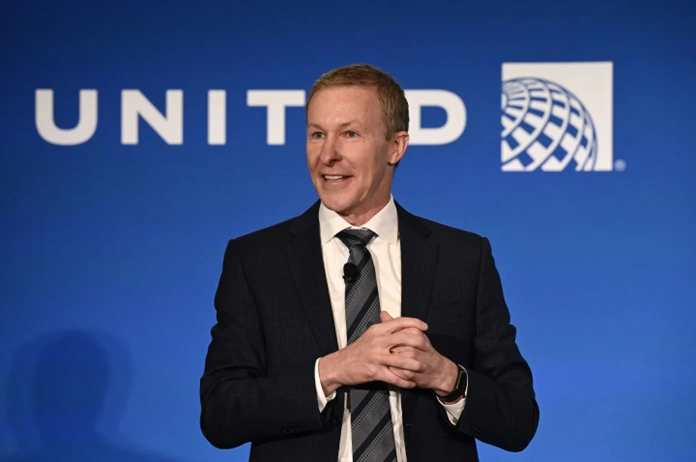
Figure 2: United Airlines CEO Scott Kirby [Courtesy: Fortune]
Kirby indicated the Company expects to restore its full schedule in autumn 2026, framing the cuts as a rel=”nofollow” precautionary measure rather than a structural retreat. He was clear that longer-term plans remain untouched, stating: “Nothing changes about our longer-term plans for aircraft deliveries or total capacity for 2027 and beyond.”
Iran War Oil Prices Are Driving a Fuel Cost Crisis Across the Industry
Jet Fuel Has Nearly Doubled Since Late February
The Iran war oil prices shock has moved with speed. Jet fuel prices have nearly doubled since late February 2026, compressing margins across the global aviation industry and forcing widespread reroutings and airspace restrictions.
US Carriers Carry Elevated Risk Due to Limited Fuel Hedging
United’s exposure reflects a broader vulnerability among American airlines. Most US carriers do not hedge fuel costs, unlike several European and Asian competitors that use hedging strategies to cushion against price spikes. This leaves them reliant on fare increases and capacity discipline as their primary tools for recovering added fuel expense.
Kirby addressed the uncertainty directly in the memo, writing: “There’s a good chance it won’t be that bad. But there isn’t much downside for us to prepare for that outcome.”
Airline Ticket Price Surge Is Helping Carriers Absorb the Shock
Two Fare Increases Already Pushed Through with More Potentially Ahead
Despite the cost pressures, strong travel demand has given US airlines room to raise fares. The airline ticket price surge already in motion includes two increases of approximately US$10 each way, and analysts at Melius Research have suggested a further 5% to 7% rise may be supportable given current demand conditions.
Figure 3: Airline ticket booking representation illustrating rising travel costs and fare adjustments across the aviation industry [Courtesy: Freepik]
United’s Booking Trends Remain Historically Strong
Kirby noted that fares booked over the past week had risen 15% to 20%, and that the first ten weeks of 2026 were the strongest booking weeks in the Company’s history. Rival Delta Air Lines (NYSE: DAL) has also flagged flexibility to trim capacity if fuel prices remain elevated, after raising its first-quarter revenue forecast earlier in the week.
The airline ticket price surge is expected to continue supporting industry pricing power as capacity discipline tightens across major carriers. Low-cost carriers, however, face compounding pressure given business models already strained by rising labour costs.
United’s Long-Term Growth Strategy Remains Intact
120 New Aircraft Still Due This Year as United Holds Its Investment Course
Despite the near-term United flight cancellations 2026 adjustments, the Company is not stepping back from its broader fleet expansion. Kirby confirmed that United will continue taking delivery of approximately 120 new aircraft this year, including 20 Boeing (NYSE: BA) 787s, with a further 130 aircraft due by April 2028.
No Furloughs and No Investment Delays Planned
Kirby was explicit that United would not respond to the current downturn the way it has in past cycles. The Company will not furlough staff or delay future capital investments, signalling confidence that the demand environment and fare recovery will be sufficient to weather the Iran war oil prices shock over time.
Industry Outlook
Global aviation is navigating one of the most severe fuel cost environments since the oil price spikes of the early 2000s. The Iran war oil prices impact is being felt across carriers on every continent, with airspace restrictions and reroutings adding operational costs on top of the raw fuel price increase. Analysts expect capacity discipline across major US and European carriers to remain a defining feature of the industry through at least the first half of 2027, with the airline ticket price surge likely to persist as long as oil stays above US$100 per barrel.
Future Direction and Impact
The trajectory of United flight cancellations 2026 will depend heavily on whether Iran war oil prices stabilise or continue climbing toward the US$175 scenario Kirby has planned for. If oil remains above US$100 through 2027, as the Company expects, the capacity cuts and airline ticket price surge seen today are likely to become industry-wide norms rather than isolated responses.
United’s decision to maintain investment and avoid furloughs suggests Kirby is betting on a recovery rather than a structural downturn. Whether that confidence proves well-placed will be one of the defining stories in global aviation through the remainder of 2026.
Frequently Asked Questions
Q1. Why is United Airlines cutting flights in 2026?
Ans. United flight cancellations 2026 are driven by surging Iran war oil prices, which have pushed jet fuel costs to nearly double their late February levels and threaten to add US$11 billion to the Company’s annual fuel bill.
Q2. How high could oil prices go, according to United’s CEO?
Ans. Chief Executive Scott Kirby stated the Company is preparing for oil to rise as high as US$175 a barrel and remain above US$100 through the end of 2027.
Q3. How much is United cutting from its schedule?
Ans. United is cutting approximately five percentage points of its planned 2026 capacity, targeting off-peak routes, Chicago O’Hare services, and maintaining the suspension of Tel Aviv and Dubai flights.
Q4. How is the airline ticket price surge helping carriers?
Ans. Strong travel demand has allowed US airlines to push through two fare increases of approximately US$10 each way, with analysts suggesting a further 5% to 7% rise may be possible.
Q5. Is United Airlines still growing despite the cuts?
Ans. Yes. United is continuing to take delivery of approximately 120 new aircraft in 2026 and has ruled out staff furloughs or investment delays, maintaining its long-term growth strategy.
Disclaimer
This article is intended for informational purposes only and does not constitute financial or investment advice. All content is based on the source article published by Reuters on 20 Mar 2026 and the United Airlines staff memo issued by Chief Executive Scott Kirby on the same date. Share price, fuel cost projections, and market data referenced reflect information available at the time of publication. Investing in securities involves risk, including the possible loss of principal. Readers should conduct their own research and seek independent financial advice before making any investment decisions. Colitco does not hold any position in the companies or organisations mentioned.
Sources
Reuters — United Airlines to cut more flights as it eyes oil above US$100 through 2027, 21 Mar 2026 https://www.reuters.com/
United Airlines Newsroom — Message from United CEO Scott Kirby to Employees, 21 Mar 2026 https://www.united.com/en/us/newsroom/announcements/cision-125448/announcements/cision-125448
Disclaimer


