

Retirement planning in Australia just got a little more breathing room. The federal government is lifting the income and asset thresholds tied to the Age Pension, and the changes are already in motion.

Figure 1: Retirement planning and Age Pension eligibility in Australia [Courtesy: SuperGuide]
For Australians aged 67 and over, the updated Australian pension rules could mean a larger payment each fortnight. Knowing what has shifted puts you ahead of the curve.
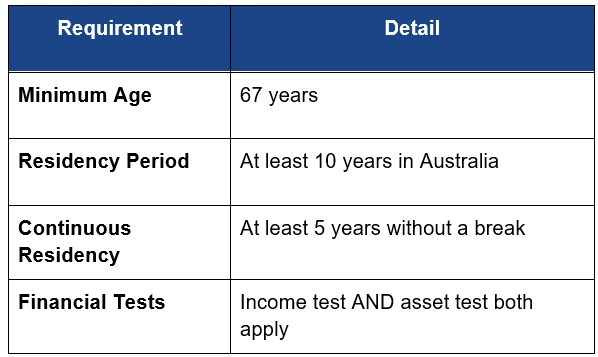
Who Qualifies for the Age Pension
Beyond age and residency, two financial tests determine how much a person receives. These are the income test and the asset test. Both must be passed. If a person’s income or assets exceed the set limits, the pension is reduced or cut off entirely.
Meet those conditions, and two financial tests come into play. The income test and the asset test both need to be passed. Exceed either limit and the pension shrinks or stops altogether.
Eligibility at a Glance
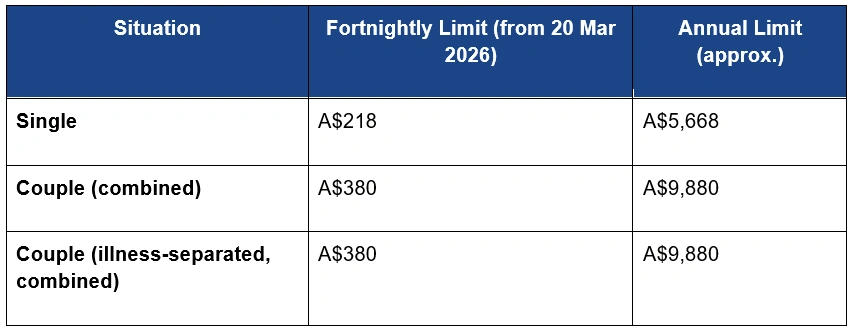
The Income Test: How Much Can You Earn
The income test looks at gross income from every source. This includes wages, investment returns, superannuation income streams, and even earnings from overseas. A partner’s income is also included in the assessment.
Full Pension Income Limits
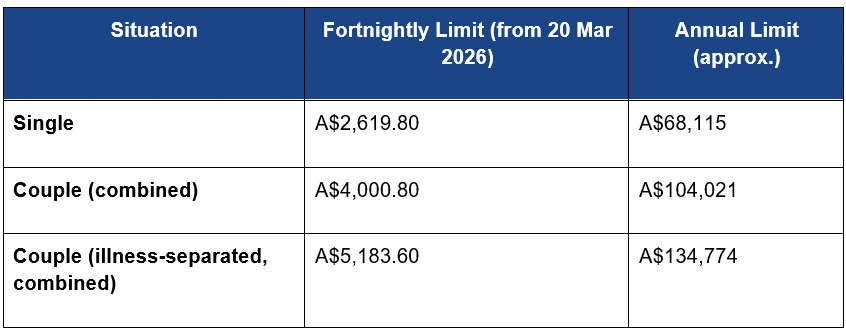
Part Pension Income Limits
Earning above the full pension threshold does not automatically rule a person out. A part pension remains available up to higher income limits.
The Work Bonus
Australians still in part-time work get an additional buffer. Centrelink ignores the first A$300 earned each fortnight for the income test. This can be as high as A$11800. It is automatically applied by Centrelink and does not require an application.
What Counts as Income
The income test does not just look at your pay cheque. It pulls in earnings from nearly every corner of a retiree’s financial life, and that includes income your partner receives as well.

Figure 2: Financial income sources considered under Age Pension assessments [Courtesy: Magnific]
Included in the Assessment
The income test casts a wide net. Any of the following can be counted toward a person’s assessable income:
- Employment earnings, minus the Work Bonus
- Rental income from investment properties at actual rates
- Deemed income from financial assets such as shares, superannuation, and bank deposits
- Voluntary superannuation contributions that are reportable
- Business income for sole traders or business partners
- Certain lump sums, including trust distributions, royalties, and redundancy payouts
- Income from overseas, converted to Australian dollars at current exchange rates
What Is Excluded
Not every dollar received counts against the pension. Most government payments, regular payments from close family members, and certain one-off lump sums such as gifts, inheritances, insurance payouts, and gambling wins are excluded from the income test.

Figure 3: Australian retirees reviewing their finances and pension eligibility [Courtesy: Magnific]
The Asset Test: What You Can Own
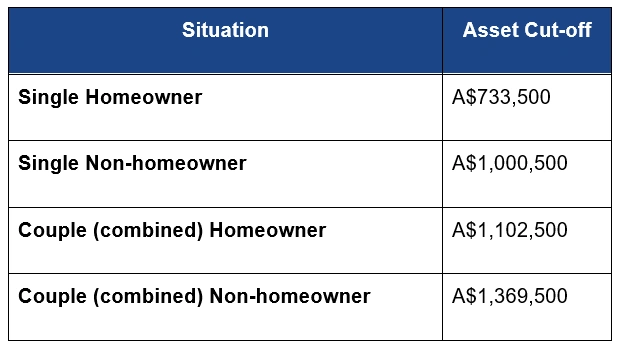
The asset test measures the total value of everything a person owns or has an interest in, with one major exclusion: the family home a person lives in is not counted.
Full Pension Asset Limits (from 1 July 2026)
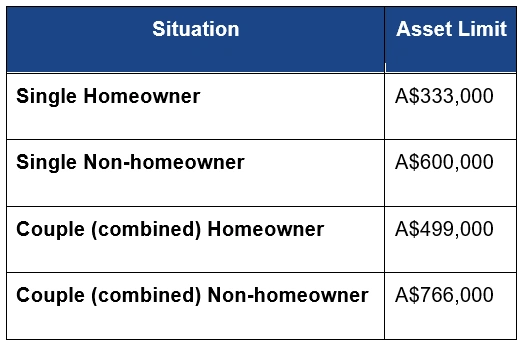
Part Pension Asset Limits (from 1 July 2026)
Holding assets above those limits does not necessarily end pension eligibility. Part pensions remain available at higher asset values. Assets above these cut-off points result in no pension payment at all.
How Deeming Works
Financial assets are not assessed at their actual returns. Centrelink instead applies a deeming rate, a fixed assumed rate of return, regardless of what the investments actually earn. This deemed income is then added to all other income to determine the pension rate.
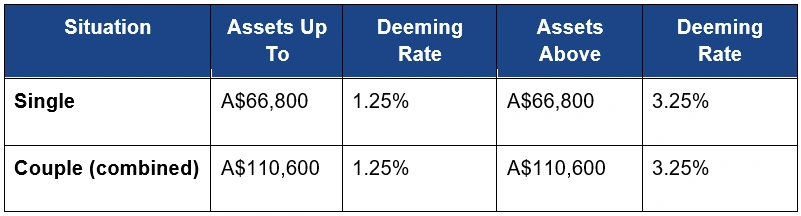
One important point: a mortgage on a principal residence does not reduce the value of financial assets used in the deeming calculation. The two tests operate separately.
How the Two Tests Work Together
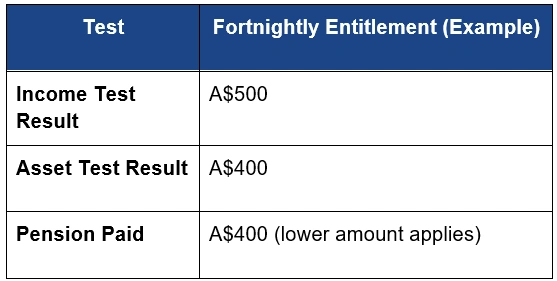
Both the income test and the asset test run simultaneously. Centrelink calculates a pension rate under each test and then applies the lower of the two amounts. This is the “lower of two” rule.
Current Maximum Payment Rates
The maximum fortnightly Age Pension rates as at March 2026 to September 2026 are outlined below. Base rates do not include the pension supplement or energy supplement. When all supplements are included, total maximum payments are higher.
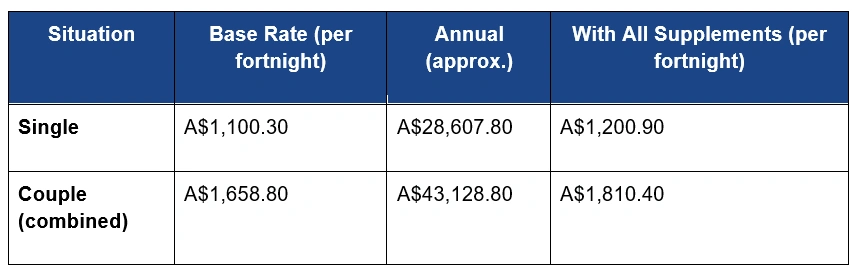
The Department of Social Services reviews and adjusts these rates every 20 March and 20 September.
Additional Benefits for Age Pensioners
Receiving the Age Pension opens the door to other support. Pensioners can access:
- Pensioner Concession Card, issued automatically by Services Australia, for discounted healthcare and medicines
- Pension supplement to help cover utilities, phone, internet, and medication costs
- Rent assistance for those paying rent
- Work Bonus to protect part-time earnings
- Home Equity Access Scheme, which allows retirees to use their property as security for a government loan to supplement their income
- Centrepay, a free bill-paying service deducted directly from Centrelink payments
Reporting Obligations
The Australia Age Pension rules carry ongoing responsibilities. If income or assets change, Centrelink must be notified within 14 days. This applies to both increases and decreases. Centrelink will then reassess the correct entitlement. Overpayments must be repaid. Underpayments will be reimbursed.
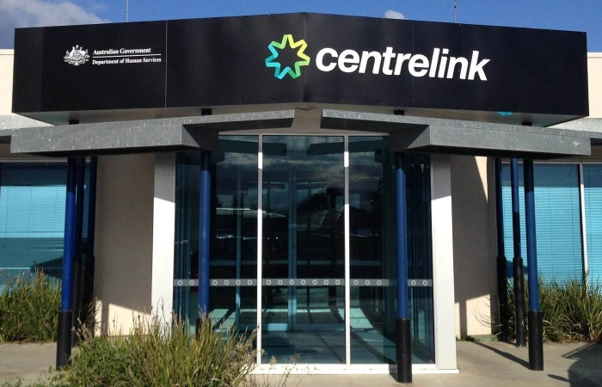
Figure 4: Centrelink service centre supporting government pension services in Australia [Courtesy: Nextmedia]
Some pensioners may also be required to report their earnings to Centrelink every 14 days to confirm the correct payment rate.
Conclusion
Australia is getting older, fast. Australia’s population aged 65 and over is set to double by 2058, with the sheer pressure on an aging pension system felt annually. Keeping the Age Pension in line with real living costs is why the government will lift income and asset thresholds in 2026.
For retirees, the numbers matter. If you are tracking the political sector, then you should know that more Australians will now qualify for a full or part pension under the updated Australia Age Pension rules. It is worth checking your income streams and asset position whenever these thresholds shift, because even a modest change can move the dial on what you receive.
ALSO READ: Askari Metals Grows Uis Target Pipeline to Seven New Pegmatites Ahead of RC Drilling
FAQ
Q1. What is the eligibility age for the Government pension Australia?
Ans. In order to be eligible for the Age Pension, one must reach the age of at least 67.
Q2. How do the Australian pension rules treat a family home?
Ans. The family home a person lives in is excluded from the asset test entirely.
Q3. Can a person still receive the Age Pension if they work part-time?
Ans. Yes. The Work Bonus excludes the first A$300 earned per fortnight from the income test.
Q4. How do the Australia Age Pension rules apply the income and asset tests together?
Ans. Both tests run simultaneously and the lower entitlement amount is the one that applies.
Disclaimer
This article is meant only for informational purposes. If you are an investor who is watching Australian Age Pension rules and retirement planning closely, all the data published in the content is sourced from external sources. Kindly verify all the information related to income thresholds, asset limits, and payment rates. Any financial decision should be made at the investor’s own risk. Colitco does not hold any position in any entity mentioned in this article.
Sources
- https://www.fool.com.au/2026/06/20/australias-new-age-pension-rules-age-income-and-asset-tests-explained/
- https://www.superguide.com.au/in-retirement/age-pension-income-test-thresholds
- https://moneysmart.gov.au/retirement-income-sources/age-pension-and-government-benefits

Luke Carlino is a seasoned Copywriter, Content Strategist, and Social Media Manager specialising in Mining, Finance, and Business journalism. With more than a decade of industry experience, he brings rigorous editorial standards and commercial acuity to every project.