
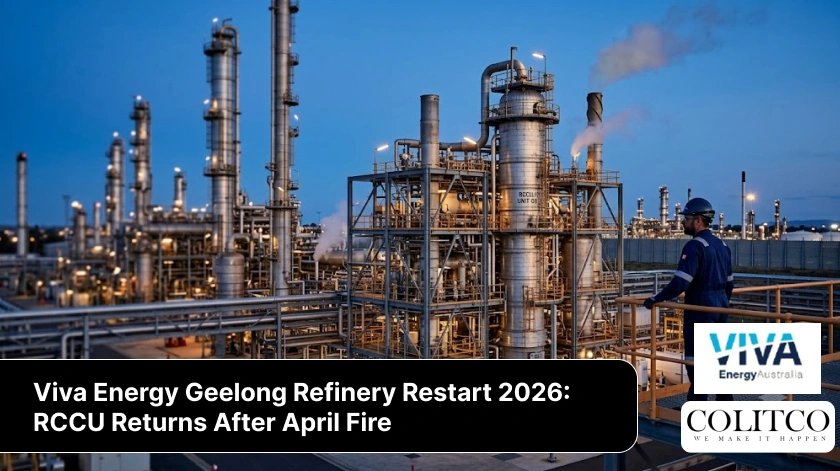
Weeks after a fire knocked out one of Australia’s last two operating refineries, Viva Energy Group Limited (ASX: VEA) has its Residue Catalytic Cracking Unit running again. For a Company still working through the fallout of the 15 April 2026 incident at the Geelong Refinery, getting the RCCU back online is no small thing.
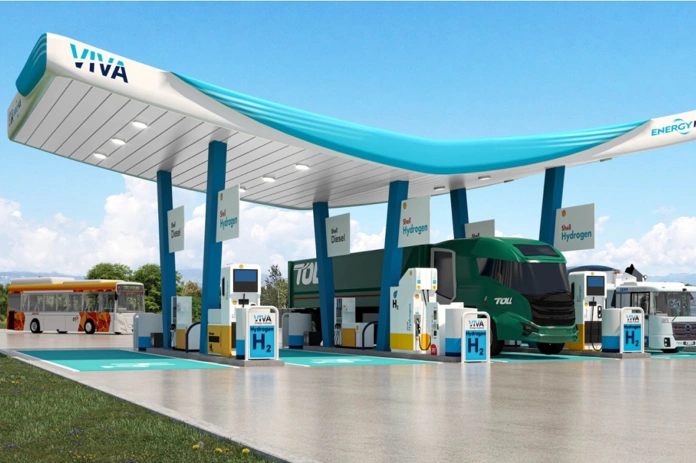
Figure 1: Viva Energy’s energy infrastructure and industrial operations in Australia [Courtesy: Viva Energy]
Production is now expected to return to over 90% of normal refinery capacity. That is the target the Company had previously set for itself, and it appears to be on track.
The Restart That Matters
The Residue Catalytic Cracking Unit, known as the RCCU, is not just any piece of equipment. It is the processing heart of the Geelong Refinery restart effort. Without it, the facility cannot efficiently convert lower-value intermediate products into higher-value finished fuel products.
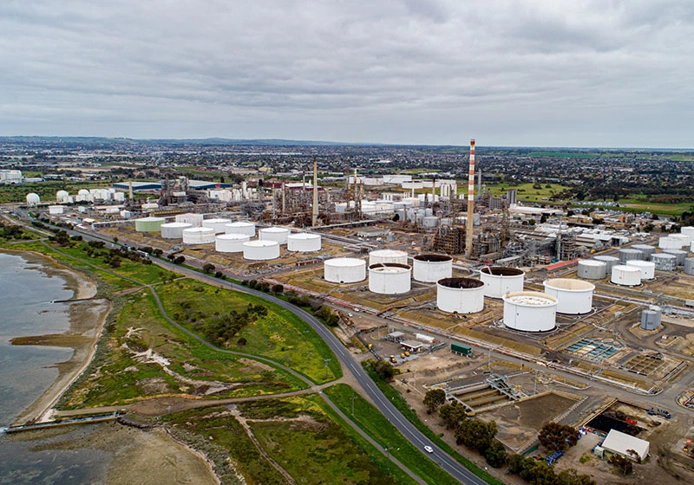
Figure 2: Geelong Refinery, one of Australia’s two remaining operational refineries [Courtesy: Viva Energy]
Viva Energy confirmed the RCCU and its associated units returned to operation during the week of 23 Jun 2026. The Company released the update via an ASX announcement to the market the same day.
What the RCCU Actually Does
The RCCU’s role is straightforward but significant. It converts heavier, less valuable refinery streams into finished products like petrol and diesel. More output from the RCCU directly improves the Geelong Refining Margin.
This matters because the Geelong Refinery is one of only two remaining operational refineries in Australia. Keeping it running at full capacity is not just a Viva Energy concern. It has implications for the domestic fuel supply across the country.
The Alkylation Unit Problem
Not everything is back on track. The Alkylation unit remains isolated from refining operations and will stay offline. Based on the current assessment of damage sustained, the refinery is expected to operate without the Alkylation unit throughout 2027.
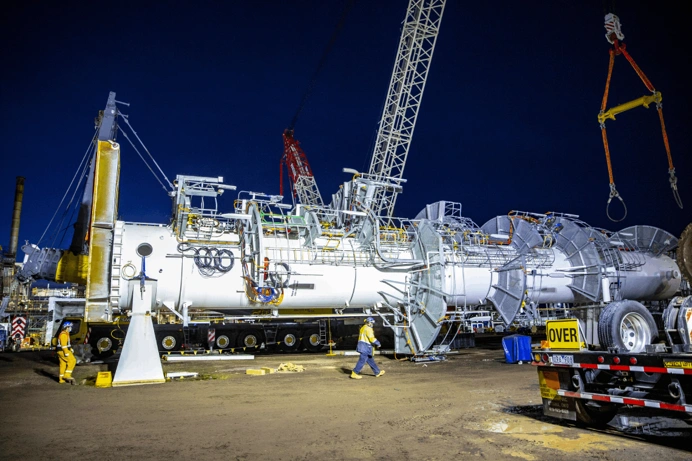
Figure 3: Maintenance and industrial works at the Geelong Refinery site [Courtesy: Viva Energy]
Viva Energy is assessing options to repair or replace the unit. The Company has described this as a highest priority item, though the timeline remains long.
What This Means for LPG Conversion
The Alkylation unit’s job is to convert LPG into gasoline. LPG is a by-product of other refinery processes. Without the Alkylation unit, that conversion capacity is gone for now.
This creates a constraint on the refinery’s gasoline output. Investors should note this is a separate issue from the RCCU restart. The two units serve different functions.
What Caused the Fire
Viva Energy refinery fire update Australia findings point to a failure in a section of piping within the Alkylation unit itself. The piping failure released fuel, which then ignited.
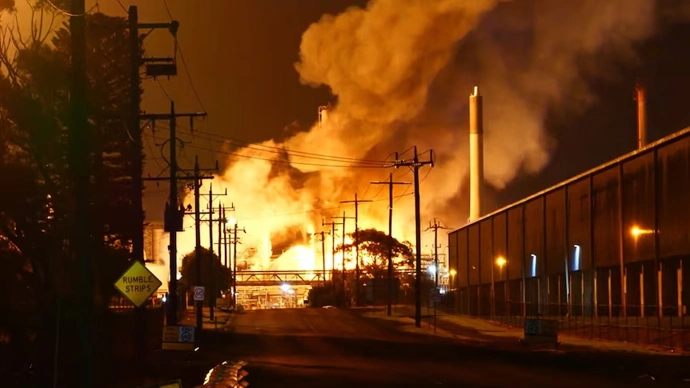
Figure 4: Fire at Viva Energy’s Geelong Refinery [Courtesy: ABC News]
The Company’s refining team responded quickly. The fire was contained before it could spread further through the plant. Viva Energy continues to investigate alongside its insurers, covering both property damage and business interruption claims. Final conclusions remain pending.
Refining Margin Under Pressure
The financial impact of the incident is visible in the numbers. The Geelong Refining Margin for April and May 2026 came in at US$23.9 per barrel. This was measured from a refining intake of 6.5 million barrels of oil.
That figure reflects two headwinds. First, reduced production following the fire. Second, lower margin yield caused by increasing crude premia across that period.
The RCCU restart directly addresses the first problem. With the unit back online, the refinery can again convert a greater proportion of lower-value streams into higher-value finished products. That conversion is what drives GRM higher.
About Viva Energy
Viva Energy is one of Australia’s largest energy infrastructure and convenience businesses. The Company has been operating in Australia for well over 120 years. What’s even more, its distribution networks span over 1,280 stores along with wholesale fuels and lubricants to nearly 1,550 service stations across the country.
The Group owns and operates the Geelong Refinery located in Victoria. Viva Energy is also involved in bulk fuels, aviation, bitumen, marine, chemicals, polymers and lubricants businesses in addition to refining. It has more than 25 terminals across the country and 98 airports and airfields in its national infrastructure.
The Geelong Refinery
The Geelong Refinery has had a presence in the Geelong community for over 70 years, commencing operations in 1954. More than 1,100 people work at the plant, which is one of just two operational refineries still in Australia.
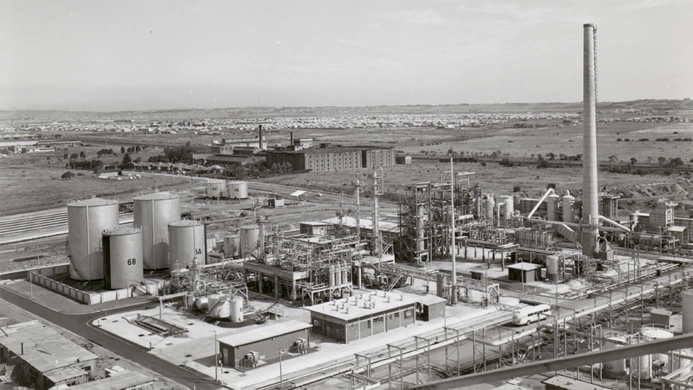
Figure 5: Historical operations at the Geelong Refinery in Victoria [Courtesy: Viva Energy]
The facility supplies over 50% of Victoria’s fuel and around 10% of Australia’s total fuel needs. At full capacity, it can process up to 120,000 barrels of oil per day, producing petrol, diesel, LPG, jet fuel, avgas and Low Aromatic Fuel.
It is also Australia’s only manufacturer of hydrocarbon solvents, marine fuel oil, bitumen, avgas and high-quality plastic feedstock used in food packaging, medical equipment and polymer banknotes.
Share Price
Viva Energy ASX VEA share price today:
- Last Price: A$2.070
- Market Capitalisation: A$3.49 billion
- 52-week range: A$1.695 to A$2.690 per share
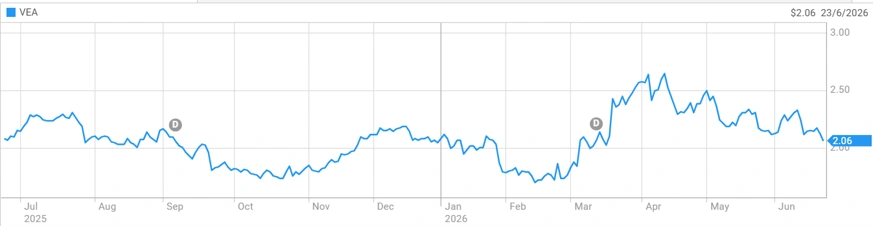
Figure 6: Viva Energy (ASX: VEA) share price performance over the past 12 months [Courtesy: ASX]
Industry Outlook
Global oil demand grew by around 0.65 million barrels per day in 2025, according to the IEA’s Global Energy Review 2026. Petrochemicals and aviation drove most of that growth. Road transport barely moved, largely because electric vehicle sales crossed 20 million units for the first time.
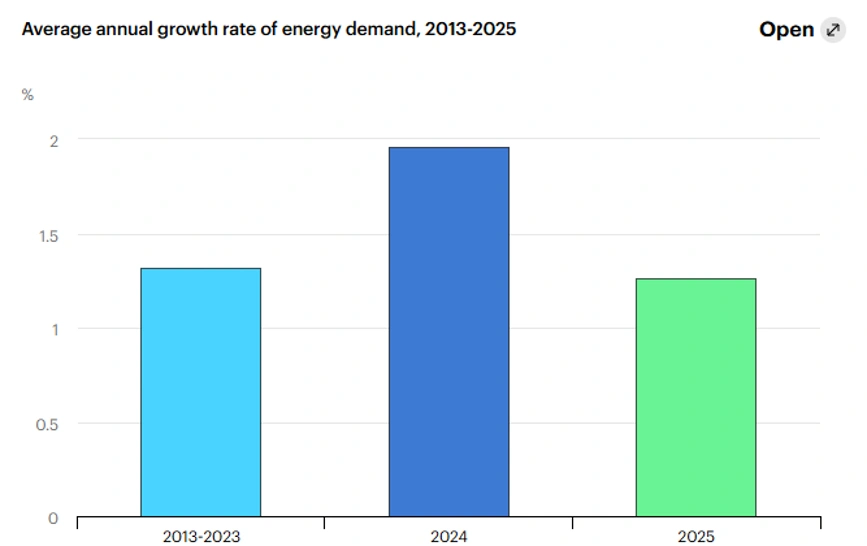
Figure 7: Average annual growth rate of global energy demand between 2013 and 2025 [Courtesy: International Energy Agency]
Domestic refining capacity in Australia remains limited. With only two operational refineries left in the country, any disruption at Geelong carries a direct impact on national fuel availability. The RCCU restart, therefore, carries relevance well beyond Viva Energy’s own balance sheet.
Future Direction and Impact on Refinery Output
Viva Energy remains one of the more closely watched names in ASX Energy. The immediate priority for Viva Energy is stabilising output at the Geelong Refinery. With the Viva Energy Geelong refinery restart 2026 now underway, above 90% capacity, management will turn its attention to the Alkylation unit assessment.
A repair or replacement decision on the Alkylation unit will shape the refinery’s gasoline output profile through 2027. Investors and fuel market participants will watch that assessment closely.
Insurance negotiations for property damage and business interruption are ongoing. The outcome of those discussions will influence how the financial impact of the April incident flows through the Company’s results.
ALSO READ: Askari Metals Grows Uis Target Pipeline to Seven New Pegmatites Ahead of RC Drilling
FAQ
Q1. What is the RCCU at the Geelong Refinery?
Ans. Residue catalytic cracking unit is a catalytically driven conversion process that restores lower-value intermediate refinery streams into finished fuels like petrol and diesel.
Q2. When did the Geelong Refinery fire occur?
Ans. The fire took place on 15 Apr 2026 due to a piping failure within the Alkylation unit.
Q3. What is the current production capacity after the Geelong Refinery restart?
Ans. Viva Energy expects production to return to over 90% of normal refinery capacity following the RCCU restart.
Q4. Will the Alkylation unit be repaired?
Ans. The Company is assessing repair and replacement options. Based on current damage assessments, the refinery will operate without the Alkylation unit throughout 2027.
Q5. What is the Geelong Refining Margin?
Ans. The GRM for April and May 2026 was US$23.9 per barrel from a refining intake of 6.5 million barrels of oil.
Disclaimer
This article is for informational purposes only. All data published in this content is sourced from ASX announcements and publicly available external sources. Kindly verify all information related to share price and market data independently. Any investment decision should be made at the investor’s own risk. Colitco does not hold any position in the above-mentioned Company.
Sources:
- https://data-api.marketindex.com.au/api/v1/announcements/XASX:VEA:3A695793/pdf/inline/residue-catalytic-cracking-unit-restart-at-geelong-refinery
- https://www.vivaenergy.com.au/operations/geelong
- https://www.asx.com.au/markets/company/VEA
- https://www.iea.org/reports/global-energy-review-2026/oil#abstract
- https://www.iea.org/reports/global-energy-review-2026/global-trends#abstract

Elizabeth Jones is a finance and mining content specialist with over 10 years of experience creating clear, SEO-driven content across fintech, investing, banking, insurance, cryptocurrency, and resource markets. She transforms complex financial data and industry trends into engaging, reader-focused articles that improve understanding and audience engagement.