
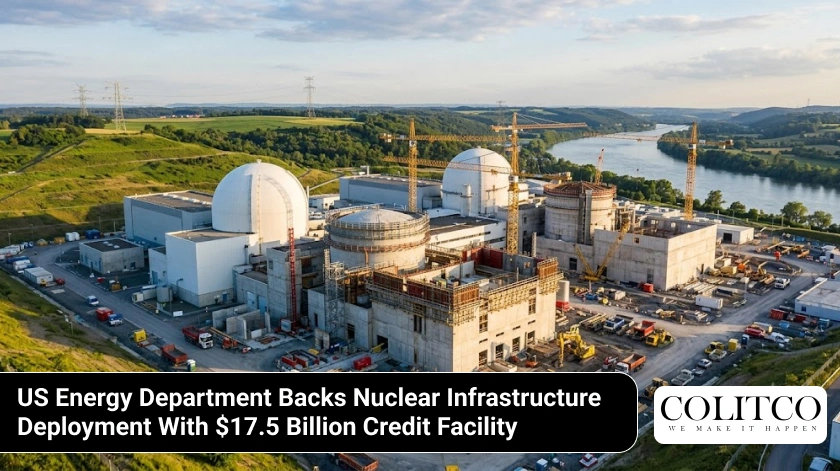
The United States Department of Energy established a 17.5 billion dollar credit facility to support nuclear infrastructure. This initiative, operating under the title of the American Nuclear Supply Chain Loans, provides financing to expedite energy infrastructure projects. The administration intends to fund the development of 10 commercial nuclear reactors through this single mechanism.
The Office of Energy Dominance Financing manages this 17.5 billion dollar allocation to strengthen the energy sector. Officials plan to advance the construction timelines of these power installations by up to three years. The strategy removes financial bottlenecks that traditionally stall industrial projects prior to ground-breaking ceremonies.
The finance package targets the procurement of components with long lead times rather than construction labour. These parts include reactor vessels and steam generators that require years of fabrication time before delivery. By securing these components early, power utilities can avoid scheduling delays that drive up project expenditures.
Energy Secretary Chris Wright announced the credit facility during a briefing with reporters. The administration aims to put 10 reactors under construction by the year 2030. The policy aligns with executive mandates to reinvigorate the industrial base.
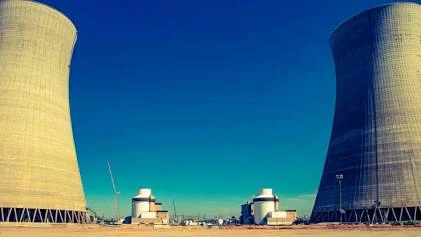
Figure 1: The Westinghouse AP1000 commercial nuclear reactor configuration [Source: Westinghouse]
Significance and Impact
Technology corporations continue to construct data centres to process artificial intelligence workloads and cloud computing applications. This digital expansion places strain on the electricity grids across the nation. Ratepayers and commercial businesses require a reliable supply of baseload power to prevent blackouts and economic disruption.
Traditional energy infrastructure often struggles to meet modern consumption requirements without increasing carbon emissions. Nuclear facilities generate volumes of electricity without emitting greenhouse gases during daily operations. The expansion of this energy sector offers a path toward grid stability and climate targets simultaneously.
Historically, cost overruns and regulatory delays inside the nuclear industry discourage investment groups from backing power projects. This state-backed credit programme mitigates those initial capital risks for utility operators and financiers. Consumers ultimately benefit when energy providers complete power plants on schedule, keeping consumer power rates stable.
A robust supply chain creates jobs within the manufacturing, engineering, and construction sectors. Local communities receive tax revenues and economic stability from long-term infrastructure investments. Stabilising the energy grid protects national security and economic productivity during peak consumption periods.
Key Stakeholders
The United States Department of Energy serves as the primary governing body for this capital deployment. Energy Secretary Chris Wright led the announcement and emphasized the role of public-private cooperation in reviving the supply chain. The newly renamed Office of Energy Dominance Financing replaces the former Loan Programs Office to oversee the credit distribution.
Westinghouse Electric Company acts as the primary technology provider and partner for the selected energy enterprises. The corporation owns the design for the AP1000 reactor, a licensed advanced commercial reactor design in the United States. Westinghouse will maintain joint ownership in each funded development project alongside local utility companies.
Brookfield Asset Management, the parent organisation of Westinghouse, welcomed the financing package through its leadership team. Chief Executive Officer Connor Teskey noted that public-private partnerships accelerate the build-out of nuclear power generation. Technology hyperscalers and utility shareholders comprise the other core stakeholders driving this energy expansion forward.
Westinghouse already holds letters of intent with seven potential corporate partners that have identified specific project sites. These utility companies operate within the commercial power sector, aiming to serve the electricity needs of technology firms. The collective agreements secure commitments from both technology users and energy producers.
Geographic Scope
The federal government issued the announcement from Washington, District of Columbia, targeting national energy infrastructure deployment. The impacts of this funding programme will reach across multiple states where utilities construct nuclear facilities. Westinghouse and its partners have already selected seven distinct project locations across the United States.
Energy developers place these installations near regional transmission networks to optimise electricity delivery. The chosen sites often sit adjacent to existing power stations to share infrastructure and minimise grid integration costs. This spatial strategy reduces the environmental impact and speeds up local regulatory approvals.
The geographic distribution focuses on regions experiencing industrial growth and high concentrations of data centres. These locations require additions to local power generation capacities to sustain regional economic development. The programme establishes localized supply chains that feed components into these specific construction hubs.
Timeline
The Department of Energy released the official funding announcement on Tuesday, June 23, 2026. This move advances an executive order that the administration signed one year prior to revitalize the nuclear industrial base. The timeline dictates a matter of urgency as data centre power consumption escalates.
The framework establishes milestones stretching from the current year through the next decade. The primary goal requires participating utilities to place ten reactors under construction by the year 2030. The early capital injection allows companies to truncate the procurement timeline by thirty-six months.
The deployment schedule demands action from equipment manufacturers to meet the 2030 building targets. Analysts expect the first manufacturing orders to hit the supply chain within the next two quarters. The multi-year lifespan of these supply contracts provides long-term revenue visibility for manufacturing companies.
Implementation Strategy
The Office of Energy Dominance Financing will back up to five individual loans to power companies. Each loan will support the construction of exactly two 1.1-gigawatt Westinghouse AP1000 reactors at a single site. This arrangement ensures that each project achieves economies of scale during the procurement phase.
The programme enforces financial conditions before releasing any taxpayer dollars to the applicants. Both Westinghouse and its chosen utility partner must fully commit 500 million dollars each in project equity upfront. This requirement ensures that participants provide one billion dollars in capital per project prior to accessing public funds.
The participants will stagger the purchasing of equipment based on the timing of these equity commitments. The Department of Energy requires each project to satisfy technical, legal, environmental, and financial conditions before executing definitive financing agreements. Once companies meet these conditions, the procurement of machinery begins immediately.
Also Read: Copper Mining Stocks Australia: Why Bell Potter Sees Triple-Digit Gains In This ASX Share
The AP1000 design features an electrical output of 1117 megawatts per unit. The system utilizes passive safety systems that rely on gravity and natural circulation instead of operator action. Westinghouse supplies this reactor design to global energy markets to modernise power generation grids.
Program Highlights
- The federal government allocates 17.5 billion dollars in total conditional loans through the credit facility.
- The programme finances the construction of up to 10 commercial nuclear reactors nationwide.
- Each selected energy site will host exactly two 1.1-gigawatt Westinghouse AP1000 reactors.
- The financing framework accelerates the standard construction and deployment schedule by up to 3 years.
- Each project requires an upfront equity injection of 500 million dollars from Westinghouse and another 500 million dollars from the utility partner.
- The Office of Energy Dominance Financing will issue a maximum of five discrete loans to qualifying applicants.
- Westinghouse maintains letters of intent with seven potential utility partners across identified project sites.
Statements from Leadership
The Department of Energy provided official statements detailing the scope and philosophy behind the credit deployment.
“Just over one year ago, President Trump directed the Energy Department and its agency partners to unleash the next American nuclear renaissance,” US Energy Secretary Chris Wright said. “To accomplish that mission, these conditional loans will play an important role in reviving the supply chain needed for America to once again build large-scale commercial reactors.”
Wright further elaborated on the commercial viability of the infrastructure investments during his press brief.
“We are confident that these projects will be economic for utility shareholders, ratepayers and hyperscalers,” Wright said.
The corporate leadership at Brookfield Asset Management highlighted the strategic alignment between public capital and private execution.
“Westinghouse continues to be at the forefront of major public and private partnerships that will materially accelerate the build-out of large-scale nuclear power generation, help meet growing energy demand, and support energy security in the U.S.,” Connor Teskey, Chief Executive Officer of Brookfield Asset Management, said.
Sources
- https://www.mining.com/doe-launches-17-5b-loan-program-to-accelerate-nuclear-buildout/
- https://www.energy.gov/articles/department-energy-announces-american-nuclear-supply-chain-loans
Disclaimer:
This article is for informational purposes only and does not constitute financial, legal, or professional advice. The details regarding the U.S. Department of Energy’s loan facility, including project timelines, funding allocations, and stakeholder roles, are based on current reports and announcements. Readers should verify specific program requirements, eligibility criteria, and regulatory conditions directly with official government sources or relevant corporate documentation before making any investment or business decisions. The information provided may be subject to change as federal policies and project developments evolve.

Rachael Jones is an award-winning broadcast journalist, producer, and scriptwriter with over 30 years of experience spanning television, digital media, and financial reporting. She specialises in transforming complex business and finance stories into engaging, accessible content for diverse audiences.
Rachael has expertise in live presenting, reporting, interviewing, sub-editing, and end-to-end content production and has a proven track record of delivering impactful stories across finance news platforms and digital channels. She is passionate about making financial news clear, relevant, and engaging, particularly for younger professional audiences navigating an evolving economic landscape.
Rachael brings extensive experience managing the full production process, from research and scripting through to final delivery. She is also an Authorised ASIC Representative with RG146 accreditation in financial product advice, combining strong journalism skills with a deep understanding of financial markets and investment communication.