
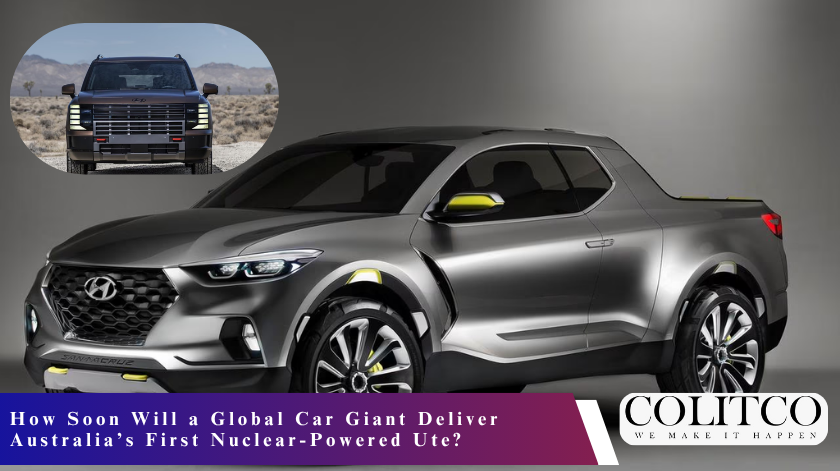
A nuclear-powered ute in Australia is slowly becoming a reality, with Hyundai confirming it will complete what it terms a ute development program by the conclusion of 2025. The model, which is projected to be launched in the market by the year 2028, is the bold move that the brand is taking in the competitive dual-cab utility market.
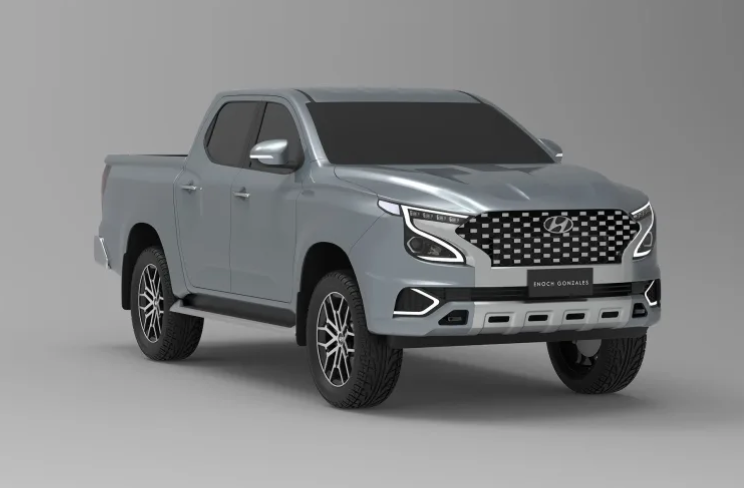
This initiative places Hyundai in competition with other major Australian utes in the market, like the Toyota Highlux, Ford Ranger, and Isuzu D-Max. The company is targeted at developing a long, powerful, and green model that fulfills the work and leisure needs throughout Australia.
Hyundai Confirms Timeline for the Australia Nuclear-Powered Ute Launch
The Hyundai Motor Company has officially stated that it will lock in the launch of the Australian nuclear-powered ute late in 2025. The model is developed to suit the Australian conditions after several years of research and cooperation with the local engineering team of Hyundai.
The Chief Executive Officer of Hyundai Australia, Ted Lee, stated that the development process has attained a high level where the Australian division has been giving important feedback on performance, payload, and towing capacity. The ute should satisfy the needs of the Australian consumers who are focused on both off-road and urban functionality and durability.

Hyundai executives outlining plans to finalise its next-generation ute platform by 2025
Engineered for Local Terrain and Tough Work Conditions
The Australian prototype is the first nuclear-powered ute, not a repackaged version of any Hyundai SUV or pickup. It is being developed by engineers on a fresh platform to provide strength, reliability, and technological efficiency.
The participation of Hyundai Australia goes further to include chassis testing and tuning in to local environment, such as gravel, sand, and unsealed rural roads. The brand strives to make the car work in the worst of circumstances, as it has insight into Australian work life and the culture.
Advanced Powertrain Strategy for Nuclear-Powered Vehicles Australia
The next ute by Hyundai is an innovation that brings a breakthrough to nuclear-powered vehicles in Australia, with the ability to be sustainable. All of this is expected to be accompanied by conventional diesel and hybrid alternatives, although internal plans involve the incorporation of a small modular nuclear energy unit that could safely be operated over considerable durations.
This system is currently under review to be compliant with regulations, and it has the potential to transform the way light commercial vehicles use energy. The engineers of Hyundai are collaborating with global partners to guarantee safety and operational uniformity that meets the standards of the Australian automobile industry.
Australia’s Role in Hyundai’s Global Ute Program
Australia has been one of the most strategic markets for this ute project by Hyundai. The company has ensured that Australian engineers and product specialists are directly engaged in the design and testing of vehicles. They have influenced critical suspension tuning, load balancing, and reinforcement.
The Australian market is also perceived by the brand as a testing zone to roll out to the rest of the world. Having narrowed down the design of the ute in this instance, Hyundai will be sure that the vehicle is capable of navigating various roads-outback tracks, and suburban highways, before it gets to other foreign markets.
A New Chapter in the Australian Dual-Cab Market
The launch of the first nuclear-powered ute in Australia is set to change the appearance of Hyundai in the utility segment. The brand has not been present in the full-size ute market in years, which is currently one of the most performing automotive markets in Australia.
This launch is a sign of innovativeness and energy diversity of Hyundai. The company seeks to present a product that provides performance, life, and safety, and offers consumers more sustainable options in the category of light commercial vehicles.
Features Expected in Hyundai’s Upcoming Dual-Cab Ute
Although the full specifications are still secret until 2025, Hyundai has already indicated that the ute will have a ladder-frame chassis and will have higher towing tech. It will also be combined with a set of contemporary safety systems, connectivity options, and parametric power management.
The design is supposed to focus more on the comfort and functionality of the interior with an appeal to both the trade professionals and the personal purchasers. The ute is targeted with its nuclear-assisted energy system to provide extended range, less maintenance, and high operational reliability.
Also Read: Artificial Intelligence in Australia 2025: Voices and Concerns from Everyday Australians
Final Thoughts
The confirmation of Hyundai’s Australia nuclear-powered ute launch represents one of the most anticipated developments in the nation’s automotive industry. As the first nuclear-powered ute in Australia, the model could redefine expectations for power, efficiency, and endurance in the dual-cab segment.
By 2028, Australian roads are set to welcome a vehicle that merges cutting-edge nuclear energy technology with Hyundai’s engineering expertise. This advancement not only broadens the scope of nuclear-powered vehicles in Australia but also strengthens Hyundai’s position as a forward-thinking manufacturer committed to meeting future mobility demands.
FAQs
1. What is meant by the “first nuclear-powered ute in Australia”?
The “first nuclear-powered ute in Australia” refers to a concept vehicle reportedly being planned by a global car manufacturer. It would use a compact nuclear energy system as its power source, marking a technological shift from electric and hybrid engines toward a sustainable, zero-emission future in the Australian utility vehicle market.
2. When is the Australia nuclear-powered ute launch expected to occur?
According to industry reports, Hyundai is preparing to finalise its ute program by the end of 2025. While the nuclear-powered version has not yet been officially confirmed, production timelines suggest that the Australia nuclear-powered ute launch could occur between 2028 and 2030, following design and regulatory approvals.
3. How will nuclear-powered vehicles in Australia differ from conventional utes?
Nuclear-powered vehicles in Australia would differ by using a miniature atomic energy module instead of a combustion or electric battery system. This technology could enable continuous energy supply, longer driving ranges, and lower refuelling needs. It also aims to eliminate carbon emissions associated with diesel or petrol-powered utes, currently popular in rural and commercial sectors.
4. Which carmaker is developing the first nuclear-powered ute in Australia?
Hyundai is the global car manufacturer expected to lead the project for the first nuclear-powered ute in Australia. The brand has already confirmed plans to finalise its dual-cab ute platform by 2025, which could be adapted for future clean-energy variants, including potential nuclear or hydrogen-based systems designed for Australian conditions.
5. What powertrain options will the first nuclear-powered ute in Australia include?
While specific details remain undisclosed, Hyundai’s upcoming ute lineup is anticipated to include diesel, hybrid, electric, and possibly nuclear-powered models. The nuclear-powered ute version would employ advanced modular energy systems to deliver high efficiency, extended operational life, and minimal maintenance compared to combustion engines.
6. What regulatory challenges do nuclear-powered vehicles in Australia face?
Nuclear-powered vehicles in Australia would face complex regulatory scrutiny. Government safety agencies would need to establish new frameworks for nuclear energy use in transport, covering licensing, environmental standards, and emergency procedures. These steps must align with international nuclear safety protocols before any public deployment.
7. Will the first nuclear-powered ute in Australia use a small modular reactor design?
Industry speculation suggests the first nuclear-powered ute in Australia may utilise a small modular reactor (SMR) system. This technology generates controlled thermal energy through miniature, sealed nuclear cells. Such designs are being studied globally for compact transport applications due to their durability and safety record.


