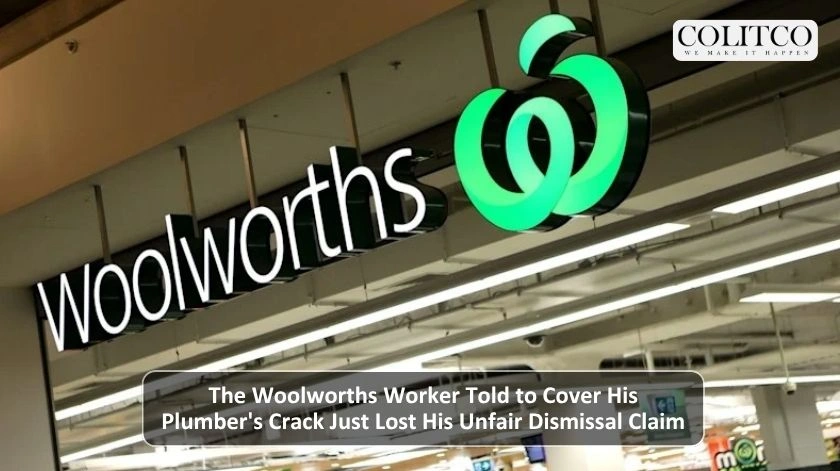
Anthony Davitkov, a casual Woolworths employee, lost his unfair dismissal claim after an embarrassing workplace interaction left his feelings hurt and his desire to work, apparently gone.
What Happened at the Woolworths Store
During a casual shift, Davitkov was told by a co-worker that the cleft of his bottom was protruding from his trousers, and was asked in rude terms to cover up.
That was it. That was the incident.
Davitkov took offence, stopped taking shifts, and then lodged a formal application with the Fair Work Commission alleging he had been dismissed in breach of his workplace rights.
Woolworths, for its part, was baffled. The company told the Commission Davitkov had continued to work shifts even after lodging his claim and only stopped turning up later. Nobody had fired him. Nobody had stood him down. He simply walked.

The case originated from an incident during a casual shift at a Victorian Woolworths store.
Why the Fair Work Commission Dismissed the Case
Deputy President Alan Colman did not mince words in the judgment, handed down last Thursday.
“I find Mr Davitkov was not dismissed. He had no standing to make the application. This case had nothing to do with dismissal,” Colman wrote.
He went further, describing the case as “evidently a speculative claim made in the pursuit of a monetary settlement that would spare Woolworths the nuisance of defending it.”
That is a fairly direct way of saying: this was never a serious claim.
The Commission found the application “unmeritorious.” Davitkov had made five separate submissions to the Commission over two years. Five. For a plumber’s crack comment.
The Legal Problem With the Claim
Under the Fair Work Act 2009, an unfair dismissal application requires an actual dismissal. An employee who voluntarily stops attending work, without being stood down, terminated, or constructively pushed out through intolerable conditions, does not meet that threshold.
Davitkov was a casual employee. Casuals are not guaranteed ongoing shifts. Woolworths had not told him his services were no longer needed. He chose not to come back after a comment that embarrassed him.
The distinction matters. Unfair dismissal protections exist for workers who genuinely lose their jobs against their will. They are not designed to compensate someone who simply chose to stop showing up after an awkward moment on the shop floor.
What This Case Reveals About Workplace Rights
This case sits at an interesting point in Australia’s industrial relations landscape. On one hand, the Commission regularly handles legitimate claims from workers who face serious mistreatment. On the other, it also deals with speculative filings that consume time and resources on both sides.
The plumber’s crack case is unusual, but it is not entirely surprising. Casual workers in retail often feel vulnerable, and complaints about how they are spoken to by colleagues are genuinely valid in the right context. A rude comment about someone’s body is, at minimum, unpleasant. In some circumstances, it could cross into workplace harassment.
But feeling hurt is not the same as being dismissed. And a one-off remark, however uncomfortable, does not automatically give rise to a legal claim if the employee then refuses to return.
The Commission’s job is to assess claims on their legal merits. This one had none.
Woolworths and Its Workers: A Broader Picture
This incident comes at a time when Woolworths has faced its share of workplace tension, including a significant industrial dispute with warehouse workers over pay and safety conditions in late 2024. That case involved thousands of workers, protected industrial action, and genuine supply chain disruption across Victoria and New South Wales.
The contrast is stark. One case involved real workplace grievances pursued through proper channels. The other involved a man, a gap in his trousers, and five Commission submissions.
It says something about how widely the unfair dismissal system is understood, and perhaps misunderstood, by casual workers who believe any negative work experience can be converted into a formal claim.
Also read: These Lithium Stocks Are Sitting on Some of the World’s Rarest Cesium Assets
FAQs
Q: What is a plumber’s crack?
A: The term refers to the visible gap between the lower back and the top of trousers, often exposed when someone bends over. It is an informal expression used in Australian and American English.
Q: Can you make an unfair dismissal claim if you weren’t formally fired?
A: No. Under the Fair Work Act 2009, an unfair dismissal application requires that an actual dismissal occurred. If an employee chooses to stop working without being terminated, stood down, or constructively dismissed, they have no legal standing to bring such a claim.
Q: What did the Fair Work Commission say about the Woolworths plumber’s crack case?
A: Deputy President Alan Colman found that Anthony Davitkov was never dismissed. The Commission described the claim as “unmeritorious” and said it appeared to be a speculative pursuit of a monetary settlement.
Q: How many times did the Woolworths worker submit claims?
A: Davitkov made five submissions to the Fair Work Commission over a two-year period in connection with this matter.
Disclaimer: This article is for general informational purposes only. The content is based on publicly available information, including judgments and statements from the Fair Work Commission. It does not constitute legal advice. Readers with specific workplace or employment concerns should seek guidance from a qualified legal professional.
Source: