
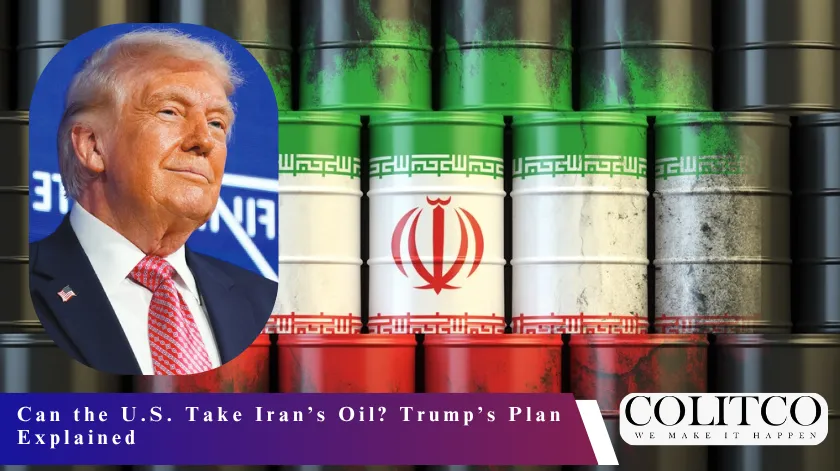
President Donald Trump has signalled his intent to seize Iran’s primary oil export facility as the United States continues military operations against Tehran. The remarks have drawn global attention and raised questions about the legal, military, and economic consequences of such a move.
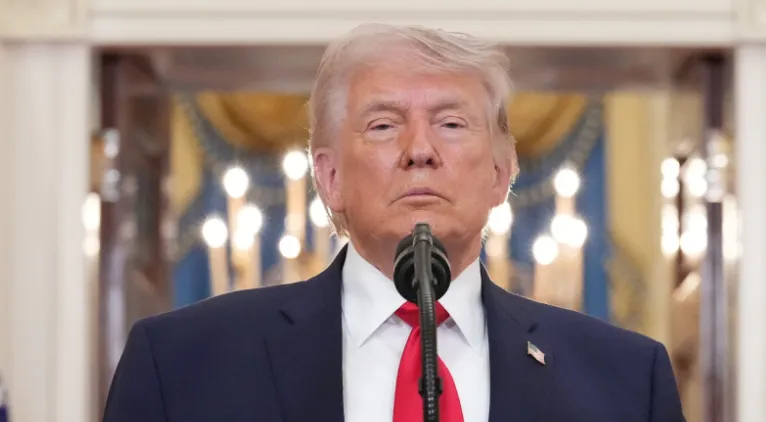
US President Donald Trump signals intent to target Iran’s oil infrastructure amid rising tensions. [Mint]
Trump’s Statements on Taking Iranian Oil
Trump told the Financial Times that his preference was to ‘take the oil’ in Iran. He pointed to the U.S. operation in Venezuela as a model. In that case, U.S. forces seized control of Venezuela’s oil industry after capturing President Nicolas Maduro.
Trump went further on his Truth Social platform, writing that the U.S. could ‘easily open the Hormuz Strait, take the oil, and make a fortune.’ He also acknowledged domestic political limits, stating that the American public may lack the patience for a prolonged occupation.
Kharg Island: Iran’s Key Oil Export Hub
The target at the centre of this debate is Kharg Island. It is a 22-square-kilometre coral outcrop in Iran’s Bushehr province. The Islamic Revolutionary Guard Corps (IRGC) closely guards the island. Entry requires official security clearance.
The island’s terminal receives crude oil from three major offshore oilfields: Aboozar, Forouzan, and Dorood. A network of subsea pipelines moves the oil to onshore processing facilities. From there, tankers load and ship Iranian crude to global markets.
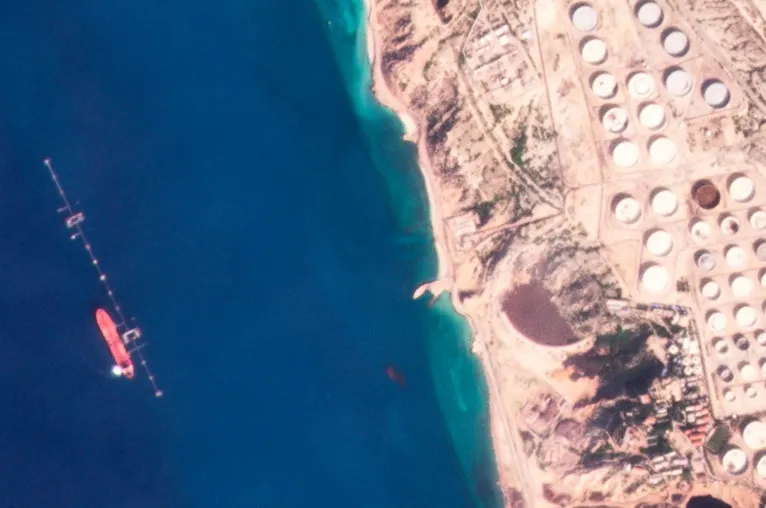
Kharg Island handles the majority of Iran’s crude oil exports to global markets. [The Times Of Israel]
Iran’s Oil Revenue and Economic Importance
Kharg Island generates enormous revenue for the Iranian government. Net oil export revenue from the island reached approximately $53 billion in 2025. This figure represents around 11 percent of Iran’s annual GDP.
Iran’s GDP stood at roughly $457.5 billion in 2023, according to World Bank data. Oil exports form a critical pillar of the Iranian economy. A seizure of Kharg Island would cut off a major source of state income.
“Seizing Kharg Island would constitute an economic knockout of the regime, essentially defunding Tehran.” U.S. official, as reported by Axios
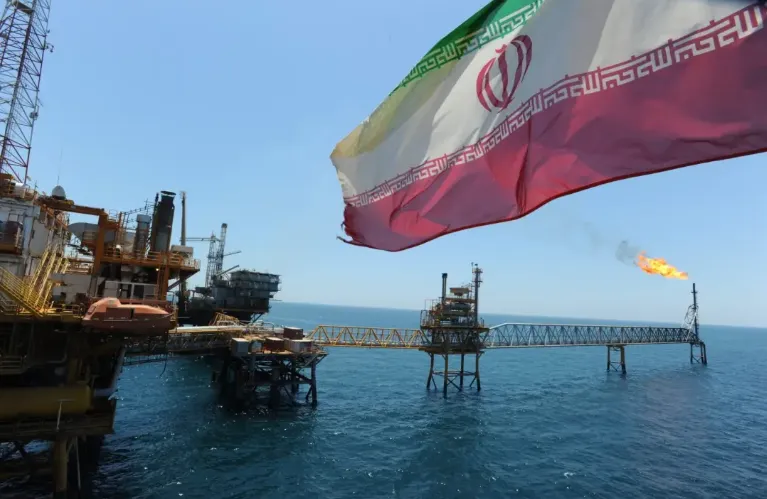
Iran’s oil exports remain a key pillar of its national economy and global supply. [Shale24]
Why the U.S. Military Is Already Moving
The Trump administration has deployed U.S. Marines ahead of a possible takeover of the island. Sailors and Marines aboard the USS Tripoli arrived in the Middle East on March 27, 2026. The USS Tripoli serves as the flagship of its amphibious ready group and carries the 31st Marine Expeditionary Unit.
Marine Expeditionary Units specialize in missions that involve seizing territory, conducting raids, and intercepting vessels. The Pentagon has also been surging broader troop numbers to the region in preparation for extended ground operations.
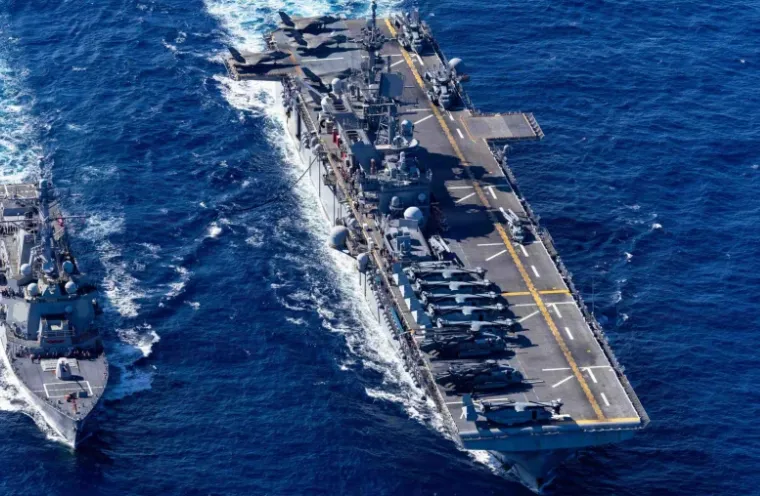
The USS Tripoli carries Marines trained for rapid-response and territorial operations. [UPI]
Military Risks of Seizing Kharg Island
Experts warn that the operation would face serious challenges. Analysts at the Foundation for Defense of Democracies say there is no guarantee a seizure would deliver a decisive victory. Iran would likely launch mass attacks against U.S. forces during any seizure or subsequent occupation.
Protecting troops would require robust defense systems and a large number of personnel. Setting up those systems quickly on the island would be difficult. U.S. air and naval assets are already stretched across multiple active missions in the region.
Threat of Wider Regional Retaliation
A U.S. ground operation could trigger broader regional escalation. Amir Handjani, a resident fellow at the Quincy Institute, told TIME that strikes on the island’s energy infrastructure would likely provoke massive Iranian retaliation on the energy infrastructure of the Arab States of the Persian Gulf.
Kuwait has already reported damage to a power generation and water desalination plant in what it described as Iranian aggression. One worker, an Indian national, was killed. Iran’s parliament speaker warned that any attempt to seize Kharg Island would result in targeted attacks on the vital infrastructure of regional countries that assist in the operation.
Seth Krummrich, a former U.S. chief of staff for special operations at CENTCOM, said the region is likely closer to the beginning or middle of this story than to the end.
The Legal Problem: Who Actually Owns the Oil?
International law presents a major barrier to Trump’s stated goal. Under the doctrine of Permanent Sovereignty over Natural Resources, adopted by the UN General Assembly in 1962, oil and minerals belong to the countries where they are found.
Occupying Kharg Island would not grant the U.S. access to Iranian oil. To actually control Iranian oil production, the U.S. would need to occupy Iran’s refineries and production sites on the mainland. That would amount to a full occupation of Iran itself.
The Venezuela Comparison and Its Limits
Trump has repeatedly compared his Iran strategy to the U.S. operation in Venezuela. He claimed that 100 million barrels of Venezuelan oil had reached Houston refineries. He suggested a similar model could work in Iran, given more time.
However, the situations differ significantly. Venezuela’s government cooperated with U.S. forces after Maduro’s capture. Iran’s government remains intact, continues to control its resources, and has resisted direct negotiations. The U.S. has no confirmed ground presence inside Iran.
Also Read: Iran Downs US Aircraft: Trump’s Quagmire Moment
Diplomatic Talks and the 15-Point Peace Plan
Alongside military pressure, the U.S. presented Iran with a 15-point peace proposal. The plan called for a complete end to Iran’s nuclear program and strict limits on its missile arsenal. Tehran publicly rejected the offer.
Trump claimed Iran had agreed to most of the points through indirect talks via Pakistani intermediaries. He told reporters the two sides had held very good meetings, both directly and indirectly. Iran denied direct contact with U.S. officials. The war between the U.S.-Israeli coalition and Iran has now entered its second month.
FAQS
- Q: What did Donald Trump say about Iran’s oil?
A: Donald Trump said the United States could seize Iran’s oil assets, including its main export hub, and potentially profit from them. His remarks were made in interviews and on social media.
- Q: Why is Kharg Island important to Iran?
A: Kharg Island is Iran’s primary oil export terminal and handles a large share of its crude shipments, making it vital to the country’s economy.
- Q: Can the U.S. legally seize Iran’s oil?
A: No. Under international law, countries retain ownership of their natural resources, meaning the U.S. cannot legally claim Iran’s oil simply by occupying territory.
- Q: What are the military risks of seizing Iranian oil assets?
A: Such an operation could trigger strong retaliation from Iran, including attacks on U.S. forces and regional infrastructure, potentially escalating into a wider conflict.
- Q: How does Trump’s Iran strategy compare to Venezuela?
A: Venezuela has been cited by Trump as a model, but unlike Venezuela, Iran has not cooperated with the U.S., making a similar approach far more complex and risky.
Disclaimer
This article is published by Colitco for informational and news reporting purposes only. It does not constitute financial, legal, or geopolitical advice. While every effort is made to ensure accuracy, developments involving Iran and the United States may change rapidly. Colitco does not accept liability for any decisions made based on this content. Readers are encouraged to consult official sources and qualified professionals for guidance.
Sources


