
The tech world just witnessed something remarkable. An Australian company founded by two Sydney brothers has secured a $9.7 billion (USD) deal with Microsoft, one of the largest AI infrastructure contracts ever signed.
IREN Limited, formerly known as Iris Energy, announced the five-year agreement on November 3, 2025. The deal positions the company as Microsoft’s largest customer for AI cloud capacity, providing access to Nvidia’s advanced chips at a scale that could reshape how hyperscalers build AI infrastructure.
This isn’t just another corporate announcement. It represents a fundamental shift in how the global tech industry views Australian innovation and execution capability.
From Bitcoin Miner to AI Infrastructure Powerhouse
IREN’s journey reads like a masterclass in strategic pivoting. Founded in 2018 by brothers Daniel and William Roberts – both former Macquarie Group bankers – the company initially focused on renewable-powered Bitcoin mining operations.
The transformation accelerated dramatically in 2023 when the Roberts brothers recognised the AI boom would demand exactly what they had built: massive data centres with secured power capacity running on renewable energy.
Today, IREN operates across North America with over 2,900 megawatts of grid-connected capacity. The company has essentially become what every hyperscaler desperately needs but struggles to build fast enough – ready-to-deploy AI computing infrastructure. 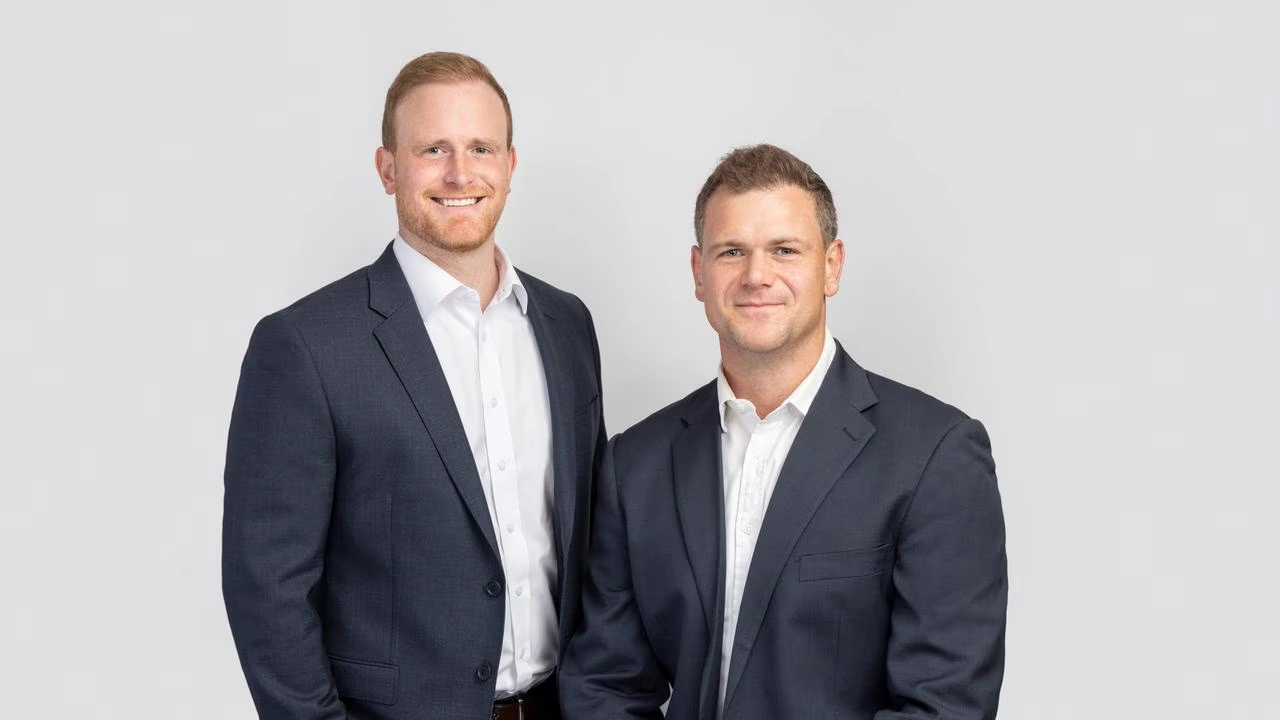
Daniel Roberts and William Roberts, Founders of IREN
The Deal’s Scale Speaks Volumes
The IREN Microsoft deal includes several components that highlight its significance:
Contract Structure:
- Five-year term valued at $9.7 billion USD
- 20% upfront prepayment from Microsoft
- Access to Nvidia’s GB300 GPUs
- Phased deployment through 2026
Hardware Investment:
- Separate $5.8 billion agreement with Dell Technologies
- Purchase of GPUs and ancillary equipment
- Deployment at IREN’s 750MW Childress, Texas campus
- New liquid-cooled data centres supporting 200MW of critical IT load
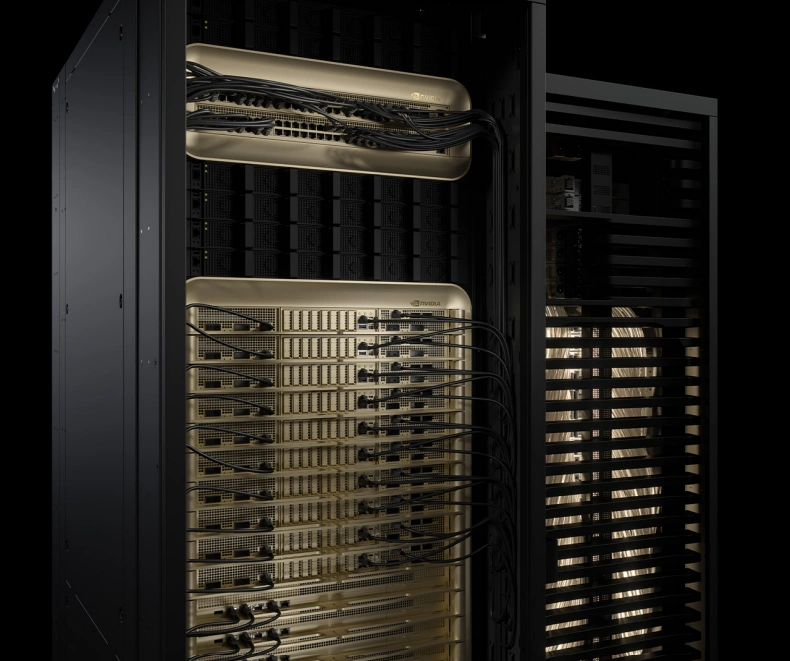
The upfront payment structure reveals Microsoft’s urgency. The company is essentially funding IREN’s infrastructure buildout to secure computing capacity that would otherwise take years to develop internally.
Microsoft CFO Amy Hood acknowledged last week that Azure capacity shortages are depressing cloud revenue and will likely persist through at least mid-2026. The IREN partnership offers a faster path to meeting surging demand for AI cloud capacity.
Why Former Crypto Miners Are Winning the AI Race
IREN’s success story reflects a broader industry trend. Former Bitcoin mining operations are emerging as critical partners for tech giants racing to scale AI infrastructure.
These companies possess three strategic advantages:
- Secured Power Capacity Bitcoin miners spent years securing long-term power agreements in locations with abundant energy. This asset has become gold in an era where power allocation delays are the primary bottleneck for AI deployment.
- Existing Data Centre Infrastructure Facilities built for energy-intensive Bitcoin mining were inherently over-engineered compared to standard data centres. They’re now perfect for power-dense AI computing workloads.
- Renewable Energy Experience IREN operates on 100% renewable energy—a selling point for companies facing increasing pressure to meet sustainability commitments while scaling AI operations.
Bernstein analysts noted that Bitcoin miners collectively secured access to more than 14 gigawatts of power, positioning them as critical partners as hyperscalers face power allocation delays.
Similar to how Australia’s copper industry is powering renewable energy infrastructure, IREN demonstrates how strategic positioning in energy-intensive sectors creates unexpected advantages in emerging tech markets.
Market Validation and Stock Performance
The market’s response to the announcement tells its own story. IREN shares surged more than 20% on the news, pushing the stock to near-record highs around US$67 per share.
Performance Metrics:
- Year-to-date gain: approximately 557%
- Market capitalisation: US$18.37 billion
- 52-week range: $5.13 to $74.15
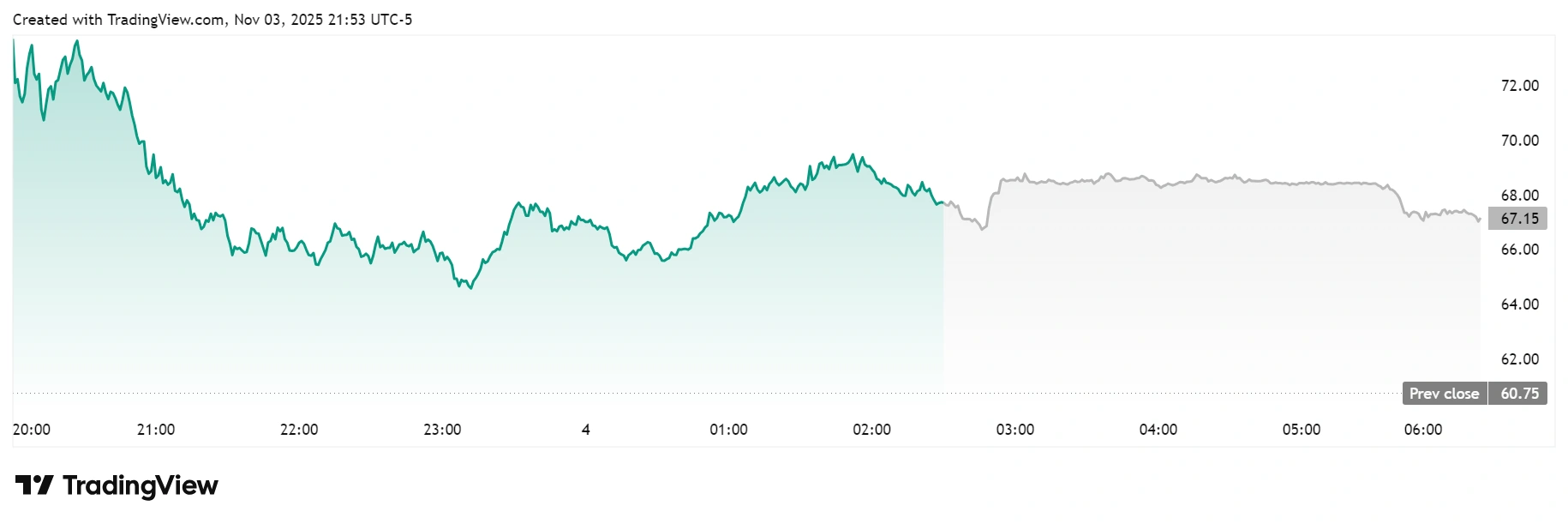
IREN Stock Performance Chart
This performance places IREN alongside established technology infrastructure providers and validates the thesis that former cryptocurrency miners possess strategic advantages in AI infrastructure development.
Cantor Fitzgerald analyst Brett Knoblauch raised his price target to $142 following the Microsoft announcement, citing IREN’s transformation into an infrastructure provider resembling CoreWeave’s business model.
The company now targets over $500 million in AI cloud annualised revenues by Q1 2026 – a remarkable pivot from its origins as a Bitcoin mining operation.
The Australian Angle That Everyone’s Missing
Here’s what makes this story particularly significant for Australia: IREN tried to list on the ASX in 2021 and was rejected.
The Australian Securities Exchange deemed a Bitcoin miner too risky or speculative for local markets. The Roberts brothers took their company to NASDAQ instead.
Today, IREN’s market capitalisation exceeds that of Qantas Airways and the Australian Securities Exchange itself. The irony is palpable.
Daniel Roberts recently noted on LinkedIn: “After the brown cardigans at the ASX rejected us due to their anti-technology stance, IREN – now ASX100 scale – was forced to list overseas.”
This outcome raises uncomfortable questions about Australian capital markets’ ability to support innovative tech companies, particularly those operating in emerging sectors like crypto or AI infrastructure.
Much like how ASX critical minerals companies are driving the global shift to EVs and renewable energy, Australian tech founders are capable of building globally competitive businesses – they just need local markets willing to back them at earlier stages.
What This Means for the AI Infrastructure Race
The IREN Microsoft deal signals several important shifts in how AI infrastructure gets built:
- Decentralisation of AI Computing: Rather than building every data centre in-house, hyperscalers are increasingly partnering with specialised operators who can move faster and access resources like power and land more efficiently.
- Power as the Primary Bottleneck: Microsoft spent nearly $35 billion on capital expenditures in the July-September quarter alone. Yet throwing money at the problem doesn’t solve power allocation delays or permitting challenges. IREN’s secured power capacity is its most valuable asset.
- The Nvidia Partnership Premium: IREN’s status as an Nvidia Preferred Partner gives it priority access to the latest GPU technology. In a supply-constrained market, this relationship creates significant competitive advantage.
Similar to OpenAI’s strategy to reduce Nvidia reliance through chip development, major tech companies are exploring multiple approaches to secure AI computing capacity.
The Risks Nobody’s Talking About
While the deal appears transformative, several execution risks deserve attention:
- Delivery Timelines: The Microsoft contract can be terminated if IREN fails to meet deployment schedules. Building 200MW of liquid-cooled data centre capacity while deploying thousands of GPUs by 2026 is an ambitious timeline.
- Customer Concentration: Microsoft will represent approximately 10% of IREN’s total capacity. This creates significant dependency on a single customer for a substantial portion of future revenue.
- Capital Intensity: The $5.8 billion hardware procurement from Dell requires careful financing. While Microsoft’s 20% prepayment helps, IREN must fund the balance through existing cash, operating cash flows, and additional financing initiatives.
- Market Valuation Concerns: JPMorgan downgraded IREN to “Underweight” in September 2025, suggesting the stock price already reflects optimistic assumptions about AI infrastructure growth.
Looking Ahead: Can IREN Execute?
The deal validates IREN’s strategy and positions the company at the centre of AI infrastructure development. But validation and execution are different animals.
IREN faces its next test on November 6, when the company reports quarterly earnings. Investors will scrutinise progress on GPU deployments, power utilisation rates, and updates on the Microsoft contract timeline.
The company’s track record offers some reassurance. IREN scaled from 5.6 EH/s to 50 EH/s of Bitcoin mining capacity in just 30 months – demonstrating the operational discipline required to deliver complex energy and data centre infrastructure rapidly.
Daniel Roberts, IREN’s Co-CEO, stated: “We’re proud to announce this milestone partnership with Microsoft, highlighting the strength and scalability of our vertically integrated AI Cloud platform.”
The Bigger Picture for Australian Tech
IREN’s success – achieved despite being rejected by local capital markets – highlights both Australia’s potential and its challenges in supporting tech innovation.
The country produces world-class tech founders with experience in infrastructure, energy, and finance. The Roberts brothers leveraged their Macquarie backgrounds to identify opportunities in stranded renewable energy and build infrastructure that now serves the world’s largest software company.
Yet these success stories increasingly happen offshore. Australian capital markets remain cautious about emerging tech sectors, pushing innovative companies to list in the US where investors are more comfortable with higher risk, higher growth opportunities.
As the global economy increasingly runs on AI infrastructure and critical minerals, Australia has natural advantages in both energy and resources. The question is whether local markets and regulators will support the next generation of companies building in these spaces.
Also Read: RBA Faces Critical Choice: Rate Cut or Hold as Inflation Surges Above Target
Final Thoughts
The IREN Microsoft deal represents more than a large contract. It demonstrates how strategic positioning, operational execution, and the courage to pivot can create enormous value.
It also proves that Australian founders can build globally competitive tech companies that partner with the world’s largest corporations. The fact this happened despite – rather than because of – local market support should prompt serious reflection about how Australia nurtures and supports tech innovation.
For investors watching the AI infrastructure boom, IREN’s transformation from rejected Bitcoin miner to Microsoft’s largest AI cloud partner offers a compelling case study. Whether the company can execute on its ambitious deployment timeline will determine if this deal marks a genuine inflection point or just another overheated tech story.
One thing is certain: the world is watching.


