
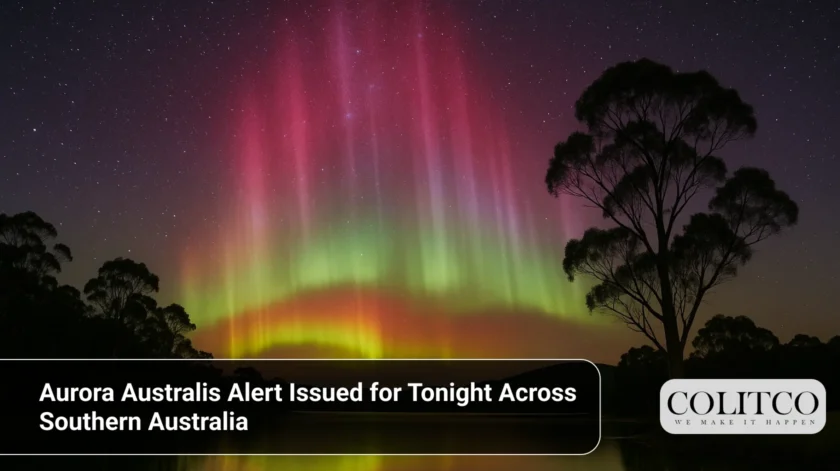
The Australian Space Weather Forecasting Centre (ASWFC) has issued an Aurora Australis alert for tonight, indicating a geomagnetic storm currently underway. This natural phenomenon could make the sky glow in southern parts of Australia if weather conditions allow. Residents and visitors in regions such as Tasmania, Victoria, southern New South Wales, and South Australia may witness this rare celestial light show.

Aurora Australis alert issued by The Australian Space Weather Forecasting Centre
Geomagnetic Storm Powers Aurora Australis Display
A geomagnetic storm results from solar activity, specifically charged particles ejected from the sun interacting with Earth’s magnetic field. This solar wind energises particles in the upper atmosphere, producing the Aurora Australis, known as the Southern Lights. The current alert signals a G3-level geomagnetic storm, which is considered strong enough to increase auroral visibility at lower latitudes than usual.
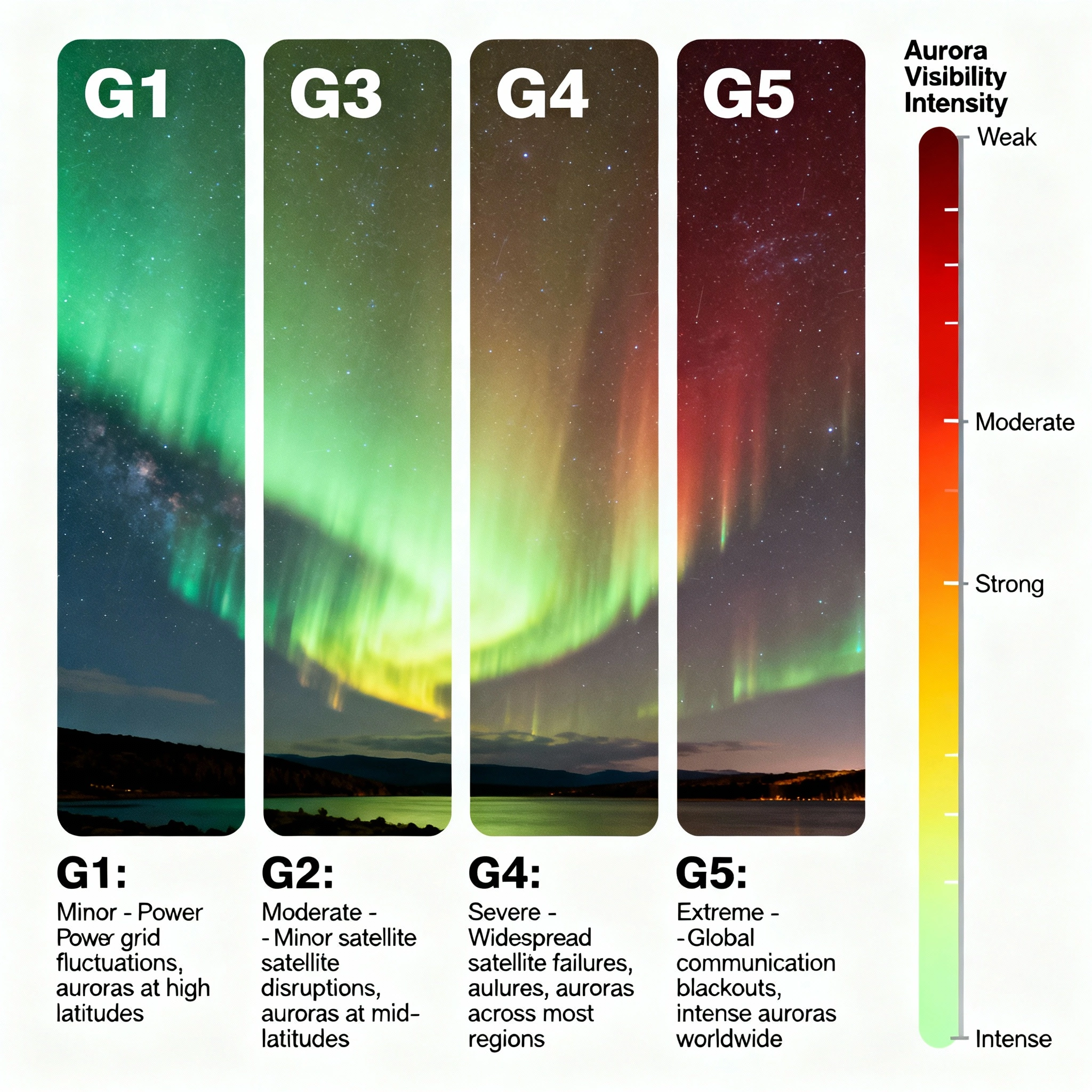
Geomagnetic storm scale showing tonight’s G3 alert level
Optimal Viewing Locations and Times
The best chances to observe the Aurora Australis tonight lie in the southernmost parts of the continent. Tasmania offers the highest likelihood of seeing the phenomenon due to its proximity to the geomagnetic south pole. Mainland southern states such as Victoria, southern New South Wales, and South Australia also have opportunities to witness the display but require dark skies and minimal light pollution.
Viewing is expected to be best between approximately 10 pm and 2 am local time. During this window, the aurora typically lasts between one and three hours. The ASWFC recommends checking their auroral oval tool to verify if your location falls within the equatorward visibility line for the night.
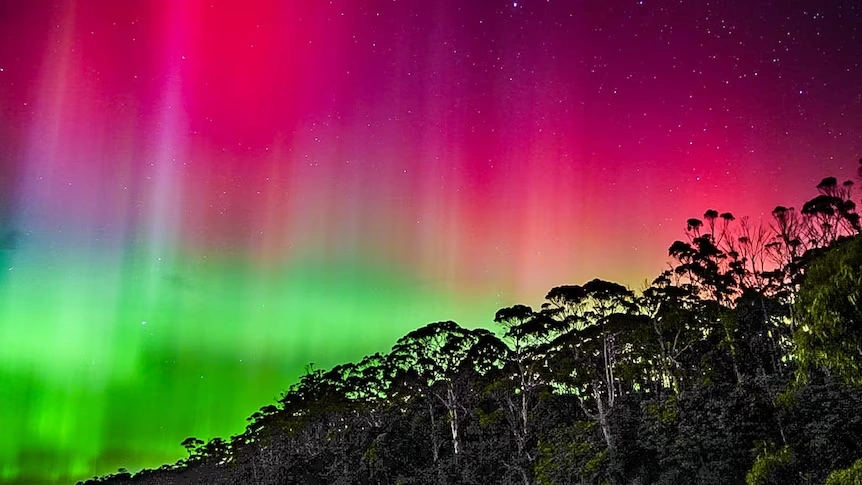
Aurora Australis, Tasmania in 2023
Previous Sightings and Current Expectations
Earlier this year, Australia experienced its first major Aurora Australis event on June 1, caused by a severe geomagnetic storm. Since then, solar activity has remained high due to the solar maximum phase predicted for 2025. This peak involves an increase in sunspots and solar flares, which propel more charged particles towards Earth, stirring frequent and vibrant auroras.
The ASWFC’s recent alert follows reports of sightings from late October to early November, especially around midnight in Tasmania, Victoria, southern New South Wales, and South Australia. This surge in auroral activity marks one of the brightest displays seen in two decades.
https://youtu.be/Qlsyxut0AIQ?si=1ufKVyq3RqSmqLZP
Scientific Explanation of Aurora Australis
The Aurora Australis occurs when charged solar particles collide with gases in Earth’s atmosphere, predominantly oxygen and nitrogen. These collisions release photons, creating visible light that appears as curtains, ripples, or waves in the night sky. The predominant colours are green and pink, with occasional hints of red, blue, and purple.
The Earth’s magnetic field directs these particles towards the polar regions. The geomagnetic south pole lies near Antarctica, which explains why the Southern Lights are commonly seen much further south. However, strong geomagnetic storms can push the aurora’s visibility towards lower latitudes.
https://youtu.be/PgIKsuZ3RZU?si=MkrIJJcgfYMNILIp
Viewing Tips for Tonight’s Aurora Australis
Observers should seek locations with little to no light interference. National parks, rural areas, or coastal spots far from urban light sources provide the best vantage points. Clear skies without cloud cover enhance visibility, so local weather should be monitored before heading out.
Adequate clothing is essential, as nights in southern Australia can be cold during this period. Bringing a reliable camera or smartphone with long exposure settings allows for better aurora photography.
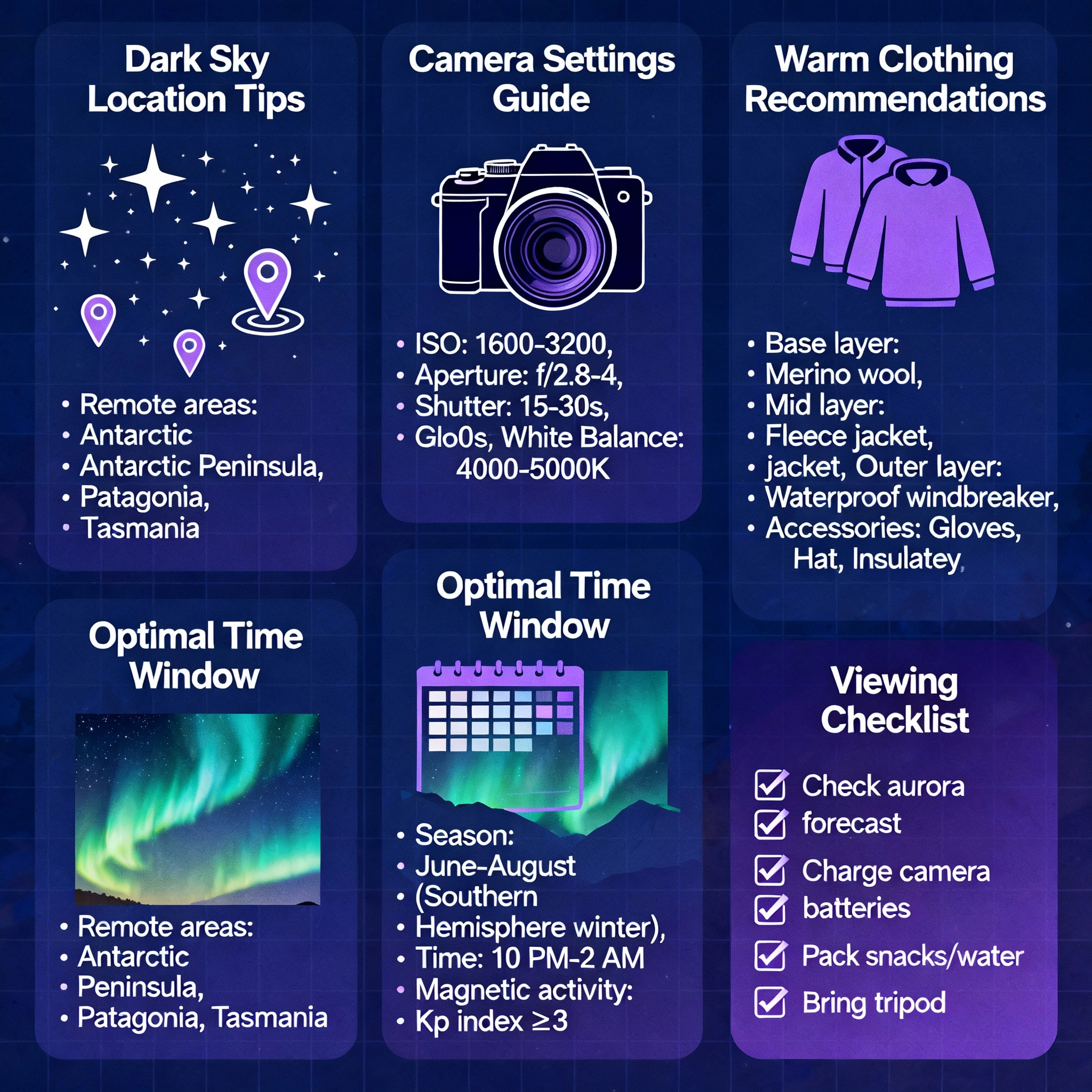
Essential tips for viewing and photographing Aurora Australis tonight
Current Weather Conditions and Moon Phase Impact
While the aurora alert is promising, weather plays a significant role in the ability to witness the lights. Clear, dark skies free from cloud coverage are necessary. Check local forecasts for tonight to confirm suitable viewing conditions.
The moon phase also affects visibility since a bright moon can wash out the aurora’s colours. Tonight’s moon is nearly full, which may pose challenges for seeing fainter details. Despite this, the strength of the geomagnetic storm means the aurora could still be prominent.
WARNING/ALERT: A G3/Strong geomagnetic storm is currently in progress with a maximum Kp index of 7 due to coronal mass ejection (CME) influences. Stay tuned @SpaceweatherSA for more updates. @SANSA7 @dstigovza pic.twitter.com/7Qy8qYyPHl
— SANSA Space Weather (@SpaceweatherSA) November 6, 2025
Broader Impact of Solar Maximum on Aurora Visibility
The Earth is currently experiencing a solar maximum phase in its approximately 11-year sunspot cycle. This period features a heightened number of sunspots and solar flares, which increase the frequency and intensity of geomagnetic storms.
In 2025, space weather experts forecast a peak of around 115 sunspots during July, contributing to more charged particles reaching Earth’s atmosphere. This has elevated opportunities to witness auroras both in the Northern and Southern Hemispheres.
How to Stay Updated
To track the auroral activity in real-time, the public can access live maps and alerts through the ASWFC website. Subscribing to geomagnetic storm notifications is also recommended for timely information on upcoming aurora events.
Social media groups dedicated to aurora sightings offer community reports and tips for capturing the spectacle. Last month, reports of sights from Tasmania and southern Australia confirmed that the current solar maximum is delivering memorable light shows.
Also Read: NAB FY2025 Pillar 3 Report: Capital Leadership and Financial Stability
Aurora Viewing Beyond Australia
New Zealand’s South Island is another prime destination for viewing the Aurora Australis due to its southern location and dark sky areas. The country has several recognised dark sky reserves where the visibility of the Southern Lights is enhanced.
While Antarctica remains the main zone of auroral activity, increased solar activity this year has expanded visibility northwards towards populated southern regions.
Scientific Monitoring and Forecasting of Aurora Activity
Space weather agencies worldwide, including NOAA and ASWFC, monitor solar wind and geomagnetic conditions to predict auroral displays. The geomagnetic Kp index measures the magnitude of geomagnetic storms; tonight’s forecast includes a Kp around 5 to 6, indicating a moderate to strong storm.
These measurements inform alerts that help the public and scientists anticipate when and where auroras might appear. The technology involves satellite data and ground-based observations.


