

The Qantas financial projections indicate a great change in FY26 expectations. The airline has revised the guidelines due to the increased geopolitical tensions. The cost of fuel has been taking centre stage with regard to financial performance.
The results of 1H26 have more than doubled jet fuel prices. Refining margins soared to about US 120 as compared to US 20 per barrel in February. Consequently, the cost of 2H26 fuel is currently estimated to be 3.1 -3.3 billion.
In spite of this pressure, Qantas continues to have high demand in significant markets. The airline has been changing its approach in order to cope with volatility. In this changing environment, operational flexibility will continue to be critical.
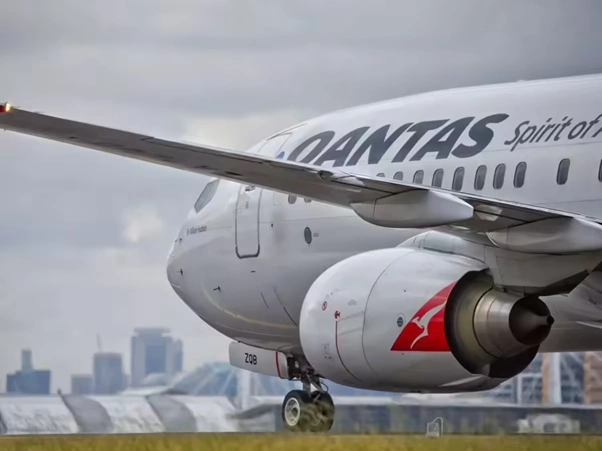
Qantas aircraft operations amid rising global fuel costs. [Courtesy: The Economic Times]
Why Is Qantas FY26 Outlook Explained As Cautiously Balanced?
The Qantas FY26 outlook indicates equilibrium between the strength of demand and cost pressures. The Middle East war has brought about uncertainty within the fuel supply chains. Qantas has retaliated with hedging mechanisms of about 90 per cent of 2H26 crude exposure.
Nonetheless, exposure to refining margins is still a challenge. These margins have gone up drastically in recent months. The airline has also been in close liaison with the government and suppliers to make sure that there is fuel.
The global economic conditions have not affected demand. This equilibrium is in favour of a tentatively steady outlook. The company is still keeping a close eye on developments.
Where Is Qantas Positioning Its Growth Strategy 2026?
The Qantas growth strategy 2026 is oriented towards strategic capacity adaptation and network optimisation. The airline has repositioned aircraft on US flights to Europe. Strong demand shifts are reflected in the increased flights to Paris and Rome.
Amid Middle East disruptions, customers are opting to use other routes. Qantas has no direct flights to the Middle East. Nonetheless, it serves customers travelling on partner airlines. It has added the option of flexible booking and refunding.
The domestic capacity has decreased by approximately 5 percentage points in 4Q26. These modifications match operations with the trends in demand. Redeployment helps in maintaining the revenue performance.
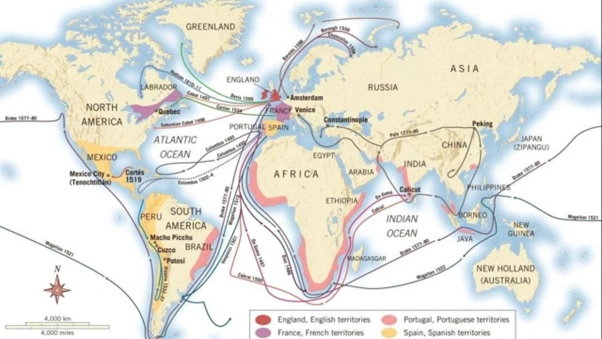
Qantas international expansion is focusing on European routes. [Courtesy: Student of History]
When Will Qantas Financial Results Forecast Impact Earnings Performance?
Qantas financial results forecast indicates that the financial results will be affected by cost pressures in the near term. Profitability is likely to be burdened by increased fuel costs. Nevertheless, the increase in revenues offers some compensation.
The 2H26 international unit revenue (RASK) is projected to increase by 4 to 6 per cent. This is double the previous guidance. The growth of RASK within the country is anticipated to be about 5 per cent.
On 4Q26, the domestic RASK can be as high as 6 per cent. These values are based on the assumption that the level of demand is constant.
Not only has the airline sold 50 per cent of 4Q26 revenue prior to the conflict, but it has also already sold it. The costs will be affected by the effectiveness of cost control.
How Is Qantas Managing Risks In Its FY26 Outlook?
The Qantas FY26 outlook explained is all about risk mitigation. The airline is working on capacity and pricing changes. To counter the increasing fuel prices, fare increments are being implemented.
Qantas is also cutting down domestic capacity to ensure that it is efficient. Alternatives or refunds are being offered to customers who are affected by changes. The airline has high liquidity within its financial framework. As of FY26, capital spending amounts to no more than $4.1 billion.
This is at the bottom end of previous guidance. The target range of Net Debt is expected to be within the range between 30 June 2026. These are measures that enhance financial resilience.
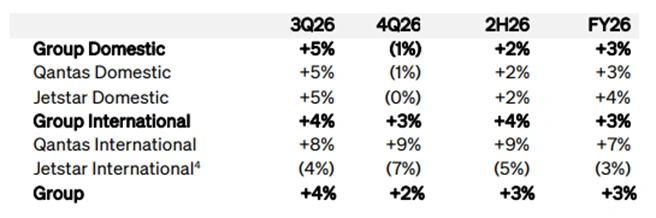
Qantas financial strategy reflects disciplined capital management
What Is Driving Investor Focus On Qantas Growth Strategy 2026?
Financial discipline has ensured that investor focus on the Qantas growth strategy 2026 is high. Shareholder returns remain a priority for the airline. A $300 million interim dividend of 19.8 cents per share will be paid. This will be on 15 April.
The intended 150 million buyback has, however, not yet started. This is a sign of reserve in the present state of uncertainty. The company is progressing with FY27 funding plans.
Strong demand and strategic adjustments support investor confidence. The airline maintains the flexibility to adapt to the changing conditions. This adaptability is key to long-term growth.
Also Read: Qantas Share Price Outlook: Macquarie Signals Strong Upside
FAQs
Q1. What are the updated Qantas Financial Results Forecast for FY26?
A1: Fuel costs are now estimated at $3.1 – 3.3 billion for 2H26. Revenue growth remains supported by strong demand.
Q2. Why Did Qantas Reduce Domestic Capacity In 4Q26?
A2: Domestic capacity was reduced by around 5 percentage points. This aligns operations with demand and rising costs.
Q3. How Much Of Qantas Fuel Exposure Is Hedged?
A3: Qantas has hedged approximately 90 per cent of 2H26 crude oil exposure. Refining margins remain a key risk.
Q4. What Dividend Has Qantas Announced For FY26?
A4: A $300 million interim dividend of 19.8 cents per share will be paid. Payment is scheduled for 15 April.
Disclaimer
This article is based on Qantas Group’s April 2026 market update and reflects current disclosed data. It does not constitute financial advice. Investors should assess risks, including fuel volatility and geopolitical factors. Forecasts may change due to evolving market conditions. Always consult a licensed financial advisor before making investment decisions related to airline or equity markets.
Sources