Market participants monitor the CEN August Performance closely. The latest metrics reveal a dynamic shift in operations. Investors now have clear data to evaluate the overarching ASX Energy Stock Outlook.
Contact Energy published its August 2026 Monthly Operating Report recently. The document outlines significant operational improvements across all divisions. These figures confirm an undeniable Energy Cycle Acceleration ASX trend.
The customer business achieved impressive sales volumes during this period. Mass market electricity and gas sales reached 550GWh. This result easily beat the August 2025 total of 454GWh.
Retail gas sales drove a portion of this growth. The company sold 167GWh of retail gas in August 2026. This volume more than doubled the 74GWh sold in August 2025.
Netback figures also demonstrated solid stability and pricing power. The mass market netback settled at $148.57 per MWh. This marks a slight increase from $148.36 per MWh a year earlier.
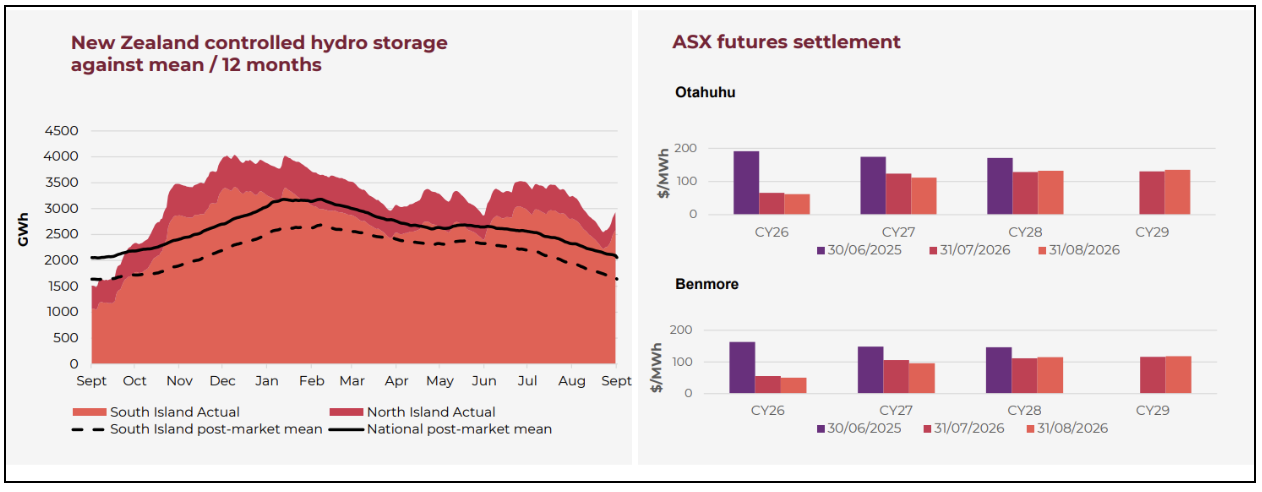 Fig 1: Hydro storage and forward prices [marketindex]
During that month, average power sale prices showed an increase. The average amount of money that customers paid for electricity was $339.23 per MWh, which is much higher than the previous year when the price was $311.74 per MWh.
Despite inflation, the company had to deal with cost factors very well. The direct pass-thru electricity costs for customers went up to $161.23 per MWh compared to $141.83 per MWh in the previous year.
Contact Energy reduced its internal cost to serve customers. The cost to serve fell to $11.75 per MWh. This indicates a solid improvement from $12.47 per MWh previously.
Energy costs plummeted, benefiting the bottom line directly. The business recorded energy costs of $178.38 per MWh. This figure dropped substantially from $199.73 per MWh in August 2025.
Wholesale Generation and Industrial Sales
Wholesale operations matched the positive momentum seen in retail. Contracted wholesale electricity sales hit 1,087GWh. This volume remains practically flat compared to the 1,090GWh sold in August 2025.
Electricity sales to Commercial and Industrial clients grew strongly. The company delivered 204GWh to these large-scale customers. This reflects a healthy increase from 168GWh in the previous year.
Commercial and Industrial netback pricing also improved significantly. The C&I netback reached $205.56 per MWh at the connection point. This price climbed from $193.74 per MWh a year earlier.
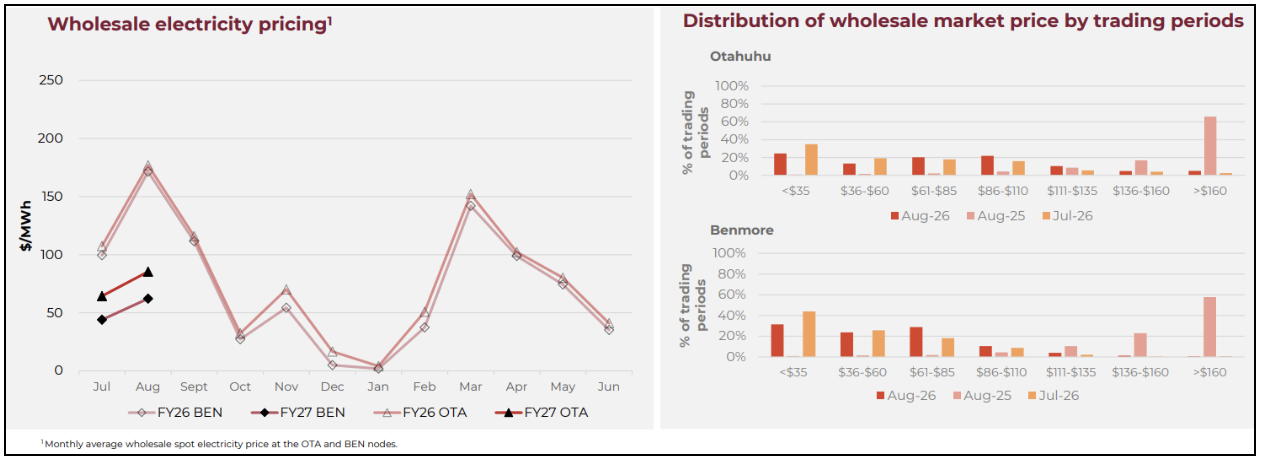 Fig 2: Monthly average wholesale spot electricity price at the OTA and BEN nodes [marketindex]
Electricity Contract for Difference sales decreased slightly. Contact executed 473GWh in CFD sales during the month. This volume fell from 518GWh in August 2025.
Electricity and steam net revenue climbed across the board. The company reported $164.59 per MWh for the month. Last year, this metric stood at $164.24 per MWh.
Generation Costs Plunge Amid Resource Shifts
Contact generated or acquired a total of 1,125GWh of electricity. This figure represents a minor drop from 1,174GWh in August 2025. However, the cost profile changed dramatically.
The unit generation cost dropped to $40.90 per MWh. This cost includes acquired generation expenses. It reflects a huge improvement from $57.52 per MWh in the previous year.
Own generation costs showcased even better operational efficiency. The company spent just $27.38 per MWh on its own generation. This number plummeted from $41.99 per MWh in August 2025.
A huge reduction in thermal generation drove these savings. The company produced only 8GWh from thermal sources. This output crashed from a hefty 116GWh in August 2025.
Consequently, internal gas consumption for generation fell drastically. Contact used just 0.1PJ of gas for internal generation. Last year, the company burned 1.0PJ for the same purpose.
Hydro generation expanded to replace the thermal output. The hydro assets produced a robust 539GWh. This generation jumped from 464GWh in the previous year.
Geothermal generation remained perfectly stable and reliable. The geothermal plants generated 457GWh during the month. This output almost matched the 459GWh produced in August 2025.
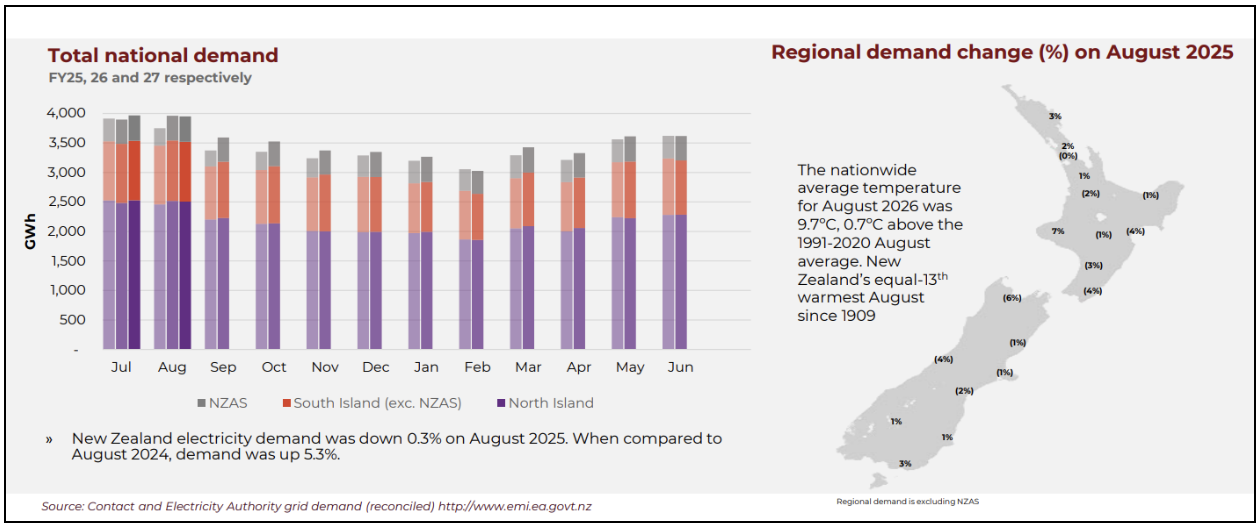 Fig 3: Electricity demand [marketindex]
Hydro Storage Exceeds Historical Averages
Favourable weather patterns boosted hydro storage levels across the network. South Island controlled storage reached 166% of the mean as of September 13, 2026. North Island controlled storage registered at 84% of the mean.
The Clutha scheme experienced outstanding water retention. Total Clutha scheme storage hit 138% of the historical mean. Water inflows into the Clutha catchment reached 164% of the mean for August.
These strong inflows follow an inconsistent winter season. Catchment inflows recorded 132% in July and 171% in June. May 2026 only saw inflows at 89% of the historical mean.
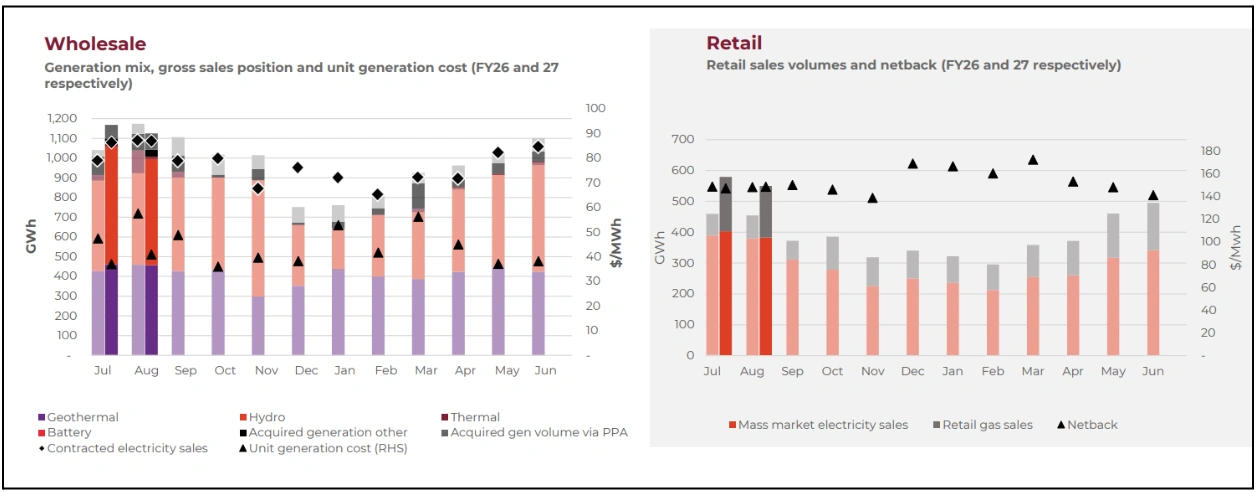 Fig 4: Business performance [marketindex]
Futures Pricing and Market Derivatives
Traders track the Otahuhu futures settlement wholesale price eagerly. The fourth quarter of 2026 priced at $45.50 per MWh on September 15. This reflects an increase from $39.50 per MWh at the end of August.
The ASX forward curve showed earlier volatility in pricing. At the end of July 2026, the Q4 price stood at $51 per MWh. Contact Energy navigates these pricing shifts with secure market contracts.
Market derivatives yielded positive financial results for the month. The company realised gains of $0.80 million on market derivatives. These derivatives do not sit in a formal hedge relationship.
The company holds significant gas reserves for upcoming operations. Contact secured 8.2PJ in contracted gas volume. This volume covers the next 12 months and includes contracted swaps.
Climate Conditions Impact National Demand
Warmer weather suppressed national electricity demand slightly. New Zealand electricity demand fell 0.3% compared to August 2025. However, demand still tracked 5.3% higher than August 2024 levels.
The nationwide average temperature reached 9.7°C in August 2026. This temperature sat 0.7°C above the 1991-2020 August average. New Zealand experienced its equal-13th warmest August since 1909.
Expanding the Renewable Energy Pipeline
Contact continues constructing major renewable development projects. The Te Mihi Stage 2 geothermal project requires $712 million in approved costs. Management expects this asset to come online in the third quarter of calendar year 2027.
Battery storage also forms a crucial part of the strategy. The Glenbrook-Ohurua Battery 2 carries a $235 million price tag. The company plans to activate this facility in the first quarter of 2028.
Solar developments expand the generation portfolio even further. Contact advances the Glorit Solar 2 project alongside Lightsource bp. This joint venture costs $316 million and targets a late 2028 completion.
Customer Connections Accelerate Sharply
Retail operations achieved exceptional customer acquisition results. Total customer connections surged to 712,000 across all services. This massive jump easily surpasses the 655,000 connections recorded a year ago.
Electricity individual connection points grew at a steady pace. Contact now services 469,500 electricity ICPs nationwide. This figure rose from 449,000 electricity ICPs in August 2025.
Gas and telecommunications segments mirrored this strong operational growth. Gas ICPs expanded to 80,500 from 72,500 last year. Telco connections exploded to 153,000, up from just 129,000 previously.
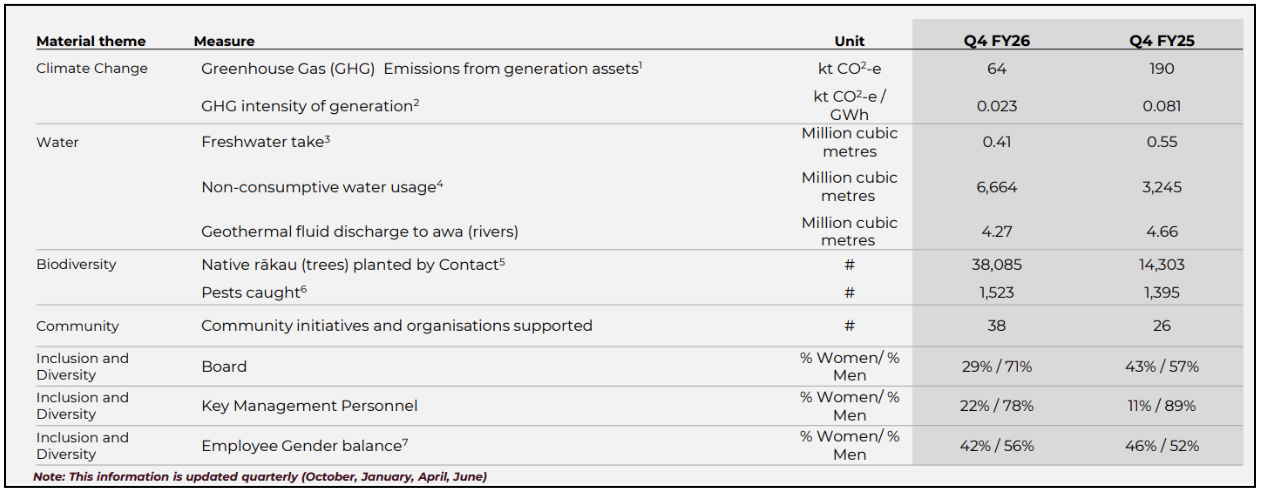 Fig 5: Environment, Social and Governance (ESG) [marketindex]
Environmental Upgrades and Corporate Diversity
The company delivered immense improvements in greenhouse gas emissions. Generation assets produced just 64 kilotonnes of CO2 equivalent. This output crashed from 190 kilotonnes in the previous year.
Generation carbon intensity plummeted alongside total emissions volume. The greenhouse gas intensity dropped to 0.023 kilotonnes per GWh. Last year, this intensity metric sat at 0.081 kilotonnes per GWh.
Water management showed responsible and measured resource utilisation. Operations required 0.41 million cubic metres of freshwater take. This volume represents a decrease from 0.55 million cubic metres earlier.
The company actively tracks workplace inclusion and diversity statistics. The Board currently features 29% women and 71% men. Key Management Personnel consist of 22% women and 78% men.
Biodiversity and Social Responsibility Efforts
Contact escalated its biodiversity initiatives this quarter. Workers planted 38,085 native trees across various operational sites. This planting effort dwarfs the 14,303 trees planted in the previous period.
Pest control programs also expanded their environmental reach. Teams caught 1,523 pests during this specific reporting period. This number edged out the 1,395 pests caught last year.
Community support programs received increased corporate funding and engagement. The company supported 38 different community initiatives and organisations. This marks a clear increase from 26 supported organisations previously.
Shaping the ASX Energy Stock Outlook
All these operational metrics feed into a broader sector narrative. The impressive CEN August Performance highlights serious corporate momentum. Investors study these efficiency gains to predict future market movements.
Lower generation costs provide defensive padding for margins. Strong customer connection growth secures reliable forward revenue streams. The active renewable pipeline promises long-term capacity expansion.
Analysts consider this data crucial for evaluating the ASX Energy Stock Outlook. Contact Energy demonstrates clear operational superiority in current market conditions. The company positions itself perfectly for the upcoming financial decade.
Market watchers recognise the signs of an Energy Cycle Acceleration ASX phase. Surging retail volumes and plunging costs create a perfect storm. Contact Energy proves ready to capitalise on this emerging market opportunity.
Also read: Build an ASX Portfolio Strategy for Market Selloffs
FAQ
- How did Contact Energy cut its generation costs so sharply in August?
- Contact slashed own generation costs to $27.38/MWh by throttling expensive thermal output down to 8GWh and relying on surging hydro catchments.
- Does the mild winter weather and softer national demand threaten wholesale earnings?
- Strong commercial and industrial sales expanded to 204GWh at an improved $205.56/MWh netback, shielding base revenues from milder local temperatures.
- What underpins the company’s multi-year margin expansion?
- Total customer connections jumped to 712,000, while a $1.26B buildout in geothermal, solar, and battery storage locks in low operating costs.
- How well-protected is Contact against unexpected fuel shortages heading into summer?
- South Island hydro reservoirs sit high at 166% of normal levels, backed by 8.2PJ of secured gas contracts for the next 12 months
Disclaimer
This article is meant only for informational purposes. If you are an investor who is watching Mineral Resources Limited closely, all the data published in the content is sourced from ASX announcements and external sources. Kindly verify all information related to the share price and market data. Any investment should be made at the investor’s own risk. Colitco does not hold any position in the above-mentioned Company
———————————
Source:

Luke Carlino is a seasoned Copywriter, Content Strategist, and Social Media Manager specialising in Mining, Finance, and Business journalism. With more than a decade of industry experience, he brings rigorous editorial standards and commercial acuity to every project.