The Deep Yellow uranium strategy 2026 centres on a difficult balancing act: preparing a mine for construction while waiting for commercial conditions that justify committing shareholders’ capital.
In its annual report released on 16 September, Deep Yellow (ASX:DYL) reported A$160 million in net cash at 30 June 2026, no debt and full product offtake flexibility across its projects.
Tumas in Namibia remains the immediate priority. Mulga Rock in Western Australia and exploration in the Northern Territory provide longer-term opportunities.
For investors, the question is how these assets could become dependable uranium supply. The report presents management’s case for stronger nuclear demand, but it does not establish that another global supply shock is inevitable.
Why Tumas Leads the Development Plan
Deep Yellow anticipated a final investment decision for Tumas in the fourth quarter of calendar 2026, subject to market conditions.
That qualification matters. The board has delayed approval while continuing selected development activities, seeking to improve readiness without committing to the entire construction programme.
At financial year-end, detailed engineering was 79% complete and the three-dimensional engineering model was 81% complete. More than 76% of major process plant equipment had been tendered, with most long-lead equipment packages awarded.
Bulk earthworks were also complete. The report subsequently recorded the award of civil and concrete contracts.
These milestones demonstrate preparation. They should not be confused with full construction approval or operating production.
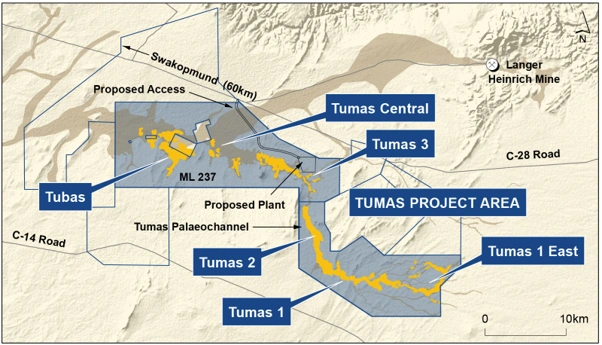
Figure 1: Deep Yellow’s Tumas project fly-through. This depicts the proposed development rather than a completed operating mine. Image credit: Mining and Energy
What the Annual Report Establishes
The figures below summarise the development position described in Deep Yellow’s 2026 annual reporting.
| Measure | Reported position |
| Net cash at 30 June 2026 | A$160 million |
| Debt | None |
| Tumas investment decision | Anticipated Q4 2026, subject to market conditions |
| Detailed engineering | 79% complete at year-end |
| Tumas annual production target | 3.6 million pounds of uranium oxide |
| Product offtake | Full flexibility retained |
The production figure is a project target, not current output. Financing, approval, construction and commissioning remain essential steps.
Tumas resource and reserve figures in the report are presented on a 100% project basis. A subsequent-event disclosure records local partner Oponona becoming a 5% shareholder in Reptile Uranium Namibia, an important distinction when assessing ownership.
How Deep Yellow Is Reducing Development Risk
Several practical steps underpin DYL global uranium supply positioning:
- Power: A transmission power supply agreement with NamPower was executed in December 2025, with connection design progressing.
- Water: Deep Yellow executed its NamWater water supply agreement in August 2026, after financial year-end.
- Technical review: An independent technical expert completed initial financing due diligence in December 2025 and identified no material issues.
- Mine planning: Reviews of mining methods and pit configurations aim to improve early plant feed, mining costs and tailings capacity.
These activities address the infrastructure and execution requirements behind the production target. They also give management better information for its investment decision.
Why Cash and Contract Flexibility Matter
Deep Yellow’s debt-free balance sheet provides room to continue technical work while considering its development commitments.
It does not mean Tumas is fully funded. The annual report says mandated lead arranger Nedbank was awaiting confirmation of the proposed debt facility size before approaching the market.
That leaves an important financing decision outstanding. Offtake flexibility is another deliberate feature. With future product uncommitted, Deep Yellow retains scope to negotiate sales arrangements as market conditions evolve.
The trade-off is uncertainty: flexibility preserves commercial choices, but does not establish future selling prices or contracted revenue.
Investors therefore need to assess financing and sales arrangements together. Progress on one side does not automatically settle the other.
Where the Supply Shock Argument Fits
Chairman Chris Salisbury links the company’s outlook to fuel supply security, nuclear energy’s role in reliable electricity generation and decarbonisation, and growing power requirements associated with artificial intelligence.
These are management’s reasons for maintaining confidence in uranium. However, the uranium supply shock investment outlook requires a distinction between a favourable demand argument and an event that has actually occurred.
The report does not provide a confirmed date or quantified magnitude for a future global shortage.
Deep Yellow’s response is to prepare potential supply while retaining commercial choices. Whether that positioning creates shareholder value will depend on market conditions and successful project delivery.
How the Australian Portfolio Adds Depth
Mulga Rock provides a second development opportunity beyond Namibia.
During FY2026, Deep Yellow continued metallurgical work and feasibility studies. Pilot work demonstrated recovery of uranium, base metals and rare earth elements, while subsequent testing examined refining intermediate liquids into final products.
Mining methods and the project’s geological and processing model also remained under review.
Hydrogeological drilling and bore installation were anticipated to finish by December 2026, followed by extensive pumping tests in the first half of 2027.
These studies will help define dewatering requirements and development choices. They do not yet establish commercial recovery performance.
Readers can locate the asset through Deep Yellow’s Mulga Rock project overview, with the annual report providing the reporting-period details used here.
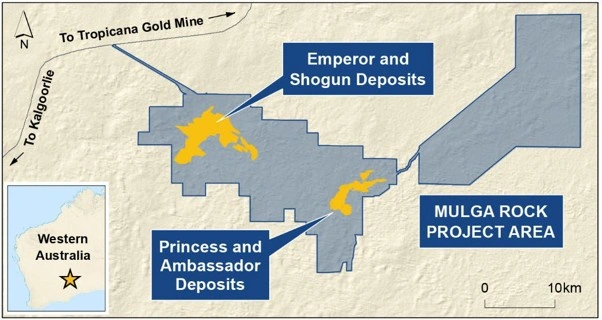
Figure 2: Archival map showing Mulga Rock’s principal deposits in Western Australia. Image credit: Deep Yellow Limited, via ABN Newswire.
What Could Slow the Strategy
The annual report identifies unfinished work that investors should monitor:
- Investment timing: Tumas approval remains conditional on market conditions.
- Updated economics: Capital and operating estimates previously expressed in 2024 real terms are being refreshed.
- Financing: Technical due diligence does not constitute a completed debt agreement.
- Execution: Engineering, procurement and infrastructure preparation must translate into effective construction.
- Australian studies: Mulga Rock’s processing and water investigations still need to inform its revised feasibility assessment.
A stronger uranium market would not remove these requirements. Updated costs could also affect the commercial benefit of higher selling prices.
Who Is Responsible for Delivery
Greg Field joined as managing director and chief executive in February 2026, following senior roles at Rio Tinto.
His stated priorities include reviewing Tumas mining, processing, infrastructure, contracting and execution arrangements to improve capital efficiency and reduce risk.
The company also appointed Sinead Kaufman as a non-executive director in May, adding mining operations and uranium experience.
Leadership strengthens the company’s capacity to make development decisions. The evidence of delivery will come through project outcomes, spending discipline and progress against disclosed milestones.
What Investors Should Watch Next
The next updates should make the development case more measurable:
- Tumas approval: Whether the anticipated investment decision proceeds and under what conditions.
- Funding structure: The proposed debt amount, terms and any remaining capital requirement.
- Revised estimates: Updated construction costs, operating assumptions and schedules.
- Sales commitments: Whether offtake flexibility converts into commercially attractive agreements.
- Portfolio progress: Mulga Rock study results and exploration outcomes across Namibia and Australia.
Together, these measures provide a firmer basis for assessment than uranium sentiment alone.
What Happens Next
The Deep Yellow uranium strategy 2026 is a staged development plan supported by cash, technical preparation and multiple assets.
Its immediate test is Tumas. Management must bring together updated economics, financing and market conditions before committing to full development.
For shareholders, the decisive question is whether that preparation becomes a funded, executable project capable of supplying customers.
Also Read: Why Franco-Nevada Just Put Another A$200m on Minerals 260
FAQ
Is Deep Yellow producing uranium at Tumas?
No. The annual report describes a development project awaiting an investment decision.
When was that decision anticipated?
The fourth quarter of 2026, subject to market conditions.
Does the report confirm a global supply shock?
No. It outlines management’s favourable uranium outlook.
Disclaimer
Prepared for Colitco for informational purposes only, based on Deep Yellow’s 2026 Annual Report. This article does not constitute investment advice. Development targets and forecasts remain subject to financing, market, technical and execution risks. Readers should independently assess company disclosures before making investment decisions.

Luke Carlino is a seasoned Copywriter, Content Strategist, and Social Media Manager specialising in Mining, Finance, and Business journalism. With more than a decade of industry experience, he brings rigorous editorial standards and commercial acuity to every project.