
The market reset hard. The prices of lithium, copper and a whole host of strategic minerals also surged back through 2025 and into early 2026, bouncing back from years in decline. Tight supply did most of the work, alongside fresh export controls out of China and a surprise quota from the Democratic Republic of the Congo.
Australia and Latin America now sit at the centre of the response. Both now face rising demands for lithium, copper and rare earths, as the world works to build supply chains that depend on fewer single points of failure.
Lithium Prices Double as Battery Storage Demand Outpaces New Supply
Lithium prices soared to more than double from January 2025 to April 2026, the IEA’s Global Critical Minerals Outlook 2026 said. Energy storage demand drove it. Supply simply could not keep up. Cobalt rose around 130% over the same window, largely on the back of the DRC’s export quota.
Base metals moved too. Aluminium, copper and tin climbed roughly one third, with copper hitting record highs. Strategic minor minerals ran further still. Tungsten surged sixfold.
Battery demand was the big one. Storage now acts like its own growth engine, not just a side topic. It sits alongside EVs in importance. In 2025, the two together pushed battery use past 1.5 terawatt-hours. That is more than a 35% rise versus the year before. Lithium demand also stayed fast. For the last two years, it has grown by nearly 25% per year.
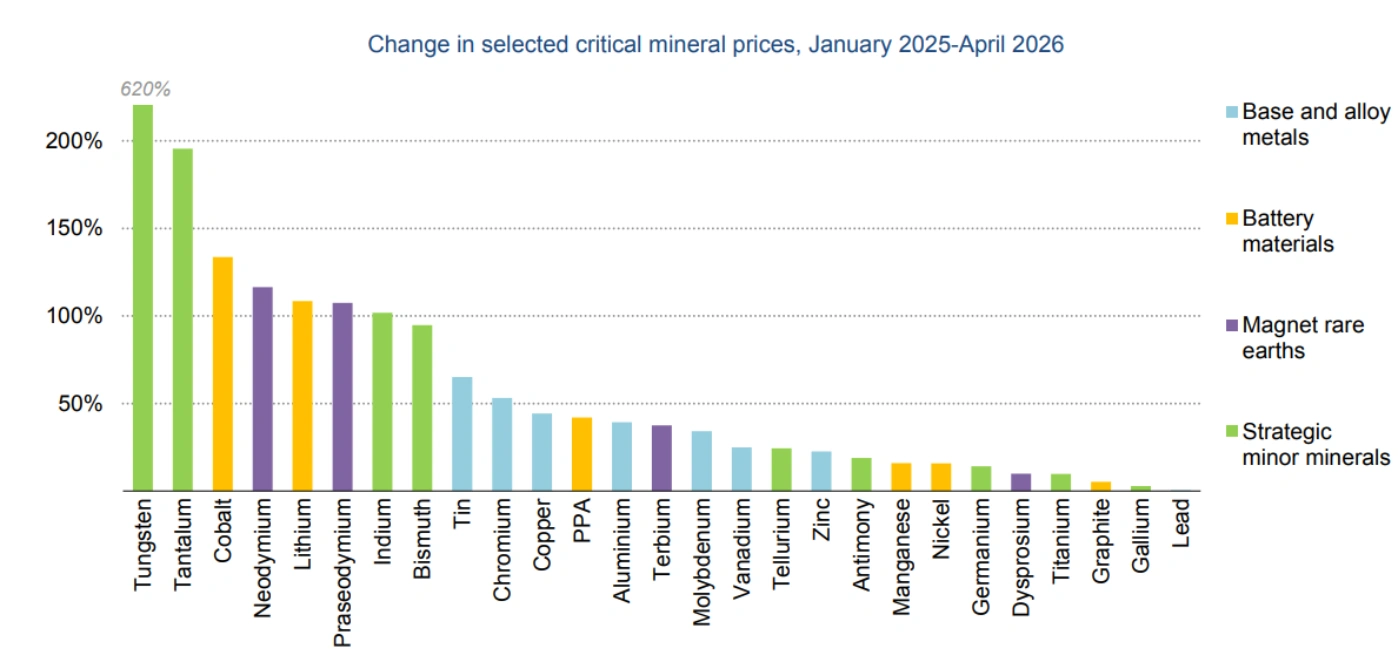 Figure 1: Tungsten, tantalum and cobalt led price gains between January 2025 and April 2026, with lithium not far behind [Courtesy: International Energy Agency]
Investment Falls Behind as Demand Keeps Climbing
The result is a growing gap. Buyers kept speeding up in 2025. Yet money for critical minerals dropped by 9%. That was the first clear fall in the space for years.
Battery metals took the hit. Capital spending on lithium, nickel and cobalt projects dropped more than 20%. Lithium companies cut investment by around 40%. Exploration spending fell in step, down more than 10% overall, with lithium and nickel exploration budgets down close to 45%.
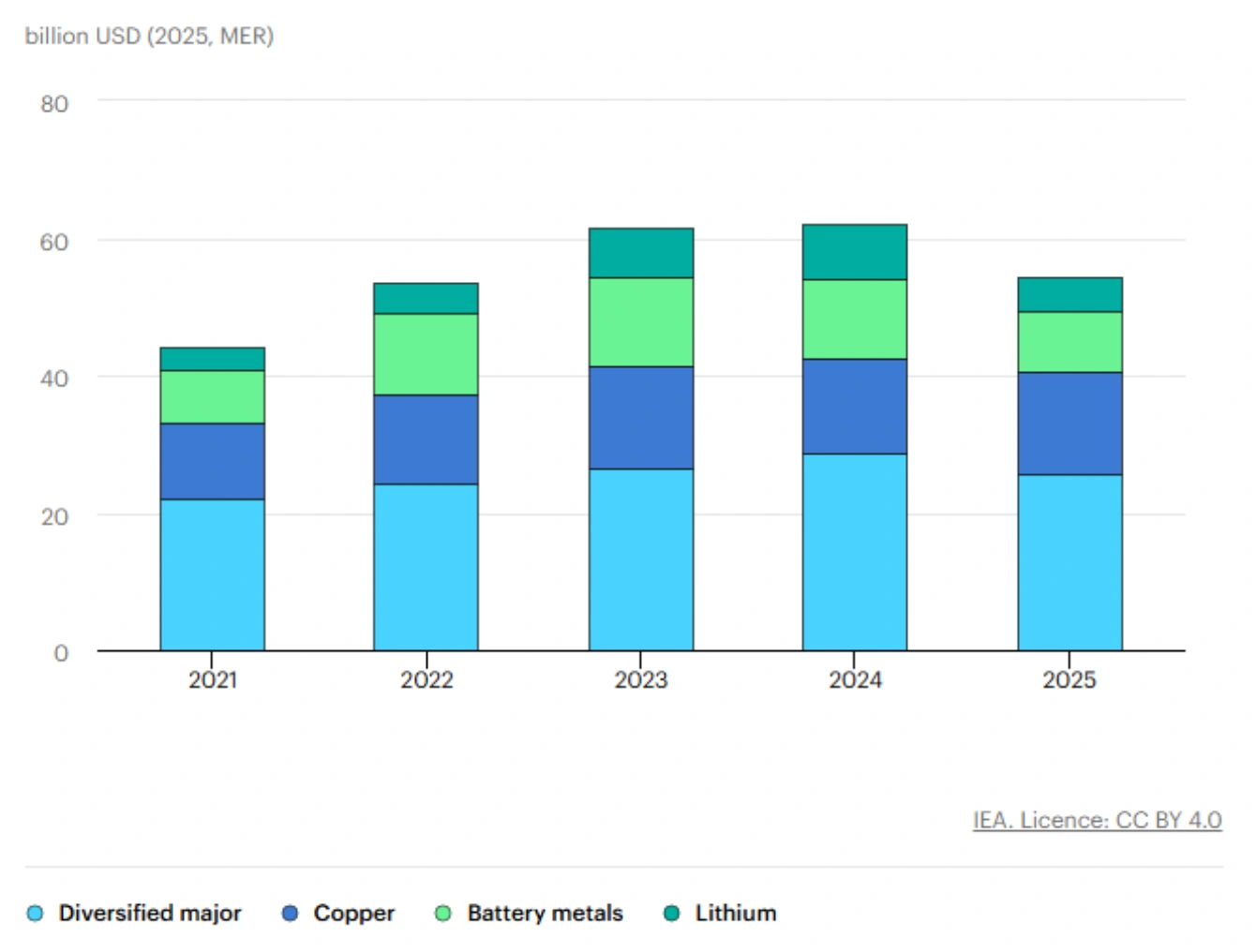 Figure 2: Battery metal and lithium investment fell in 2025. [Courtesy: International Energy Agency]
Copper told a different story. Copper-focused companies lifted spending 8 per cent in 2025. Deal value for copper assets climbed 20 per cent in 2025, compared with 2024. Investors are backing copper’s long game far more than lithium’s short one right now.
Australia Holds the World’s Largest Lithium Base But Faces a Slow Build
Australia produces more than half the world’s lithium from just over one fifth of global deposits, according to a Reserve Bank of Australia bulletin published in October 2025. It also ranks among the top five producers and exporters of both cobalt and rare earths.
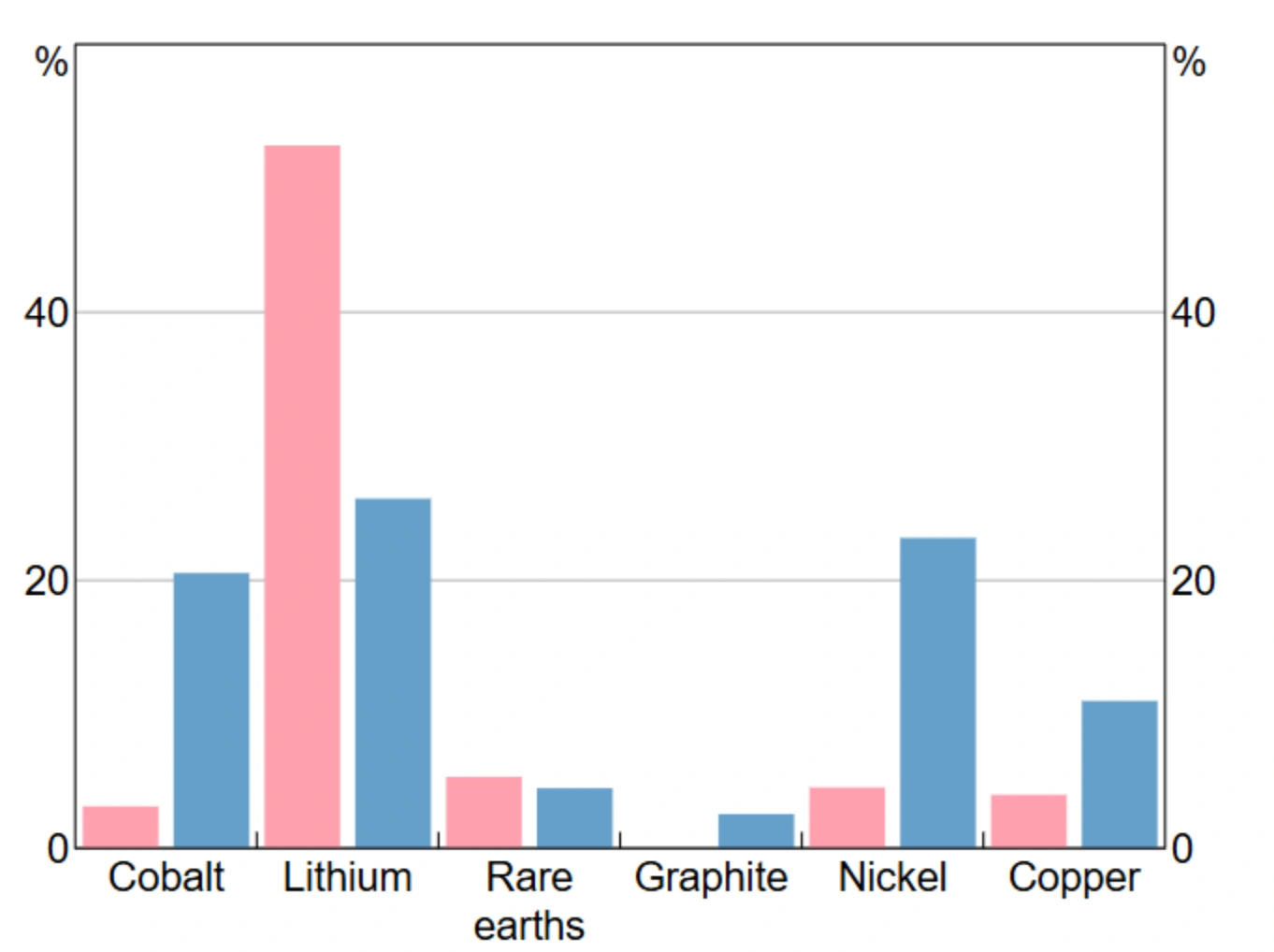 Figure 3: Australia’s lithium output outpaces its deposits. [Courtesy: Reserve Bank of Australia, Geoscience Australia]
Most of that output comes from Western Australia. Most of it gets processed offshore, largely in China, the United States, Japan and Malaysia. Critical minerals still make up only around 6% of Australia’s resource exports today.
Production Set to Rise This Decade
RBA and Department of Industry, Science and Resources projections point to strong growth in Australian lithium, rare earths and copper output through 2030. Nickel goes the other way. Low prices have already forced cancellations and cutbacks.
BHP Group (ASX: BHP) paused its Nickel West operation. Mineral Resources Limited (ASX: MIN) shelved its Bald Hill lithium mine. Both moves were cited in the RBA’s own analysis as examples of price-driven delay. The Department of Industry expects lithium, copper and nickel to make up around 10% of resource exports by 2030, up from roughly 6% now.
The Long-Term Bet Hinges on Global Policy
Push the horizon to 2050, and the RBA’s modelling assumes Australian supply tracks global demand under the IEA’s Stated Policies Scenario. On that basis, lithium carries the sector’s growth, since global lithium demand is projected to run around two and a half times higher in 2050 than in 2030.
Under a more ambitious policy path, Australian output could sit around 1.5 times higher in 2050 than in 2030. The RBA flags plenty of uncertainty around that number. Government policy, global prices, exploration success and cost competitiveness all still have to line up.
The US-Australia Critical Minerals Framework, signed 20 Oct 2025, was noted in the same report as a development still working through the investment pipeline.
Why This Matters for Investors
Line up the three threads. Demand for lithium and copper is outrunning new supply. Lithium investment has pulled back hard. Australia and Latin America, the two biggest suppliers outside China, are both short on the processing capacity they need to capture more value.
That combination tends to favour miners already in production. It also raises the pressure on governments trying to fund the missing refining links, since the IEA’s own project pipeline shows mining capacity growing faster than downstream capacity almost everywhere.
For ASX-listed lithium and copper names, the implication is clear enough. Near-term project economics remain exposed to price swings, regardless of how solid the long-term demand case looks.
Critical Minerals Price Movement
| Mineral category | Price movement, Jan 2025 to Apr 2026 | Key driver |
| Base metals (aluminium, copper, tin) | Up about one third; copper at record highs | Tight concentrate supply |
| Lithium | More than doubled | Energy storage demand, constrained supply |
| Cobalt | Up around 130% | DRC export quota |
| Strategic minor minerals (incl. tungsten) | More than doubled; tungsten up sixfold | New export controls, robust demand |
The Risks That Could Slow the Boom
A few things could still derail this:
- Commodity price swings, since lithium and nickel moved sharply between 2021 and 2025 and could do so again
- Policy shifts in supplier countries, since the DRC’s cobalt quota shows how fast a supply gap can open
- Higher costs outside China. The IEA puts refining capital costs 20% to over 150% higher and operating costs around 50% higher than incumbent suppliers
- Slow permitting and infrastructure gaps across Latin America, particularly power and water
- Skills shortages in downstream processing, an issue the RBA raised specifically for Australia
Industry Outlook
Global critical mineral demand is set to nearly double by 2040 under current policy settings, with lithium demand growing more than threefold. Copper adds the largest absolute volume, driven by electricity networks and next-generation technologies. Supply gaps for copper and lithium have narrowed slightly since last year’s outlook. The cobalt gap has widened, following the DRC’s export quota.
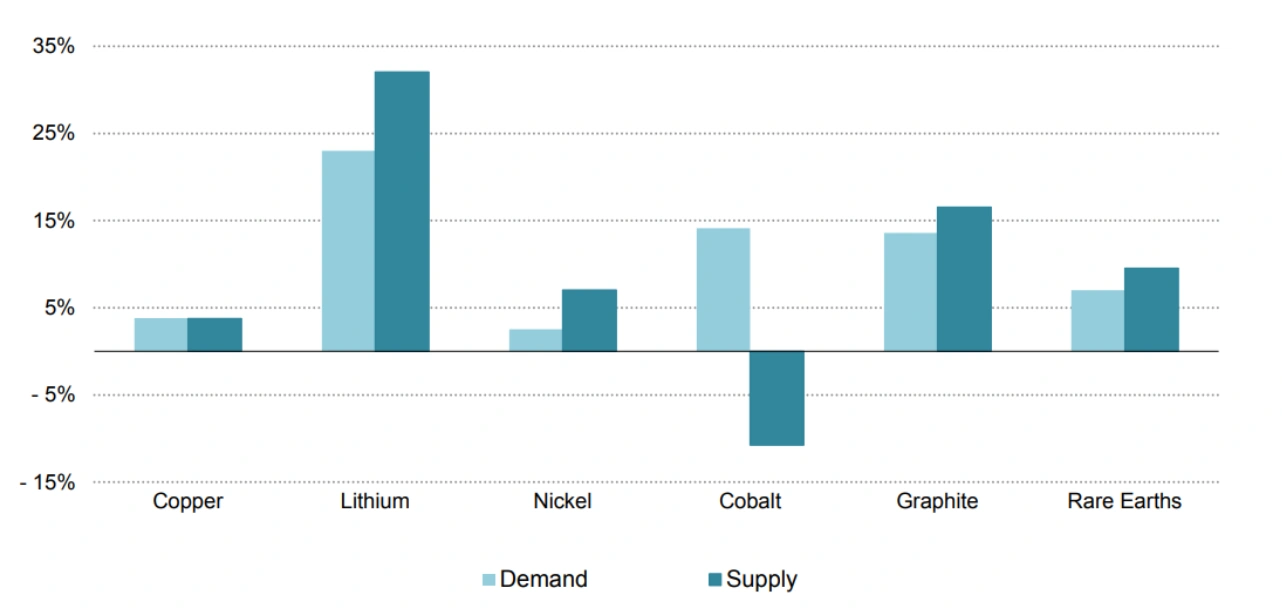 Figure 4: Cobalt was the only key energy mineral where refined supply actually contracted in 2025 [Courtesy: International Energy Agency]
Future Direction and Impact
The IEA’s Critical Minerals Security Programme is expanding its work through 2026, building on mandates from IEA Ministers and G7 Leaders. Governments have already put real money behind this.
Australia is banking on lithium, copper and nickel climbing to around 10% of resource exports by 2030, up from 6% now. Globally, the lithium and copper supply gap is not closing anytime soon, not unless new projects actually get built.
Latin America stands to gain nearly 50% more economic value by 2035, but only if local processing and copper refining actually take hold. Battery cell costs, meanwhile, will likely stay under pressure for as long as lithium prices hold their ground.
Mining Herald will continue tracking how these financing commitments and export control decisions reshape supply chains through the rest of 2026.
ALSO READ: Mining M&A Regulations Tighten Amid Global Mining Deals Scrutiny
FAQ
Q1: Why did critical mineral prices reset in 2025?
Ans: New export curbs from China and the DRC and tight supply pushed prices sharply higher.
Q2: How much of its own critical minerals does Latin America actually refine?
Ans: Not much. Around one fifth of its mined output gets refined locally, lithium being the one exception.
Q3: What is the biggest risk to this mining boom continuing?
Ans: Policy shifts in major supplier countries, similar to the DRC’s cobalt export quota, which can reshape supply gaps quickly.
Disclaimer
This article is intended for informational purposes only. If you pay attention to the Australian and Latin American critical minerals sector as an investor, then all the data in the content is from third-party sources. Please check out the complete share price and market data info. Investing carries a high risk, and you should only invest at your own risk. Mining Herald has no involvement in the above-listed companies.