
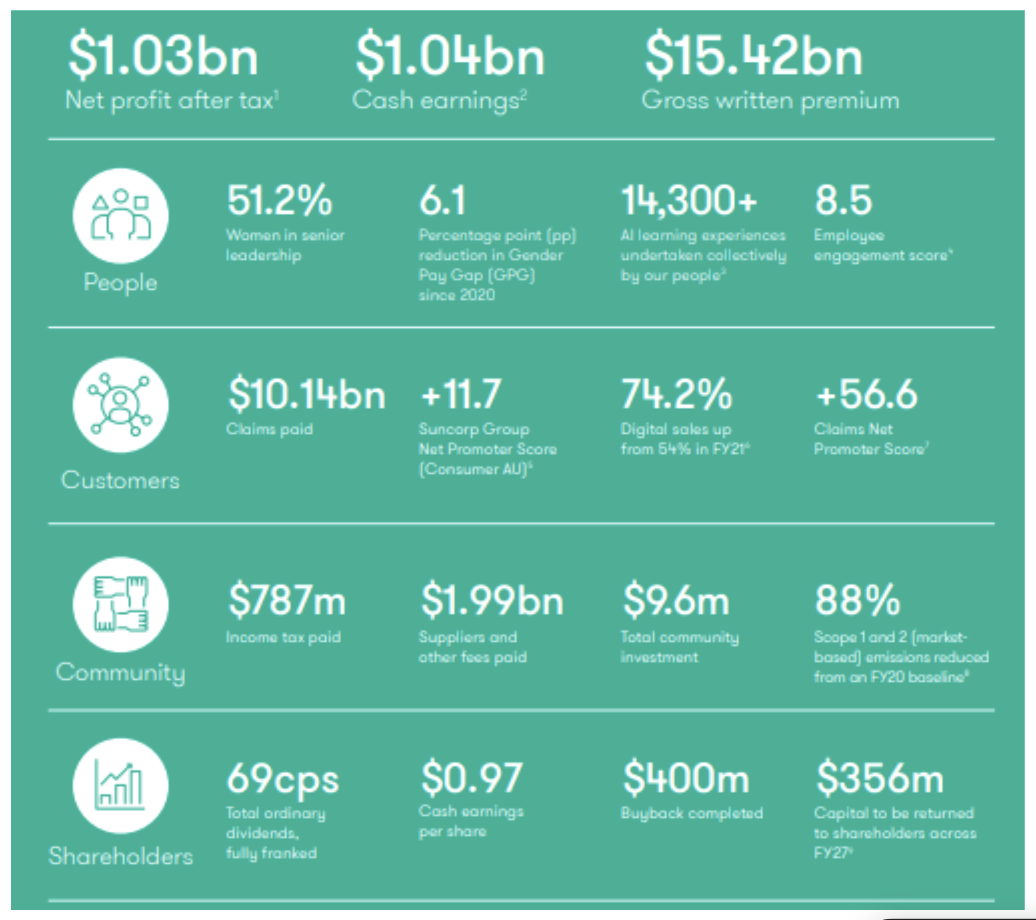
Suncorp’s FY26 Annual Report shows a major shift in Australia’s insurance market. The company is now a focused general insurer. The reporting period was from 1 July 2025 to 30 June 2026. Suncorp’s net profit after tax was $1,027 million.
During the year, cash earnings were $1,042 million. Gross written premium grew by 2.7% to $15,407 million. The insurer said that it also had an 11.8% underlying insurance trading ratio.
That was still on the high end of its 10%-12% target range. The findings underscore greater operating resilience in the face of challenging claims conditions. They also highlight how technology is transforming how insurance is being delivered.
 Suncorp’s FY26 results highlight resilience across Australia’s changing insurance market. [Courtesy: The Guardian]
Australia Insurance Market Trends 2026 Face Rising Claims Costs
For insurers in Australia, natural disasters continue to be a significant issue. Suncorp experienced 32 individual weather events in Australia and New Zealand. These included 18 declared natural hazard events with a cost estimate of >$10 million.
There were 120,000-plus natural hazard claims that were managed during FY26. The total cost of natural hazards was $2,024 million. That was above the $1,770 million annual allowance. Net incurred claims increased 10.7% to $10,244 million.
Construction and labour pressures also increased claims inflation. These pressures could continue shaping Australia’s insurance market trends in 2026. Affordability and accessibility therefore remain important issues for customers.
Suncorp’s Consumer Insurance Business Shows Pricing Momentum
Suncorp’s consumer portfolio remained central to its Australian strategy. Gross written premium reached $8,491 million. That represented growth of 5.8% from the previous year. Home and Motor products supported the increase through pricing and unit growth.
However, net incurred claims increased 17.8%. Natural hazards and claims inflation drove much of that increase. The underlying insurance trading ratio improved to 9.9%.
Suncorp also continued refining its portfolio towards lower-risk homes. Customer sentiment improved during the year as well. The Australian consumer Net Promoter Score reached +11.7. That compared with +9.1 in FY25.
 Consumer insurance growth reflects pricing, portfolio selection and stronger customer engagement. [Courtesy: ASX]
Suncorp ASX News 2026 Signals Stronger Capital Returns
Capital management remains another major theme within the Suncorp FY26 Annual Report. The company completed a $400 million on-market share buyback. It also announced further shareholder returns for FY27. Key capital actions include:
- A fully franked final dividend of 52 cents per share.
- Total FY26 ordinary dividends of 69 cents per share.
- A fully franked special dividend of 10 cents per share.
- An on-market buyback of up to $250 million during FY27.
The final dividend and special dividend are payable on 22 September 2026. The ordinary dividend payout ratio reached 70.5% of cash earnings. These measures highlight Suncorp’s capital strength and disciplined approach.
Technology Could Reshape Australia Insurance Market Trends 2026
Digital transformation is becoming central to Suncorp’s future strategy. The company launched more than 20 GenAI initiatives during FY26. These projects target claims decisions, communication and customer outcomes.
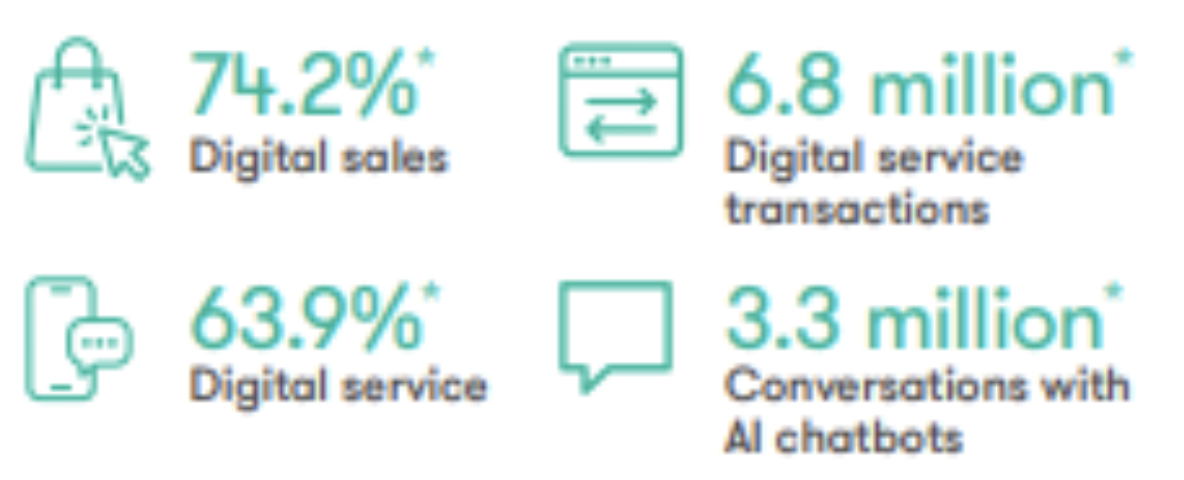
Digital sales reached 74.2% across included products. Digital service transactions reached 6.8 million. AI chatbot conversations reached 3.3 million.
Suncorp also reported faster claims processing through new technology. Its SMART PDS initiative reduced handling time by around 25%.
Motor claims using GenAI incident review improved description quality by 85%. The Digital Insurer programme is also moving into selected Australian brands. Its Australian rollout is scheduled for FY27.
 Suncorp is using AI and digital platforms to modernise insurance services and claims. [Courtesy: ASX]
Reinsurance Strengthens Suncorp’s FY27 Position
Suncorp has also strengthened protection against future natural hazard volatility. Its FY27 natural hazard allowance increased to $1,800 million. The figure excludes claims handling expenses and profit commission.
Suncorp also placed aggregate reinsurance protection. This programme aims to reduce earnings volatility from major events.
The company expects downside to be limited in most scenarios. The FY27 programme could limit natural hazard downside to $50 million.
This applies in 90% of scenarios under the stated programme structure. For investors, reinsurance provides greater visibility around potential earnings pressure. For customers, resilience remains important as severe weather risks continue.
Suncorp’s Strategic Shift Focuses On Digital Growth
Suncorp’s strategy now centres on platform modernisation and operational transformation. The company aims to create simpler digital-first insurance experiences. Its strategy also targets personalised products and stronger claims services. Key priorities include:
- Modernising core insurance platforms across selected Australian brands.
- Expanding AI and data capabilities across customer journeys.
- Improving pricing, underwriting and risk selection.
- Strengthening prevention and protection solutions.
The company plans to continue these investments throughout FY27. Management expects technology to support more seamless customer self-service. It also sees AI supporting better claims journeys. These changes could influence competitive positioning across Australia’s insurance industry.
What The FY26 Report Means For Insurance Investors
The FY26 report presents both opportunities and challenges for investors. Suncorp enters FY27 with stronger capital flexibility and reinsurance protection.
Its Australian consumer business also continues to show premium growth. However, natural hazards remain a major earnings risk. Claims inflation could also pressure future margins.
Technology investment creates another potential source of efficiency. Suncorp’s expense ratio improved to 18.1% during FY26.
Operating expenses still increased 3.4% amid transformation investment. The company is therefore balancing growth with technology spending and risk management. Overall, the report points towards a simpler, more digital insurance model.
Also Read: Santos Fuels the Western Hemisphere Comeback in Global Energy Markets
FAQs
Q1. What did Suncorp report for FY26?
Ans: Suncorp reported net profit after tax of $1,027 million. Cash earnings reached $1,042 million in FY26.
Q2. What is Suncorp’s FY27 shareholder return plan?
Ans: Suncorp announced a 10 cents per share special dividend. It also announced a buyback of up to $250 million.
Q3. How are natural hazards affecting Suncorp?
Ans: Natural hazard costs reached $2,024 million during FY26. These costs exceeded the $1,770 million annual allowance.
Q4. How is Suncorp using artificial intelligence?
Ans: Suncorp launched more than 20 GenAI initiatives during FY26. These initiatives target claims, communication and customer outcomes.
Disclaimer
This article comes from Suncorp Group’s FY26 Annual Report, for the year ended 30 June 2026, and yeah, it’s being shared only for general news and information things. It shouldn’t be treated as financial guidance, investment advice, or even a suggestion to buy or sell Suncorp shares. You really ought to look over the official disclosures and, if needed, get proper professional advice before you make any investment choices.
Source Links
- https://www.marketindex.com.au/data-api/api/v1/announcements/XASX:SUN:2A1689008/pdf/inline/fy26-annual-report
- https://www.suncorpgroup.com.au/news/news/fy26-results

Luke Carlino is a seasoned Copywriter, Content Strategist, and Social Media Manager specialising in Mining, Finance, and Business journalism. With more than a decade of industry experience, he brings rigorous editorial standards and commercial acuity to every project.