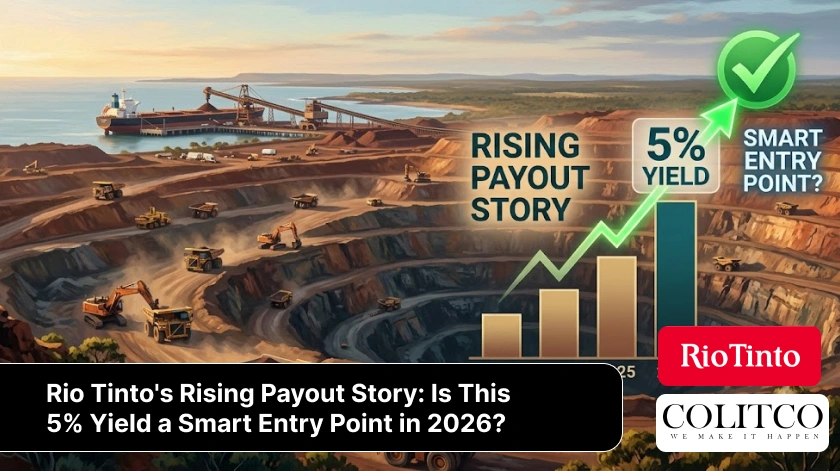
Rio Tinto (ASX: RIO) delivered a 43% jump in its interim dividend for the first half of 2026. Copper strength, a firmer iron ore base and a growing lithium book drove the earnings behind it. That growth is at the heart of the Rio Tinto rising payout 2026 ASX story now doing the rounds among income investors.
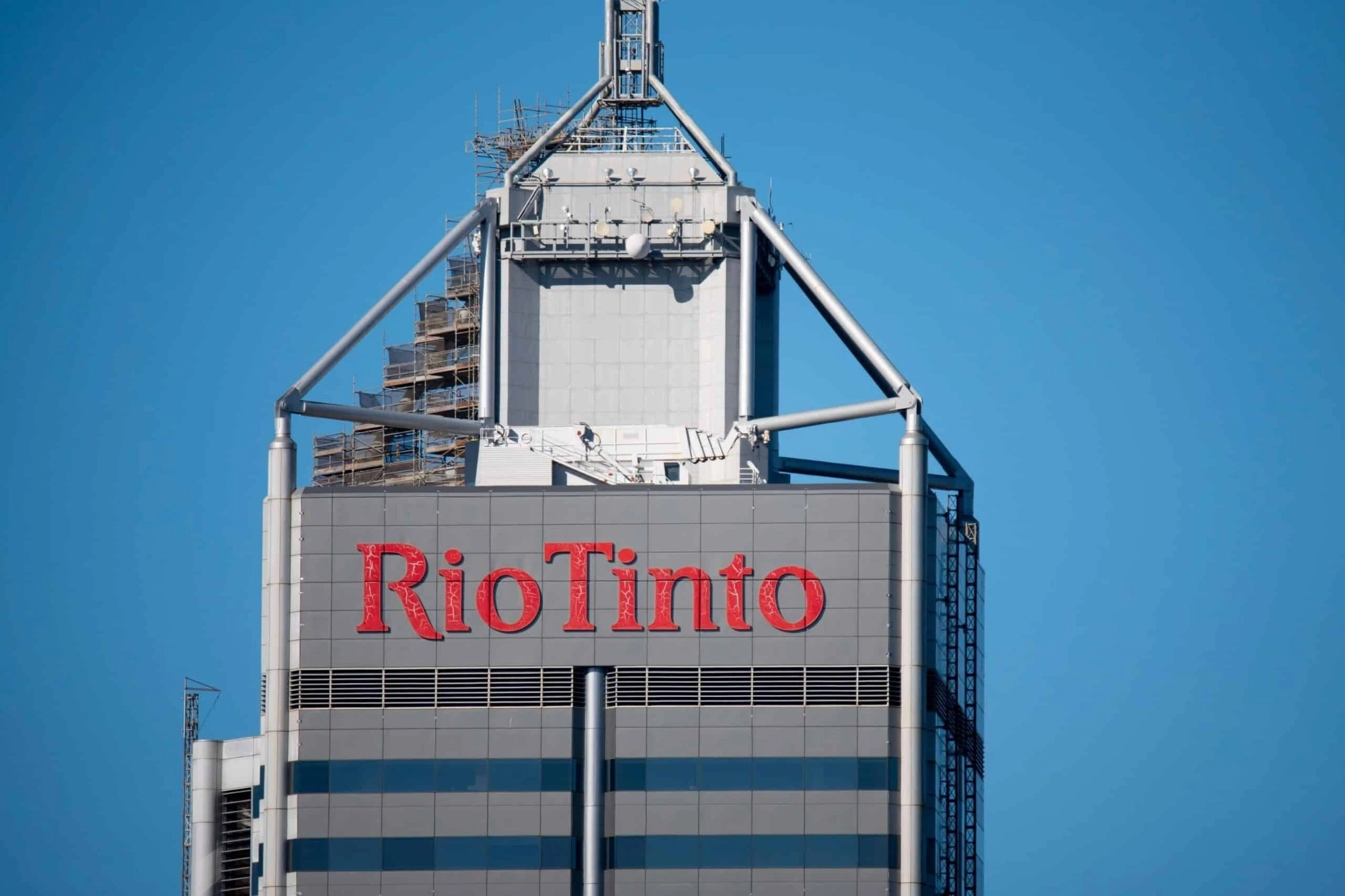
Figure 1: Rio Tinto’s signage atop its corporate headquarters building [Courtesy: Getty Images]
There is a catch, though. The Rio Tinto dividend yield of 5 per cent being quoted looks smaller once the share price gains are factored in. A bigger dividend paired with a much bigger share price does not automatically make a stock better value. Investors weighing a Rio Tinto investment entry point ASX 2026 decision need to look past the headline number first.
What Happened: A Bigger Payout for FY26
Rio Tinto’s half-year result for FY26 came in well ahead of the prior period:
| Metric | H1 FY26 | vs H1 FY25 |
|---|---|---|
| Revenue | US$31 billion | +15% |
| Underlying EBITDA | US$14.8 billion | +28% |
| Underlying earnings | US$6.85 billion | +43% |
| Net profit | US$6.7 billion | +47% |
| Free cash flow | US$3.8 billion | +75% |
| Interim dividend | US$2.11 per share | +43% |
That growth gave the Company room to reward shareholders with a larger payout, and it is exactly the kind of result that fuels the Rio Tinto rising payout 2026 ASX conversation right now.
Why the Yield Looks Smaller Than the Growth Suggests
A 43% dividend increase should normally lift the yield by a similar amount. That has not happened here. Rio Tinto’s share price has gone up more than 53% over the past year, and a rise that large brings the yield down. When the share price grows faster than the dividend, the yield falls, even if the dividend itself is strong.
Market projections put Rio Tinto’s yield at around 3.7% excluding franking credits, or roughly 5.3% including them. That gets the Rio Tinto dividend yield 5 per cent in Australia figure onto the table, but it falls short of what the stock has offered in stronger years.
Why It Matters to Investors
Dividend yield only tells half the story without price context. A large dividend increase can hide a share price that has already run hard on good news. Anyone weighing a Rio Tinto investment entry point ASX 2026 needs timing to matter as much as business quality.
Mining businesses also carry cyclical risk most sectors avoid. Commodity prices move, and high fixed costs mean earnings swing harder in both directions. That leverage cuts both ways, and it shapes how analysts are reading Rio Tinto’s next twelve months.

Figure 2: Investment planning concept with accounting and finance notes [Courtesy: Magnific]
Who and Where: The Business Behind the Numbers
Copper and lithium prices did most of the heavy lifting for Rio Tinto’s FY26 earnings, with Australian iron ore holding steady in the background. The Company’s reach now extends well beyond Australia, with the Simandou Project in Africa forming a growing part of its future iron ore supply. That spread across commodities and geography is a large part of why Rio Tinto’s earnings look less volatile than in past cycles.
When: The Result Behind the Current Rally
The half-year figures were published on 27 Aug 2026, arriving after months of share price strength. Rio Tinto shares are up 5.14% for the week and 11.69% for the month. That takes the 2026 year-to-date gain to 21.71%. Stretch the window to a full year and the stock has climbed 53.22%, comfortably outrunning both the sector and the ASX 200.
Rio Tinto Share Price (ASX: RIO)
- Last traded price: A$178.72
- Market capitalisation: A$66.79 billion
- 52-week range: A$112.96 to A$195.84
- 1-week performance: +5.14%
- 1-month performance: +11.69%
- 2026 year-to-date performance: +21.71%
- 1-year performance: +53.22%
- Performance versus mining sector (1 year): +7.39%
- Performance versus ASX 200 (1 year): +52.28%
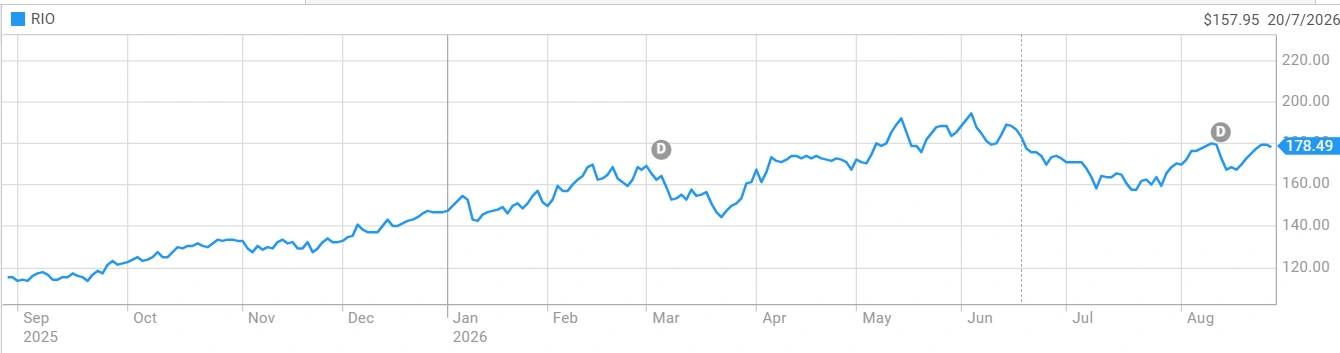
Figure 3: Rio Tinto (ASX: RIO) share price trend from September 2025 to August 2026 [Courtesy: Google Finance]
How It Could Play Out: Analyst Views
CommSec data shows 15 broker ratings on Rio Tinto, split between seven buy calls and eight hold calls. That near-even split says the market is genuinely divided on whether the current price still leaves room to run.
Some analysts prefer to avoid buying miners during periods of strength. Rio Tinto’s better entry points have historically shown up when commodity prices were under pressure, not when they were running hot. Others see it differently.
If demand for copper and lithium stays as strong as expected, it may be better to hold the investment through short-term price changes rather than try to sell and buy back in at a lower price.
Industry Outlook
The need for copper and lithium is driven largely by spending on infrastructure and electrification, and this is likely to continue to be the case. Iron ore is a slower-growing part of the market, but big projects like Simandou can change the amount of supply that gets to buyers and from where. Diversified miners like Rio Tinto are generally better placed to manage that shifting demand across the sector.
Future Direction and Impact on Rio Tinto’s Investment Case
Impact on shareholder returns: further growth in copper and lithium earnings could support additional dividend increases, extending the Rio Tinto rising payout 2026 ASX story for income investors.
Impact on valuation: if the share price keeps outpacing earnings and dividend growth, the yield on offer may keep shrinking. That could make a Rio Tinto investment entry point in ASX 2026 harder to justify at current levels.
Impact on sector positioning: the mining sector broadly benefits if copper and lithium prices hold firm. A downturn in iron ore or a broader commodity slump would test Rio Tinto’s diversified model in ways it has not faced this cycle. Anyone thinking about buying in now needs to weigh the FY26 result against a share price that has probably already priced most of that strength in.
Colitco will continue tracking Rio Tinto’s dividend trajectory and share price movement as the FY26 story develops further.
ALSO READ: Carbonxt Agrees Balance Sheet Restructuring as Kentucky Plant Nears Production
Frequently Asked Questions
Q1. What is the current Rio Tinto dividend yield?
Ans. Around 3.7% without franking credits, closer to 5.3% once franking is included.
Q2. Why has the Rio Tinto dividend yield 5 per cent in Australia fallen from previous years?
Ans. The share price has climbed sharply, and yield shrinks when price growth outpaces dividend growth.
Q3. Is now a good Rio Tinto investment entry point ASX 2026 opportunity?
Ans. Opinion is split, with brokers divided between buy and hold ratings during a period of share price strength.
Q4. What is driving Rio Tinto’s rising payout in 2026?
Ans. Firmer copper and lithium prices did most of the work, with steady iron ore output adding to earnings and cash flow.
Disclaimer
This article is meant only for informational purposes. If you are an investor who is watching Rio Tinto closely, all the data published in the content is sourced from ASX announcements and external sources. Kindly verify all the information related to the share price and market data. Any investment should be made at the investor’s own risk. Colitco does not hold any position in the above-mentioned company.

Luke Carlino is a seasoned Copywriter, Content Strategist, and Social Media Manager specialising in Mining, Finance, and Business journalism. With more than a decade of industry experience, he brings rigorous editorial standards and commercial acuity to every project.