Strata Minerals Limited (ASX: SMX) (“Strata” or the “Company”) has reported a maiden resource at its Zelica Gold Project.
The Company owns 100% of Zelica, in Western Australia’s Eastern Goldfields.
The estimate is 814,000 tonnes at 1.61 grams per tonne (g/t) of gold. That holds 42,000 ounces of contained gold.
Below is what the numbers show and what the Company plans next.
What the Zelica Maiden Resource Contains
A Mineral Resource Estimate (MRE) is a formal count of the gold in the ground. In Australia, it follows the JORC Code.
The Company reports Zelica at a cut-off grade of 0.5g/t gold. That is the lowest grade included in the count.
The announcement sets out these headline figures:
- 814,000 tonnes at 1.61g/t Au for 42,000oz of contained gold
- 28,500oz at 1.69g/t Au classified as Indicated (68%)
- 13,500oz at 1.46g/t Au classified as Inferred (32%)
- Located on granted mining lease M39/1101
- 100% owned by the Company
| JORC 2012 classification | Tonnes | Au (g/t) | Au (oz) |
|---|---|---|---|
| Indicated | 525,000 | 1.69 | 28,500 |
| Inferred | 289,000 | 1.46 | 13,500 |
| Total | 814,000 | 1.61 | 42,000 |
Table 1: Zelica Gold Project Mineral Resource Estimate by classification. Tonnes are rounded to the nearest 1,000t and ounces to the nearest 500oz. [Source: Strata Minerals ASX announcement]
| Material type | Tonnes | Au (g/t) | Au (oz) |
|---|---|---|---|
| Oxide | 362,000 | 1.56 | 18,000 |
| Transitional | 293,000 | 1.53 | 14,500 |
| Fresh | 159,000 | 1.88 | 9,500 |
| Total | 814,000 | 1.61 | 42,000 |
Table 2: Zelica Gold Project Mineral Resource Estimate by material type. [Source: Strata Minerals ASX announcement]
Oxide is rock weathered near the surface. Transitional rock sits between oxide and fresh rock.
Oxide and transitional material together hold 32,500oz.
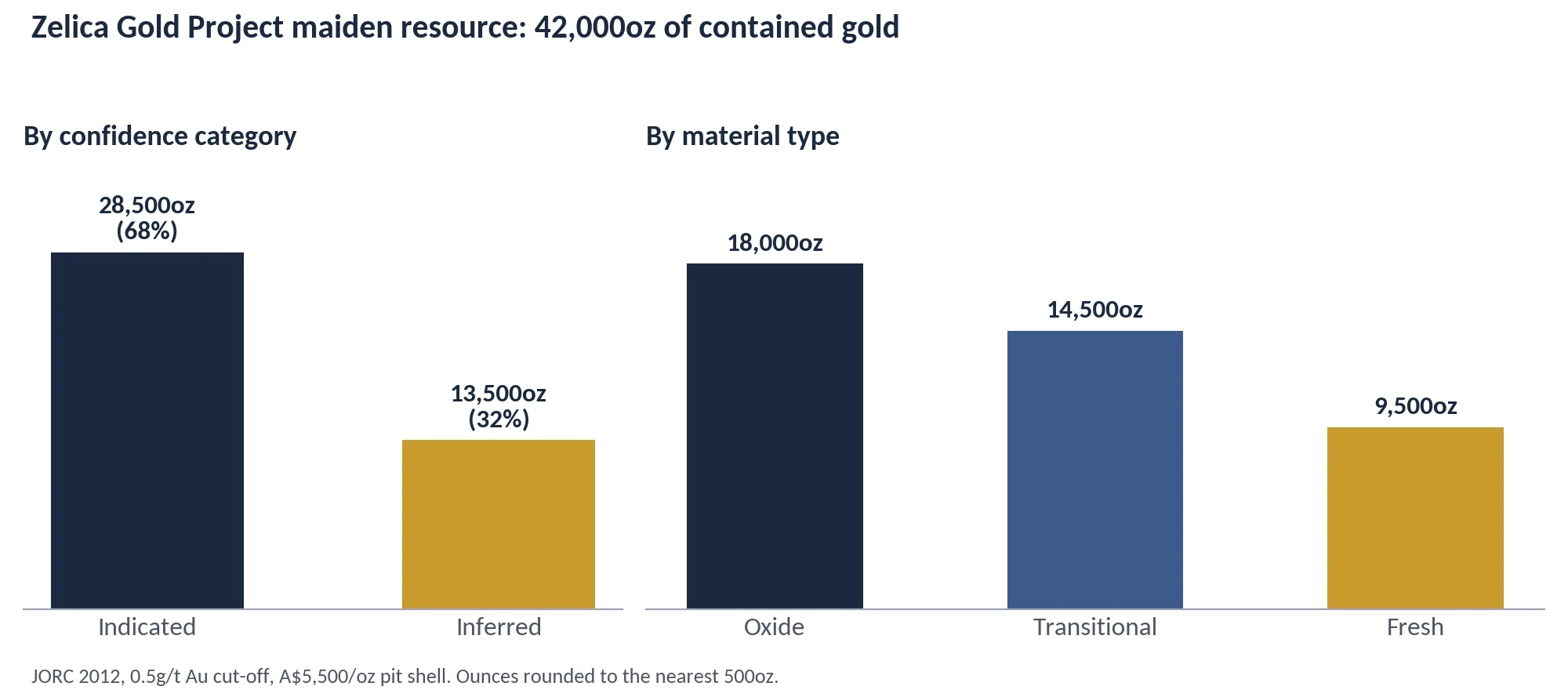
Figure 1: Zelica maiden resource by confidence category and material type, in ounces of gold. [Source: Strata Minerals]
Why the 68% Indicated Share Matters
Resources are ranked by how confident geologists are in them. The three categories are Inferred, Indicated and Measured.
At Zelica, 28,500oz sit in the Indicated category. A further 13,500oz are Inferred.
Under the JORC definitions published by Geoscience Australia, Indicated resources can be converted to Ore Reserves. Inferred resources cannot.
An Ore Reserve is the part of a resource that can be mined economically.
The same definitions say most Inferred resources can reasonably be expected to upgrade to Indicated with more exploration.
At Zelica, Indicated blocks sit on drill spacing of about 25m by 25m. Inferred blocks sit on about 40m by 40m.
“What is particularly encouraging is that we have defined a resource with more than two-thirds of the ounces now classified as Indicated, strengthening our confidence as we progress mine planning and development studies.”
Peter Woods, Managing Director
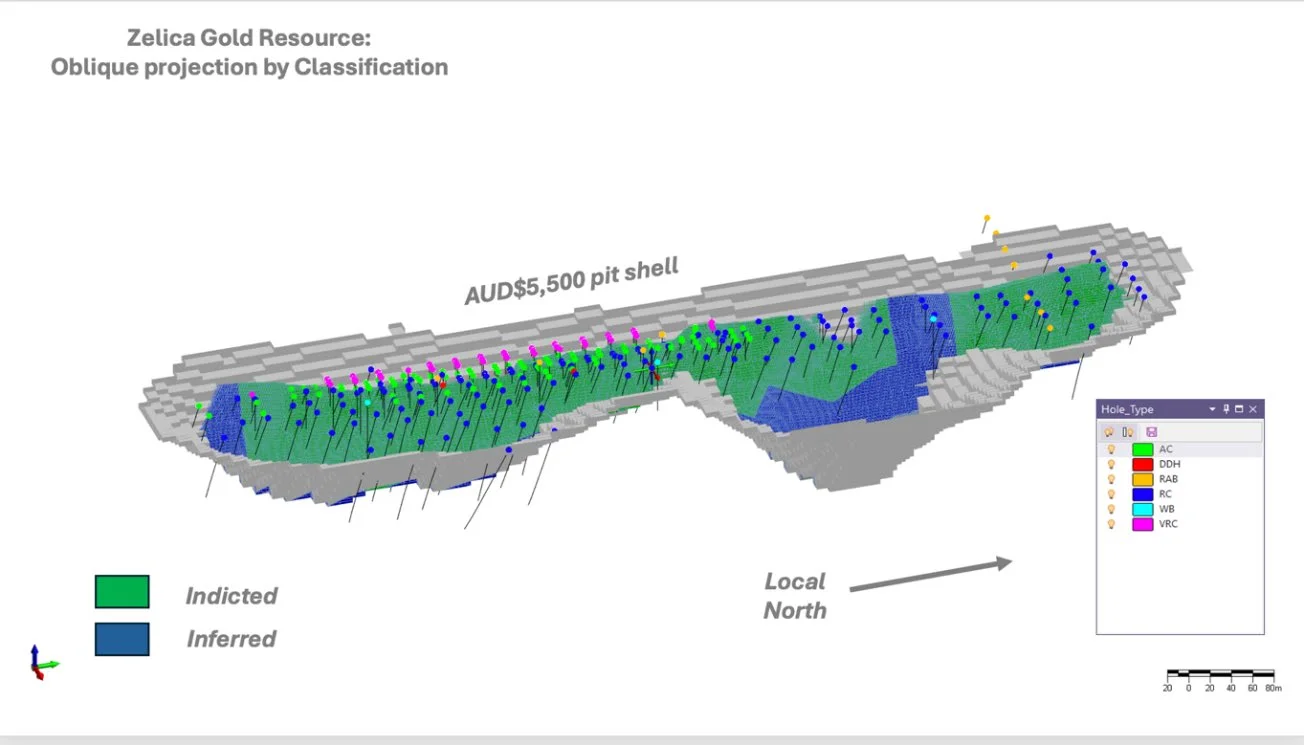
Figure 2: Oblique projection of the Zelica resource by classification, with drill collars shown by drill type. [Source: Strata Minerals]
How the Company Built the Estimate
The maiden MRE supersedes an earlier estimate by Exterra Resources Ltd, reported under the 2004 edition of the JORC Code.
It combines historical drilling with two reverse circulation (RC) drilling campaigns by the Company. RC drilling brings rock chips to the surface for sampling.
- 300 drill holes for 14,699 metres across the deposit
- 40 RC holes for 4,161 metres drilled by the Company
- Campaigns completed in November 2025 and March 2026
- Main drilling grid of 25m by 25m, with extension holes at 40m by 40m
- Gold grades estimated using ordinary kriging in Micromine software
Kriging is a standard method for estimating grade between drill holes.
The majority of the additional ounces in the new estimate sit down-dip of the previous resource.
Some earlier hole types helped guide the geology but were not used in the grade estimate.
Every hole the Company drilled was surveyed at 10-metre intervals to track its path.
The Company also drilled five twin holes to check earlier results. Three returned more metal than the original holes, and the combined result was positive.
Quality control checks on the Company’s samples showed assay results within 3% of certified standards.
High grades were capped at 12g/t before estimation. That stops a few extreme assays from lifting the average.
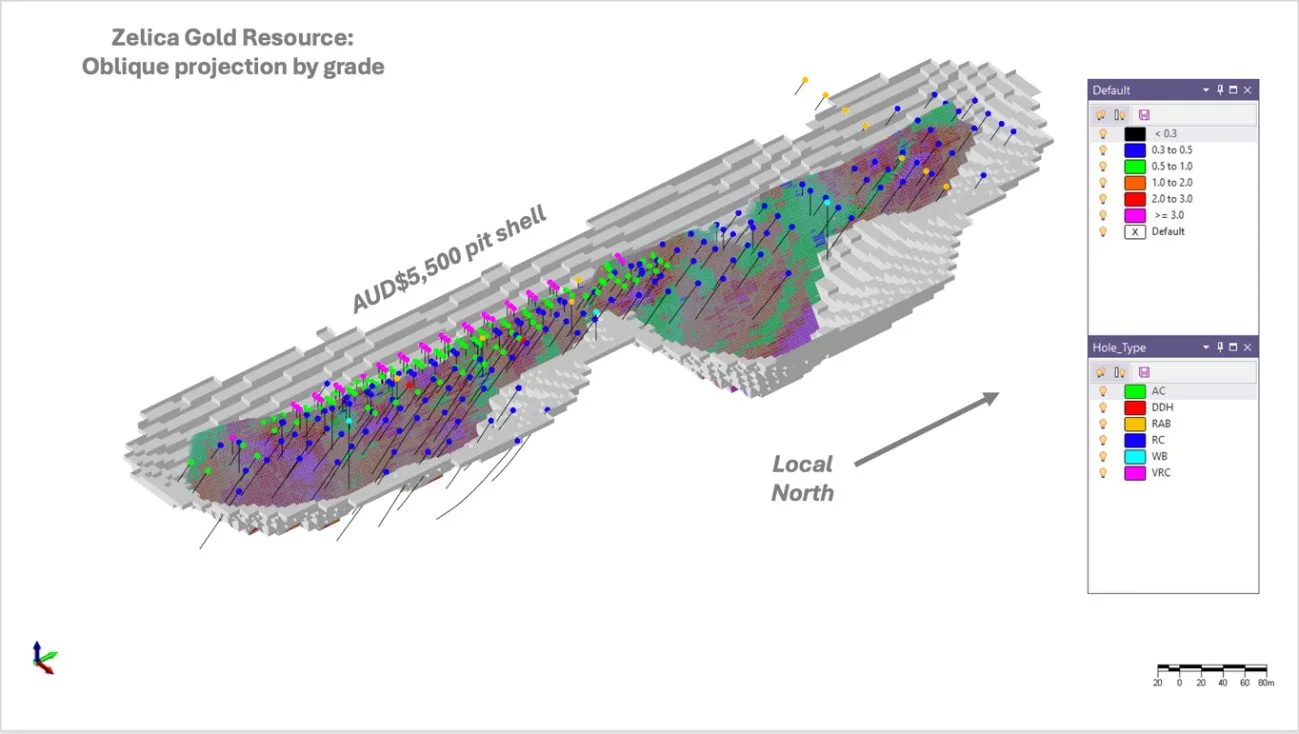
Figure 3: Oblique projection of the Zelica resource by grade, inside the A$5,500/oz pit shell. [Source: Strata Minerals]
The Pit Shell and Cost Assumptions Behind the Resource
JORC requires a resource to show reasonable prospects of eventual economic extraction. The Company tested this with a pit optimisation.
A pit shell is a computer-generated pit outline that makes economic sense at set costs and a set gold price.
Only gold inside the A$5,500 per ounce shell is in the resource. The Company says that price reflects the current gold price and the expected timing of mining.
These are the inputs the Company used:
- Gold price of A$5,500/oz
- Mining cost of A$4.80 per tonne
- Processing cost of A$82.25 per tonne at a toll treatment plant
- Haulage cost of A$0.18 per tonne per kilometre
- Processing recovery of 90%
- Mining dilution of 10%
- Cut-off grade of 0.5g/t Au
Metallurgical testwork behind the 90% recovery figure
Metallurgical testwork since 1988 informs the 90% average. Several programs returned recoveries above 90%.
- 95.0% of gold recovered in 14 days from lime-agglomerated pellets in column leach tests
- 92.4% recovered in 592 hours from cement-agglomerated pellets
- 96% average extraction in 2006 direct cyanidation tests at a grind of p80 75 microns
- Above 94% overall recovery in 2006 gravity-cyanidation tests
- 85% and 93% recovery from two low-grade stockpile samples in 2021
In a column leach test, crushed ore is packed in a column and a solution is passed through it. In p80 75 microns, 80% of the ground ore passes a 75-micron screen.
Further metallurgical testwork is one of the Company’s stated priorities.
Geology: Where the Gold Sits
A lode is a zone of mineralised rock. Zelica has three principal lodes: the Hanging Wall, Main and Footwall lodes.
- Deposit runs about 1km along strike
- Dips steeply east at about 60° to 70°
- Main ore zone holds 90% of the ounces in the resource
- Main Lode is about 1 to 13 metres thick
- Oxidation reaches about 70 metres below surface
- Shallow oxide mineralisation covers about 1km of strike to about 150 metres vertical depth
Mineralisation stays open along strike and below the limits of current drilling.
Higher-grade zones reach the base of the current pit shell. The Company calls these priority targets for extension drilling.
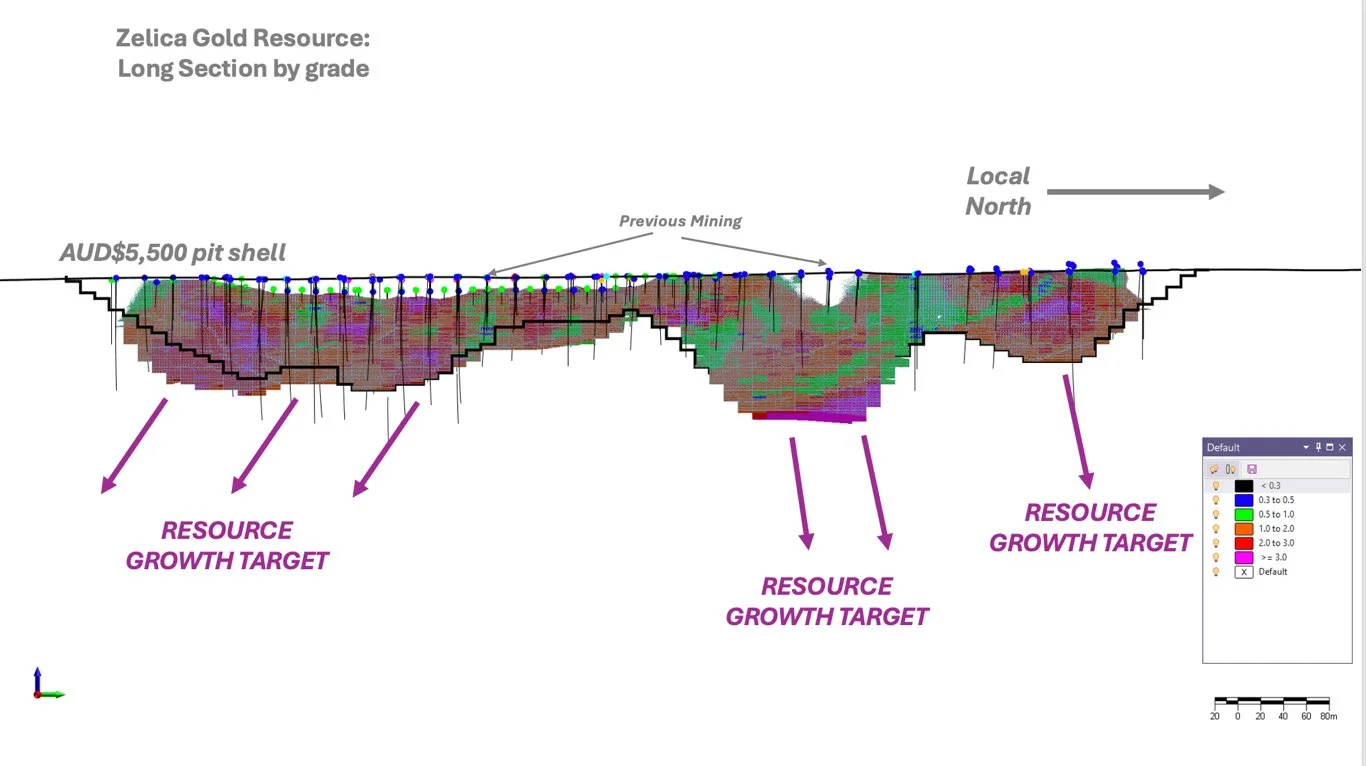
Figure 4: Long section of the Zelica resource by grade, with growth targets below the pit shell. [Source: Strata Minerals]
Future drilling will focus on the southern, central and northern zones. Pit optimisation there was limited by the depth and extent of existing drilling.
The mineralised structure also continues into prospecting licence P39/5833. The Company has applied for a mining lease over that area.
A 9.5km Gold Corridor Beyond the Resource
The maiden resource is an initial base within a 9.5km gold corridor. The Company says most of that corridor has not had systematic modern exploration.
Zelica sits in the Yundamindra District, between Leonora and Laverton. It lies within about 50km of multiple deposits above 1Moz (one million ounces) and several processing mills.
The gold sits along a shear zone, part of the regional Celia Fault system. A shear zone is a band of rock deformed by movement.
The Company plans mapping, geochemistry, geophysics and targeted drilling to build a pipeline of new targets.
It has already completed a high-resolution magnetic survey across the expanded tenure.
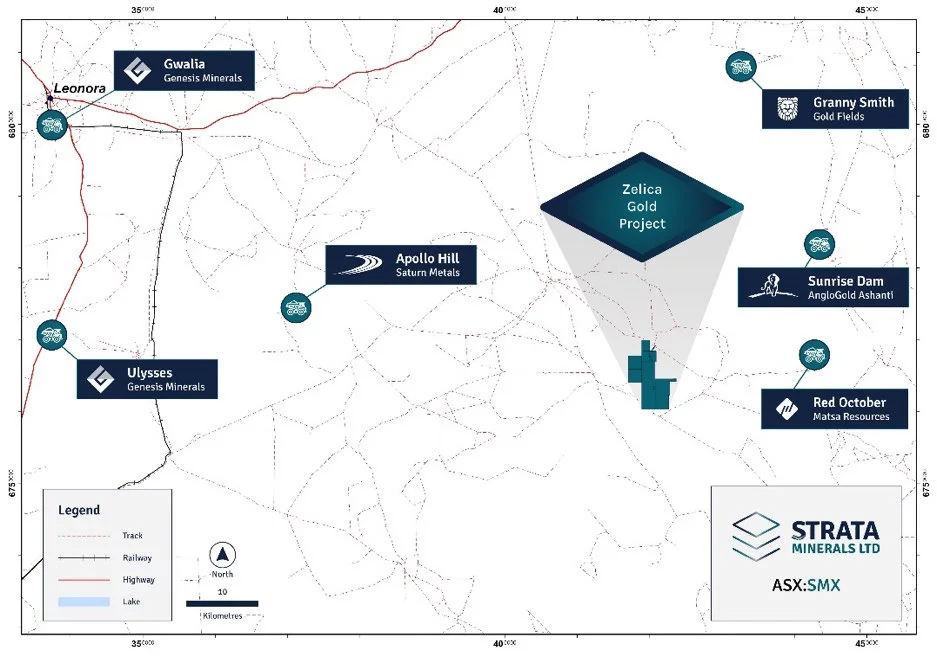
Figure 5: Location of the Zelica Gold Project relative to Leonora and nearby gold operations. [Source: Strata Minerals]
Development Pathway With BML Ventures
The Company is advancing Zelica under its Mining Services and Profit Share Agreement with BML Ventures.
- BML is responsible for funding pre-development, development and mining costs
- Funding is on a non-recourse basis
- Costs are recovered from revenue, then profits are shared equally
- Mining services depend on an agreed mine plan and budget and an ore tolling agreement
In general terms, non-recourse means the funder relies on project proceeds for repayment. BML has worked with other ASX gold companies.
The Company points to four supports for its plan. These are a defined resource, a granted mining lease, nearby processing infrastructure and the BML agreement.
The Zelica Gold Project covers three tenements:
- M39/1101, a granted mining lease
- P39/5833, a prospecting licence with a mining lease application
- L39/261, a miscellaneous licence
An existing A$20 per ounce royalty applies to M39/1101. The Company entered a deed of assumption for it.
“With our BML Ventures Mining Services and Profit Share Agreement in place, we have a pathway to rapidly advance potential mining options while continuing to grow the resource.”
Peter Woods, Managing Director
The Company has listed five immediate priorities:
- Resource growth, targeting depth and down-plunge extensions below the pit shell
- Metallurgical test work on processing characteristics and potential gold recoveries
- Mining and development studies, including mine planning, pit optimisation and production scenarios
- Permitting and environmental approvals for future mining activity
- Regional exploration across the 9.5km Zelica corridor
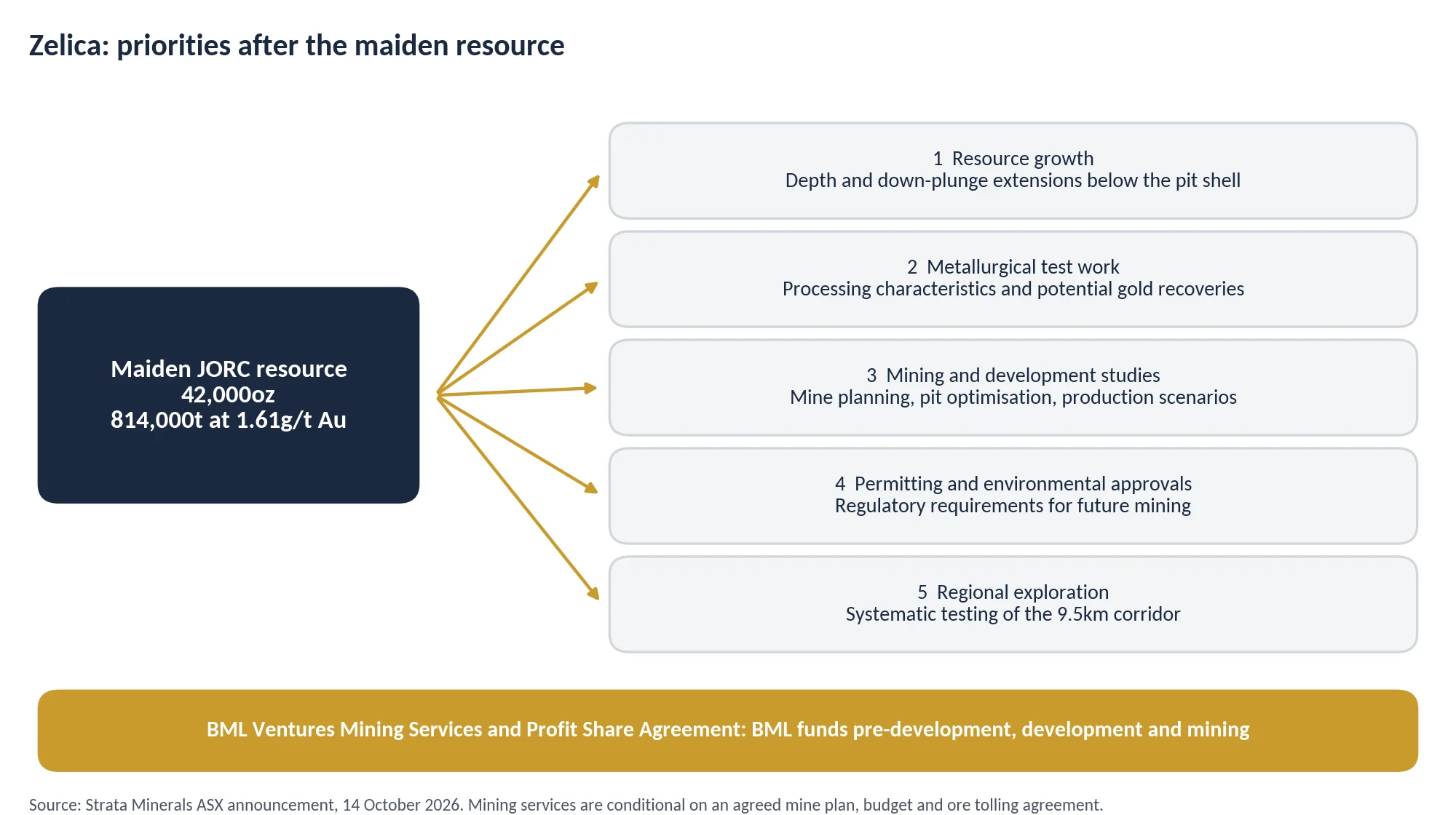
Figure 6: The maiden resource and the Company’s five immediate priorities. [Source: Strata Minerals]
SMX Share Price and Investors’ Outlook
| Metric | Current reference |
|---|---|
| SMX last price | $0.015 |
| vs Sector | +7.57% |
| Market capitalisation | $6.13M |
| Zelica maiden MRE | 814,000t @ 1.61g/t Au for 42,000oz |
| Indicated share of resource | 28,500oz (68%) |
Table 3: SMX share price performance, market capitalisation and resource reference points at the time of drafting. Market data is time-sensitive. [Source: ASX]
The maiden resource gives the Company a defined base to build on. It now has a resource, a granted mining lease and a partner responsible for funding mining costs.
The Company says it will keep growing the resource while it advances technical work. Any move to mining remains subject to technical, economic and regulatory requirements.
A recent Company update listed Q4 2026 milestones. They include metallurgical and magnetic survey results, mine planning and grade-control drilling, and a mine development closure proposal.
Upcoming catalysts
- Extension drilling in the southern, central and northern zones
- Metallurgical test work results
- Magnetic survey results and refined regional drill targets
- Mine planning, pit optimisation and production scenarios
- Permitting and environmental approvals, including a mine development closure proposal
- Mine plan, budget and ore tolling agreement with BML Ventures
- Mining lease application over prospecting licence P39/5833
- Regional exploration across the 9.5km corridor
Disclaimer
This report has been prepared by Colitco in collaboration with Strata Minerals Limited as part of a commercial content and investor communications arrangement. Colitco may receive compensation for the production and distribution of this content. This article is intended for informational purposes only and does not constitute financial product advice, investment advice, or a recommendation to buy or sell any securities. The content reflects information available at the time of publication and may not be updated. All figures, data and statements have been sourced from Strata Minerals Limited’s official ASX announcements and publicly available sources. Readers should conduct their own independent research and seek professional financial advice before making any investment decisions. Past performance is not a reliable indicator of future results. Exploration results and Mineral Resource estimates are not a guarantee of future resource definition or commercial production.

Elizabeth Jones is a finance and mining content specialist with over 10 years of experience creating clear, SEO-driven content across fintech, investing, banking, insurance, cryptocurrency, and resource markets. She transforms complex financial data and industry trends into engaging, reader-focused articles that improve understanding and audience engagement.