

The current global policy changes affect the investment decision taken on mining more than ever before. The industry is being restructured by governments using tariff restrictions, export restrictions and environmental regulations.
These policies influence supply chains and the demand for commodities globally. Policy awareness has become an essential investment tool for Australian investors in mining companies.
Geopolitical and trade controversies also have a strong response in the markets. Large miners and the overall ASX resource sector are easily affected by the tariff threats from China.
The outcome is a policy-based investment process, with rules predetermining capital flows. To investors, knowledge of such signals helps them to know the Australian mining stock that can be useful depending on the changing global priorities.

Global policy decisions increasingly influence the performance of Australian mining stocks. [Foreign Analysis]
Mining Stock Investment Australia: Why Policy Now Drives Commodity Markets
The future of the mining industry is more and more influenced by government policy. Nations are in a race to have access to the critical minerals that are needed in clean energy technologies. Exploration funds, the level of production and international supply chains are now being determined by strategic policies.
As an illustration, export regulations and policies on resource consolidation can alter the balance of mineral supply in the globe. Regulation is also employed by governments to empower domestic industries and get access to strategic materials.
Such alterations have the ability to make things volatile and to develop investment opportunities. By monitoring these indicators, investors will be able to determine areas where there is political and financial backing.
These policy priorities are often used in lithium, rare earths and copper producers. The consequence is that a new environment is developed in which mining stock investment in Australia relies extensively on regulatory trends and geopolitical strategy.
How Trade Policies And Tariffs Influence Australian Mining Stocks
One of the strongest mining share policy drivers is the trade policy. When tariffs are announced, it may result in instant shifts in the expectations of commodity demand.
The mining companies that are geared towards major trading partners tend to be affected most. The policy uncertainty also has an effect on the atmosphere of investors in the ASX resources industry.
Potential tariffs can also make investors pull back exposure to commodity producers. Analysts tend to term such tariffs as a moving goal on markets, which leaves the investors in a state of constant uncertainty.
Nonetheless, volatility is also an opportunity for the companies that are well placed. Globalised diversified miners may be more suitable in dealing with policy shocks than single commodity producers.
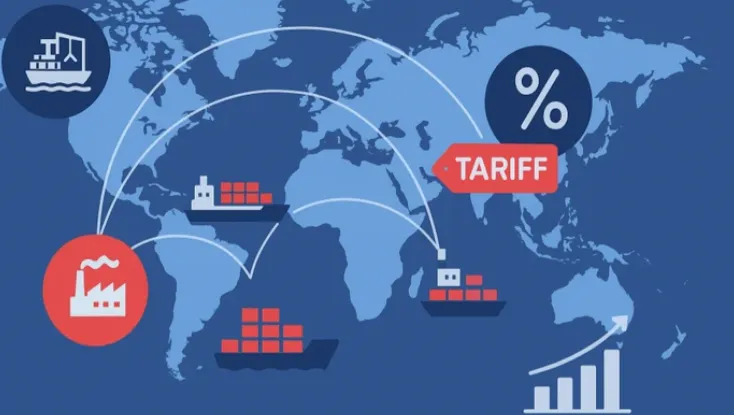
Trade policies and tariffs can quickly influence global commodity markets and mining share prices. [Insights.made-in-china]
The Rising Importance Of ESG Policies In Mining Investment
The future of mining is currently influenced by environmental, social and governance laws. The mining companies are being put under pressure by governments and investors to meet increased environmental standards.
These regulations affect project approvals, operating costs, and corporate valuations. Tightening of the ESG reporting is also being created in key jurisdictions. Businesses are now expected to be responsible in their supply chains and to act in an ethical manner.
This change represents an increase in questioning of various industries that are dependent on the mining of minerals. The emerging pressure on the mining companies is reflected in new legislation against forced labour and environmental risk.
On the side of the investors, compliance with ESG can also indicate greater stability in the long term. Through open practices, companies tend to gain institutional investment.
How Investors Can Identify Opportunities In Australian Mining Stocks
Commodity prices are not the only factors that should be analysed by investors who are looking at the opportunities. The alignment of the policies with the national and international priorities becomes more important.
Government reaction to critical minerals projects tends to be more favourable and quicker. Certain jurisdictions are now fast-tracking permits to enhance the local supply chain.
Indicatively, some policies permit the mining approvals to proceed much more quickly in national security systems. The changes will be able to enhance the project timelines and increase investor confidence.
Government incentives, infrastructure investment and global trade partnerships are also key areas that should be monitored by the investors. Organisations located in favourable policy environments can have higher growth in the long-term.
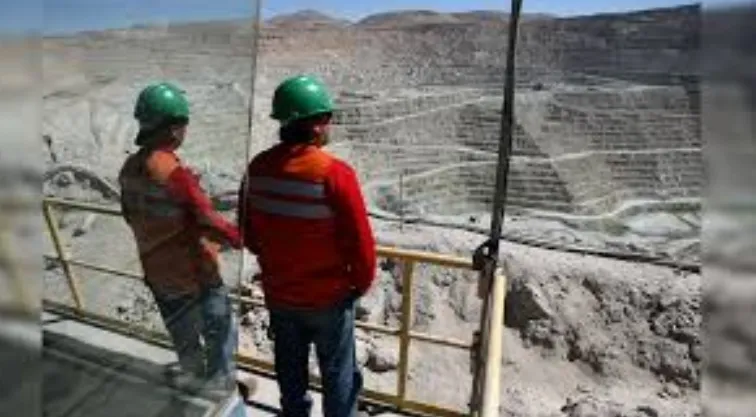
Policy-aligned mining projects often attract stronger investor interest and government support. [The Economic Times]
Future Outlook For Mining Stock Investment in Australia
Government strategy is also likely to keep the future of mining investment strongly affected. The competition for critical minerals in the world environment is increasing fast as the demand for clean energy is augmented.
Governments are implementing policies to ensure that they have a domestic supply and minimise dependence on imports. Such activities are transforming the exploration priorities and corporate investment decisions.
Investment cycles that are driven by policy might also bring about short-term booms in certain commodities. Analysts caution that great policy encouragement may on occasion produce quick supply surges.
However, with time, it is possible that stable regulatory regimes will facilitate the cyclic mining boom-and-bust patterns. To investors, it could be as important as geological or cost of production analysis to keep track of political developments.
Also Read: PNG vs Australia Mining: Which Offers Better Returns for Investors?
FAQs
Q1. What Is Mining Stock Investment Australia?
A1: Mining stock investment in Australia refers to investing in ASX-listed mining companies involved in mineral exploration, development, and production.
Q2. Why Do Global Policies Affect Mining Stocks?
A2: Policies influence trade, supply chains, and environmental regulation, which directly affect mining production and commodity prices.
Q3. Which Commodities Benefit Most From Policy Support?
A3: Critical minerals such as lithium, rare earths, copper, and nickel often receive strong policy backing due to energy transition demand.
Q4. How Can Investors Track Mining Policy Trends?
A4: Investors can follow government announcements, trade policies, ESG regulations, and international supply chain strategies.


