
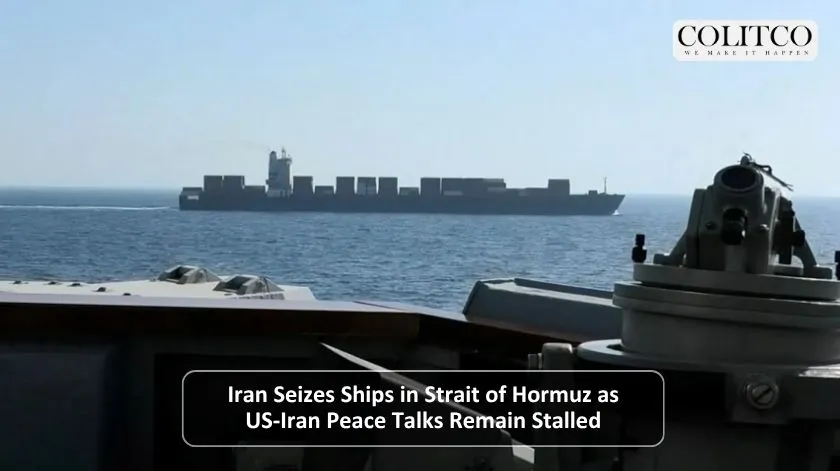
Iran’s Revolutionary Guard captured two container ships and fired on a third on Thursday, hours after President Trump extended an indefinite ceasefire — while keeping the US naval blockade firmly in place.
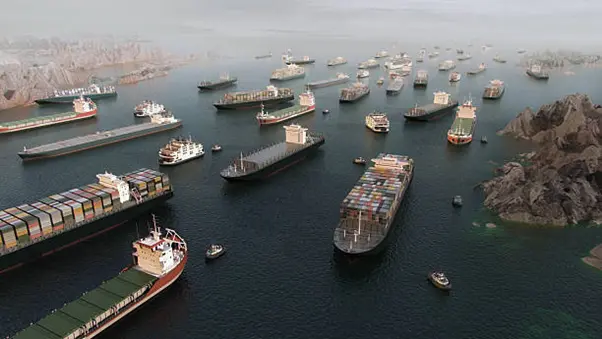
Commercial and military vessels navigate the Strait of Hormuz, a critical global oil transit route amid rising US-Iran tensions. [IStock]
Iran’s Revolutionary Guard Seizes Two Ships in Hormuz Strait
Iran’s Islamic Revolutionary Guard Corps (IRGC) seized two foreign container ships in the Strait of Hormuz on Thursday morning. The vessels, identified as the MSC Francesca and the Epaminondas, were targeted as they attempted to pass through the waterway. Iran stated both ships violated maritime regulations.
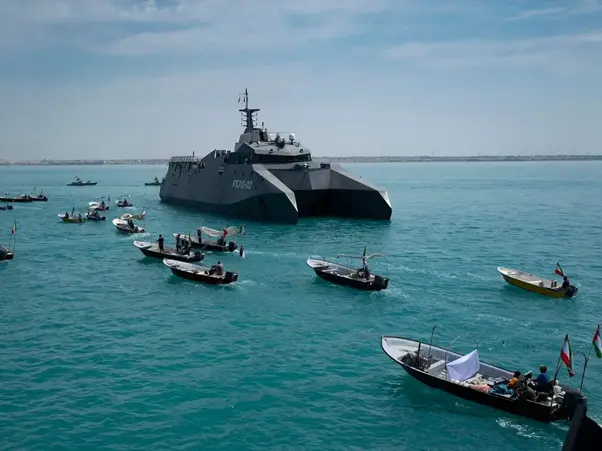
Iranian Revolutionary Guard naval units patrol the Strait of Hormuz during heightened maritime security operations. [Business Insider]
A third vessel, the Greek-owned Euphoria, came under IRGC fire and later became stranded on Iran’s coastline. Iran’s state-run Fars News Agency reported the attack via Telegram, adding the ships had “ignored warnings from Iranian armed forces.” The UK Maritime Trade Operations Centre (UKMTO) confirmed the incidents and warned of “high levels of activity” across the strait.
All crew members involved were reported safe. The UKMTO added the first container ship suffered significant bridge damage after an IRGC gunboat opened fire without prior communication.
Trump Extends Iran Ceasefire — But Keeps Naval Blockade Active
Hours before the ship seizures, US President Donald Trump announced he would extend the ceasefire with Iran indefinitely. He made the announcement via Truth Social late Wednesday, stating he wanted to give Iran’s leadership time to “come up with a unified proposal” to end the conflict.
US President Donald Trump announced an indefinite ceasefire extension while maintaining a naval blockade on Iranian ports. [MSN]
Trump made clear the US naval blockade of Iranian ports would continue. The blockade, which began on April 13, has forced at least 23 vessels to reverse course, according to US Central Command (CENTCOM). Trump told reporters Thursday there is “no time frame” on the conflict, dismissing speculation that midterm elections influenced his approach.
Iran Calls US Blockade the Main Obstacle to Hormuz Peace Negotiations
Senior Iranian officials responded to the ceasefire extension with sharp criticism. Iran’s Foreign Ministry spokesperson Esmail Baghaei told state media that there has been “no final decision” on whether Tehran will return to the negotiating table. He cited what he called “unacceptable actions” by the United States as the reason for Iran’s reluctance.
Iran’s parliamentary speaker Mohammad Bagher Ghalibaf, who led Tehran’s delegation in the first round of talks in Islamabad, stated publicly that the US blockade violates the existing ceasefire agreement. Iran’s President Masoud Pezeshkian also weighed in on social media platform X on Thursday.
Second Round of US-Iran Talks Remains Uncertain After Pakistan Meeting Collapses
A planned second round of peace talks in Pakistan has effectively collapsed. Vice President JD Vance had been expected to lead a US delegation to Islamabad, but the trip is now on hold. Iranian state media outlet Tasnim reported earlier this week that Tehran’s negotiators would not attend further talks.
The first round of talks, held in Islamabad, produced no concrete agreement. Both sides had expressed cautious optimism in the days that followed. However, the US seizure of the Iranian cargo ship Touska on April 20 — in which Marines boarded the vessel after a destroyer disabled its engines — dramatically shifted Tehran’s posture.
“Breach of commitments, blockade and threats are the main obstacles to genuine negotiations.” — Iranian President Masoud Pezeshkian
US Forces Seized Iranian Ship Touska Days Before Hormuz Escalation
On April 20, US forces fired on and seized the Iranian-flagged cargo vessel Touska in the Strait of Hormuz. The guided-missile destroyer USS Spruance disabled the ship’s propulsion before Marines descended from a helicopter to board the vessel. CENTCOM released footage of the operation.
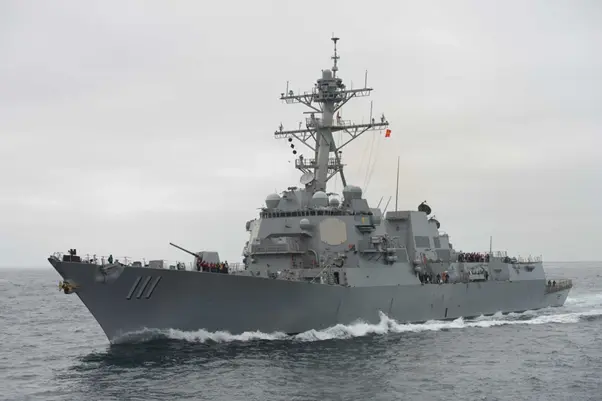
USS Spruance conducts a maritime interception operation in the Strait of Hormuz during enforcement of the US naval blockade. [DVIDS]
Trump described the incident publicly, stating the US military had “stopped them right in their tracks by blowing a hole in the engine room.” He added that Marines then took control of the ship and investigated its cargo. Iran characterized the seizure as a violation of the ceasefire and a direct provocation against ongoing diplomatic efforts.
Hormuz Strait Shipping Crisis Escalates as Blockade Reaches Day 10
The US naval blockade of Iranian ports entered its tenth day on Thursday. CENTCOM confirmed that 23 vessels have complied with US orders to turn around since the blockade began on April 13. The blockade covers Iranian ports near the Strait of Hormuz and does not directly target the strait itself.
The Strait of Hormuz carries roughly 20 percent of the world’s daily oil and gas supply. Continued disruptions have pushed global energy markets into uncertainty. Iran has intermittently declared the strait open and then closed it again over the past several weeks, creating what analysts describe as an unpredictable shipping environment.
Key Facts at a Glance — April 23, 2026
- Ships seized today: MSC Francesca, Epaminondas
- Ship stranded on Iran’s coast: Euphoria (Greek-owned)
- US blockade started: April 13, 2026
- Vessels turned back by US: 23 (per CENTCOM)
- Conflict started: February 28, 2026
- Peace talks venue: Islamabad, Pakistan (Round 1)
- Round 2 talks: On hold / uncertain
Israel Kills Lebanese Journalist in Separate Strike — Lebanon Condemns Attack
In a separate development on Thursday, Israeli airstrikes on Lebanon killed at least five people. Among the dead was Lebanese journalist Amal Khalil. The Lebanese government described the strike as a “heinous crime.” The attacks come despite a previously announced ceasefire between Israel and Lebanon.
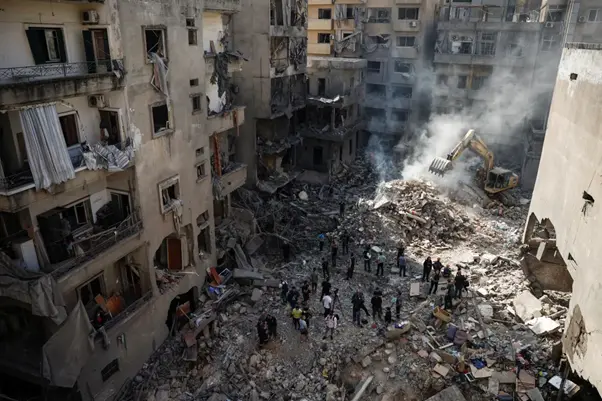
Smoke rises following reported Israeli airstrikes in Lebanon amid ongoing regional tensions. [Al jazeera]
The strikes add to a wider pattern of regional violence that has intensified since the US and Israel launched attacks on Iran on February 28. The conflict has drawn in multiple fronts across the Middle East, complicating diplomatic efforts to achieve a broader regional settlement.
What Comes Next: Hormuz Diplomacy at a Critical Crossroads
- Analysts say Thursday’s ship seizures mark a major escalation in the conflict.
- Iran’s move to target commercial vessels after the US ceasefire extension signals lack of trust in Washington’s intentions.
- The US naval blockade remains the main obstacle to progress in peace negotiations.
- Donald Trump stated the ceasefire will continue until talks conclude “one way or another.”
- Iran has not committed to a second round of negotiations, narrowing chances of a diplomatic breakthrough.
- Both sides have seized vessels, further increasing tensions and complicating dialogue.
- The global shipping industry is closely monitoring the Strait of Hormuz.
- Any further disruption could significantly impact global energy prices.
- The next 48–72 hours are seen as critical for the direction of the conflict.
- Iran’s Supreme Leadership has not issued an official position on ongoing talks.
- The international community, including Pakistan, has urged restraint from both sides.
FAQS
Q1: Why did Iran seize ships in the Strait of Hormuz?
A: Iran stated that the vessels violated maritime regulations and ignored warnings from its naval forces, leading to their seizure by the Islamic Revolutionary Guard Corps.
Q2: Which ships were involved in the incident?
A: The seized vessels were identified as the MSC Francesca and Epaminondas, while a third ship, Euphoria, came under fire and was later stranded near Iran’s coastline.
Q3: How has the United States responded to the situation?
A: The United States has maintained a naval blockade on Iranian ports despite extending a ceasefire, with operations overseen by United States Central Command.
Q4: Why are US-Iran peace talks currently stalled?
A: Talks remain uncertain due to disagreements over the US naval blockade and recent military actions, including the seizure of the Iranian vessel Touska, which Iran considers a violation of the ceasefire.
Q5: Why is the Strait of Hormuz important to global markets?
A: The Strait of Hormuz is a critical chokepoint through which roughly 20% of the world’s oil supply passes, making disruptions highly significant for global energy prices.
Q6: What impact could this escalation have on global trade?
A: Increased tensions and shipping risks in the region may disrupt oil and cargo flows, potentially raising energy prices and affecting international supply chains.
Disclaimer
Colitco provides this content for general informational purposes only. The article is based on publicly available information, official statements, and credible media reports at the time of publication. Events involving the Strait of Hormuz and broader geopolitical developments may change rapidly without notice. Colitco does not offer political, legal, or financial advice. Readers should rely on official sources and professional advisors for the latest updates and guidance.
Sources
https://www.cnn.com/2026/04/22/world/live-news/iran-war-us-trump-blockade-ceasefire


