
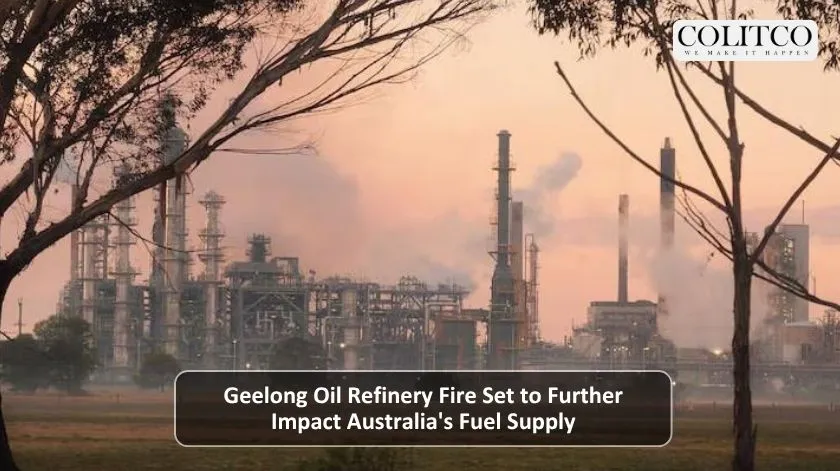
Fire Breaks Out at Geelong Refinery, One of Only Two in Australia
A significant fire tore through the Viva Energy refinery in Geelong, Victoria, late on Wednesday night, 16 April. Firefighters from Fire Rescue Victoria responded to the scene as flames reached up to 60 metres high. A gas leak ignited the blaze, triggering several explosions before the fire took hold.
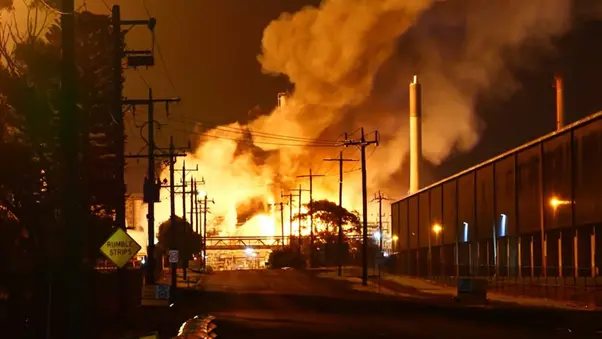
Fire and explosions erupt at Viva Energy’s Geelong refinery on 16 April 2026, prompting an emergency response from Fire Rescue Victoria. [ABC]
Authorities declared the fire under control at 12:04 pm on Thursday. No casualties were reported. The Geelong refinery, which has operated since 1954, processes 120,000 barrels of oil per day. It supplies more than 50% of Victoria’s fuel and around 10% of the nation’s total supply.
The plant is one of only two active oil refineries in Australia. That fact alone has raised the stakes considerably. The fire struck at a moment when Australia was already managing a broader fuel security crisis linked to the Iran conflict.
Petrol Output Drops 40% as Fire Damages Key Production Units
The blaze primarily damaged the section responsible for converting liquefied petroleum gas into petrol components. Viva Energy confirmed that two production units sustained significant damage. Those units are now out of operation while the company assesses the situation.
Prime Minister Anthony Albanese confirmed the production impact after touring the Geelong site on Thursday. He stated that petrol output at the refinery had fallen by approximately 40%. Diesel and aviation fuel production continued, though at reduced levels due to safety precautions.

Prime Minister Anthony Albanese speaks at the Geelong refinery after the fire, outlining fuel supply and recovery measures. [The Guardian]
“This is an incident that obviously is regrettable, particularly given the timing in which it has occurred, but the advice that we’ve received today is that 80 per cent of diesel production is continuing, 80 per cent of aviation fuel is continuing.”
— Prime Minister Anthony Albanese, speaking at the Geelong refinery site, 17 April 2026
Viva Energy CEO Scott Wyatt acknowledged the severity of the incident and confirmed the company would not restart production until it could do so safely. He stated that production would resume without the two damaged units while recovery work continues.
Australia’s Fuel Security Already Under Strain Before the Blaze
Australia depends on imports for roughly 80% of its fuel needs. The country has faced growing supply pressure since the United States launched military strikes on Iran on 28 February 2026. That conflict disrupted transit through the Strait of Hormuz, a key route for global oil shipments.
The Iranian war pushed fuel prices to record highs across the Asia-Pacific region. Australia responded with a range of emergency measures. The federal government halved the fuel excise in late March, cutting pump prices by 26.3 cents per litre for three months. It also tapped strategic reserves and relaxed diesel standards.
Energy analyst Kevin Morrison noted that the broader Asia-Pacific region was already dealing with fuel security issues before the fire. He described the loss of Geelong’s output as “quite an issue” given the absence of major national stockpiles.
Fuel Prices Fall Despite Geelong Refinery Blaze
Despite the fire, petrol prices continued to fall on Friday. A two-week ceasefire between the United States and Iran, announced on 8 April, drove expectations of a resumption in Strait of Hormuz traffic. In response, the price of Brent crude dropped by up to 17% before settling near USD $95 a barrel.
Government intervention also played a role. The combination of excise cuts, reserve releases, and secured import shipments pushed petrol prices down more than 10% from the record high recorded at the end of March. That downward trend continued into this week.
However, the ceasefire remains fragile. Negotiations between the US and Iran failed to produce a formal agreement. The situation is still dependent on compliance by both sides. Any breakdown could quickly reverse recent price declines.
Government Moves to Secure Replacement Fuel Supply
The federal government has acted swiftly to offset the production loss at Geelong. Albanese’s office confirmed the securing of approximately 100 million litres of diesel from Brunei and South Korea. The government described this as the first delivery under its new Strategic Reserve powers.
Through Export Finance Australia, the government also arranged terms with Viva Energy, Ampol, Park Fuels, and IOR. These agreements support additional fuel procurement to address regional shortages and critical supply gaps across the country.
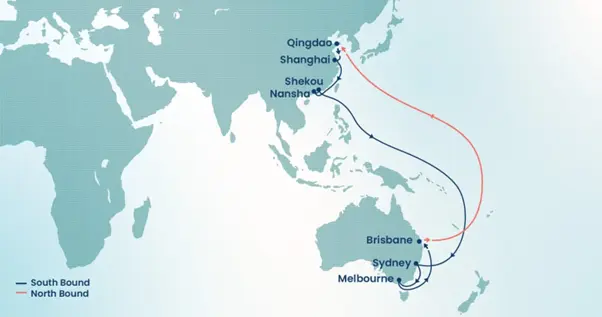
Australia relies on imports for around 80% of its fuel, with supply routes stretching across Asia and the Middle East. [Sealand]
Foreign Affairs Minister Penny Wong is travelling to Singapore to continue diplomatic outreach. The effort builds on earlier talks in Malaysia, where Albanese secured assurances from national energy company Petronas regarding continued fuel supply to Australia.
Australia Remains at Stage Two of the National Fuel Security Plan
The government confirmed that Australia will not escalate to stage three of its national fuel security plan. Stage three would trigger an increase in voluntary measures to restrict fuel consumption. Albanese said the current situation does not warrant that step.
Australia currently holds 39 days’ worth of petrol, 30 days’ worth of diesel, and 30 days’ worth of aviation fuel in reserve. All fuel shipments through to May have been secured. Supply levels remain consistent with pre-conflict figures, despite localised shortages in some regional areas.
The government also established a national fuel security task force to coordinate policy, monitor supply levels, and oversee distribution. The taskforce aims to ensure fuel reaches the areas that need it most, particularly in regional and remote communities.
Viva Energy Refinery Recovery Timeline Remains Unclear
Viva Energy has not provided a firm timeline for restoring full capacity at the Geelong site. CEO Scott Wyatt said the company would work through operational options over the coming days. The refinery will increase production gradually, operating without the two damaged units until repairs are possible.
Energy Minister Chris Bowen acknowledged the fire would affect local production “for some time.” He added that the government is monitoring the situation closely and will provide regular updates on supply levels through the fuel security task force.
The refinery’s age adds complexity to recovery efforts. The Geelong plant began operations in 1954 and was running at maximum capacity before the fire, given the pressures of the global oil crisis. Analysts note that repairing ageing infrastructure under current demand conditions presents a significant logistical challenge.
Experts Warn Sustained Price Relief Requires Broader Resolution
Analysts have cautioned that lasting fuel price relief depends on more than domestic policy. A meaningful and sustained fall at the pump requires either a formal end to the Middle East conflict, a significant reopening of the Strait of Hormuz, or a sharp drop in global crude demand.
The ceasefire between the US and Iran, while encouraging, has not delivered a binding agreement. Iran’s foreign minister stated that the country would continue its resistance. Trump, meanwhile, has declined to commit to a specific end date for the military campaign.
Until a durable resolution emerges, Australia’s fuel security will remain contingent on continued imports, government intervention, and careful management of national reserves. The Geelong fire has removed a key layer of domestic supply buffer at one of the worst possible times.
Also Read: Viva Energy Geelong Refinery Fire Sparks Fuel Supply Fears
FAQS
Q1: What caused the fire at the Geelong refinery?
A1: The fire was reportedly triggered by a gas leak at Viva Energy’s Geelong refinery, which led to an explosion and a large blaze that spread across key production areas.
Q2: How much fuel production was affected?
A2: The fire has reduced petrol production at the refinery by approximately 40%, with two major production units taken out of operation.
Q3: Were there any casualties reported in the incident?
A3: No casualties were reported. Fire Rescue Victoria managed to bring the blaze under control within several hours of the outbreak.
Q4: How important is the Geelong refinery to Australia’s fuel supply?
A4: The refinery processes around 120,000 barrels of oil per day and supplies more than 50% of Victoria’s fuel and about 10% of Australia’s total fuel demand.
Q5: Will Australia face immediate fuel shortages due to the fire?
A5: Authorities say supply remains stable for now due to imports and reserves, though the fire adds pressure to an already strained fuel market.
Q6: Is petrol expected to become more expensive after the fire?
A6: Short-term price drops are still occurring due to global market trends and government measures, but analysts warn prices could rise again if supply disruptions continue.
Q7: When will the Geelong refinery return to full operation?
A7: Viva Energy has not provided a clear timeline, stating that repairs and safety assessments are ongoing before full production can resume.


