
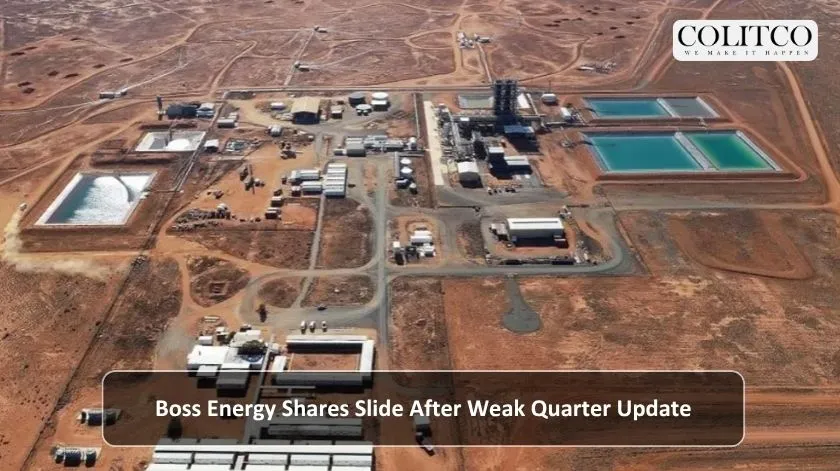
Boss Energy Shares Slide down on Thursday morning. The stock declined 3% to $1.49. The market closely watched the recent report for the September 2016 quarter. This highlighted lower uranium production and increased costs.
The news sparked a negative sentiment in the market. Tuesday’s fall continues a slump. The stock price has been weak over the last year. Market conditions and supply chain issues played a role.
The company’s near-term outlook has been revised. The report has raised fresh concerns about execution. The company’s downgrade on outlook also contributed.

Boss Energy shares fell 3% after a weak uranium output report. [Courtesy: Investing News Network]
Why Did Boss Energy Shares Decline Today?
A decline in production was the main reason for the drop. The Honeymoon mine produced 203,000 pounds of U3O8. This was a 56% decrease from the previous quarter.
This was a cause for concern. This was lower than forecast. Reduced output affected the returns potential. The market responded to the magnitude of the fall. Price risks exist with mining.
The company cited the weather for the decline. But investors are wary of volatility. The report pointed to continued issues. This prompted a sell-off during the day.
How Did Costs And Sales Impact Performance?
There were strong increases in costs. The C1 cost is $60 per pound. It’s US$41 per pound. This is a 100% increase from the last quarter. The price rise was driven by falling output. Higher fixed costs led to higher expenses.
At the same time, sales dropped 7% to 325,000 pounds. This also affected the bottom line. But the average price was unchanged.
This was US$74 per pound. The company remained price strong despite outages. Liquid assets and cash rose slightly. They were up 2% to A$211 million.
What Led To The Production Disruption?
Adverse weather was cited by management. March experienced heavy rainfall. Access to the site was severely limited. This impacted supply chains. Essential reagents were not readily available.
Leaching process conditions were disturbed. This led to reduced production efficiency. Further, equipment commissioning was delayed. These added to operational problems. The net effect was to lower production.
Weather impacts are not uncommon in mining. But there were multiple events this quarter. The operator admitted the problems. The market is watching the recovery time.
Why Has FY26 Guidance Been Downgraded?
The firm has upgraded its FY 2026 guidance. It now expects 1.40 Mlbs to 1.45 Mlbs U3O8. This was 1.6 Mlbs earlier. The revision is due to poor results for the quarter. Management has brought expectations in line with reality.
Cost guidance is unchanged overall. But it is now expected to be high. C1 guidance remains $36-$40 per pound. The AISC guidance remains at $60-$64 per pound. These reflect operating costs.
The guidance downgrade reflects short-term weakness. Lower forecasts are generally viewed negatively by investors. This was part of the reason for the falling share price.

Rising costs and lower output pressure profitability. [Courtesy: The Economic Times]
What Did Management Say About The Quarter?
CEO Matthew Dusci said it was a tough quarter. He cited lower-than-expected production. The culprit was heavy rain. It limited access to the site and work. Disruptions to the supply of reagents.
Infrastructure delays added further complications. Management noted the effect on production. This led to higher costs. The company is still on course. It’s on track to meet cost guidance for the full year.
But expect it will be at the top end. The announcement sought to calm the market. But there’s still concern about execution. Investor sentiment seems to be tempered post-update.
How Are Boss Energy Shares Performing Long-Term?
Shares have been under pressure for the last 12 months. It’s more than 50% below its price a year ago. This has been due to market and specific company factors. Market conditions in the uranium industry have been a factor.
Operational setbacks have added further strain. Also, the stock is highly shorted. Some 11.3% of shares are shorted. This suggests investors are bearish. Short interest can also lead to higher volatility.
It also demonstrates a bearish outlook until there are signs of recovery. This latest statement supports defensive positions. Investors are holding out for operational improvement.
Should Investors Consider Buying Boss Energy Shares Now?
Investors are taking their chances. Uranium has a bright future. Worldwide interest in nuclear power is growing. But there are risks. This past quarter demonstrates challenges. Consistency in production will be crucial.
Analysts advise caution when investing. There is also a range of views on stock value. Others have not listed it in their favourites.
Diversification is a key investment strategy. Risk tolerance is an important factor. High-risk investors may like the stock. Others may seek other, less risky options.
FAQs
Q1. Why did Boss Energy shares fall today?
A1: Shares fell after production dropped 56% to 203,000 pounds. Costs doubled to $60 per pound.
Q2. What is the new FY26 production guidance?
A2: The company expects 1.40 Mlbs to 1.45 Mlbs U3O8. This is down from 1.6 Mlbs.
Q3. How much cash does Boss Energy hold?
A3: Cash and liquid assets rose 2% to A$211 million. This supports ongoing operations.
Q4. What percentage of shares are shorted?
A4: About 11.3% of shares are held short. This indicates strong bearish sentiment.
Disclaimer
This article is for informational purposes only and does not constitute financial advice. It is based on publicly available company updates and market data. Investors should conduct independent research before making decisions. Market conditions and company performance can change rapidly. Past performance is not indicative of future results. Always consult a licensed financial adviser before investing.
Sources


