
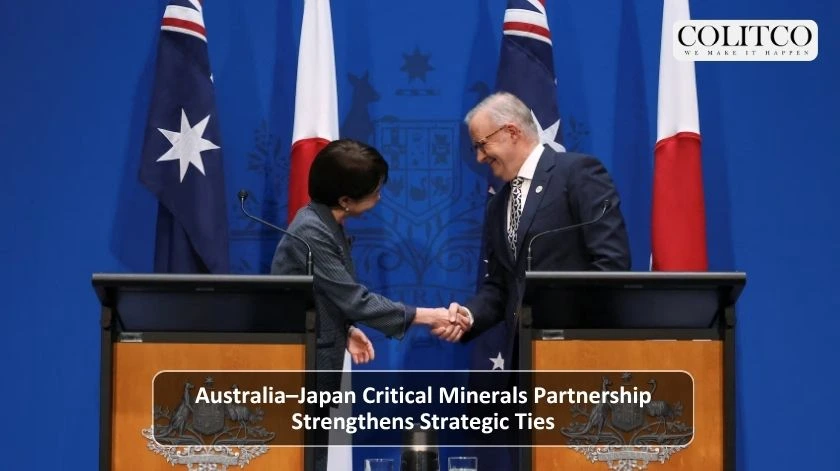
The Australia-Japan critical minerals alliance has transitioned to a new stage of strategic significance. The two countries have made critical minerals a key pillar of economic security. This initiative is an indicator of greater collaboration in supply chains, investment, and project development.
The announcement was made after a joint declaration by the two prime ministers in a high-level visit. The agreement emphasizes the critical minerals as critical to the advanced manufacturing and energy transition objectives.
It also strengthens the economic sustainability in the long-run between the two nations. This cooperation indicates increasing demand in the world for stable and diversified mineral supply chains. It makes the two countries pioneers in the future security of resources.
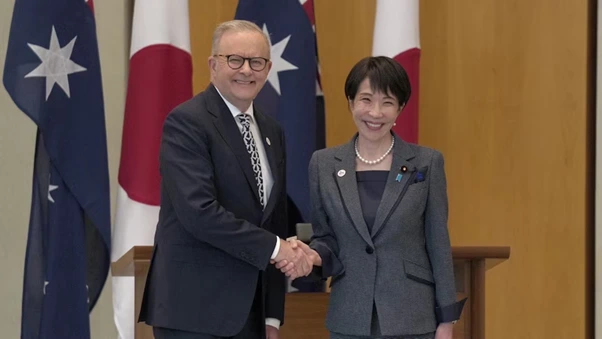
Australia and Japan strengthen critical minerals cooperation through a new strategic declaration. [Courtesy: ABC News]
Why the Australia–Japan Critical Minerals Partnership Matters Globally
The Australia-Japan critical minerals relationship is a response to the increasing worldwide worries about concentrate supply. The availability of rare earths and other key metals is stable in many industries. These are the renewable energy, semiconductors, and electric vehicles segments.
Both governments realized the threats that can be traced to the shortage of supply sources. This collaboration is expected to diversify the supply chains and minimize vulnerabilities. Greater coordination will be used to support downstream industries and manufacturing ecosystems.
The partnership also guarantees resilience in case of geopolitical upheaval. The process of policy and investment strategies alignment strengthens the global influence of both countries. This action points to a larger change in the direction of resource security in international economic strategies.
Where Investment And Policy Coordination Will Drive Growth
Policy and investment co-alignment is at the heart of this partnership. The two countries will improve information exchange and coordination of regulations. The funding instruments of the public will be instrumental in expediting the project development.
Japan’s JOGMEC and Australia’s Critical Minerals Strategic Reserve will support funding efforts. The purpose of these initiatives is to facilitate approvals and minimize delays in projects. The cooperation also promotes the involvement of the private sector and investment across the border.
The government of Australia has made up to $1.3 billion in investments using major financing initiatives. Japan has already provided about 370 million in funding assistance. All these efforts provide a powerful financial base for long-term development.
Investment initiatives from Australia and Japan boost critical minerals project development. [Courtesy: CSEP]
How Key Projects Will Strengthen Supply Chain Security
This partnership is rich with several strategic projects. Lynas Rare Earths continues to play a major role in supply diversification.
Recently, the project recorded significant milestones in heavy rare earth production. The gallium recovery project at Alcoa is aimed at the semiconductor and solar industries. The Magnium project is aimed at low-carbon magnesium production.
Such developments can be used in automotive and aerospace applications. Tivan’s Speewah fluorite project aims to supply semiconductor materials. The Copi project by RZ Resources is aimed at producing sands of minerals and rare earth elements.
Each project deals with certain gaps in the supply chain. They combine to increase the production capacity as well as decrease the world’s reliance on concentrated sources.
When Government Support Will Accelerate Industry Expansion
The support of the government will speed up work on the most important mineral projects. The policy support is high, with Australia committing up to $1.3 billion in funds. Export Finance Australia is an important source that facilitates project funding.
Investor confidence is further enhanced by non-binding Letters of Support. The JOGMEC in Japan is ever-increasing its footprint in investments. Further funding will be anticipated with the progression of projects.
These financial obligations guarantee the long-term sustainability of developers and other stakeholders. Collaboration between the miners, investors, and off-take partners is also facilitated by the partnership.
This is a coordinated approach that helps to make projects viable. It also takes care of the availability of essential resources to the international markets in time.

Government funding commitments accelerate growth in critical minerals projects. [Courtesy: Australia Mining]
What Role Strategic Projects Play In Economic Security
This long-term vision of this partnership is based on strategic projects. The Kalgoorlie Nickel Project is one of the most successful developments. The Goongarrie Hub is advantageous due to good cooperation with Japan.
The project is included in Australia’s investor front door program. This is a program that would ease the interaction with foreign investors. Such projects also help in generating employment and industrial potential. They also aid national security by being resource independent.
Both countries enhance their value chains by focusing on mining, refining, and manufacturing. The combined strategy is a guarantee of sustainable development. It also resonates with international attempts to ensure the stocks of critical minerals.
How Future Collaboration Will Expand The Partnership
The cooperation between Australia and Japan will continue to develop the Australia-Japan critical minerals partnership. Both governments will continue to find more priority projects. Business missions will bridge stakeholders in the entire value chain.
There will be increased engagement between miners, financiers, and investors. It is also a partnership in alignment with the global partners, such as the United States. This wider collaboration empowers the global supply chains. It also increases the resilience of a group against disturbances.
Further cooperation will aid in innovation and development of technology. The alliance can be used as an example of international cooperation of resources. It also makes both countries competitive in the changing energy transition environment.
Also Read: US1 Critical Minerals Secures $1 Million Placement With Snow Lake Energy
FAQs
Q1: What Is The Australia–Japan Critical Minerals Partnership?
A1: It is a strategic agreement focusing on supply chains and investment. It includes funding commitments of $1.3 billion and $370 million.
Q2: Why Are Critical Minerals Important For Both Countries?
A2: They support industries like EVs and semiconductors. They also ensure economic security and supply stability.
Q3: Which Projects Are Key Under This Partnership?
A3: Projects include Lynas Rare Earths and the Kalgoorlie Nickel Project. These target supply diversification and production growth.
Q4: How Will This Partnership Impact Global Supply Chains?
A4: It will reduce reliance on concentrated sources. It also improves resilience across global mineral supply networks.
Disclaimer
This article is for informational purposes only and reflects publicly available announcements regarding the Australia–Japan critical minerals partnership. It does not constitute financial or investment advice. Readers should conduct independent research before making decisions related to mining, resources, or associated investments. Market conditions and project developments may change over time.
Sources


