
President Donald Trump signed executive directives requiring military contractors to eliminate Chinese minerals from defence supply chains. Federal procurement mandates direct defence manufacturers to stop purchasing rare earths, neodymium magnets, tungsten, molybdenum, and tantalum from China, Russia, Iran, and North Korea.
American industrial processing capacity falls short of domestic material requirements. Washington officials acknowledge that the administration will likely grant administrative waivers to allow the purchase of Chinese materials and avoid production stalls.
- President Donald Trump enacted policy measures targeting foreign mineral dependencies across defence industries.
- Federal regulations mandate complete tracing of rare-earth magnets from raw material extraction to final assembly.
- Federal agencies prepare national security waivers to allow Chinese mineral imports past initial cutoffs.
The Department of Defence established these sourcing targets to protect national supply chains against foreign leverage. Domestic processors currently lack the refining infrastructure to replace foreign suppliers before federal deadlines take effect.
Military contractors rely on these elements to produce fighter aircraft, precision missiles, naval vessels, and satellite communications. The administration now balances strategic independence goals against immediate manufacturing realities.
Significance and Impact
Global supply networks directly affect consumer technology prices, industrial energy security, and national defence capabilities. Material shortages in critical elements threaten production schedules for military hardware, commercial automobiles, and personal electronics.
A breakdown in mineral access increases production costs across manufacturing sectors worldwide. Taxpayers fund government initiatives like the 12-billion-dollar Project Vault stockpile, which uses public capital to acquire material reserves.
- Critical minerals enable the production of guidance systems, electric vehicle motors, and power grids.
- Supply bottlenecks drive up manufacturing expenses for industrial goods and consumer products.
- Government stockpiling programmes allocate public funds to stabilize commodity access during trade disputes.
Failure to secure processing capacity leaves global markets vulnerable to sudden export restrictions. Readers following economic trends, manufacturing outputs, and public policy feel the direct impact of these commodity constraints.
Stable mineral access supports domestic employment across manufacturing and technology industries. Shifts in procurement rules alter investment flows into resource processing and civil engineering projects.
Key Stakeholders and Industry Players
President Donald Trump and leaders within the Department of Defence oversee the execution of these procurement mandates. Major defence contractors, including Lockheed Martin and Boeing, evaluate their component supply lines to identify foreign inputs.
Mineral processing companies like MP Materials and Ucore Rare Metals receive government funding to build domestic refining operations. Automobile manufacturers such as General Motors seek non-Chinese magnet suppliers to power electric vehicle assembly lines.
- President Donald Trump directs executive strategy regarding critical mineral independence.
- Lockheed Martin and Boeing audit vendor components across complex military platforms.
- MP Materials and Ucore Rare Metals construct processing facilities to handle heavy rare earths.
- General Motors secures supply agreements for domestic rare-earth magnet production.
The broader sector includes commercial mining operators, aerospace engineers, automotive executives, and international commodity traders. Government representatives coordinate with private corporate officers to establish alternative processing networks through allied nations.
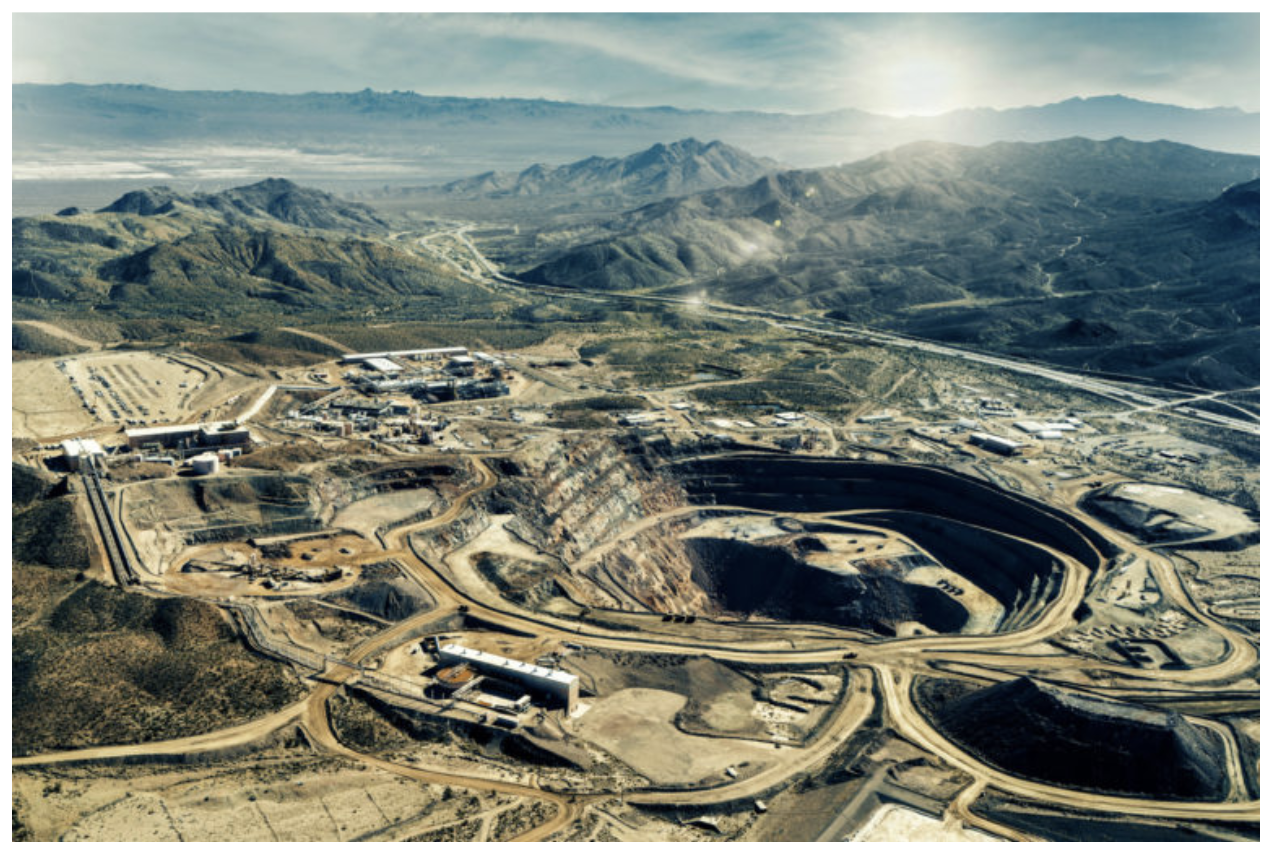
Figure 1: Aerial view of MP Materials’ Mountain Pass rare earths mine photographed in 2022. [Source: MP Materials]
Mining startup Guardian Metal Resources works to open domestic tungsten mines, while Lion Rock Resources develops tantalum deposits. Industry analysts like Chris Berry monitor supply readiness across public markets and corporate reports.
Geographic Scope
Policy directives originated in Washington, Columbia District, within executive offices and the Pentagon complex. Manufacturing operations span processing facilities in Texas, mining sites in California, and refining projects in South Dakota.
The geographic footprint extends to Beijing, China, where state-backed companies control global refining assets and export channels. Regional processing operations in East Asia manage the majority of heavy rare-earth separation procedures.
- Government officials issued executive orders and military regulations from Washington, Columbia District.
- Refining facilities in Texas and mining sites in California expand processing operations.
- Industrial centres in Beijing and regional Chinese provinces control foreign export quotas.
Mining locations in Australia and partner processing plants in Japan form secondary international supply lines. Industrial activities expand across North America, Europe, and Asia as companies build processing infrastructure outside China.
Defence contractors coordinate with regional suppliers to trace origin credentials for raw materials. Supply chain tracking covers multiple international borders from extraction mines to final machining plants.
Timeline and Deadlines
Lawmakers established baseline supply restrictions through the fiscal year 2023 and 2024 National Defence Authorization Acts. President Donald Trump reinforced these objectives through executive actions following his return to office.
Federal procurement rules require defence contractors to eliminate restricted foreign materials by 1 January 2027. The administration launched Project Vault, a 12-billion-dollar mineral stockpile programme, in February 2026 to manage near-term deficits.
- Congress enacted initial sourcing restrictions in defence authorization bills between 2022 and 2024.
- The Trump administration launched the 12-billion-dollar Project Vault stockpile programme in February 2026.
- Defense contractors face full compliance mandates starting on 1 January 2027.
Defence suppliers perform component trace audits ahead of the regulatory cutoff date. Construction timelines push completion dates for several domestic processing facilities into 2028 and subsequent years.
Also Read: Australia Mining Outlook 2026: BGL Quarterly Update Points to Long-Term Expansion
Recent export licensing delays from foreign governments highlighted vulnerabilities in early 2025. Policy adjustments continue as the 2027 deadline approaches.
Implementation and Strategy
This material gap emerged because domestic firms reduced mining and processing investments over several decades. China established dominance by controlling 80 percent of global refining capacity and 98 percent of heavy rare-earth separation.
American demand for rare-earth magnets reached 48,000 tonnes in 2025, while domestic plants produced only 300 tonnes. Industry projections indicate domestic output will reach approximately 5,000 tonnes by late 2026, leaving a substantial shortfall.
- American domestic magnet production yielded 300 tonnes against a 48,000-tonne demand in 2025.
- Domestic processing capacity targets 5,000 tonnes by late 2026, leaving a significant deficit.
- Chinese state refiners maintain control over 80 percent of global mineral separation facilities.
To maintain weapons assembly lines, the Pentagon will grant statutory national security waivers to defence contractors. The government will purchase Chinese minerals for the national stockpile while domestic firms construct refineries over the next several years.
Partnerships with allied nations in Asia and Europe will provide temporary supply buffers during the transition. Domestic mining projects will gradually expand processing capacity to reduce foreign dependency over the coming decade.
Sources
- https://www.mining.com/web/trump-may-need-to-allow-chinese-minerals-as-us-industry-struggles-to-meet-2027-deadline/
Disclaimer: The information provided in this article is for educational and informational purposes only and does not constitute professional, legal, or investment advice. While every effort has been made to ensure accuracy, the rapidly evolving nature of federal procurement policy and international trade dynamics means that specific details may change. Readers should consult with qualified industry experts or official government sources regarding compliance with current defense supply chain regulations. The author and publisher assume no liability for actions taken based on the content of this article.

Luke Carlino is a seasoned Copywriter, Content Strategist, and Social Media Manager specialising in Mining, Finance, and Business journalism. With more than a decade of industry experience, he brings rigorous editorial standards and commercial acuity to every project.