

Gold miners don’t often get to report a record year and raise next year’s target at the same time. Bellevue Gold Limited (ASX: BGL) just did both. Its June 2026 quarterly report, lodged on 28 July, reads like a company that’s finally moved past the growing pains and into full stride. For anyone watching the Australia mining outlook 2026 unfold, this is one of the clearer signals so far.
The headline number: 143,539 ounces of gold for FY26, a company record. That landed above the midpoint of Bellevue’s own guidance band of 130,000 to 150,000 ounces. Not a stretch target met by luck, either; production actually grew every quarter through the back half of the year.
Inside the BGL Quarterly Update 2026
June quarter output came in at 41,643 ounces, edging up from 40,745 ounces in March. Costs held firm too. Full-year AISC landed at A$2,827 per ounce, right inside the guided A$2,600–2,900 range, while the June quarter itself sat at A$2,604 per ounce.
Gold sold for the quarter reached 40,671 ounces, fetching an average realised price of A$4,180 per ounce. Part of that price reflects early deliveries into forward sales contracts, a deliberate call by management, not a fallback.
Mining physicals told a similar story of a business hitting its rhythm. Bellevue moved a record 315,300 tonnes of ore during the quarter, grading 4.6 grams per tonne. The processing plant kept pace, treating 298,772 tonnes at 4.5 grams per tonne and recovering 96.0 percent of the gold, close to the best the plant has ever done.
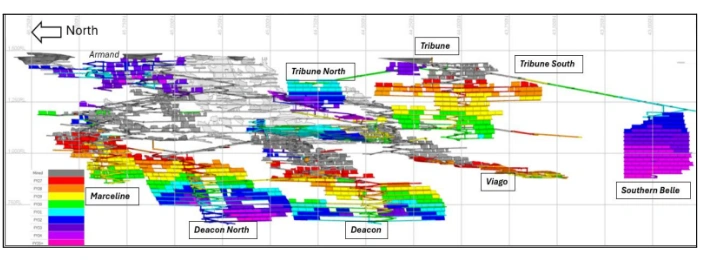
Fig 1: Mining from FY27 onwards will be largely focused on five mining areas (Deacon, Deacon North, Viago, Marceline, Tribune) [Announcement]
A Balance Sheet That Backs the Growth Talk
Cash and gold on hand grew to A$206.4 million by the end of June, up from A$180.7 million three months earlier. Debt sits unchanged at A$100 million, and there’s nothing mandatory to repay until CY27. That’s a company with room to move, not one scrambling for its next raise.
Free cash flow before hedge pre-deliveries came in at A$110 million for the quarter. After Bellevue voluntarily delivered gold early against its forward contracts, that figure settled at A$27.8 million, the trade-off being a lighter hedge book going forward.
And the hedge book really has come down. Bellevue cut forward commitments by 83.4koz across FY26, leaving just 68.7koz on the books. Mandatory deliveries are now off the table until the end of June 2027, which hands the company much cleaner exposure to spot gold prices at a time when the metal keeps setting new highs.
FY27 Guidance: This Isn’t Just More of the Same
Here’s where the update gets interesting for anyone weighing up the ASX Australia gold mining growth forecast for the year ahead. Bellevue has lifted FY27 guidance to 150,000–170,000 ounces, a genuine step up rather than a modest tweak. Project AISC guidance sits at A$2,800–3,100 per ounce.
Why the jump? Simple, really, the mine now draws ore from five established long-term areas: Deacon, Deacon North, Viago, Marceline and Tribune. Spreading production across five zones instead of one or two smooths out the swings and takes pressure off any single high-grade pocket.
Non-sustaining capital is expected to fall to A$90–100 million in FY27, down from A$113.3 million in FY26. Most of what’s left funds the paste plant build, a village upgrade, and infrastructure tied to the switch from outgoing miner Develop Global to incoming contractor Barminco. Management expects costs to ease once that transition beds in through the second half of the year.
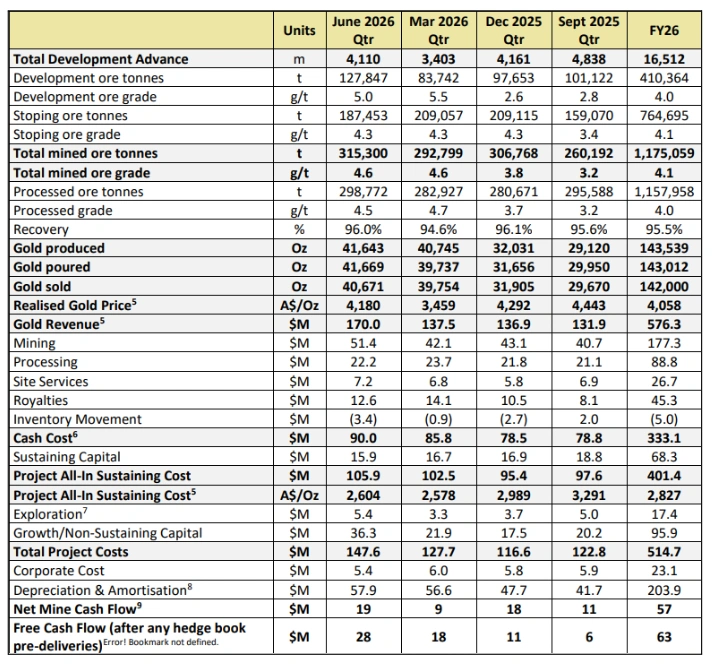
Fig 2: Production and cost summary [Announcement]
Exploration Money Follows the Drill Results
The exploration budget has jumped too, up to A$25–30 million for FY27. Bellevue has bought an extra underground drill rig, taking the underground fleet to two or three rigs running all year, plus a surface rig for most of it.
The spending looks justified already. Underground drilling at Tribune South, new ground south of the current reserve, never tested from underground before, returned 3.50 metres at 44.96 grams per tonne gold and 1.71 metres at 7.80 grams per tonne gold. The style of mineralisation matches Tribune’s northern extension, which is a promising sign for continuity down-plunge.
A downhole electromagnetic survey is also underway on surface. It’s the same targeting method that’s found the sulphide-rich, higher-grade zones at Bellevue in the past, so there’s history behind why the company keeps using it.
The Sustainability Angle Isn’t Just Window Dressing
Bellevue Gold Project claims the title of the world’s first net zero (Scope 1 and 2) gold mine. Renewable energy averaged 75.4 percent through the June quarter, a touch lower than usual thanks to winter, but the company still hit its 80–90 percent target across FY26 overall.
This matters beyond the sustainability report. Lower reliance on diesel means lower exposure to fuel price swings, something plenty of competitors still can’t say. As ESG scrutiny keeps tightening across the sector, that’s a real point of difference, not just a talking point for investor decks.
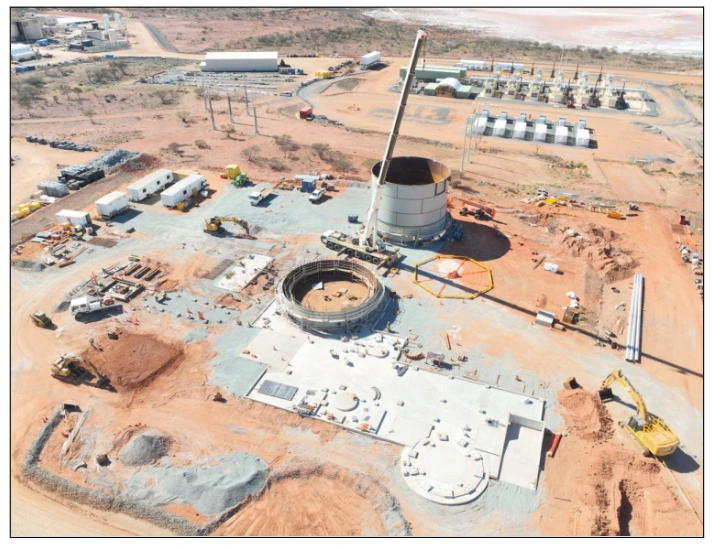
Fig 3: Paste Plant construction progress – 24 July 2026 [Announcement]
What It Signals for Gold Mining Nationally
Bellevue’s quarter is a decent litmus test for where Australian gold producers sit heading into FY27. The companies pulling ahead are the ones combining tight cost control, a shrinking hedge book, and genuine drill success, not just riding the gold price.
There’s a risk worth flagging: the Barminco contractor handover still needs to bed in cleanly, and the September quarter will be the real test of that. But with five mining areas now in steady production, a stronger cash position, and fresh assay results opening up ground at Tribune South, Bellevue looks better placed to build on FY26 than simply repeat it.
More broadly, this update fits a pattern showing up across the Goldfields: operators that spent 2025 chasing steady-state production are now turning that stability into real expansion plans for 2027 and beyond.
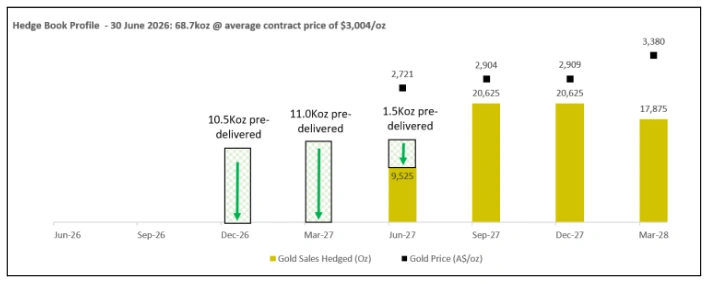
Fig 4: Gold forward sales commitments as at 30 June 2026, reflecting the impact of 23.0Koz reduction from pre-deliveries in the June 2026 quarter [Announcement]
Also read: Top ASX Rare Earth Stocks 2026 That’re Turning Into Real Returns for Australians
FAQ
Q: What is Bellevue’s current liquidity and net cash position?
A: Bellevue holds A$206.4 million in cash and gold liquidity against A$100 million in debt, providing a net cash buffer of A$106.4 million with no mandatory principal debt repayments until CY27.
Q: How is Bellevue managing its forward gold sale hedge obligations?
A: Bellevue pre-delivered 83,400 ounces in FY26 to eliminate all mandatory hedge book deliveries until June 2027, maximising unhedged spot price exposure.
Q: What key growth projects will underpin near-term operational expansion?
A: The commissioning of a new paste plant in mid-FY27 and active mining across five distinct underground production zones support long-term mill feed and lower growth capex.
Also read: Build an ASX Portfolio Strategy for Market Selloffs
Disclaimer
This article is meant only for informational purposes. If you are an investor who is watching Mineral Resources Limited closely, all the data published in the content is sourced from ASX announcements and external sources. Kindly verify all information related to the share price and market data. Any investment should be made at the investor’s own risk. Colitco does not hold any position in the above-mentioned Company
——————————-
Source:

Luke Carlino is a seasoned Copywriter, Content Strategist, and Social Media Manager specialising in Mining, Finance, and Business journalism. With more than a decade of industry experience, he brings rigorous editorial standards and commercial acuity to every project.