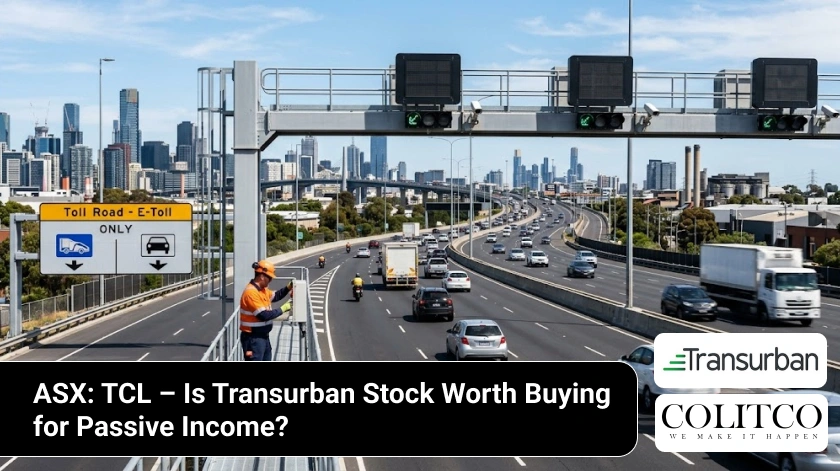
Passive income, as we understand, is the income we generate with scant effort. That passive income source should require some one-time effort to set up, and afterwards it becomes automatic. It can be a digital product, rental property, or investment portfolio; whatever it is, it should generate stable cash flow in your bank account.
The stock market is a fantastic, highly popular source of passive income for many people. It requires a one-time effort to research and invest in a proper time. However, time… is the most important factor here.
You can buy a stock when it is $10, even though the same stock was trading at $8.50 just a few days ago. Or, you can wait until the share price falls back to $8 or $9, which may seem like the perfect entry point. However, the market does not always move according to your expectations, and the stock could just as easily rise to $12 in the meantime. So, time, my friend, is the most important factor here.
The Pattern of TCL Stock in the Recent Months
You may be wondering why we’ve been talking about all of this: time, passive income, and everything in between.
Here’s why.
A month and a half ago, on 16 April, if you had bought TCL stock, your portfolio would be showing a return of around 12–13% today. Because on that date, the stock price was $13.37. And, at the time of close, yesterday, 5th June, the price was $15.08.
The year-to-date performance is also pretty impressive. In all standard time frames, such as one week, one month, one year, etc., the stock has delivered positive returns and remained in the green.
- 1 Year: +5.53%
- 1 Week: +3.71%
- 1 Month: +6.50%
- 2026 Year-to-Date: +6.12%
- Outperformed Sector (1 Year): +7.44%
- Outperformed ASX 200 (1 Year): +4.52%
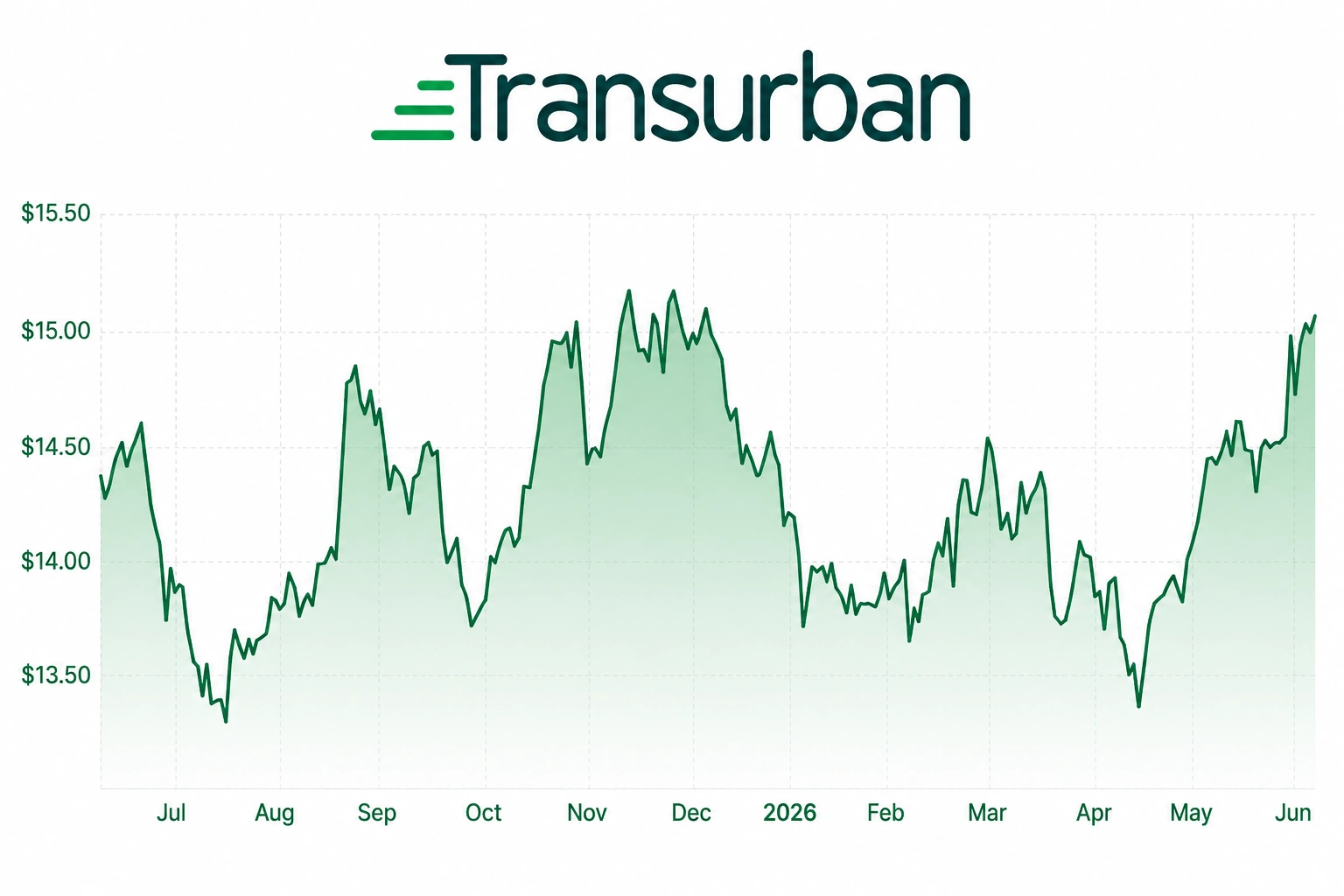
Figure: Share price performance of Transurban Group in the past 52 weeks
Transurban Group, the infrastructure operator that owns and manages major toll road networks across Australia, Canada and the United States, has caught the attention of investors across the country at a time when the sector (Industrials) itself has not shown very impressive performance.
The Industrials sector has plummeted by 2.74% year-to-date in 2026 and 1.91% over the past 52 weeks.
The market capitalisation of the company is approximately $47 billion, and with this market cap, the company holds an ASX rank of 13 out of 2,340 companies and a sector rank of 1 out of 211 companies.
Income Investors Keep Watching Transurban Stock: Here is Why
Transurban’s appeal for passive income investors mostly comes from its predictable cash flows. If you look at other businesses, such as telecommunications companies, banks, and others, they often depend heavily on economic cycles. Toll roads, on the other hand, generate recurring revenue from daily commuter and freight traffic, which is largely unavoidable.
If we were to explain it like we’re explaining it to a five-year-old, no matter what the economic cycle looks like, whether it’s an economic downturn, a share market crash, or something else, you will still need to travel on roads, right? And in many cases, you will still need to pay tolls.
There are other factors as well. A major advantage is the group’s pricing structure. More than 90% of its revenue is linked to inflation through CPI adjustments or fixed escalation mechanisms, which helps protect earnings during periods of rising costs. This inflation-linked revenue model has historically provided a degree of resilience compared with other income-focused investments.
It doesn’t end here. The company also paid an unfranked distribution of 34 cents per security earlier this year, translating to a trailing yield of roughly 4.5% at current share price levels.
This combination of stable cash generation and distributions appears to be a significant attraction for ASX investors.
What Are Latest Traffic Trends as Mentioned by the Company?
Management noted that the weaker conditions seen earlier in the month are showing signs of improvement. More recent traffic data were encouraging.
Traffic in Melbourne rose by 1.6% in April. The West Gate Tunnel project helped alleviate Melbourne traffic.
Brisbane traffic increased by 0.7%, broadly in line with the underlying performance seen during the March quarter.
Across Australian markets, commercial vehicle traffic increased by 10.8% in April. Excluding the West Gate Tunnel, commercial vehicle traffic was up 4.4% across the network.
| Market | Change |
|---|---|
| Sydney | +2.3% |
| Melbourne | +16.6% |
| Melbourne (excluding West Gate Tunnel) | +3.3% |
| Brisbane | +7.8% |
Growing freight traffic is particularly important because commercial vehicles generally contribute higher toll revenue than passenger vehicles. The adoption of the West Gate Tunnel by freight operators is increasing, and it may provide an additional earnings tailwind.
Also Read: Chrysos Corporation Locks In $200 Million Debt Facility for PhotonAssay Expansion
Are There Any Risks?
Yeah, everything in the stock market comes with some inherent risk factors.
First of all, the company’s share price is trading very close to its 52-week high of $15.25 per share. It suggests that near-term upside potential may be low. From a valuation and risk-reward perspective, the stock appears fairly priced at current levels. As such, a hold stance may be more appropriate than either accumulating more shares or exiting the position.
Second, interest rates will be one of the biggest factors influencing investor sentiment. Infrastructure businesses typically carry substantial debt due to the capital-intensive nature of their assets. We have seen companies keeping their debt-to-equity ratios as high as 80:20. Sometimes even more.
For example, APA Group, an energy infrastructure company in Australia, has a Debt-to-Equity ratio of approximately 477.06% (4.77x), implying a capital structure of roughly 83% debt and 17% equity.
By comparison, Transurban Group’s Debt-to-Equity ratio stood at 2.33x as of December 2025. This level is not unusual for infrastructure businesses. However, any significant increase in debt could be viewed negatively by investors.
Moreover, higher borrowing costs can put pressure on the company’s profitability and cash flows. Rising interest expenses may also reduce the relative attractiveness of dividend-paying stocks.
So… Is Transurban Worth Buying for Passive Income?
Yes, it is a stock with strong fundamentals, but again, as we mentioned earlier, timing is an important factor. The company has outperformed most infrastructure stocks on the ASX; however, you should still conduct a thorough analysis to determine the most suitable entry point.
Disclaimer
This article is for informational and educational purposes only and does not constitute financial advice, investment advice, or a recommendation to buy, sell, or hold any security. The views expressed are based on publicly available information and the author’s analysis at the time of writing. Investors should conduct their own research and consider their financial objectives, risk tolerance, and personal circumstances before making any investment decisions. Past performance is not indicative of future results, and investments in shares carry risks, including the potential loss of capital.
Sources
- https://yourir.info/resources/a50955429d255a58/announcements/tcl.asx/3A692567/TCL_West_Gate_Tunnel_asset_tour.pdf
- https://www.asx.com.au/markets/etp/TCL
- https://www.transurban.com/

Luke Carlino is a seasoned Copywriter, Content Strategist, and Social Media Manager specialising in Mining, Finance, and Business journalism. With more than a decade of industry experience, he brings rigorous editorial standards and commercial acuity to every project.