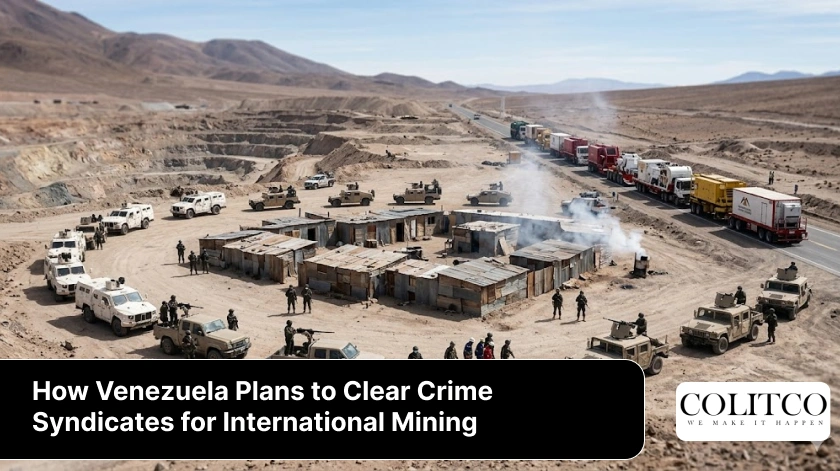
The government of Venezuela launched an initiative to restructure the mining sector of the nation. This plan aims to attract capital from markets across the globe to exploit deposits of gold and minerals of importance. Officials expect that this reset will revive an economy that previously depended on the export of oil.
Lawmakers in the National Assembly passed legislation to formalise concessions and modernise guidelines for the industry. Analysts from GEM Mining Consulting stated that the legislation creates “a legal route for domestic and foreign companies,” which targets the regularisation of operators. The state intends to replace extraction in conditions of chaos with partnerships under a formal structure.
The country faces challenges of magnitude as this policy collides with realities on the ground. Decay of institutions and the collapse of infrastructure hinder the entry of corporations without delay. Syndicates that operate without permits currently control many of the zones of production.
The state must address the presence of networks that extract gold and diamonds without regulation. These syndicates fund operations through the extraction of resources and challenge the authority of the government at the centre. This clash between legislation from the state and reality in the territories forms the obstacle of highest priority for the reset.
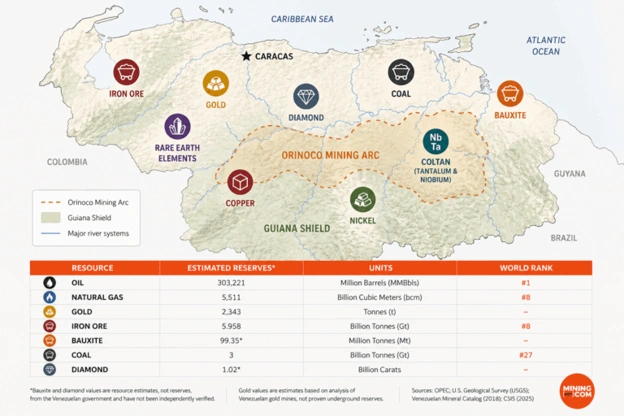
Figure 1: Estimated reserves of resources in Venezuela [Mining.com]
Data from the Center for Strategic and International Studies highlights specific statistics regarding this resource base:
- Venezuela holds an endowment of seventy-five million ounces of gold within its territory.
- The formations of geology possess a capacity to support production each year of fifty-two million tonnes for bauxite.
- The deposits allow an output each year of 148 million tonnes for products of iron ore.
- Mining without authorization penetrates twenty-seven of the forty-one areas under protection in the region of the Amazon.
Global Relevance
Supplies of minerals influence the manufacturing of technology and applications for defence across the world. Venezuela holds resources that could alter the balance of chains of supply if corporations extract them with success. Buyers tracking the availability of gold, iron, and coltan observe these shifts in policy with attention.
The transition affects the stability of markets throughout South America. Investors monitor the resolution of risks regarding sanctions and the establishment of security in the region. Success or failure in this territory will signal whether capital can enter frontiers that experienced instability in the past.
Consumers of electronics rely on metals like coltan for the production of smartphones and satellites. The entry of a producer of scale into the market of the world can lower costs for industries that require inputs from nature. The outcome of this strategy impacts the economics of the globe and the pricing of goods for consumers.
Key Stakeholders
A collection of actors participate in or influence the reorganisation of the mining sector in Venezuela. The administration of US President Donald Trump eased sanctions and encouraged firms from America to re-enter the country. Doug Burgum, the US Interior Minister, led a delegation of executives from mining companies to meet with the leadership of Venezuela.
Acting President Delcy Rodríguez managed these discussions to secure commitments for investment. In the legislature, members of the Socialist Party voted unanimously to pass updates to regulations. Corporations from the sector of commerce outside the state in nations like India also seek partnerships to guarantee security of energy and supplies of minerals.
On the ground, the landscape features groups with arms, rebel organisations from Colombia, and syndicates of crime. These entities contest the power of the state and exploit workforces in the area through coercion. The International Crisis Group documents how these networks generate revenues that sustain economies that run in parallel.
The changes directly impact more than 1500 communities of people of Indigenous heritage in regions in the south. These populations face displacement and pressure from both syndicates and entities of the state. The enterprise under ownership of the state, Corporación Venezolana de Guayana, retains control of eleven of the twenty mines that exceed all others in size.
Area of Operation
The activities and challenges of enforcement concentrate within the Orinoco Mining Arc. This zone of strategy spans approximately 111,800 square kilometres across territories in the region. The boundary encompasses parts of Bolívar, Amazonas, and Delta Amacuro.
The Guayana Shield forms the base of geology for these deposits of a size that exceeds the norm in South America. Areas with thickness of trees in the Amazon rainforest shelter both the resources and the networks that extract them without authorisation. Hubs for extraction operate deep within jungles that the state cannot easily police.
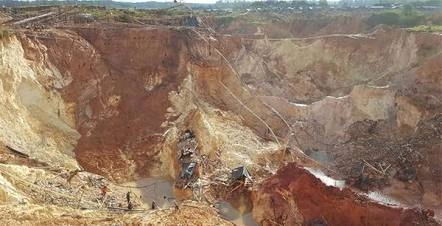
Figure 2: Mining operations within the Orinoco strategic zone [Image: World Rainforest Movement]
The impact extends to waterways within Bolívar that provide ninety percent of the water fit for drinking for the nation. Syndicates pollute rivers with mercury and sediment during the separation of gold. This contamination affects ecosystems and communities from the forests in the south to centres of population downriver.
Policy Timeline
The trajectory of the time of today for the sector shifted rapidly following the removal of Nicolás Maduro from power in January 2026. This transition in politics allowed the introduction of adjustments to policy for the economy. The change in leadership prompted responses with speed from governments of other lands and entities from the business world.
In March 2026, the delegation from the United States visited Venezuela to initiate talks about resources. Following these meetings, the National Assembly moved with speed to draft updates to structure. Lawmakers approved the framework for mining with a scope that covers all areas on 9 April 2026.
The problems in the sector connect to a timeline that covers a span of decades. Hugo Chávez nationalised the gold industry in 2011 through Decree Number 8413, which initiated a decline in exploration by corporations. Analysts estimate that the resolution of the degradation that followed will require timelines measured in decades rather than years.
Strategy and Future Outlook
The rollout of the reset relies on a combination of updates to laws and enforcement of security. The text of the law creates mechanisms to formalise mining at a small scale and grant concessions to enterprises. The plan requires an investment that analysts place at fifty billion US dollars to succeed fully.
This capital must rebuild the infrastructure for transport and generate electricity for hubs of processing. The absence of data of geology from the era of today under systems of standard practice like JORC or NI 43-101 creates an obstacle at the start for financiers. Without these surveys, institutions cannot assess risks or fund projects of magnitude.
The situation of security requires the deployment of forces of the military to dismantle syndicates of crime. These groups currently occupy twenty-seven of the forty-one areas under protection in the region of the Amazon. Units of the military must clear these zones before corporations can build infrastructure safely.
Concerns for the environment will also dictate the pace of integration into the economy of the world. The reversal of a 2022 decision that permitted river mining remains a priority for advocates for the environment. The government must enforce standards like the Equator Principles to satisfy the demands of investors of the era of today.
Also Read: Nvidia Holds Firm During Chip Stock Selloff While Rivals Take Big Losses
Experts project that the extraction of gold will lead the recovery because of networks that operate informally at present. Re-establishing the production of iron ore and bauxite will take more time due to the complexity of plants for industry. The process will unfold through partnerships of small scale rather than a return without delay to operations of a scale that exceeds the norm.
Officials from the state plan to initiate agreements between two sides with entities from partner nations to bypass channels of capital used in the past. This mechanism allows the government to secure machinery and training in technology directly in exchange for allocations of minerals. Analysts expect that these arrangements will build capacity for operations over a period of twenty-four months.
The success of the framework depends on stabilization without an end date of regions near the borders. If the state fails to contain the violence from syndicates, capital from across the globe will select other jurisdictions for exploration. The years ahead will demonstrate whether the administration can translate geology into wealth for the nation.
FAQs: Frequently Asked Questions
1.What is the primary goal of the mining reset?
The main goal is to attract global capital to exploit gold and mineral deposits, shifting the economy away from its previous dependence on oil exports.
2.What is the greatest obstacle facing the government’s plan?
The highest priority obstacle is the clash between new state legislation and the reality on the ground, specifically the illegal syndicates that extract gold and diamonds and challenge the government’s authority.
3.What is the estimated mineral wealth in Venezuela?
Venezuela holds an estimated 75 million ounces of gold, and its geological formations have the capacity to support annual production of 52 million tonnes of bauxite and 148 million tonnes of iron ore.
4.Where is the primary area for these activities?
The activities concentrate within the Orinoco Mining Arc, a strategic zone of approximately 111,800 square kilometers located in the Guayana Shield region.
5.How much investment is needed for the plan?
Analysts project that an investment of fifty billion US dollars is required to fully succeed, primarily to rebuild transport infrastructure and generate electricity for processing hubs.
Sources
- https://www.mining.com/venezuela-mining-reset-meets-ground-level-challenges/
- https://news.mongabay.com/2026/04/venezuelas-new-mining-law-could-spell-disaster-for-the-amazon-critics-warn/
Disclaimer:
This article is for informational purposes only, summarising current Venezuelan government policy, legislative changes, and analyst projections regarding the mining sector. The situation is subject to significant, rapidly evolving risks, including geopolitical sanctions, infrastructure collapse, institutional decay, and ongoing conflicts with armed syndicates. The outlook and projections discussed are forward-looking and not guarantees of future outcomes.

Luke Carlino is a seasoned Copywriter, Content Strategist, and Social Media Manager specialising in Mining, Finance, and Business journalism. With more than a decade of industry experience, he brings rigorous editorial standards and commercial acuity to every project.