
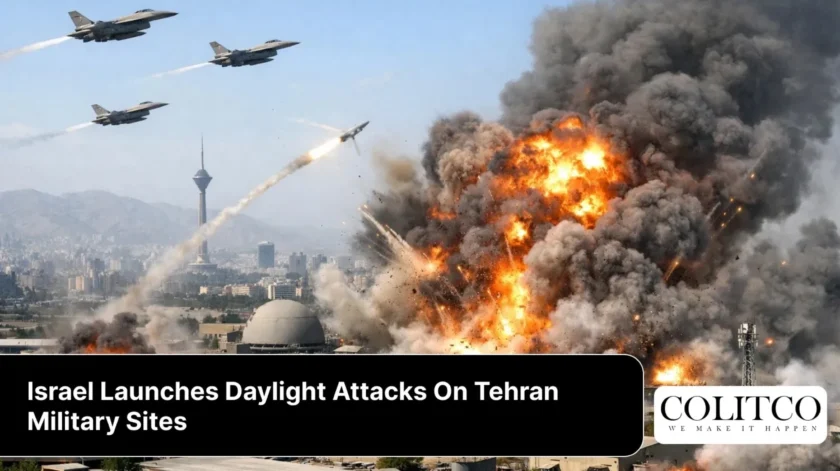
Israel launched a daylight attack on Tehran on 28 February 2026. Defence Minister Israel Katz declared a state of emergency across the country. Thick smoke rose from explosions in downtown Tehran.
The Israeli military issued a proactive alert to prepare the public. Officials warned about the possibility of missiles from Iran. Sirens sounded across Israel at the same time.
Missiles struck University Street and the Jomhouri area in the capital. Witnesses heard the blast in the city centre. Iranian state television later reported on the explosion.
The military did not immediately elaborate on specific targets. This strike follows months of regional tension. Israel aims to remove threats to its security.
“The State of Israel launched a pre-emptive attack against Iran to remove threats to the State of Israel,” Katz said.
‘JOINT US-ISRAELI ATTACK’ ON IRAN — Israeli media
Tehran up in smoke rn#Isreal #Iran #US pic.twitter.com/hUXTDa3FUp
— World Events and breaking news🌎‼️ (@2ru_Events) February 28, 2026
Schools across Israel closed following the announcement. The government advised the public to work from home. Public gatherings now face a total ban.
This event marks a significant escalation in the Middle East. It occurred after the Twelve-Day War in June 2025. Israel and Iran engaged in an air war during that period.
The United States has assembled a fleet of fighter jets in the region. Warships also maintain a presence in nearby waters. These forces aim to pressure Iran over its nuclear programme.
Negotiations between the United States and Iran were renewed in February. These talks sought to resolve a decades-long dispute. Diplomatic efforts failed to produce a final agreement this week.
Israel insisted that any deal must dismantle the nuclear infrastructure. The Israeli government lobbied Washington to include missile restrictions. Iran ruled out linking its missile programme to nuclear talks.
Following a situational assessment, it was determined that as of today (Saturday), at 08:00, immediate changes will be made to the Home Front Command Guidelines.
As part of the changes, it was decided to shift all areas of the country from Full Activity to Essential Activity.
The…— Israel Defense Forces (@IDF) February 28, 2026
Military Operations Target Nuclear And Missile Facilities
The Israeli Air Force utilised long-range strike capabilities for this mission. Over 100 aircraft participated in previous operations against Iran. This attack focuses on military sites and production factories.
Satellite images show activity at the Esfahan Nuclear Technology Centre. Israel and the United States struck this site in 2025. Iran recently covered tunnel entrances with soil for protection.
On February 27, 2026, the Department of State authorized the departure of non-emergency U.S. government personnel and family members of U.S. government personnel from Mission Israel due to safety risks.
In response to security incidents and without advance notice, the U.S.… pic.twitter.com/aWzX6Gk36x
— U.S. Embassy Jerusalem (@usembassyjlm) February 27, 2026
The International Atomic Energy Agency cannot verify recent enrichment activities. A confidential report states the agency lacks data on uranium stockpiles. Iran held 400 kilograms of enriched uranium before the 2025 war.
- The strike targeted missile production complexes.
- Israel struck air defence batteries in Tehran.
- Military alerts remain active in both nations.
United States Secretary of State Marco Rubio visited the region recently. He stated that Iran tries to achieve intercontinental ballistic missiles. The Defense Intelligence Agency assessed Iran’s capabilities last year.
The United States authorised the departure of non-essential workers from Israel. The Department of State issued a travel advisory for citizens. It urged people to leave while commercial flights remain available.
Ambassador Mike Huckabee contacted embassy staff via email. He urged staff members to book flights immediately. The United States maintains two carrier strike groups in the area.
Iran recently signed an arms deal with Russia for air defence systems. This deal includes 500 shoulder-fired missiles. Russia and China provide support to the Iranian government.
Iranian military officials inspected air defence bases this week. Brigadier General Alireza Elhami visited the northern zone base in Tehran. These inspections aimed to improve defensive readiness.
The Bavar 373 system failed to intercept previous targets. Iran now seeks alternative components from foreign partners. Indigenous systems show limitations against advanced aircraft.
Economic Instability And Internal Unrest Inside Iran
The Iranian rial plunged to a record low in December 2025. One United States dollar now equals 1.42 million rials. This currency collapse increases food prices for citizens.
Protests broke out in major markets in downtown Tehran. Citizens expressed frustration over inflationary pressure. Supreme Leader Ali Khamenei called for security forces to act.
He stated that rioters must return to their places. Demonstrations continued in several cities across the country. People shouted from windows to support the protests.
- Inflation impacts the cost of daily necessities.
- The government implements internet blackouts during unrest.
- Economic sanctions continue to affect national trade.
Sainsbury’s and other global entities monitor regional stability. Energy markets react to news of strikes in the Middle East. Oil prices often fluctuate during military confrontations.
The United Nations Security Council reimposed sanctions in late 2025. These sanctions bar certain types of diplomacy and trade. China and Russia failed to stop this process.
France, Germany and the United Kingdom issued warnings to Tehran. They demanded a solution to the nuclear standoff by August. The “snapback” process for sanctions began shortly after.
Donald Trump stated that he remains unhappy with the situation. He mentioned that military force stays on the table. Regime change remains an option for his administration.
“We’re not exactly happy with the way they negotiated,” Trump told reporters. “They cannot have nuclear weapons.”
The Israeli government believes operational success overcomes political concerns. Prime Minister Benjamin Netanyahu directs the current military strategy. He received support to take the necessary actions.
Regional partners like Saudi Arabia and Qatar watch the conflict. They worry about the stability of the Gulf region. Iran warned neighbours against hosting United States strike teams.
Iraqi militias threatened to target United States bases. Kataib Hezbollah called for a war of attrition. They consider American facilities to be legitimate targets.
The Red Sea also remains a zone of conflict. Houthi rebels continue to launch attacks on shipping. These actions link back to the broader regional struggle.