
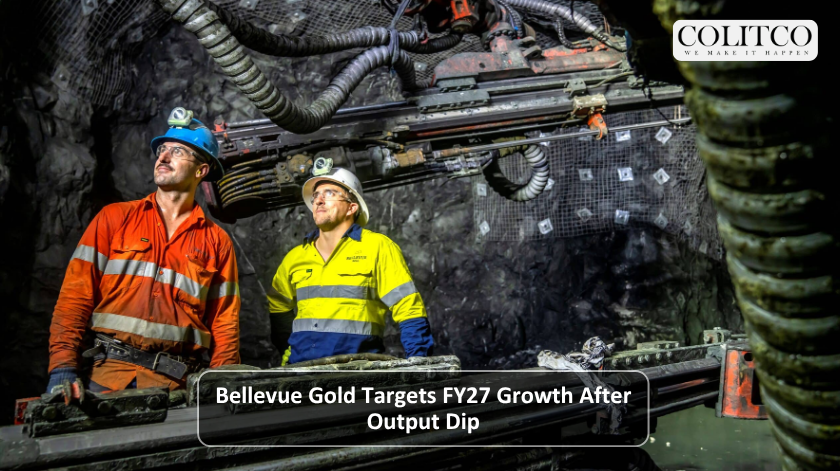
Bellevue Gold production fell to 35,585 ounces in the September 2026 quarter, compared with 41,643 ounces in June.
Barminco assumed operational control on 1 August. The handover happened as planned. Building up mining activity afterwards took longer.
That leaves three quarters to make up the ground lost at the start.
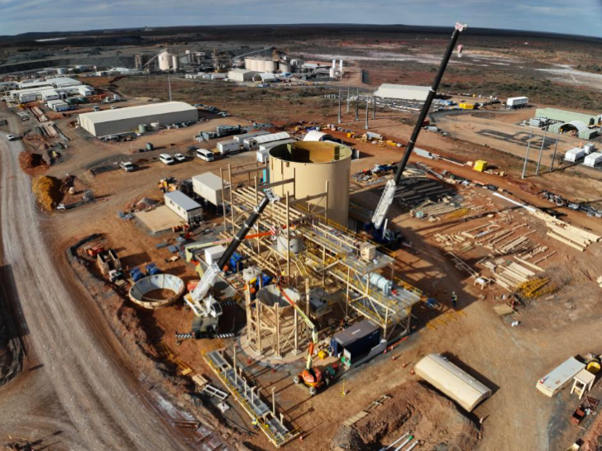
Figure 1: Paste Plant Construction. Credit: Bellevue Gold ASX
Fewer Tonnes Reached the Plant Despite Steady Grades
The clearest change was in the amount of ore coming out of the mine.
Underground ore mined fell to 203,013 tonnes from 315,300 tonnes in June. Mined grade edged higher, reaching 4.7 grams per tonne against 4.6 grams previously.
There was gold in the ore. The difficulty was getting enough ore through the operation.
The processing plant treated 250,702 tonnes, drawing on surface stockpiles to supplement underground deliveries. Recovery slipped to 94.9%, which Bellevue attributed to inconsistent ore feed.
| Operating measure | June 2026 quarter | September 2026 quarter |
| Ore mined | 315,300 tonnes | 203,013 tonnes |
| Mined grade | 4.6g/t | 4.7g/t |
| Ore processed | 298,772 tonnes | 250,702 tonnes |
| Gold recovery | 96.0% | 94.9% |
| Gold produced | 41,643oz | 35,585oz |
| Gold sold | 40,671oz | 35,979oz |
More Underground Workers Are Expected in December
Barminco replaced Develop Global as Bellevue’s underground mining contractor. Develop progressively demobilised during July before the August handover.
Three issues held back the new contractor’s ramp-up: workforce availability, equipment commissioning and restricted access to some planned high-grade stopes.
Bellevue expects staffing to improve during the December quarter. Barminco is completing work at another Western Australian project, allowing workers to transfer to Bellevue.
The next quarterly report should show whether those additional workers translate into more development metres and ore mined. September development advance was 2,646 metres, compared with 4,110 metres in June.
Colitco’s earlier Bellevue Gold mining update provides background on the company’s development plans.
Deacon North Has a Bigger Role Later in FY27
The Bellevue Gold FY27 outlook also depends on the contribution from Deacon North.
Bellevue has established five core long-term mining areas and expects more high-grade material from Deacon North in the second half. Recent infill drilling has been incorporated into mine planning.
The company expects metallurgical recovery to return towards its longer-term average as mining rates improve through the first half.
September Costs Rose Alongside Transition Spending
Project all-in sustaining costs reached A$3,096 per ounce sold, up from A$2,604 in June.
Lower gold sales contributed to the higher unit figure. Sustaining capital also increased to A$25.9 million from A$15.9 million.
There is a reporting change to consider when comparing the quarters. From FY27, Deacon North development expenditure moved from non-sustaining to sustaining capital as the area entered commercial production.
Bellevue has also changed the allocation of power-station lease costs. Those costs now sit entirely within sustaining or non-sustaining capital.
The annual project AISC forecast remains A$2,800–3,100 per ounce. It excludes corporate costs, so readers should avoid treating it as a measure of every expense incurred by the business.
| FY27 measure | Unchanged guidance |
| Gold production | 150,000–170,000oz |
| Project AISC | A$2,800–3,100/oz |
| Non-sustaining capital | A$90–100 million |
| Exploration expenditure | A$25–30 million |
Paste Plant Spending Should Ease After the First Half
September included the highest expected quarterly expenditure on the paste plant, along with a one-off purchase of underground infrastructure equipment from the outgoing contractor.
Bellevue expects non-sustaining capital spending to reduce progressively over the next few quarters.
The paste plant remains scheduled for commissioning around mid-FY27, with paste filling to begin immediately afterwards. Its 2,000-cubic-metre tailings holding tank is already in place.
Project AISC is also expected to decline in the second half. Meeting that expectation will require both the planned reduction in spending and a stronger operating result.
Exploration spending is headed the other way. Bellevue expects it to increase as more drilling is directed towards resource and reserve growth.
Early Hedge Deliveries Reduced Cash Retained This Quarter
Bellevue reported A$47.6 million in underlying free cash flow before voluntary early deliveries into future hedge contracts.
After those deliveries, free cash flow was A$8.9 million.
The distinction matters. The underlying measure shows cash generation before the company’s decision to bring forward future hedge obligations. It should not be read as the amount retained after that decision.
Bellevue delivered 11,150 ounces early against forward contracts, reducing outstanding commitments to 57,500 ounces. It continues to target clearing the entire hedge book during FY27.
Doing so would increase exposure to future spot gold prices. That would benefit revenue when spot prices exceed the contracted prices, while also leaving sales more exposed to a fall in gold.
Colitco’s March 2026 quarterly coverage tracks an earlier stage of this hedge reduction programme.
At 30 September, cash and cash equivalents stood at A$188.5 million. Including bullion awaiting settlement and gold on hand, total liquidity was A$213.2 million. Bank debt remained A$100 million.
December Will Test the Recovery Plan
The Bellevue Gold production forecast is unchanged, but the next report needs to show progress behind it.
The first checks are straightforward: more underground development, higher ore deliveries and a steadier supply to the processing plant. Stockpile rebuilding would provide another sign that mining is catching up.
Later in the year, attention shifts to Deacon North’s contribution, paste plant commissioning and lower capital expenditure.
Bellevue has identified what interrupted September production and where improvement should come from. December’s operating figures will offer the first full-quarter test of that recovery.
ALSO READ: Evolution Mining’s Gold Margins Hold Despite Slow Start
FAQs
Q1. What was the gold production of Bellevue in September 2026?
Ans. Bellevue produced 41,643 ounces in the June quarter compared to 35,585 ounces.
Q2. Why did production fall?
Ans. The new contractor’s ramp-up was slower than expected. Workforce availability, equipment commissioning and access to planned high-grade stopes affected mining activity.
Q3. Has Bellevue changed its FY27 guidance?
Ans. No. Production guidance remains 150,000–170,000 ounces, with project AISC of A$2,800–3,100 per ounce.
Q4. What should investors watch next?
Ans. December mining rates, workforce mobilisation, stockpile levels and plant recovery. Paste plant commissioning and Deacon North’s contribution are later checkpoints.
Disclaimer
This post provides information only, not financial advice. Bellevue Gold’s September 2026 quarterly report numbers. Forecasted production, cost, and commissioning dates are subject to change. Losses are possible with investing.

Luke Carlino is a seasoned Copywriter, Content Strategist, and Social Media Manager specialising in Mining, Finance, and Business journalism. With more than a decade of industry experience, he brings rigorous editorial standards and commercial acuity to every project.