
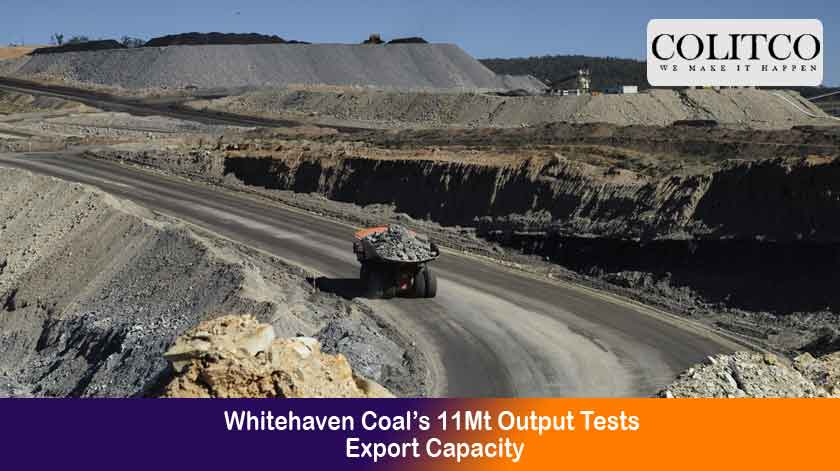
The Whitehaven Coal production update, released on 23 October 2026, reported 11.0 million tonnes of managed run-of-mine output. Equity sales of produced coal fell 5% from June to 6.0 million tonnes.
The company said customer demand remained strong. The immediate difficulty was at the export terminals, where planned and unplanned outages reduced vessel throughput.
For shareholders, December now needs to show whether those delayed sales can be completed while the mines continue producing.
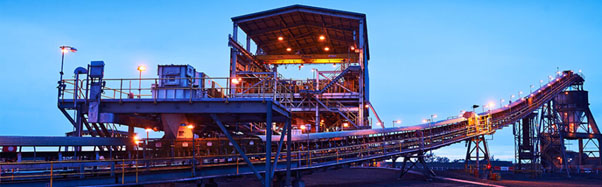
Figure 1: Daunia Mine in Queensland, part of Whitehaven’s metallurgical coal operations. Archive photograph. Credit: Whitehaven Coal.
Loading Outages Held Back Coal That Was Ready to Move
At RG Tanna, Blackwater’s loading terminal, outages totalled 12 days during the quarter.
Across Queensland, managed coal stocks rose by approximately one million tonnes to 3.1 million tonnes. Whitehaven said RG Tanna was operating normally again and expected inventories to reduce as vessel queues improved.
The Whitehaven Coal export capacity issue was therefore about available loading capacity during the quarter. The report does not establish a permanent shortage of export capacity.
The 11Mt Production Figure Needs a Like-for-Like Comparison
The headline production and sales numbers measure different things.
Run-of-mine, or ROM, production records coal before processing. Managed figures cover the operations Whitehaven manages, including joint-venture partners’ interests. Equity figures represent Whitehaven’s ownership share.
Subtracting 6.0 million tonnes of equity sales from 11.0 million tonnes of managed ROM production would not measure unsold coal.
| Group measure | June 2026 quarter | September 2026 quarter |
| Managed ROM production | 10.725Mt | 11.028Mt |
| Managed saleable production | 8.060Mt | 8.467Mt |
| Managed sales of produced coal | 7.835Mt | 7.562Mt |
| Managed closing coal stocks | 3.859Mt | 5.292Mt |
| Equity sales of produced coal | 6.316Mt | 6.000Mt |
| Equity closing coal stocks | 3.047Mt | 4.077Mt |
Mt means million tonnes.
The comparable managed figures show saleable production rising while sales declined. Closing stocks increased 37% from June.
Colitco’s earlier Whitehaven quarterly sales coverage provides background on the company’s Queensland and NSW operations.
Narrabri Lifted NSW Output Despite Port Disruptions
NSW managed ROM production reached 5.5 million tonnes, up 10% from June. Narrabri supplied much of the improvement.
The underground mine produced 1.9 million tonnes following an uninterrupted period of production. Sales reached 1.4 million tonnes.
Elsewhere, Maules Creek produced 2.7 million tonnes, down 22% in line with its planned mining sequence. Gunnedah Open Cuts contributed 0.9 million tonnes.
NSW managed sales of produced coal increased 5% to 4.0 million tonnes, although loading disruptions at PWCS prevented some sales from being completed before quarter-end.
The loader affected by the unplanned outage had returned to service when Whitehaven reported. Vessel queues were reducing. A separate planned loader outage remained scheduled for completion in November.
Those are useful recovery markers. More coal coming from Narrabri helps only if the transport and loading system can accommodate it.
Stronger Production Helped Contain Costs
The Whitehaven Coal production results also showed unit costs at the low end of the FY27 guidance range of A$132–147 a tonne.
Diesel remained expensive. It averaged approximately A$1.38 a litre during the quarter, against the A$1.16 assumption used at the midpoint of annual cost guidance.
The guidance assumes some moderation in diesel prices during the second half of FY27.
For now, stronger output helped absorb that pressure. The following quarters will show whether costs remain near the lower end as the production mix and mining schedule change.
Better Prices Supported the Coal That Was Sold
Whitehaven’s average achieved price rose 2% from June to A$226 a tonne.
Queensland operations received A$257 a tonne, up 4%. NSW achieved A$198 a tonne, broadly unchanged.
| September quarter measure | Reported result |
| Group average achieved price | A$226/t |
| Queensland average achieved price | A$257/t |
| NSW average achieved price | A$198/t |
| Metallurgical coal share of sales revenue | 57% |
| Thermal coal share of sales revenue | 43% |
Whitehaven also noted that realised prices can lag market benchmarks. Contracts may use scheduled shipment-month prices, quarterly averages or prices agreed up to three months before delivery.
A stronger benchmark therefore does not immediately flow through to every shipment.
For broader sector context, Colitco’s coverage of Yancoal and Whitehaven’s coal businesses examines developments across Australian producers.
Higher Stocks Tied Up More Working Capital
Net debt increased by approximately A$100 million to A$1.4 billion at 30 September.
Several movements contributed. Whitehaven paid A$61 million through its final dividend and share buy-back, alongside an A$84 million contingent payment for the Queensland acquisition.
Delayed sales, higher inventories and increased receivables also affected cash flow.
The company expects the working capital increase to unwind during December’s quarter. That remains an expectation until sales are completed and receivables collected.
Acquisition payments are approaching their final stages. A US$100 million deferred payment is due in April 2027, followed by the final contingent payment in early July.
Completing those obligations would give Whitehaven more flexibility over future cash allocation.
December Needs to Show Sales Catching Up
The next report should offer a straightforward test of management’s explanation: lower vessel queues, stronger sales and a reduction in coal stocks.
November’s planned PWCS loader return is one checkpoint. Further ahead, Narrabri’s next longwall move is expected to begin in March 2027 and take about nine weeks.
There is also additional haulage capacity to use. September showed that the mines could deliver stronger output while controlling costs. December will show how much of the accumulated coal can move through the ports and into completed sales.
ALSO READ: Global Markets vs ASX: Coal Stocks Surge
FAQs
Q1. How much coal did Whitehaven produce?
Ans. Managed ROM production reached 11.028 million tonnes in the September 2026 quarter, up 22% from a year earlier.
Q2. Why did sales fall despite higher production?
Ans. Loading outages at RG Tanna and PWCS delayed vessels and pushed some sales into the December quarter.
Q3. Did Whitehaven report an exact quarterly production cost?
Ans. No. It said unit costs were at the low end of its A$132–147 per tonne FY27 guidance range.
Q4. What should investors watch next?
Ans. Port recovery, sales volumes, closing inventories and cash collection. Whitehaven expects the temporary working capital increase to unwind during December’s quarter.
Disclaimer
This post contains basic financial information, not advice. Unless otherwise noted, figures are from September 2026. Recoveries and operational timelines may vary. Losses are possible with investing.

Luke Carlino is a seasoned Copywriter, Content Strategist, and Social Media Manager specialising in Mining, Finance, and Business journalism. With more than a decade of industry experience, he brings rigorous editorial standards and commercial acuity to every project.