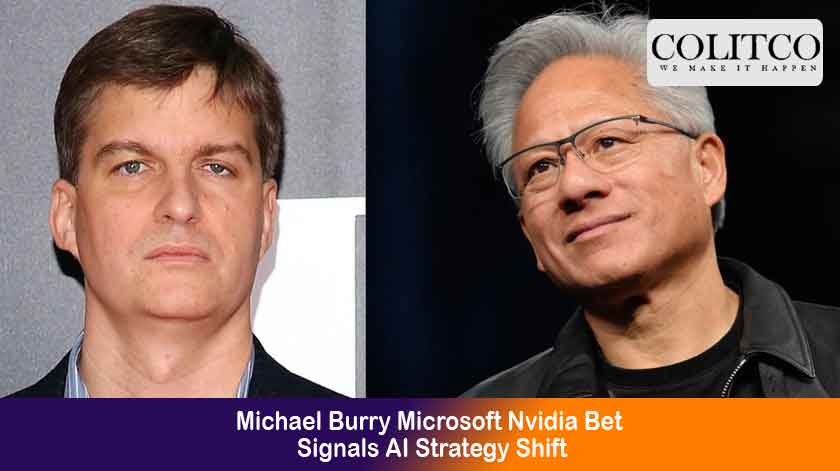
Scion Asset Management founder, Michael Burry, is switching from Nvidia to Microsoft. The investor recently revealed a new Microsoft stake following a 12% decline in 2026.
The investment indicates he believes the recent decline is an opportunity. This move is part of his strategy in a volatile market. Burry’s move is consistent with finding value in mispriced large-cap tech stocks.
This move was likely influenced by Microsoft’s poor performance relative to other Magnificent 7 stocks. Market participants are watching his decision closely for any market signals and its impact on AI-focused stocks.

Michael Burry shifts investment focus toward Microsoft amid market volatility. [Courtesy: 247 Wall Street]
Why Is Michael Burry Betting On Microsoft Now
Burry is targeting Microsoft’s leadership in artificial intelligence (AI) and cloud computing. Microsoft’s Azure platform is being rolled out worldwide to enable businesses. Analysts note its success in monetising its AI investments in various ways.
Collaborations with key AI companies boost its growth prospects. Moreover, its multi-model approach to AI offers adaptation to changing needs. Also, Copilot usage has improved in 2016, enhancing productivity. All this strengthens Microsoft.
The recent downturn seems to represent an opportunity for Burry to invest in an otherwise sound technology company.
Where Does Nvidia Stand In Burry’s Strategy
At the same time, Burry is bearish on Nvidia using long-term puts. He is long January 2027 puts on Nvidia, anticipating potential negative price movements. This reflects concerns over valuations following strong growth.
NVIDIA’s boom is driven by the need for AI computing and chips. But such growth has also driven expectations to soar. Burry’s approach is to be wary of excessive optimism.
Burry’s short positions include not only Nvidia, but also other semiconductor and technology stocks, reflecting concerns about overvaluations.
NVIDIA faces valuation concerns despite strong AI demand growth. [Courtesy: Decrypt]
What Defensive Positions Has Burry Taken
Apart from Nvidia, Burry has also hedged technology indices. He has January and March 2027 put options on the Invesco QQQ Trust. This ETF is an index of major technology firms listed on the NASDAQ.
He has also put on January 2027 puts on the iShares Semiconductor ETF. These positions reflect his pessimism about the semiconductor industry. Burry’s hedging strategy is designed to mitigate market risks.
It is based on his view that market prices might not accurately reflect fundamentals. This reflects a level of uncertainty across high-growth areas of technology.
How Microsoft’s AI Strategy Supports Growth Outlook
Microsoft’s strategy in the field of artificial intelligence is a growth factor. Microsoft uses both OpenAI and Anthropic technologies to gain a greater competitive edge. This enables Microsoft to capitalise on multiple AI ecosystems.
Azure profits from the growing trend of enterprise adoption of cloud AI services. Microsoft’s integration skills also enhance its long-term prospects, according to analysts.
Increasing capital spending does not hinder revenue growth. Its multifaceted AI strategy sets it apart. This approach helps boost investor and analyst confidence in future growth.

Microsoft strengthens AI leadership through Azure and a multi-model strategy. [Courtesy: Codelattice]
What Do Analysts Say About Microsoft Stock
Despite concerns about AI spending, Microsoft continues to have a positive analyst outlook. Piper Sandler analyst Billy Fitzsimmons has a Buy rating on the stock. The analyst has a price target of $500, suggesting that there is 18% upside.
The market is even more positive. 36 analysts give Microsoft a Strong Buy rating. Of these reviews, 34 are Buy ratings and just 2 are Hold. There are no Sell ratings currently.
The average 12-month price target is $577.05, which suggests a 36% potential gain from current levels.
When Could Burry’s Strategy Pay Off
Burry’s strategy hinges on market factors and AI adoption. Microsoft may profit from Azure growth in AI. Positive earnings could lead to a recovery in the next few quarters. In contrast, Nvidia may be vulnerable to growth revisions.
Markets tend to correct after going parabolic. This is part of Burry’s strategy. But timing is a challenge in markets. Investors should weigh short-term risks and long-term possibilities when considering such approaches with technology stocks.
Also Read: NVIDIA Quantum Threat Grows As D-Wave CEO Flags Power Shift
FAQs
Q1. Why did Michael Burry choose Microsoft over Nvidia?
A1: Burry sees value after a 12% decline in Microsoft stock. He believes AI growth and Azure demand support long-term upside.
Q2. Why is Burry bearish on Nvidia?
A2: He holds January 2027 put options, signalling downside expectations. NVIDIA’s high valuation increases risk if growth slows.
Q3. What is Microsoft’s AI advantage?
A3: Microsoft benefits from OpenAI and Anthropic partnerships. This allows monetisation across multiple AI platforms and enterprise solutions.
Q4. What upside do analysts see for Microsoft?
A4: Analysts project $500 to $577.05 price targets. This implies 18% to 36% upside from current levels.
Disclaimer
This article is for informational purposes only and does not constitute financial advice. Market investments involve risk and volatility. Readers should conduct independent research before making decisions. The views discussed are based on publicly available data and analyst insights, which may change without notice.
Source