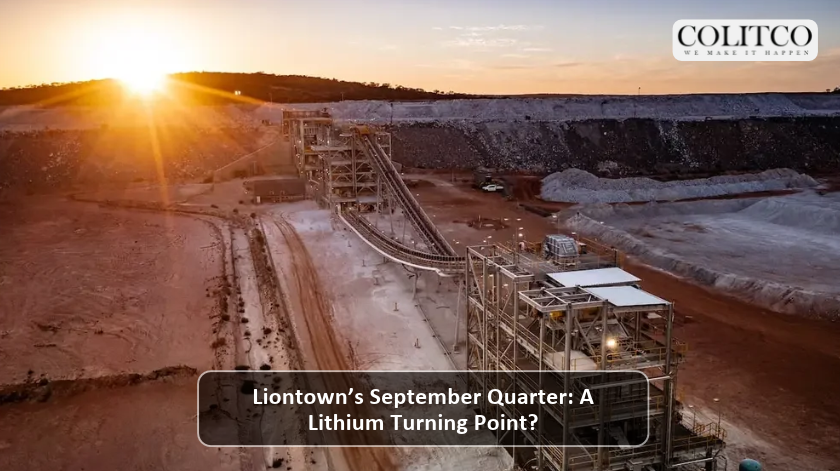
The Liontown quarterly results, released on 29 October 2026, describe a mine working through an important transition. Underground development accelerated, new mining areas opened and the company approved its next expansion.
The immediate financial result was less straightforward. Revenue fell 15% from June to A$199 million. Unit operating costs rose, and cash declined despite positive operating cash flow.
Whether September proves a turning point now depends on the next few quarters. Liontown expects the development completed underground to deliver more ore, allowing the plant to process more material and spread costs across higher sales volumes.
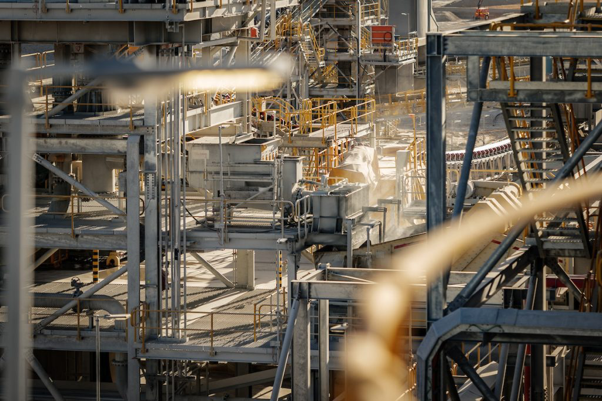
Figure 1: Kathleen Valley processing plant in Western Australia. Archive photograph. Credit: Liontown Limited.
More Underground Access Must Now Deliver More Ore
Kathleen Valley’s underground mine delivered 388,568 tonnes of ore at an average grade of 1.4% lithium oxide, up 9% on the June quarter.
Development advanced 4,021 metres, a quarterly record and a 21% increase. Liontown prioritised this work to open new levels and mining fronts.
That is an exit-rate target. It does not mean the mine will produce 2.8 million tonnes across the whole financial year.
Colitco’s earlier Kathleen Valley production report provides background on the underground transition.
The Plant Had Capacity, but Less Suitable Feed
Liontown lithium production reached 77,982 dry metric tonnes of spodumene concentrate at an average grade of 5.1% lithium oxide.
Plant availability improved to 94%, its best quarterly result. However, ore processed fell 21% from June to approximately 508,000 tonnes.
The distinction matters. Better equipment availability did not automatically produce more concentrate because feed supply and recovery constrained output.
As underground mining increases, Liontown expects the plant to handle more ore. The next results will show whether that additional feed also brings more consistent recovery.
Higher Prices Could Not Fully Offset Lower Shipments
Liontown sold approximately 82,600 dry metric tonnes during the quarter. Shipment timing was affected by scheduled maintenance and weather at Geraldton.
Its estimated realised price rose 5% to US$1,966 per dry metric tonne on a 6% lithium oxide equivalent, delivered-to-customer basis. Revenue nevertheless declined because fewer tonnes were shipped.
| Financial measure | June quarter | September quarter |
| Revenue | A$235m | A$199m |
| Realised price, SC6 equivalent, CIF | US$1,880/dmt | US$1,966/dmt |
| Unit operating cost, FOB | A$995/dmt sold | A$1,259/dmt sold |
| Closing cash | A$561m | A$502m |
Realised prices also remain estimates while relevant quotation periods are unsettled. The presentation says final prices may vary.
Colitco’s coverage of Liontown’s Canmax offtake agreement explains part of the company’s future sales arrangements.
The Unit Cost Increase Was Mainly a Volume Problem
Total operating costs remained broadly steady at approximately A$104 million. Cost per tonne rose 27% because production and sales volumes were lower.
That left September’s A$1,259 per tonne slightly above the upper end of annual guidance of A$1,050–A$1,250.
Liontown expects costs per tonne to ease as volumes increase. The expectation is reasonable to test against future results, rather than assume it has already been achieved.
The reported cost measure excludes sea freight and royalties, along with depreciation and certain other charges. It also incorporates inventory movements and credits for capitalised mine costs.
It therefore describes a defined portion of operating expenditure, rather than the company’s total cost of producing and selling concentrate.
Positive Operating Cash Flow Did Not Prevent a Cash Decline
Statutory operating cash flow was A$46.6 million. Liontown also presented underlying operating cash flow of approximately A$69 million, excluding a A$21.6 million customer-dispute settlement relating to an FY26 shipment.
For the September cash balance, that settlement was still an actual payment.
Investing activities used approximately A$82 million, including A$68 million of growth expenditure and A$14 million of sustaining capital. Financing activities used another A$23 million.
Cash consequently fell to A$502 million. The growth spending included work on the existing ramp-up, optimisation and expansion at Kathleen Valley, and the Centenario project.
Liontown has cash available for those programmes, but positive operating cash flow alone does not establish that the full investment programme is self-funding.
The Expansion Has a Longer Timetable Than the Current Ramp-Up
Among the major items in Liontown ASX news was approval of the A$389 million Kathleen Valley expansion.
That future product grade differs from the 5.1% basis used in FY27 production guidance.
| Milestone | Company’s stated timing |
| Underground mining reaches roughly 1.9Mtpa | Q2 FY27 |
| New ball mill arrives on site | Q3 FY27 |
| Current mine reaches 2.8Mtpa exit rate | End of FY27 |
| First ore from Kathleen’s Corner Underground | Q1 FY28 |
| Expansion completion | End of Q2 FY29 |
The expansion estimate is expressed in real 2026 dollars and excludes general inflation. Its spending also extends beyond the current year.
Argentina Adds an Earlier-Stage Opportunity
Liontown has entered a staged farm-in with NEXT Lithium Corp to earn up to 100% of the Centenario lithium brine project in Argentina.
Initial consideration comprises US$5 million in cash and shares valued at US$10 million. The first expenditure stage requires US$15 million over 24 months to earn a 49% interest.
Centenario gives Liontown another development option, but it is not contributing to current concentrate production. Kathleen Valley remains the operation that must deliver the near-term earnings and cash flow.
December Will Provide a Clearer Answer
September brought evidence of progress underground. It also showed the effect of restricted feed volumes on production, revenue and costs.
Liontown retained FY27 guidance of 390,000–440,000 dry metric tonnes of concentrate. After September’s roughly 78,000 tonnes, production will need to rise over the remaining quarters.
The clearest next test is the expected increase in underground ore during December. Recovery, shipments and unit costs should then show whether that mining progress is translating into a stronger operating result.
For now, September looks like a transition quarter. Calling it a turning point will require that improvement to appear in the numbers.
ALSO READ: ASX Critical Minerals: Fuelling EVs and Clean Energy
FAQs
Q1. How much concentrate did Liontown produce?
Liontown produced 77,982 dry metric tonnes in the September quarter, averaging 5.1% lithium oxide.
Q2. Why did unit costs rise?
Total operating costs were broadly unchanged, but lower production and sales volumes increased the cost per tonne sold.
Q3. Did Liontown generate positive cash flow?
Operating cash flow was positive at A$46.6 million. After investing and financing activities, the overall cash balance declined.
Q4. What is Liontown’s FY27 production guidance?
Staying at 390,000–440,000 dry metric tons of concentrate allows for shutdowns and expansion tie-ins.
Disclaimer
This post provides information, not financial advice. Price estimates, development timetables, and forecasts may vary. Readers should read corporate releases before investing.

Luke Carlino is a seasoned Copywriter, Content Strategist, and Social Media Manager specialising in Mining, Finance, and Business journalism. With more than a decade of industry experience, he brings rigorous editorial standards and commercial acuity to every project.