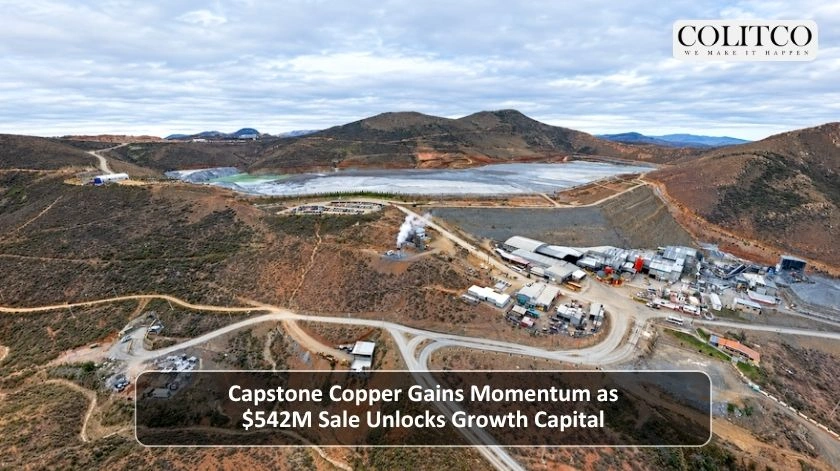
The Capstone Copper growth capital story has gained momentum following an agreement to sell the Cozamin mine in Mexico. The transaction carries maximum consideration of US$385 million, reported as approximately A$542 million.
That figure needs context. The agreement combines upfront cash, shares, deferred consideration and a conditional earn-out. It does not place the entire headline amount immediately at Capstone’s disposal.
Australian shares responded positively, trading 1.6% higher at A$14.78 during the morning of 22 September. This was an intraday observation rather than a closing price.
The investment question now moves beyond the announcement: how much usable funding will arrive, when will it become available, and what value can Capstone create by reinvesting it?
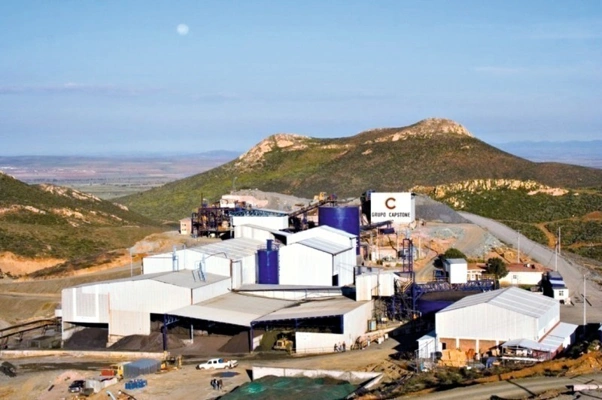
Figure 1: An archival view of Cozamin’s processing facilities in Mexico. Image source: AT Mineral Processing.
What Sits Behind the Headline Valuation
Capstone has agreed to sell Cozamin to Luca Mining. The official transaction announcement sets out the following payment structure.
| Component | Amount in US dollars | Timing or condition |
| Upfront cash | US$275 million | At closing, subject to adjustments |
| Luca shares | US$15 million | Issued at closing |
| Deferred consideration | US$35 million | First closing anniversary; cash and/or shares at Luca’s option |
| Copper-linked earn-out | Up to US$60 million | Dependent on annual copper prices |
| Maximum consideration | US$385 million | Includes all conditional payments |
Closing is expected in the fourth quarter of 2026, subject to customary conditions and regulatory approvals. The agreement has no financing condition or shareholder-approval requirement.
The $542M asset sale mining headline therefore describes a maximum transaction value. For funding analysis, investors should separate cash proceeds from securities and amounts payable later.
Three Distinctions That Matter for Funding
The payment structure creates several differences between headline value and spending capacity.
- Cash has immediate utility: Once received, cash can support investment or strengthen liquidity. Shares remain exposed to market movements and may require a sale before funding expenditure.
- Timing affects availability: Deferred consideration cannot automatically be treated as money available for near-term commitments.
- Conditional proceeds remain uncertain: An earn-out linked to commodity prices should be assessed separately from payments that are not subject to that price test.
These distinctions are ordinary transaction considerations, but they become particularly important when a company has several projects competing for capital.
They also explain why a large disposal announcement does not, by itself, establish that an entire development programme is funded.
The Copper Price Hurdle Behind the Earn-Out
The earn-out tests annual average copper prices during 2027–2029. Payments begin at US$7.00 per pound, while the maximum annual payment requires at least US$8.51 per pound.
The referenced market commentary highlighted TD Cowen’s caution: its forecast peak of US$5.60 per pound in 2027 was below the payment threshold. That forecast is an analyst assumption, not a prediction investors should treat as certain.
Nevertheless, the comparison explains why the maximum consideration deserves scrutiny.
A brief copper-price spike would not necessarily satisfy a condition based on an annual average. Investors assessing the transaction should therefore consider a range of outcomes rather than assigning full value to the earn-out immediately.
Selling a Producing Mine Carries an Opportunity Cost
Cozamin is an underground copper-silver operation with a surface mill near Zacatecas City. It has operated under Capstone since late 2006, and exploration has extended its operating history well beyond the original development expectations.
Selling an established operation exchanges future operating exposure for consideration that can be deployed elsewhere.
That is the central trade-off. A transaction can improve financial flexibility while also removing a source of production and earnings.
For shareholders, success ultimately depends on whether the value created through reinvestment exceeds the value relinquished. That assessment requires attention to project returns, execution risk and the time between spending capital and receiving operating cash flow.
The sale price is the starting point for that comparison.
Financial Results Provide a Broader Starting Position
Capstone entered the transaction period with stronger reported earnings, although its operating results were mixed.
Second-quarter revenue reached US$739.7 million, while adjusted EBITDA was US$354 million. Net debt stood at US$674.9 million at 30 June, down from US$780.1 million at the end of 2025.
However, consolidated copper production fell 10% year on year to 51,759 tonnes, and C1 cash costs rose 15% to US$2.82 per pound.
Those figures give Capstone Copper momentum a more balanced meaning. Higher earnings and reduced debt are constructive, but production and cost performance still require attention.
Disposal proceeds can improve financing choices. They cannot replace the operational work needed to maintain output and control expenditure.
Where Growth Funding Meets Execution
The company’s second-quarter operating update described the US$176 million Mantoverde Optimized project as a brownfield expansion expected to add approximately 20,000 tonnes of annual copper production and 6,000 ounces of gold.
These are expected project contributions, not evidence that the sale proceeds have been specifically allocated to that expenditure.
The distinction matters when evaluating Capstone Copper growth capital. A stronger balance sheet creates choices, but management still needs to explain the sequence and funding of individual investments.
Investors can then assess whether project schedules, remaining costs and expected returns fit together.
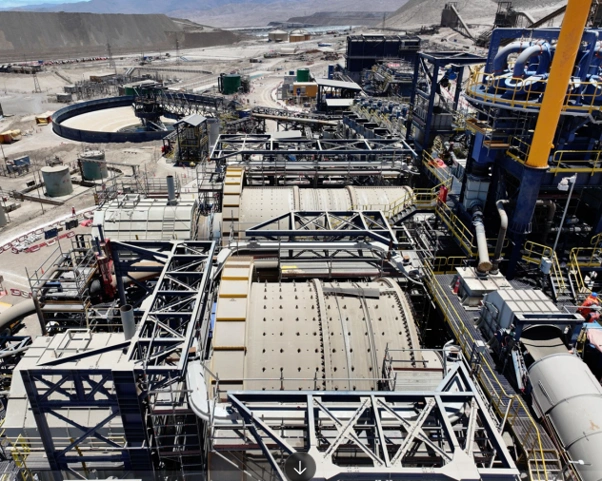
Figure 2: Mantoverde processing equipment during commissioning activities in 2023. Archival image credit: Capstone Copper, via Business Wire.
Questions for the Next Capital Allocation Update
The most useful follow-up disclosure would connect available funds with measurable objectives.
- Which projects receive priority? Clear sequencing helps investors understand where management expects the strongest returns.
- How much funding remains necessary? Remaining expenditure matters more than comparing a disposal headline with an entire historical project budget.
- What balance-sheet capacity is retained? Liquidity can provide protection against delays, weaker prices or unexpected operating costs.
- How will progress be measured? Construction milestones, production delivery and cash generation provide evidence beyond strategic language.
These questions do not assume that every dollar should be spent immediately. Retaining financial flexibility can also have value.
Milestones That Could Strengthen the Investment Case
The transaction now has to progress from agreement to completion, followed by effective use of the proceeds.
- Completion confirmation: Investors should distinguish signing an agreement from receiving consideration.
- Net proceeds disclosure: Closing adjustments and transaction-related outflows affect the amount ultimately available.
- Updated investment plans: Specific expenditure decisions would clarify how the disposal changes development priorities.
- Operating follow-through: Production, costs and project delivery will help determine whether financial flexibility translates into stronger performance.
A favourable initial share-price response recognises potential. Subsequent reporting must show whether that potential is being realised.
What Happens Next?
The proposed disposal gives Capstone another way to finance its ambitions while simplifying its operating portfolio.
The strongest reading of the announcement is therefore measured: financial flexibility could improve, but the maximum valuation remains conditional and future returns depend on execution.
For investors, the next decisive evidence will be completed payments, clear capital allocation and operating results that justify the investment.
Also Read: BHP vs Rio Tinto: The Copper Power Shift Redefining Mining Investment Leadership
Disclaimer
Prepared for Colitco for general information only, this article does not constitute investment advice. Transaction completion, contingent payments and project outcomes remain uncertain. Readers should review original disclosures and current market information before making investment decisions.

Luke Carlino is a seasoned Copywriter, Content Strategist, and Social Media Manager specialising in Mining, Finance, and Business journalism. With more than a decade of industry experience, he brings rigorous editorial standards and commercial acuity to every project.