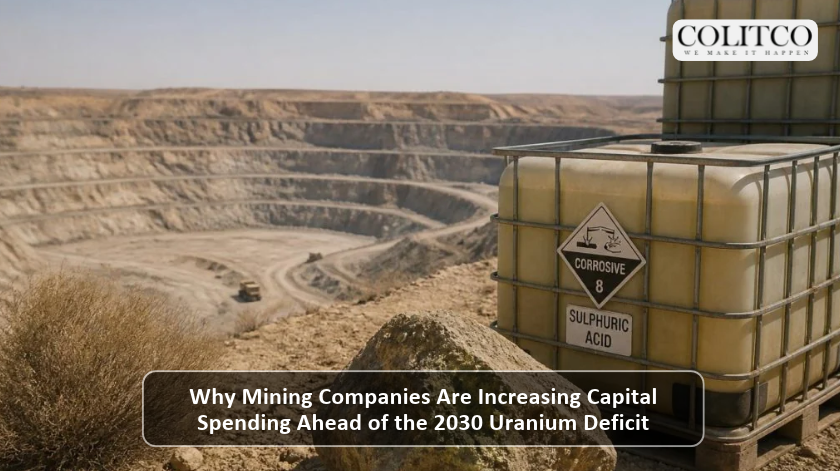
Mining companies aren’t waiting for better days. Prices have cooled and sentiment has dipped in 2026, but the big cheques keep getting written. Uranium mining investment is the clearest case. Miners are lining up capital for a uranium supply deficit they expect to bite after 2030.
The wider sector has been sliding since August. Excitement about the artificial intelligence (AI) buildout has faded. The growth outlook for 2027 looks softer too. Yet miners are fixed on 2030. If supply stays tight, the returns could be attractive.
Paladin Energy Raises $525 Million to Tackle the Uranium Supply Deficit
Paladin Energy (ASX: PDN) is the latest to back that view. This week it wrapped up a $525 million equity raising, fully underwritten. The offer was priced at a 10.3% discount to the $8.70 close on 11 November. For uranium mining companies, it’s a loud signal.
Paladin holds a 75% interest in the Langer Heinrich mine in Namibia. It also has a development project in Canada, called Patterson Lake South (PLS). Exploration projects round out the portfolio. On 5 November, the company reaffirmed its production guidance. Its raising presentation pointed out that the Namibian mine gives exposure to today’s uranium market.
The catch? PLS needs fresh financing to keep moving. Paladin expects the supply-and-demand deficit to widen after 2030. It calls PLS a tier-one project in the Athabasca Basin. Many see that region as the world’s premier source of ‘high-grade’ uranium.
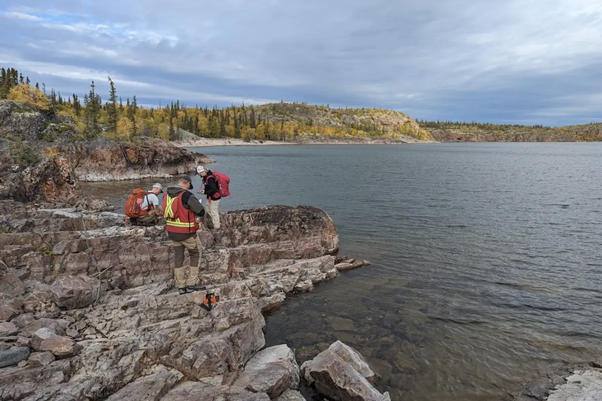
The Athabasca Basin in Canada is widely regarded as the world’s premier high-grade uranium region. [Investing News Network]
Why Uranium Mining Investment Is Accelerating Before 2030
Nicholas Boyd Matthews, chief investment officer at Janah Capital, laid out the reasoning on Livewire Markets. Four pressures stand out:
- Years of thin investment have left several commodity markets short of new supply.
- Many mines are getting old, and ore grades keep falling.
- New developments cost more to build than they used to.
- A new mine takes years to reach production, so supply can’t jump when demand does.
That lag is the whole story. A mine approved today won’t produce tomorrow. Wait for a clear shortage, and you’re already late. Move early, and you may catch the gap as it opens.
Which Other Miners Back the Same 2030 Supply Gap
Uranium isn’t the only market where miners see a gap. Others are making similar bets:
- Lithium producer PLS Group (ASX: PLS) reached a $1.9 billion final investment decision in October for its P2000 Project. It also expects demand to significantly outpace supply around 2030.
- Rio Tinto (ASX: RIO) iron ore chief executive Matthew Holcz forecasts an 800-million-tonne (Mt) supply gap. At the time, Rio saw only 300Mt committed from future projects. No major iron ore miner has announced new capacity since.
- Rio itself did commit US79 billion) in late October to the Kangwinan Bauxite Project in Queensland.
- Last week Freeport-McMoRan (NYSE: FCX) announced a US$4.5 billion expansion of its Bagdad Copper-Molybdenum Project in Arizona. It would become the second biggest copper mine in the US.
How Glencore and Investors Back Long-Term Supply Growth
Uranium mining companies have plenty of companies thinking big. Copper players and investors tell the same story:
- Swiss-based Glencore (ASX: GLC) is moving aggressively into copper.
- Earlier this year it weighed a blockbuster merger with Rio, then shelved it.
- CEO Gary Nagle told the Australian Financial Review in October that consolidation still makes sense. He cited massive synergies and potential re-ratings, and hasn’t completely ruled out another attempt.
- Most fund managers and wider capital markets still support miners’ expansion plans.
Boards and investors seem to be playing the same long game.
What the Uranium Supply Deficit Means Next
Timing is what matters most. Paladin and PLS Group both point to around 2030. Rio sees a similar gap forming in iron ore. Projects approved now could deliver supply just as shortfalls appear. That helps explain why boards are spending despite weaker sentiment. Raisings and final investment decisions work as early signals.
Location counts too. Money is flowing to Namibia, Canada’s Athabasca Basin, Queensland and Arizona. Risks haven’t gone away, of course. Prices could stay soft, and schedules can slip. Still, the uranium supply deficit story is shaping decisions across the sector.
For anyone watching the sector, the picture is simple. Short-term weakness and long-term spending are running side by side. The 2030 deadline keeps getting closer, and miners know it.
Also Read: Omega Oil & Gas Advances Queensland Gas Exploration With New Subsurface Results
FAQs on the Uranium Supply Deficit
Q1: When is the uranium supply deficit expected to widen?
A1: Paladin Energy expects the uranium supply-and-demand deficit to widen after 2030. Long mine lead times mean new supply can’t respond quickly.
Q2: How much did Paladin Energy raise?
A2: Paladin completed a $525 million, fully underwritten equity raise. It was priced at a 10.3% discount to the $8.70 close on 11 November.
Q3: Where are Paladin’s uranium assets?
A3: Paladin holds a 75% interest in the Langer Heinrich mine in Namibia. Its Patterson Lake South project sits in Canada’s Athabasca Basin.
Q4: Which other miners are spending ahead of 2030?
A4: PLS Group reached a $1.9 billion final investment decision for its P2000 Project. Freeport-McMoRan announced a US$4.5 billion expansion of Bagdad in Arizona.
Disclaimer:
This article is general information only and does not constitute financial advice. Mining and uranium shares are volatile. Figures such as Paladin Energy’s $525 million raising reflect company announcements at publication. Forecasts of a post-2030 uranium supply deficit may change. Readers should carefully verify details with primary sources. Always consult an independent, licensed financial adviser before making any investment decisions.

Luke Carlino is a seasoned Copywriter, Content Strategist, and Social Media Manager specialising in Mining, Finance, and Business journalism. With more than a decade of industry experience, he brings rigorous editorial standards and commercial acuity to every project.